Freeze-dried food solves two different problems: building a shelf-stable pantry and packing meals for trips where refrigeration is impractical. I’ve narrowed this list around serving counts, storage conditions, preparation, container design, and practical meal variety. The strongest options range from full emergency buckets to single-can vegetables and beans for DIY meal builders.
A gallon jug of broccoli makes sense for a busy kitchen that regularly turns dried vegetables into soups, stews, and camping meals. The 30-ounce package expands when cooked, so I see more value in it as a recipe ingredient than as a complete meal. One important distinction: Harmony House air dries and dehydrates this broccoli rather than freeze-drying it.
That distinction matters because air-dried vegetables are shelf-stable, but they are not the same category as the vacuum-freezing process used for Ready Harvest cauliflower. The broccoli’s no-additive formula and stated one-to-two-year cupboard storage window still make it useful for household meal building, especially in a cool, dry pantry.
Points In Its Favor
✓The gallon-format jug provides a substantial quantity for repeated recipes.
✓Broccoli rehydrates for soups, stews, sides, and simple vegetable dishes.
✓No additives or preservatives are listed.
✓The product is labeled non-GMO and designed to reduce pantry waste.
Small Caveats
•Broccoli needs soaking or cooking time, so it isn’t as immediate as a ready meal.
•Storage guidance depends on a sealed container, cool temperatures, and low humidity.
Key Attributes
Feature
Specification
Why It Matters
Package
30 oz, gallon-size jug
Offers useful volume for meal builders
Method
Gently air dried
Reduces moisture for pantry storage
Formula
No additives or preservatives
Keeps the ingredient list focused
Made For
Home cooks and campers who want a large supply of shelf-stable broccoli for recipes rather than full meals.
A Better Fit Elsewhere
Home cooks seeking a true freeze-dried vegetable will find Ready Harvest Freeze-Dried Cauliflower more closely aligned with that process.
Ready Hour takes the opposite approach from the single-vegetable jug: this bucket centers on substantial meal coverage with up to 120 servings. The handled, flood-resistant container is more relevant to a household emergency pantry than a lightweight hiking load, especially with limited kitchen equipment or refrigeration.
I’d expect its greatest appeal to come from households wanting a concentrated entree reserve rather than assembling components. The stated shelf life reaches 25 years under cool, dry conditions, but package age, moisture exposure, and container closure matter, so rotation records are sensible long-term practice.
The Helpful Details
✓Up to 120 servings create a larger meal reserve than the cans in this lineup.
✓The handled bucket is easier to move from a closet to a temporary shelter.
✓No refrigeration is required during storage.
✓The meals are positioned for both emergencies and ordinary meals.
Worth Noting
•The full bucket may be excessive for a one-person household or small camper.
•Hot water and a suitable vessel are still needed for most meal preparation.
Quick Facts
Feature
Specification
Why It Matters
Serving count
Up to 120 servings
Supports meal planning at household scale
Container
Handled, flood-resistant bucket
Improves transport and storage
Stated shelf life
Up to 25 years
Suitable for long pantry rotation
Storage
Cool, dry environment; no refrigeration
Supports emergency pantry use
Who It Suits Best
Households preparing a centralized emergency pantry need substantial entrée portions they can store without refrigeration.
Another Choice May Suit
Solo campers and hikers will find Emergency Supply Co 124 Serving MRE Pack easier to divide into smaller outdoor portions.
Where the Ready Hour 120 Serving Entree Bucket focuses on complete meals, this fruit-and-vegetable mix supplies lighter pantry components. That makes it useful for snacks, sides, and recipe augmentation during power interruptions, camping trips, or a home pantry rotation.
The 30-year stated shelf life is the headline feature, yet the cool-and-dry storage requirement remains essential. I’d favor this mix for someone who already owns a stable supply of mains and wants fruit or vegetables to round out meals. The 56-serving count also feels more manageable than a very large bucket.
A Few Strong Suits
✓A long stated shelf life suits durable household storage.
✓The mix adds fruit and vegetables to an entrée-centered pantry.
A dedicated breakfast bucket solves a problem many mixed-meal packs overlook: morning variety becomes repetitive fast. Seven food and drink choices, including oatmeal, buttermilk pancakes, scrambled eggs, and additional options, make this more useful for routine camp mornings or a household that wants shelf-stable breakfasts.
With 128 servings, the scale is substantial, and the listing states more than 2,000 calories per day. I’d treat that figure as a planning reference rather than individualized nutrition guidance, since actual meal selection matters. Most items need water and heat, while some can be eaten without preparation.
Benefits That Matter
✓Seven breakfast choices provide more rotation than a single-flavor bucket.
This pack is built around variety across an entire day rather than one narrow food group. Breakfast, lunch, dinner, fruit, desserts, and drinks create a more useful mix for a family facing an extended power outage, especially when keeping many separate containers would be awkward.
Four serving pouches add a layer of organization that the larger Ready Hour buckets may not provide as clearly. Some campers can remove individual portions, while home users can store the full supply together. The listing describes the food as ready to eat, though pantry planning should still follow the package’s exact preparation directions.
Where It Helps
✓Six food categories prevent a monotonous single-meal reserve.
✓Four pouches simplify division and transport.
✓Individual pouches suit camping, hiking, and backpacking.
✓The complete pack can remain in a home or vehicle storage area.
Details To Watch
•Pack weight may be substantial for backpacking despite portable pouches.
•The term MRE doesn’t guarantee that every item is freeze-dried; preparation varies by component.
•Vehicle storage can become hot, so packaging conditions deserve attention.
Whose Shelf It Belongs On
Families building an all-day emergency pantry will appreciate broad meal categories and divided serving pouches.
Reach For A Different Pick When
Backpackers focused strictly on light weight may prefer the smaller Ready Harvest Freeze-Dried Cauliflower #10 Can.
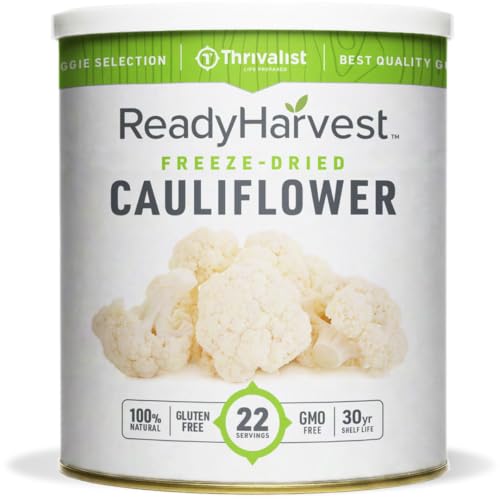
A #10 can is pantry infrastructure in miniature: large enough to stock, but more focused than a 120-serving meal bucket. Ready Harvest’s cauliflower contains only the freeze-dried vegetable, which gives cooks control over seasoning, sauces, soups, and side dishes.
The 22-serving count works nicely for gradual use, and each half-cup serving weighs 6.7 grams. Rehydration takes about five to ten minutes, so this is more convenient than dried beans but less immediate than an MRE. The open can will need proper sealing after use to protect the remaining portions.
What Earns Its Place
✓The single-ingredient formula leaves seasoning choices to the cook.
✓Twenty-two servings support repeated meal preparation.
✓The vegetable rehydrates in five to ten minutes.
✓The can format permits controlled pantry portions.
Minor Gripes
•A reusable airtight container is useful after opening the can.
•Cauliflower works best as an ingredient rather than a complete entrée.
Quick Technical Notes
Feature
Specification
Why It Matters
Can size
#10 can
Supports pantry-scale storage
Total servings
22
Allows use across several meals
Serving size
Half cup, 6.7 g
Simplifies portioning
Rehydration
5 to 10 minutes
Reduces preparation time
Right Fit For
Meal builders and campers want a flexible, single-ingredient vegetable for soups, sides, and recipes.
Where Another Pick Shines
Ready Hour 120 Serving Entree Bucket suits households needing complete meals rather than recipe ingredients.
Beans bring a useful center-of-the-pantry ingredient to a category often filled with sweet fruit and complete meals. This three-pound #10 can fits chili, soup, tacos, frittata, and seasoned bean bowls, making it especially practical for campers who prefer building meals from shelf-stable components.
The beans are pre-cooked before freeze-drying, so rehydration primarily restores texture rather than requiring a full cooking cycle. Compared with Ready Harvest Freeze-Dried Cauliflower, the tradeoff is that beans usually need more rehydration attention, while the reward is a more substantial, protein-centered ingredient.
A ready-to-eat meal removes the fuel, cookware, and rehydration steps required by several freeze-dried vegetables and beans. The chicken burrito bowl format is aimed at portable lunches, camping meals, and short trips where carrying a single complete entrée is more practical than assembling a full meal.
There’s an important category caveat. The supplied details identify it as a military MRE, not as a freeze-dried food, and older surplus inventory may carry an earlier inspection date. I’d check the package date, storage history, and contents carefully rather than treating it as interchangeable with a modern freeze-dried meal.
Practical Pluses
✓Ready-to-eat preparation suits travel and limited-cook situations.
✓The individual format carries more easily than a large emergency bucket.
✓The chicken burrito bowl provides a complete meal format.
Where It May Fall Short
•It is not presented as a freeze-dried option in the supplied information.
•Older inspection dates can be a concern for long-term stock rotation.
•The package does not match the broad serving variety of a multipouch pack.
Made For
Campers and commuters want a compact, ready-to-eat meal that needs no pantry cooking setup.
Not Your Match When
Households focused specifically on freeze-dried shelf-stable ingredients will find Ready Harvest Quick-Cook Pinto Beans 3-Pound Can more relevant.
## What To Look For In A Long-Term Food Supply### Serving Plan And Meal StructureStart by separating complete meals from recipe components. Buckets with 120-plus servings suit centralized household pantries, while cans of cauliflower or beans are easier to use gradually. Consider how many mouths must be fed and whether storage space can support a full bucket.### Storage Conditions And PackagingA cool, dry location provides the foundation for shelf-stable storage. Seal opened cans promptly, inspect buckets for dampness, and keep packaging away from pests. Stated shelf-life figures depend on proper closure, handling, and storage rather than time alone.### Rehydration And Equipment NeedsRehydration means adding water to restore a dried ingredient. Vegetables may require only a short soak, while beans often need more time, and complete meals can call for heating. Shoppers with limited fuel or cookware should favor options requiring less water or no preparation.### Packaging PortabilityFlood-resistant buckets help with indoor storage, while divided pouches are easier to distribute among trips or vehicles. A three-pound can may be sensible at home yet burdensome on a backpacking trip. The narrowest travel kit may center on single ready-to-eat meals.## Avoiding Pantry Storage Missteps### Common Shopping Slip UpsServing counts can look larger than real meal coverage, especially in mixed packages. I’d also avoid confusing air-dried vegetables with freeze-dried foods, since their processing methods differ. Carrying only ready meals may leave a pantry without seasoning, fruit, vegetables, or another entrée.### What The Higher Tier BuysLarger containers generally provide more servings, broader meal variety, or sturdier storage rather than a fundamentally different food category. Higher-capacity packaging makes sense for households and frequent users, while compact cans or single meals fit occasional needs and travel. The useful upgrade is the one that matches the actual storage space and serving plan.## Frequently Asked Questions### How Do I Store Freeze Dried Foods For Long Term Storage?Keep the packaging sealed in a cool, dry location away from moisture, heat, and pests. Seal opened cans with an airtight container to protect the remaining food.### Are Freeze-Dried Vegetables Complete Meals?They work best as ingredients in soups, stews, side dishes, and seasoned bowls. Combine them with a starch, protein, seasoning, or the Ready Harvest Quick-Cook Pinto Beans 3-Pound Can.### Which Container Is Best For Household Storage?A lidded bucket is useful for a larger emergency pantry, while smaller cans support gradual use and easier shelf organization. Regardless of format, clean and completely dry each container before refilling it.### How Long Does Freeze-Dried Food Keep?Shelf life varies by product, and the stated duration applies to properly stored packaging. Mark purchase dates, rotate older stock, and discard food affected by moisture, contamination, or damaged packaging.### Is MRE Food Always Freeze Dried?No. An MRE is a packaged meal format, not a processing method, so individual components may not be freeze-dried. Check the product description and package information for the specific item.## Closing ThoughtsI find Ready Hour 120 Serving Entree Bucket most useful for a centralized household pantry, while Ready Harvest Freeze-Dried Cauliflower #10 Can and Quick-Cook Pinto Beans give cooks more flexibility. Emergency Supply Co 124 Serving MRE Pack stands out for divided portions and all-day variety. The honest standard is simple: match serving count, preparation needs, and storage conditions to the way the food will actually be used.
Robert Wright
Robert Wright is a passionate food writer and home cook with hands-on experience exploring global flavors and culinary techniques. He combines research-based cooking knowledge with practical recipe testing to offer reliable and approachable guidance for home kitchens.