

Shipping frozen food means controlling three things: cold retention, meltwater, and pack size. Reusable freezer packs suit coolers and insulated shipping boxes, while disposable cold packs serve short trips that don’t require freezer preparation. I focus on capacity, reusability, dimensions, and real-world handling so each option has a clear purpose.
A Side-By-Side Look

Cooler Shock Reusable Long-Lasting Cooler Ice Packs

Tapleap Large 4-Piece Cooler Ice Pack Set

FREEZ PAK Reusable Medium Ice Pack
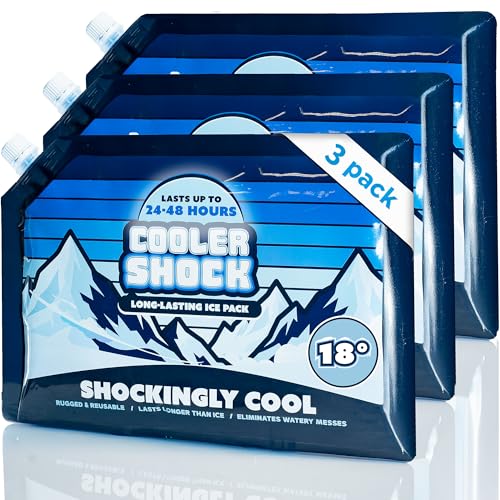
Cooler Shock Reusable Long-Lasting Cooler Ice Packs

Arctic Ice Chillin’ Brew Series Reusable Ice Pack

Aidehelp 8-Pack Instant Disposable Cold Packs

RAINBOW 8-Sheet Reusable Shipping Ice Packs

Omoojee Reusable Cooler and Lunch Ice Packs
More On The Choices That Made The List
The 13-by-10-inch footprint makes this a practical fit for standard coolers, lunch bags, and larger totes. Its water-fill format and screw cap create a reusable, flat pack that stacks around frozen goods more neatly than loose ice.
For weekend camping or a long drive, the claimed 18°F phase-change temperature and 24-to-48-hour cold-retention window make it a serious consideration. Actual duration varies with cooler insulation, starting temperatures, opening frequency, and the quantity of warm food loaded.
Strengths Worth Knowing
- Flat 13-by-10-inch profile fits broad cooler floors.
- The screw cap supports repeated filling and freezing cycles.
- Reuse reduces loose meltwater inside packed coolers.
- The low freezing point suits multi-day food and drink storage.
Points To Keep In Mind
- Owners must fill, cap, and fully freeze each pack before use.
- Cold duration depends heavily on cooler construction and packing density.
Made For
Weekend campers, anglers, and road travelers who want flat reusable cooling inside medium or large coolers.
Another Choice May Suit
Cooler Shock Reusable Long-Lasting Cooler Ice Packs suit people who prefer an included filling funnel and a stated 48-hour cold window.
Where the first Cooler Shock option emphasizes a single broad pack, Tapleap supplies four 13-by-10-inch packs for fuller cooler coverage. The stated six-pound combined weight gives the set enough mass for picnics, beach days, fishing trips, and errands involving several containers.
These are sealed, refrigerant-filled packs, so there is no water to measure before the first freeze. That convenience is valuable for households that regularly pack coolers, although the flat sheets still need enough freezer space to chill completely.
What Makes Sense
- Four packs provide more cooling area than a single-sheet setup.
- The 13-by-10-inch size fits many standard camping coolers.
- Sealed construction eliminates loose ice and associated puddle management.
- The reported 25-minute freezing time supports short-notice packing.
Minor Gripes
- Four sheets may be difficult to freeze simultaneously in a compact freezer.
- Compared with a beverage-specific pack, the listed temperature data is less detailed.
Who It Suits Best
Campers and picnic hosts who prefer several broad, ready-filled sheets over a single water-activated pack.
A Better Fit Elsewhere
FREEZ PAK Reusable Medium Ice Pack better serves commuters who need a smaller, more compact cold source for lunch boxes.
A medium pack fits naturally into a lunch tote or a compact cooler, making this a less bulky option than the Tapleap set. The polypropylene bottle construction is recyclable and designed for repeated use, which helps explain why this format remains common in packed lunches and outdoor gear.
Its main appeal is simplicity rather than elaborate temperature engineering. That may be enough for a daily commute or school lunch, but anyone shipping frozen food through an insulated box may prefer the documented low freezing points offered by the Cooler Shock options.
Positive Takeaways
- The medium format suits lunch boxes and compact coolers.
- Reusable construction avoids continual loose-ice replenishment.
- Polypropylene packaging supports repeated rotation through a freezer.
Honest Caveats
- No exact dimensions or freezing temperature are provided in the source information.
- The bottle may take more space than a fully flat sheet.
- Long shipping journeys still require a well-insulated container.
The Right Fit
Daily commuters, students, and casual road travelers need a straightforward reusable pack for lunch boxes and compact coolers.
Swap It Out When
Cooler Shock Reusable Long-Lasting Cooler Ice Packs offer a clearer fit for multi-day trips requiring a low freezing point.
The phase-change point is the defining technical feature: instead of warming as ordinary ice melts, the contents change from solid to liquid at a controlled temperature. An 18°F transition point supports cold retention in a suitably sized cooler, with the listing claiming up to 48 hours.
Unlike Tapleap’s prefilled sheets, this Cooler Shock model is filled with water and prepared at home. The included funnel and nylon-reinforced body simplify setup, but repeated freezing still requires careful capping and full air removal.
Practical Pluses
- The 18°F phase-change point supports colder, steadier chilling.
- One reusable pack is claimed to replace roughly five to six pounds of loose ice.
- Nylon reinforcement is intended to withstand repeated handling.
- The included funnel makes filling easier than a narrow cap opening.
Details To Watch
- The claimed 48-hour duration depends on a size-matched, insulated cooler.
- Water-filled packs need extra freezing time before each outing.
Built With In Mind
Campers, anglers, and road travelers who need extended cold retention from a reusable flat pack.
Where A Sibling Pick Shines
Tapleap Large 4-Piece Cooler Ice Pack Set serves people who prefer several prefilled sheets over water activation.
This pack is built around drinks rather than frozen-food shipping. Its 28°F freezing point is higher than the 18°F packs from Cooler Shock, so it targets beverage chilling at tailgates, barbecues, day trips, and parties.
That narrower purpose gives it a clear advantage in a drink cooler, but I wouldn’t treat that warmer freezing point as equivalent to a lower-temperature frozen-food system. The listing also describes several size options, although the supplied information does not identify which size this variant includes.
Key Advantages
- A 28°F transition point supports portable beverage cooling.
- The reusable format works repeatedly for cookouts and tailgates.
- It suits coolers containing cans, bottles, and other drinks.
Where It May Fall Short
- The exact size and weight of this variant are not specified.
- Its warmer freezing point is less suitable for demanding frozen-food transport.
- Owners still need to inspect the seal before each reuse.
Who Will Love This
Tailgate hosts, picnic planners, and travelers who primarily need reusable drink chilling.
Reach For A Different Pick
Cooler Shock Reusable Long-Lasting Cooler Ice Packs better serve frozen-food trips that benefit from an 18°F phase-change point.
Squeezing the center activates these packs without freezer preparation, which sets them apart from every reusable option in this list. Their 4.3-by-5.9-inch footprint also makes them easy to place beside a small insulated container during a short journey.
Disposable construction is the central trade-off. Eight units provide convenient emergency cold sources, but the listed cooling period is about 15 minutes per pack, making this a short-duration accessory rather than the main cold source for frozen-food shipping.
Good Reasons To Consider
- Activation requires no freezer or advance planning.
- Eight packs support several short outings or emergency kits.
- The compact dimensions fit small bags and carry-on storage.
Less Ideal Details
- Single-use construction creates ongoing replacement needs.
- The approximately 15-minute cooling period is brief.
- Multiple packs provide little continuous cold retention by themselves.
Who Should Grab It
Travelers, sports spectators, and households assembling compact kits for short, unpredictable cold-storage needs.
Skip It When
RAINBOW 8-Sheet Reusable Shipping Ice Packs better serve frozen-food shipments requiring flat, repeatedly used cooling sheets.
Eight flexible sheets provide more placement options than a few rigid bottles or blocks. Each sheet contains 12 cells according to the set total of 96, allowing the cold source to lie flat around irregularly packaged frozen food in an insulated shipping box.
Despite the “dry ice” wording in the name, these are water-activated reusable ice packs, not carbon dioxide. Preparation is more involved: soak the sheets for about three to five minutes, dry both sides, then refrigerate or freeze them for at least six hours.
Real-World Strengths
- Eight thin sheets can surround food within a narrow package.
- The 96-cell layout distributes water across a broad surface.
- Flat storage is convenient for compact freezer shelves.
Practical Considerations
- Every sheet must absorb water, dry thoroughly, and complete a long freeze.
- Incorrect preparation may leave less water available for freezing.
- The product contains no carbon dioxide dry ice.
Best Suited To
Small-business shippers and careful packers need flat, reusable sheets for narrow insulated shipping containers.
Consider Something Else
Tapleap Large 4-Piece Cooler Ice Pack Set suits campers who prefer four broad prefilled sheets over water-soaked flexible sheets.
The 12-ounce water capacity and included funnel make preparation approachable for first-time users of reusable packs. Filling, freezing, and rotating several packs is less convenient than opening Tapleap’s prefilled sheets, but it offers repeat use without a continual supply of loose ice.
For lunches, fishing trips, and routine cooler packing, that compromise appears sensible. The source information does not provide a freezing temperature or cold-duration claim, so I’d compare its documented precision with the 18°F Cooler Shock model for demanding transport scenarios.
The Case For It
- The included funnel simplifies initial filling.
- Twelve-ounce packs stay compact in lunch boxes.
- Reusable construction works for coolers, fishing gear, and packed lunches.
Trade-Offs To Consider
- No exact dimensions or low-temperature performance are stated.
- Multiple packs require home filling and full freezing.
- Leaks may occur after repeated handling of a poorly sealed cap.
Made For
Newcomers, commuters, and casual anglers need a manageable reusable pack for everyday coolers and lunch boxes.
Not Your Match
Cooler Shock Reusable Long-Lasting Cooler Ice Packs better serve established outdoor users who prioritize a specified 18°F phase-change point.
What Matters Before Packing Frozen Food
Match the Pack to the Container
A broad 13-by-10-inch sheet needs a cooler with enough floor space, while narrow flexible cells may fit a tighter shipping box. Measure the usable interior first, then account for food, airflow gaps, and absorbent material.
Check the Cold-Holding Design
A lower phase-change point can support steadier chilling than ordinary ice, but it doesn’t replace insulation. Published cold-duration claims assume a suitably sized container, frozen contents, limited opening, and a full load of cooling packs.
Decide Between Filling and Readiness
Water-activated packs are reusable but require preparation. Sealed refrigerant packs simplify future use, though they still need enough freezer time before departure and may occupy substantial shelf space.
Two Decisions That Shape the Choice
Mistakes Worth Dodging
Overpacking can reduce air circulation and make frozen food freeze unevenly, while too few packs leave the box exposed to outside warmth. Also, confusing water-activated “dry ice packs” with carbon dioxide dry ice can lead to incorrect handling and packing choices.
What Separates Premium From Basic
Premium options often add lower freezing temperatures, reinforced bodies, or broader surface coverage. Those improvements matter for long journeys and frequent use, while a compact pack remains adequate for a short commute or lunch packed in the morning.
Frequently Asked Questions
Are reusable ice packs suitable for shipping frozen food?
They work well inside insulated shipping boxes because they limit meltwater and provide reusable cold storage. The container’s insulation and the number of packs remain decisive.
How long should frozen food stay frozen in a shipping box?
The appropriate duration depends on the food, starting temperature, box insulation, and cold-source capacity. Match the delivery window to the package rather than relying on a pack’s stated duration alone.
Can I use dry ice packs for shipping?
Carbon dioxide dry ice and water-activated reusable packs are different products. The RAINBOW sheets contain no carbon dioxide, and carrier rules may impose separate handling requirements for actual dry ice.
How many reusable packs should go in a cooler?
Enough packs should surround the contents while leaving space for circulation. Full coverage matters more for an extended trip, while smaller coolers may need a different pack size.
Do shipping ice packs leak?
Properly sealed reusable packs normally remain contained during transport. Inspect closures before freezing, dry water-activated sheets thoroughly, and keep each pack upright until its cap is secure.
Final Verdict
The strongest fit depends on the job: Cooler Shock leads for low-temperature camping trips, Tapleap for broad multi-pack cooler coverage, RAINBOW for flat shipping-box placement, and FREEZ PAK for compact lunches. Match the format to the container, allow a full freeze, and plan the journey around complete cold retention.