

Manuka honey shopping gets confusing once jars, packets, and potency ratings enter the picture. I focus on MGO, UMF, ingredient handling, batch traceability, serving size, and pantry convenience to help daily users narrow the field without overcomplicating breakfast. A lower-rated jar may suit someone adding a spoonful to tea, while a concentrated option serves people already comfortable with stronger ratings. The main differences come down to intended use, ease of storage, transparency, and how much sweetness fits a regular routine.
The Choices Worth Comparing

Land Girl Organics UMF 15+ Manuka Honey 8.8 oz Jar

Manukora Raw Manuka Honey MGO 50+ 250g

P.R.I Manuka Honey MGO 300+ 500g
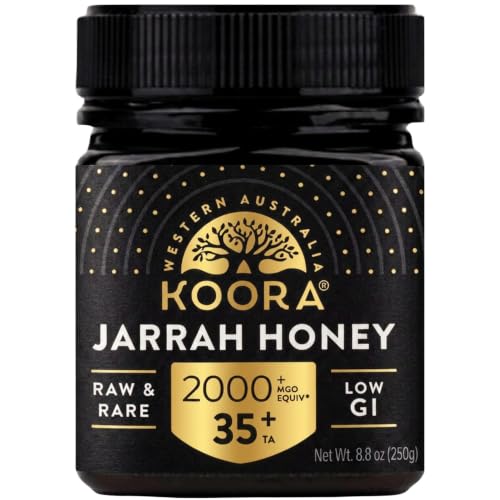
KOORA Jarrah Honey TA35+ 8.8 oz
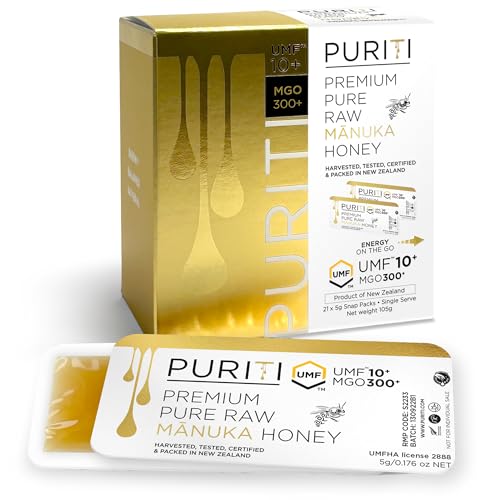
PURITI Raw Manuka Honey Snaps UMF 10+ 21 Packets

Manukora Raw Manuka Honey MGO 850+ 250g

P.R.I Manuka Honey MGO 600+ 500g

P.R.I Manuka Honey MGO 1000+ 500g
A Breakdown Of The Leading Choices
Land Girl combines a moderate 15+ UMF rating with a jar suited to breakfast bowls, warm drinks, and simple spooning. UMF is a New Zealand classification used to describe Manuka honey, while MGO measures a particular compound associated with the honey’s grading. In a busy kitchen, the 8.8-ounce size feels practical rather than oversized.
Unlike Manukora Raw Manuka Honey MGO 50+, this option sits at a more concentrated level without reaching the 600+ and 850+ ranges. I see it as a balanced middle ground for people who want a noticeable rating but prefer a moderate everyday format. The listed MGO 550+ designation also makes the naming a little denser than some pantry staples require.
The Case For It
- The 15+ UMF rating gives daily users a clear middle-tier reference.
- Organic sourcing and minimally processed handling suit ingredient-focused households.
- The 8.8-ounce jar works for tea, yogurt, toast, and smoothies without an oversized container.
- Smooth texture makes spooning more convenient than working Manuka directly from a large jar.
Small Caveats
- The UMF 15+ and MGO 550+ labels may add complexity for someone new to honey ratings.
- Raw honey can crystallize over time, so warm storage and occasional gentle warming may be necessary.
Key Specs
Made For
This jar best serves breakfast-focused households wanting a moderate Manuka rating with an organic designation and manageable container size.
A Better Fit Elsewhere
People who need individually packed servings will find PURITI Raw Manuka Honey Snaps UMF 10+ 21 Packets more convenient for commutes and lunch boxes.
A modest MGO 50+ rating makes this a relatively restrained place to begin compared with Land Girl Organics UMF 15+ Manuka Honey 8.8 oz Jar. MGO, short for methylglyoxal, is the compound used in many Manuka grading systems. The lower figure may feel easier to understand for someone comparing their first few pantry options.
The 250g format is broad enough for regular kitchen use but compact enough for a smaller pantry. It works neatly beside tea, cereal, or fruit, and raw handling preserves a more direct pantry character. I’d consider it a sensible first jar, though people seeking stronger flavor intensity may prefer a higher MGO selection.
A Favorable Mix
- The MGO 50+ rating offers a comparatively approachable entry point.
- The 250g jar fits small pantries and recurring breakfast routines.
- Raw, multifloral sourcing gives the product a less industrial pantry profile.
- Available container listings include 8.82-ounce and 17.6-ounce formats for different storage needs.
Worth Noting
- The title mentions New Zealand origin, but the supplied details do not describe a batch-specific traceability system.
- Raw multifloral honey may crystallize, requiring gentle warming rather than very high heat.
- Its lower rating may not provide the stronger sensory profile sought by experienced Manuka users.
Who It Suits Best
First-time Manuka users and smaller households benefit most from the restrained rating and familiar 250g pantry format.
Another Choice May Suit
Experienced users seeking stronger concentration will find P.R.I Manuka Honey MGO 600+ 500g better aligned with a higher-intensity routine.
The 500g P.R.I jar lands between a casual MGO 50+ choice and the more concentrated 600+ and 1000+ options. That middle position works for regular use by someone who already understands the ratings but has no reason to jump straight to an intense jar. Its size also makes measured portions easy to manage at breakfast.
Traceability is the detail that sets it apart from Manukora Raw Manuka Honey MGO 50+ 250g. A QR code on the lid links to batch-specific results, giving me a clearer way to check what sits behind the stated rating. For shoppers who care about origin evidence, that system is more useful than a broad claim alone.
The Helpful Details
- MGO 300+ provides a clear midrange concentration for regular servings.
- The 500g jar offers more pantry volume than a 250g starter option.
- Batch-specific QR traceability supports a more informed label check.
- Low-temperature processing preserves the honey’s natural flavor and texture.
Honest Caveats
- At 500g, the container may occupy more pantry space than single packets or a smaller jar.
- Cool-processed raw honey can still crystallize, particularly in cool kitchens.
Feature Snapshot
Built With In Mind
Regular household users who value batch documentation and moderate-to-high concentration will appreciate this practical middle-tier format.
Consider Something Else
Commuters and lunch-box users may prefer PURITI Raw Manuka Honey Snaps UMF 10+ 21 Packets for portioning without a jar.
Jarrah honey breaks from the Manuka-only lineup, and that difference matters more than the rating numbers suggest. It comes from jarrah nectar rather than Manuka nectar, so the usual MGO comparison does not apply. I would treat it as a separate honey category, not a direct substitute based on a converted scale.
The 8.8-ounce jar fits a regular pantry, while TA35+ uses a Total Activity grading system separate from MGO. For someone seeking a dark, distinctive honey with a different nectar source, that separation can be useful. I would not select it solely because its title compares it with a much higher MGO Manuka rating.
Standout Benefits
- Jarrah nectar provides an alternative to Manuka honey.
- The compact 8.8-ounce jar suits normal kitchen storage.
- TA35+ offers a clearly defined grading system for this non-Manuka variety.
Trade Offs
- It does not meet a strict Manuka-only requirement.
- TA and MGO ratings use different systems, so direct equivalence is difficult to judge without the supporting test details.
- The listed low-GI positioning still leaves honey as a sweet pantry ingredient, and individual dietary needs may vary.
Right Fit For
Honey enthusiasts who enjoy jarrah nectar and approach ratings independently of Manuka will find this an interesting pantry change.
Where A Sibling Pick Shines
People focused specifically on traceable Manuka potency should favor P.R.I Manuka Honey MGO 300+ 500g instead.
Twenty-one snap packets solve the daily jar problem better than any other option here. They fit into a work bag, lunch box, gym case, or carry-on without drips, spoons, or a sticky container. Compared with P.R.I Manuka Honey MGO 300+ 500g, portability replaces batch-level jar traceability and pantry volume as the main benefit.
The stated UMF 10+ rating and medium sweetness make these packets workable in tea, smoothies, and snacks. The flavor profile reportedly includes nutty notes and mild bitterness, which may appeal to people who find basic honey too uniformly sweet. I’d consider the format less wasteful for occasional use than a full jar, especially during travel.
A Strong Showing
- Individual packets simplify travel, commuting, and lunch-box portions.
- The 21-count pack supports repeated use without handling a large jar.
- Medium sweetness works in both drinks and light snack preparation.
- Snap packaging reduces the cleanup associated with liquid honey.
Practical Considerations
- Single-use packets can create more packaging than one reusable jar.
- The smaller servings may be less practical for people accustomed to larger daily spoonfuls.
Quick Facts
Who Will Love This
Commuters, travelers, parents packing lunches, and office workers benefit most from the controlled single-serve format.
Look Elsewhere
Kitchen-focused households seeking a larger pantry supply will find Land Girl Organics UMF 15+ Manuka Honey 8.8 oz Jar more efficient.
MGO 850+ places this jar firmly among the concentrated choices, well above Manukora Raw Manuka Honey MGO 50+ 250g from the same brand. That jump suits a shopper who already knows how higher ratings fit a personal routine. I would approach it as an advanced pantry option rather than a neutral starting point.
The stated 250g base size keeps the container smaller than several 500g P.R.I jars, which helps with storage. Available size details also include 8.82-ounce, 12.7-ounce, and 17.64-ounce formats. Because the provided listing data gives little technical detail beyond size, the rating and raw status carry most of the decision-making weight.
The Upside
- The MGO 850+ rating provides a clearly defined high-potency level.
- A 250g jar offers concentrated ratings without the footprint of a 500g container.
- Several listed size options can accommodate different pantry quantities.
Less-Strong Areas
- The high rating may be unnecessarily complex for first-time users.
- The supplied data does not mention batch traceability or a QR code.
- Raw honey can crystallize, making consistent spooning less convenient over time.
Technical Reference
Who Should Grab It
Experienced users seeking a compact jar with a substantially higher MGO rating will find this option more relevant than a starter honey.
Skip It
Anyone prioritizing batch-level documentation should consider P.R.I Manuka Honey MGO 1000+ 500g and its listed QR verification system.
The MGO 600+ jar gives experienced daily users a step above P.R.I Manuka Honey MGO 300+ 500g without reaching the extreme 1000+ range. Its 500g size supports regular pantry use, while the batch QR code adds a useful verification path. In my view, that combination makes it the most methodical high-potency option in this group.
Low-temperature processing helps protect the honey’s flavor and texture during handling. Raw Manuka can still crystallize, so a spoon and occasional gentle warming remain part of normal ownership. The trade-off is a concentrated jar that may be less approachable to someone learning whether Manuka suits breakfast at all.
Reasons It Performs
- The MGO 600+ rating provides a high-potency middle ground.
- Batch-specific QR information improves label transparency.
- The 500g size suits households using honey regularly.
- Low-temperature processing supports the stated natural flavor profile.
Potential Drawbacks
- The concentration is advanced for anyone comparing their first Manuka jar.
- A 500g package takes more shelf space than PURITI Raw Manuka Honey Snaps UMF 10+ 21 Packets.
The Right Fit
Experienced daily users seeking high MGO, a full pantry jar, and batch documentation will find this combination especially coherent.
Reach For A Different Pick
Small-pantry households will likely prefer Manukora Raw Manuka Honey MGO 850+ 250g for its more compact container.
At MGO 1000+, this jar represents the concentrated end of the P.R.I range in this roundup. It is a logical progression from P.R.I Manuka Honey MGO 600+ 500g, but the jump is substantial rather than marginal. I would reserve this format for someone comfortable with high ratings and a more pronounced Manuka flavor profile.
The limited-harvest positioning adds another layer, although the core decision still rests on MGO and fit. The supplied details list 8.8-ounce and 17.6-ounce options, while the main title identifies a 500g format. As with the other raw P.R.I jars, low-temperature handling is intended to retain flavor and texture.
Practical Advantages
- The MGO 1000+ designation provides the highest stated rating here.
- Limited-harvest sourcing gives the product a clearly defined niche.
- Raw, low-temperature handling fits minimally processed preferences.
- Larger size options can support households with more regular pantry use.
Details To Watch
- The intensity may be excessive for someone accustomed to moderate honey ratings.
- High-potency jars are not automatically better matches for casual tea or dessert use.
- Raw honey requires sealed storage and may need gentle warming after crystallization.
Feature Facts
Whose Shelf It Belongs On
Experienced Manuka users seeking a highly concentrated jar and limited-harvest positioning will find this format most relevant.
A Better Fit Elsewhere
Newcomers wanting a simpler starting point will find Manukora Raw Manuka Honey MGO 50+ 250g easier to approach.
What Matters Most Before Choosing Manuka Honey
Pick A Rating That Matches Experience
MGO is the most useful number here for comparing Manuka options, but a high figure does not automatically create a better daily fit. Newcomers may find MGO 50+ or UMF 10+ easier to interpret, while experienced users may prefer 300+, 600+, or 1000+. I consider the intended flavor intensity before choosing a tier.
Look Beyond The Front Label
UMF and MGO describe different grading approaches, and jarrah honey uses another system called Total Activity. A shopper focused specifically on Manuka should confirm that the label clearly identifies it rather than relying on a cross-category comparison. Organic designations, raw handling, and low-temperature processing add useful context too.
Choose The Container First
A full-size jar works well at home but can be sticky, bulky, and prone to crystallization. PURITI packets solve those ownership issues for commuting, travel, and lunch boxes, while a 250g jar offers a compact middle ground. The format that gets used consistently is often more practical than the largest container in the pantry.
Two Decisions That Shape The Choice
Hidden Buying Traps
Confusing MGO with UMF can make unrelated ratings appear directly interchangeable. I also avoid assuming that a high rating alone establishes better taste, because flavor, serving size, and preferred format still matter. Checking the stated origin, processing method, and available batch information helps narrow the field.
What The Higher Tier Buys
Higher MGO tiers generally indicate a more concentrated grade and often bring a stronger flavor profile. That upgrade matters for experienced users, while an extreme jar may add little value to someone simply sweetening tea. Paying more feels more rational once the rating, processing, traceability, and portion format all align with the routine.
Frequently Asked Questions
What Is the Best Manuka Honey Rating for Daily Use?
There is no single ideal rating for every routine. I start with a moderate label such as MGO 50+ or UMF 10+, then consider stronger tiers only after becoming familiar with the flavor and serving size.
Does Higher MGO Mean Sweeter Manuka Honey?
Higher MGO does not necessarily mean sweeter honey. It indicates a higher concentration of methylglyoxal, while sweetness and flavor remain connected to nectar, floral source, and processing.
Are Manuka Honey Packets Better Than Jars?
Packets are more convenient for travel, lunch boxes, and controlled portions. Jars are often more practical for home use, measured spoonfuls, and households that use honey regularly.
Does Raw Manuka Honey Expire?
Properly sealed honey has a long shelf life, although flavor and texture can change over time. Crystallization is a common physical change rather than a reason to discard the jar outright.
Is Jarrah Honey the Same as Manuka Honey?
No. Jarrah honey comes from jarrah nectar and uses a different activity rating, while Manuka honey comes from Manuka nectar and may carry MGO or UMF classifications.
Final Verdict
I would choose Manukora Raw Manuka Honey MGO 50+ 250g for an approachable first jar, P.R.I Manuka Honey MGO 300+ 500g for traceable midrange use, and the PURITI packets for portability. High-potency options make the most sense for experienced users with a clear preference, and Land Girl offers a balanced organic pantry choice. The right jar is the one whose rating and format feel comfortable enough to use consistently.
