

Choosing a lighter cooking oil starts with portion control, heat tolerance, and the flavor a dish needs. All edible oils add calories, so the right choice depends on how it performs and how easily I can control the portion. I focus on olive oil blends, cold-pressed extras, neutral vegetable oil, and convenient squeeze bottles for salads, sautéing, baking, roasting, and high-heat cooking.
A Fast Comparison Of The Options

Nutrioli Organic Extra Virgin Spanish Olive Oil, 16.9 Fl Oz

Nutrioli High-Smoke Spanish Olive Oil, 16.9 Fl Oz
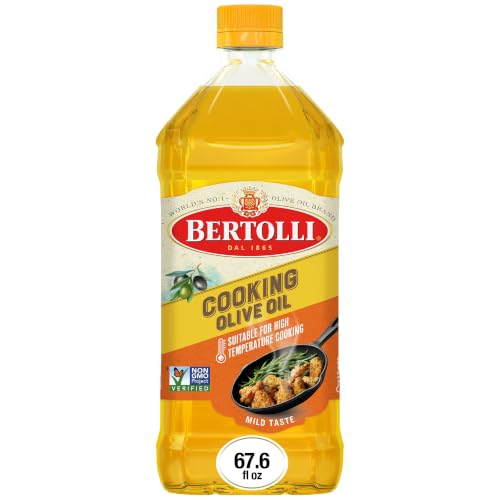
Bertolli Cooking Olive Oil, 67.6 oz

Colavita First Cold-Pressed Olive Oil, 68 Fl Oz

Colavita Mediterranean Extra Virgin Olive Oil, 34 Fl Oz

Nutrioli Extra Virgin Spanish Olive Oil, 16.9 Fl Oz

Mantova EVOO and Avocado Oil Squeeze Blend, 25.5 oz

AVO Vegetable Oil, 1 Gallon
More On The Choices That Made The List
A light salad or vegetable sauté calls for precise dispensing, and this glass bottle makes that control easier. Nutrioli blends Arbequina, Picual, and Hojiblanca olives from Spain, giving me a familiar extra-virgin option without carrying three separate oils in the pantry.
Its listed smoke point of 374°F suits low to medium heat rather than aggressive frying. The retractable pop-up pourer is a small detail that may matter in a busy kitchen, although the glass container needs careful handling around a busy sink.
The Good Stuff
- Three Spanish olive varieties create a more complex pantry staple.
- The 374°F smoke point fits vegetable sautéing, pasta sauces, marinades, and dressings.
- A pop-up pourer gives cleaner portioning than an open bottle.
- The mild, full-bodied taste suits foods without overwhelming delicate seasoning.
- The 16.9-fl-oz glass bottle is compact enough for regular use.
Small Caveats
- The lower listed smoke point makes it less suitable for very high-heat methods than Nutrioli High-Smoke Spanish Olive Oil.
- Owners commonly need to keep the glass bottle upright and wipe the pourer after use to limit residue on the counter.
Who It Suits Best
Home cooks who mostly prepare salads, sauces, and moderate-heat vegetable dishes benefit most from this format.
Consider Something Else When
AvO Vegetable Oil is a more practical fit for frequent frying or large-batch baking where a neutral taste and gallon container take priority.
Moving from dressings to the grill changes the heat equation, and this Nutrioli blend is built for that shift. It combines extra-virgin and refined olive oils made from Arbequina, Picual, and Hojiblanca olives, giving me a milder option with a listed 437°F smoke point.
That range suits roasting, grilling, frying, and other high-heat methods where Nutrioli Organic Extra Virgin Spanish Olive Oil is less capable. The smooth taste keeps seasoning in focus, though high-heat cooking still calls for controlled portions.
A Few Strong Suits
- A 437°F smoke point expands the cooking range beyond the first Nutrioli selection.
- The mild profile works with fish, chicken, vegetables, and roasted foods.
- The retractable pourer supports measured use over salads, pasta, and stovetop dishes.
- The glass bottle keeps the oil visible in the pantry.
Practical Considerations
- The refined component makes it less suited to shoppers seeking only extra-virgin oil.
- The smaller bottle may run out faster than Bertolli Cooking Olive Oil in a household that cooks several meals each week.
Made For
Cooks using one oil for salad dressings, sautéing, roasting, and grilling get the most flexibility from this blend.
Another Choice May Suit
Nutrioli Organic Extra Virgin Spanish Olive Oil serves cooks who prioritize a pure extra-virgin format over higher-heat tolerance.
Bertolli’s 67.6-fl-oz container solves a different problem from the 16.9-ounce Nutrioli bottles: pantry volume. The mild cooking olive oil is intended for daily meals, so I can keep one larger bottle available for sautéing, seasoning, and other recurring kitchen tasks.
That scale may reduce the need for constant replacement, especially in a household preparing several meals a week. The trade-off is less emphasis on extra-virgin provenance, and the large container requires storage space away from the cooktop.
What Works In Its Favor
- The 67.6-fl-oz size suits frequent cooking and a well-stocked pantry.
- A mild profile supports vegetables, pasta, and everyday seasoning without strong flavor competition.
- The larger container simplifies repeated cooking tasks.
- Non-GMO sourcing details provide another point of comparison for label-conscious shoppers.
Trade Offs
- It is a cooking olive oil rather than a specifically extra-virgin selection.
- The bulky bottle can be harder to lift and pour than smaller glass containers.
- Olive flavor may be noticeable in dishes built around neutral oil, depending on the recipe.
Right Fit For
High-use households seeking a mild olive oil for general cooking benefit from the larger format.
Where Another Pick Shines
Mantova EVOO and Avocado Oil Squeeze Blend gives salad-focused cooks finer portion control through its squeeze container.
Cold pressing describes an extraction method that helps preserve the olive character of the oil without added heat during pressing. Colavita pairs that process with a 68-fl-oz size, making this a more substantial pantry option than the 34-ounce Mediterranean blend.
The smooth, balanced profile is useful for daily salads, pasta, and general cooking, especially in a kitchen that prefers olive flavor without a squeeze-bottle routine. I would still confirm the current bottle and closure design before purchase, since the visible details are limited here.
Bright Spots
- First cold pressing supports a straightforward extra-virgin identity.
- The 68-fl-oz size reduces the frequency of pantry replacement.
- A balanced profile works across dressings, pasta, and everyday cooking.
- Several listed size options may help households match the format to their storage needs.
A Few Limitations
- The available source information does not specify a smoke point for this item.
- The larger format may occupy more space than a 16.9-fl-oz glass bottle.
Key Attributes
Best Suited To
Cooks who want a large extra-virgin supply for daily salads and moderate kitchen use fit this format well.
Look Elsewhere When
Colavita Mediterranean Extra Virgin Olive Oil suits shoppers who prefer a named 34-fl-oz format with a broader olive blend.
A one-liter bottle lands between a small finishing oil and a bulk pantry jug, and Colavita uses that middle ground for cooking with more personality than a neutral vegetable oil. This Mediterranean blend draws olives from Italy, Greece, Spain, Tunisia, Turkey, and Morocco.
The source describes a full-bodied, velvety profile with fruit-forward bitterness and an almond finish, so I would use it where olive character belongs rather than hiding it under strong seasoning. It is labeled OU Kosher and works for sautéing, roasting, baking, dressings, and dipping.
Where It Excels
- Six-country sourcing gives the blend a broader Mediterranean identity.
- The full-bodied profile suits salads, roasted vegetables, pasta, and dipping.
- OU Kosher labeling fits households that track that designation.
- The 34-fl-oz size is substantial without matching a gallon container.
- One bottle covers several preparation methods.
Minor Gripes
- Fruit-forward bitterness and almond notes may be more assertive than a neutral profile.
- No numerical smoke point is provided, so high-heat suitability is less clear.
Who Will Love This
Cooks who enjoy a pronounced olive profile and regularly prepare Mediterranean-style dishes benefit from this blend.
Not Your Match When
Nutrioli High-Smoke Spanish Olive Oil is the better match for cooks who need a clearly listed high-heat range.
Compared with the refined blend in Item 2, Nutrioli Extra Virgin Spanish Olive Oil is built more around cold-extracted extra-virgin olive character. The three Spanish varieties, Arbequina, Picual, and Hojiblanca, create a fuller pantry profile for dressings, marinades, pasta sauces, and finishing.
Its listed 374°F smoke point keeps it focused on low to medium heat. For salads, I would use a measured pour and reserve more aggressive frying for the high-smoke option or a neutral vegetable oil.
Real-World Strengths
- Three Spanish varieties add complexity to a finishing oil.
- The listed 374°F smoke point supports moderate-heat sautéing.
- A mild full-bodied taste pairs well with vegetables and pasta.
- The pop-up pourer helps control serving size at the stove and table.
- The 16.9-fl-oz format is approachable for a smaller pantry.
Trade-Offs To Consider
- It is less suitable for high-heat frying than the Nutrioli blend with a 437°F listed smoke point.
- Glass packaging adds weight and requires more careful storage.
Quick Facts
Built With In Mind
Home cooks seeking extra-virgin Spanish character and moderate-heat flexibility find this bottle easy to use daily.
Reach For A Different Pick When
Bertolli Cooking Olive Oil is the more practical alternative for a household that wants a larger general-purpose container.
Squeeze bottles solve a practical problem in salad preparation: portion control without handling a slippery glass bottle. Mantova combines extra-virgin olive oil and avocado oil in a 25.5-ounce format, balancing olive flavor with a smoother blended profile.
The bottle suits drizzling, salads, grilling, roasting, frying, and finishing, but I would check the label and closure after repeated use for wear. Compared with the Nutrioli glass bottles, the main advantage is dispensing convenience rather than a longer storage window.
Everyday Advantages
- Squeeze dispensing gives better control over dressing portions.
- The olive and avocado blend suits both finishing and broader cooking.
- The format works for salads, grilled foods, roasting, and frying.
- The lighter bottle shape may be easier to handle than a full gallon jug.
- EVOO and avocado oil provide a balanced, familiar profile.
Points To Note
- Squeeze bottles can become less precise as the closure loosens with age.
- The avocado blend is not a neutral substitute for every vegetable-oil recipe.
Feature Snapshot
The Right Fit
Salad makers and casual cooks who want neat, repeatable drizzling get the most benefit from this bottle.
Swap It Out When
AVO Vegetable Oil serves a different need, offering a larger neutral supply for deep frying and baking batches.
Large-batch cooking calls for supply and heat tolerance, which is where AVO’s one-gallon vegetable oil earns its place. The light, neutral profile works for frying, sautéing, baking, dressings, and savory dishes without adding a strong oil note.
The source also describes a simple formulation without added preservatives or artificial additives. I would treat the gallon container as a practical cooking staple, storing it sealed and away from heat, since a large vessel is less convenient on a crowded counter.
Where It Delivers
- The one-gallon size supports frequent cooking and larger batches.
- A neutral flavor gives herbs, spices, and baked ingredients room to lead.
- High-heat performance is the central reason to choose it for frying.
- The formula contains no added preservatives or artificial additives according to the source.
- One container works for sautéing, baking, frying, and dressings.
Practical Considerations
- The gallon size is excessive for a small household or limited storage area.
- Neutral flavor is useful for broad cooking, but it offers less character than olive oil.
For Frequent Cooks
Busy kitchens, small restaurants, and households that regularly fry or bake benefit from AVO’s large neutral format.
A Better Fit Elsewhere
Colavita Mediterranean Extra Virgin Olive Oil is the better fit for cooks who want olive character in dressings and roasted dishes.
How I Think About Oil For Lighter Cooking
Smoke Point Comes First
Smoke point is the temperature at which an oil begins smoking more visibly. Lower listed smoke points suit dressings and moderate sautéing, while higher smoke points give me more room for grilling, roasting, or frying. The Nutrioli 374°F option belongs in the first group, while its 437°F blend and AVO Vegetable Oil fit higher-heat routines.
Extra Virgin Versus Blended
Extra virgin olive oil is extracted from olives using mechanical methods and retains more of the source’s flavor and character. A blend can combine extra-virgin and refined olive oils for a milder, more heat-tolerant profile. Shops and kitchens may also want one for finishing and another for hot cooking.
Flavor And Portion Control
A neutral oil gives baked goods and strongly seasoned dishes a quieter base, while an olive oil can carry fruit, bitterness, or almond notes. Portion control remains the practical lever in either style. The Nutrioli bottles and Mantova squeeze format are easier to regulate than a one-gallon jug, which helps me avoid an unattended stream of oil.
Container Size And Storage
Small glass bottles suit frequent finishing and moderate-heat cooking. A 34-fl-oz jug gives more room for daily use, while a one-gallon container makes sense for large-batch cooking. I also account for lifting weight, counter space, and the need to keep bottles closed and away from heat.
Common Mistakes In Choosing Cooking Oils
Common Shopping Slip Ups
A large label can distract from the actual cooking method. I compare smoke point, flavor, and dispensing format before choosing a bottle. “Low calorie” also does not mean a larger pour is automatically better, so portion control remains part of the decision.
What The Higher Tier Buys
Extra-virgin and multi-country blends may offer a more defined origin or flavor profile, but they are not automatically necessary for every recipe. Paying more makes more sense for finishing, salad dressings, and dishes where the oil’s character matters.
Frequently Asked Questions
Are olive oils lower in calories than vegetable oils?
All edible oils are calorie-dense, so portion size matters more than the oil category. I choose the flavor and heat tolerance that suit the recipe, then measure the amount used.
Which oil is best for salad dressings?
A mild extra-virgin olive oil works well for dressings because its flavor can complement vegetables and grains. A squeeze bottle can also make a measured drizzle easier.
Can I use olive oil for frying?
Yes, within the oil’s stated heat range. The Nutrioli 437°F blend is more appropriate for high heat than the 374°F organic option.
Is a gallon cooking oil practical for home use?
A gallon is useful for frequent cooking, baking, or large batches. Small households may prefer a smaller bottle because it is easier to lift, store, and finish before it loses freshness.
What is the best oil for baking?
A neutral vegetable oil often suits baked goods because it does not compete with chocolate, fruit, or spices. AVO Vegetable Oil is a practical large-format option for that role.
Final Verdict
For lighter cooking, I focus on measured portions, the dish’s heat level, and the flavor I want to preserve. Nutrioli offers a useful range from organic extra virgin to high-smoke blends, Colavita covers larger and Mediterranean-style formats, Mantova improves dispensing, and AVO handles high-volume neutral cooking. The right bottle is the one that fits the recipe and the amount I actually use.