

Choosing olive oil for frying is less about finding a dramatic label and more about matching the oil to the pan, temperature, and dish. I focus on flavor strength, filtering, aroma, cooking format, and container size, because those details shape how an oil performs at the stovetop. A high-polyphenol bottle may suit a confident cook, while a spray can is useful for quick greasing and a mild oil works well for vegetables. I also account for storage needs, sediment, and whether a larger tin is practical for daily use.
The Main Contenders

BASSO 1904 Unfiltered Extra Virgin Olive Oil 1 Liter

Estate Arbequina Extra Virgin Olive Oil 3L
Atlas Extra Virgin Olive Oil and Cooking Spray Bundle
Pompeian Smooth and Robust EVOO Variety Pack

Atlas Organic High Polyphenol EVOO 500 mL

Atlas Organic High Polyphenol EVOO 1 L
Atlas Organic High Polyphenol EVOO 3 L Tin

Atlas Organic Extra Virgin Olive Oil Cooking Spray 5.4 fl oz
The Strengths Of Each Pick
BASSO 1904 takes a different route from the clearer, lightly filtered oils in this roundup. Its unfiltered character leaves the bottle cloudy and can allow sediment to gather at the bottom, which is expected for a more natural presentation. For someone frying vegetables, fish, or potatoes and wanting a noticeable olive character, that visual and flavor difference may be a feature rather than a drawback.
Extra virgin olive oil is still the central category here, but “unfiltered” describes how the oil was handled after milling, not a different cooking method. I find this format interesting for cooks who value aroma and fruitiness over a neutral frying medium. The one-liter size is practical for a home kitchen, although anyone sensitive to sediment may prefer a filtered bottle.
Positive Takeaways
- Unfiltered processing supports a more pronounced, mill-style olive aroma.
- Cloudiness and settled sediment can make the oil feel visibly rustic and natural.
- The one-liter bottle suits regular stovetop use and finishing dishes.
- Fruit-forward character can complement fish, vegetables, and potatoes.
Things To Consider
- Sediment may settle over time and requires care when pouring or storing the bottle.
- Its stronger flavor may overpower very delicate dishes.
Quick Facts
Who It Suits Best
This bottle fits home cooks who enjoy visible texture and stronger olive flavor while frying or finishing food.
Where Another Pick Suits Better
Estate Arbequina Extra Virgin Olive Oil is a better fit for cooks who prefer a milder, more balanced profile without settled particles.
Estate Arbequina focuses on balance rather than intensity. Arbequina is an olive variety, meaning its flavor comes from the cultivar itself, and the listed profile moves from herbaceous notes toward green and ripe banana, ripe olive, and mild nuttiness. That makes it a sensible choice for fried eggs, vegetables, and everyday sautéed foods where the oil should add character without taking over.
The three-liter format is the real distinction here. It is more useful for frequent cooking, a shared kitchen, or anyone who dislikes replenishing a small bottle every few weeks. The medium-to-mild intensity should also be easier to pair with varied recipes than BASSO 1904’s unfiltered presentation, although the larger container needs a cool, dark storage spot.
Real-World Strengths
- Arbequina variety offers a clear olive identity with a moderate flavor profile.
- Medium-to-mild intensity works well for frequently cooked vegetables, eggs, and fish.
- The three-liter size reduces the need for constant bottle replacement.
- Green, banana, olive, and nutty notes give fried food a rounded finish.
Worth Noting
- A large bottle may be inconvenient for occasional cooks or small kitchens.
- The listed flavor is more balanced than intensely peppery, so shoppers seeking aggressive fruitiness may prefer BASSO 1904.
Feature Snapshot
Made For
This oil suits busy home cooks who want a generous bottle and a versatile flavor for daily frying and sautéing.
Consider Something Else When
Atlas Organic High Polyphenol EVOO 3 L Tin may appeal more to cooks prioritizing a larger container with a high-polyphenol positioning.
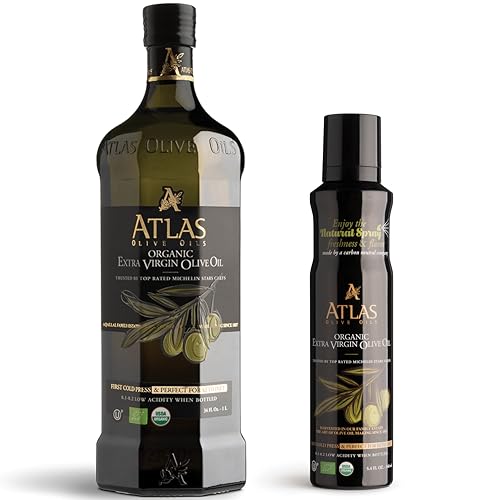
This bundle separates two different kitchen jobs: a 34-fluid-ounce bottle for cooking, grilling, baking, and garnishing, plus a 5.4-fluid-ounce spray for lighter application. That combination is more useful than buying a single format when I want full pan coverage in one task and a measured coating in another. The spray is especially handy for griddles, sandwich presses, and small portions.
Atlas describes the bottle as cold-pressed Moroccan olive oil, and the product is positioned around polyphenols. Those details are less important than matching the format to the habit: the bottle handles higher-volume frying, while the spray reduces the need to pour oil from a heavier container. I would not treat the spray as a replacement for a full bottle during high-heat cooking, since the application style matters more than the format alone.
What It Does Well
- Bundle covers both pan cooking and quick spray application.
- The large bottle supports sautéing, grilling, baking, and garnishing.
- Spray format is practical for griddles, sandwiches, and small portions.
- Cold-pressed Moroccan positioning gives shoppers a defined origin story.
Trade Offs
- Two containers mean more storage space and a spray can that may be less convenient to refill.
- The spray is better for controlled coating than for dishes requiring a large pool of oil.
Key Specs
Right Fit For
This bundle best serves cooks who alternate between full-pan frying and controlled spray application for lighter tasks.
A Better Fit Elsewhere
Estate Arbequina Extra Virgin Olive Oil is a better fit for a kitchen devoted to balanced bulk frying without a separate spray.
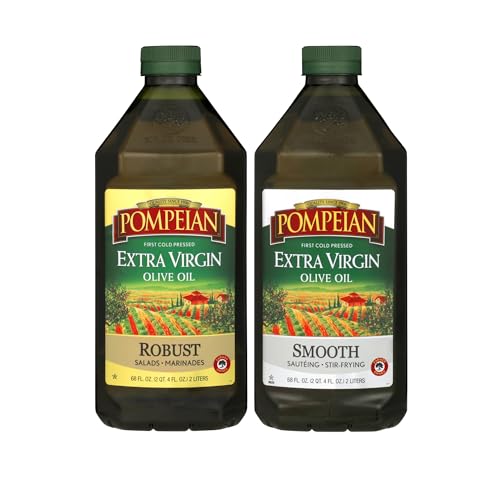
Pompeian solves a different problem from the single-note bottles in this list: choosing between two flavor styles. One bottle is labeled smooth and the other robust, giving a household a lighter option for sautéing and finishing plus a fuller option for dishes that can carry more intensity. The pack includes two 68-fluid-ounce bottles, so the trade-off is less about selection and more about bulk storage.
For a shared kitchen, that flexibility is useful. I would use the smooth bottle for vegetables, eggs, and mild fish, then reach for the robust bottle for grilled vegetables, potatoes, or a dish with enough seasoning to support a fuller oil. The variety format may be less convenient than one bottle for a single cook, especially if the second bottle is not used regularly.
What Stands Out
- Smooth and robust profiles cover different frying and finishing needs.
- Two 68-fluid-ounce bottles provide substantial household storage.
- The paired format works well for cooks preparing several kinds of meals.
Small Caveats
- Two large bottles can take up more pantry space than a single compact tin.
- A shopper with a very narrow flavor preference may find one bottle more useful than the pair.
Best Suited To
This variety pack suits households that want one mild oil and one fuller-bodied oil for different meals.
Where A Sibling Pick Shines
Atlas Organic High Polyphenol EVOO 500 mL is a better fit for a smaller kitchen that needs less volume and one defined high-polyphenol format.
The 500-milliliter format is the useful part of this Atlas option. It gives a cook a high-polyphenol, Moroccan extra virgin olive oil without committing to the larger 1-liter bottle or 3-liter tin. That makes it practical for a small kitchen, a weekend cooking routine, or a countertop setup where large containers become awkward.
High polyphenol is a composition description, meaning it points toward naturally occurring compounds in the oil, but it does not by itself tell me whether the flavor will suit a particular pan or recipe. Atlas presents the oil as cold-pressed and sourced from Morocco. The smaller bottle may be less convenient for frequent frying, yet it can still work well for sautéing, finishing, and moderate-volume cooking.
Useful Touches
- 500 mL size supports regular use without a large pantry footprint.
- High-polyphenol positioning gives cooks a clear composition cue.
- Cold-pressed Moroccan sourcing provides a defined origin and processing story.
Room For Improvement
- The smaller volume may run out quickly for households that fry daily.
- High-polyphenol positioning does not replace tasting the oil against a preferred flavor profile.
The Right Fit
This bottle suits cooks with limited storage space who want a high-polyphenol oil for sautéing and finishing.
Another Choice May Suit
Pompeian Smooth and Robust EVOO Variety Pack is a better fit for households that value two flavor styles over compact storage.
The one-liter Atlas bottle occupies the practical middle ground between the 500 mL format and the 3-liter tin. I consider it the more natural home-kitchen size for regular frying, sautéing, and finishing because it offers enough oil for repeated meals without demanding a large storage area. The product is described as organic, Moroccan, cold-pressed, and high in polyphenols, giving it a clear identity beyond a generic frying bottle.
Compared with the Atlas bundle, this is a simpler format: no separate spray, and no need to divide attention between two containers. Compared with Estate Arbequina, it leans toward a more defined high-polyphenol presentation rather than a named Arbequina variety profile. The container should be stored away from heat and light, and frequent opening can make the one-liter size more convenient to keep near the stove than a large tin.
Points In Its Favor
- One-liter size balances frequent use with manageable storage.
- High-polyphenol profile supports a more specific composition focus.
- Cold-pressed Moroccan oil suits sautéing, frying, and finishing routines.
Practical Considerations
- It does not provide the same flavor comparison as Pompeian’s smooth-and-robust pair.
- Storage away from heat and light helps protect the oil between uses.
Key Product Details
Who Should Grab It
This bottle fits home cooks seeking a practical high-polyphenol format for everyday frying and finishing.
Reach For A Different Pick When
Estate Arbequina Extra Virgin Olive Oil is a better fit for cooks who want a named olive variety and medium-to-mild flavor.
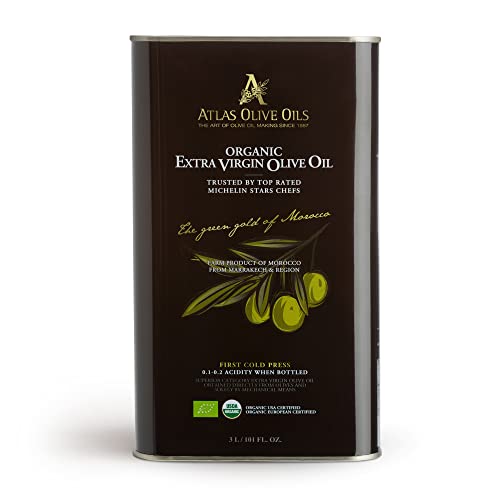
The three-liter tin is built for volume. I see it as a practical choice for frequent home cooks, shared kitchens, or anyone who regularly fries enough food to prefer fewer bottle changes. The tin format also reinforces the idea of a pantry staple rather than a small finishing bottle, although a large container still needs a cool storage area and a manageable way to lift it.
Atlas positions the oil as Moroccan, cold-pressed, organic, and high in polyphenols. Those attributes make it straightforward to compare with the smaller Atlas bottles, but the decisive difference is ownership convenience. A three-liter supply can reduce replenishment, while the larger opening may make it easier to use in a busy kitchen. For occasional cooking, that same size can feel excessive.
Useful Highlights
- Three-liter volume suits frequent frying and high-use kitchens.
- Tin packaging gives the pantry staple a substantial, practical format.
- High-polyphenol and cold-pressed positioning support a clear product focus.
Trade-Offs To Consider
- The tin may be heavy and inconvenient for some countertop setups.
- Large-volume storage can expose more oil to repeated opening and temperature changes.
Whose Shelf It Belongs On
This tin belongs on the shelf of a frequent cook who values a large supply more than compact handling.
Not Your Match When
Atlas Organic High Polyphenol EVOO 500 mL is a better fit for a small kitchen with limited storage and intermittent frying.
This spray is a focused alternative to the full bottles and tins in the roundup. Instead of pouring a larger quantity, I can coat a pan, griddle, or baking surface with a light layer, which is useful for smaller portions and quick cooking. The listed 5.4-ounce format is compact enough for a drawer or countertop and avoids carrying a heavy oil bottle for a task that only needs a thin coating.
The product is labeled as organic extra virgin olive oil cooking spray, and Atlas describes a polyphenol-rich profile. That gives it a familiar olive-oil identity, but spray application changes the practical experience: coverage is easier to control, while the can may be less convenient for continuous pouring or replenishing a large pan. I would use it for controlled coating, not assume it replaces a bulk bottle for high-volume frying.
Features That Help
- Spray format makes controlled pan and griddle coating easier.
- The 5.4-ounce size is compact for quick greasing and small portions.
- Extra virgin olive oil labeling keeps it aligned with the category.
Possible Compromises
- Repeated spraying may be less efficient than pouring oil from a bottle for large pans.
- The compact can offers less capacity for frequent high-volume cooking.
Feature Facts
Built With In Mind
This spray suits cooks who want a small, easy-to-apply option for pans, griddles, and modest portions.
Look Elsewhere When
Atlas Organic High Polyphenol EVOO 1 L is a better fit for frequent cooking that calls for a larger bottle and more continuous pouring.
What Matters Most Before Choosing
Extra virgin olive oil is the relevant category here because the oil remains in its natural culinary form, but flavor and handling still vary. A medium-to-mild profile works well for foods that should taste primarily like the ingredients, while a robust or fruity bottle suits cooks who want the oil to remain noticeable. Unfiltered oils add another decision, since natural particles and sediment can change appearance and pouring behavior.
Storage is the overlooked detail. A one-liter bottle is convenient for regular use, a 3-liter tin suits frequent cooking, and a 5.4-ounce spray is easier to handle for small jobs. I keep oil away from heat, light, and long periods of open exposure, and I avoid assuming a larger format automatically fits a small kitchen. Format is practical only when the container can be opened, stored, and used comfortably.
Everyday Use Differences
The spray format is the most distinct for controlled coating, while the full bottle is the natural choice for sautéing, frying, and finishing. Pompeian’s two-bottle format serves shoppers who want to compare smooth and robust profiles, whereas Estate Arbequina gives a single named olive variety. I choose based on the cooking task and pantry space rather than on a label alone.
Small Mistakes Worth Avoiding
Do not mistake a cloudy or unfiltered bottle for a spoiled product, especially when the oil is described as naturally cloudy with possible sediment. The appearance is different from filtered oil, so I would read the storage and handling information before deciding it is unusable. I also avoid choosing a 3-liter tin solely for volume when a smaller bottle would be easier to use and store.
Common Shopping Slip Ups
A major mistake is choosing by bottle size alone. I compare flavor intensity, container handling, and intended cooking method before selecting a format. A spray may be convenient for greasing, but it does not replace the larger supply needed for frequent frying.
What The Higher Tier Buys
Higher-priced oils may reflect sourcing, cultivar details, polyphenols, filtration choices, or packaging. The added cost is more defensible when a specific flavor or composition suits the intended dish. I would not pay more merely for a larger bottle, since storage and handling often matter more in daily frying.
Frequently Asked Questions
Can extra virgin olive oil be used for frying?
Extra virgin olive oil can be used for frying, with heat and recipe matching playing key roles. I choose an oil suited to the dish and use a cooking method that limits overheating.
Is unfiltered olive oil better for frying?
Unfiltered olive oil is not automatically better for every kitchen. It suits cooks who prefer stronger natural character and can manage possible sediment, while a filtered option may be easier to pour.
Which olive oil flavor works best for vegetables?
Mild and balanced oils often let vegetables retain their own flavor. I reach for a more robust profile when grilling or roasting brings stronger caramelized flavors.
Are cooking sprays suitable for frying?
Cooking sprays work well for controlled coating of pans and griddles. For frequent frying or dishes requiring more oil, I prefer a full bottle.
How should olive oil be stored?
I store olive oil away from heat and direct light, using a container that is easy to handle. Frequent opening and warm storage can reduce freshness more quickly than occasional use.
Final Verdict
I favor Estate Arbequina for balanced everyday frying, BASSO 1904 for a more expressive unfiltered style, and Atlas Organic Extra Virgin Olive Oil 1 L for a practical high-polyphenol format. Pompeian works well for households wanting two profiles, while the spray and 3-liter tin serve narrower storage and volume needs. Choose the format that fits the cooking routine, then let the oil do its quiet work.