If you crave the bold flavors of Thai street food, you can whip up pad thai at home in just 30 minutes. You only need easy steps and a few key ingredients to get started. Pad thai takes about 30 minutes from prep to plate, making it a top choice for quick 30-minute meals.
Dish | Prep Time | Cook Time | Total Time |
|---|---|---|---|
Pad Thai | 20 mins | 10 mins | 30 mins |
Lo Mein | N/A | N/A | Quicker |
Discover how you can master pad thai and enjoy a delicious meal any night.
Key Takeaways
You can prepare authentic pad thai at home in just 30 minutes with the right ingredients and tools.
Always use fresh ingredients and make your homemade sauce in advance for the best flavor.
Keep your pad thai simple by sticking to essential ingredients and garnishing with lime, peanuts, and chives.
Pad Thai Essentials
Authentic Ingredients
You want to make authentic pad thai at home, so you need the right ingredients. Thai culinary experts say these ingredients give pad thai its classic taste and texture. Here’s a quick look at what you need:
Ingredient | Quantity |
|---|---|
Rice noodles | 200 g |
Shrimp | 4 servings |
Chicken breast | 250 g, sliced thin |
Tofu | As desired |
Eggs | 2–4 |
Garlic | 2–6 cloves |
Shallots | 2 (optional) |
Fresh green onions | 1 cup |
Bean sprouts | 2 cups |
Peanuts | 2 tablespoons |
Preserved radish | ¼ cup (optional) |
Lime | For seasoning |
The sauce is what makes pad thai stand out. You need fish sauce, tamarind paste or block, palm sugar, and a touch of chili. These ingredients create the sweet, sour, and savory balance that defines authentic pad thai. If you swap out tamarind or fish sauce for other options, you change the flavor and lose some authenticity. You can use chicken, shrimp, or tofu for protein. Each one gives the noodles a different texture and taste.
Tip: Always use fresh ingredients for the best pad thai flavor. The right sauce and noodles make a huge difference.
Key Cooking Tools
You need the right tools to cook pad thai quickly and get that street food texture. A wok is the top choice. Professional chefs love it because it heats up fast and lets you stir-fry noodles and ingredients in minutes. You can swirl oil in a hot wok, which helps the sauce coat everything evenly. A granite mortar and pestle help you grind pastes if you want extra flavor. Sharp knives make cutting veggies and proteins easy. A rice cooker is handy if you want rice on the side. A stainless-steel steamer keeps veggies crisp.
Wok or skillet for stir-frying noodles and ingredients
Granite mortar and pestle for grinding pastes
Sharp kitchen knives for prepping ingredients
Rice cooker for perfect rice
Steamer for fresh veggies
With these ingredients and tools, you can make easy, authentic pad thai at home. The sauce, noodles, and proteins work together to create a dish full of flavor.
Pad Thai Recipe Steps

Sauce Preparation
What makes pad thai stand out is the sauce. You want a balance of sweet, sour, and savory. To make a homemade pad thai sauce, gather these essentials:
Tamarind paste or concentrate for tangy sourness
Fish sauce for deep umami
Palm sugar for sweetness
Oil (neutral, like canola or vegetable)
Shallots for aroma and texture
Mix tamarind paste, fish sauce, and palm sugar in a bowl. Stir until the sugar dissolves. This is your traditional pad thai sauce. You can make the sauce ahead of time and keep it in the fridge. That makes it easy to whip up pad thai any night. If you want a vegetarian version, swap fish sauce for soy sauce or vegetarian oyster sauce. Always taste your sauce before cooking. You want it packed with flavor—tangy, salty, and a little sweet.
Tip: Making the sauce in advance saves time and helps you get that authentic street food taste.
Stir-Frying Noodles
What gives pad thai its signature texture? The way you prepare and cook the noodles. Start by soaking dried rice noodles in room temperature water. For medium noodles, soak for about 50-60 minutes. For small noodles, 20-30 minutes is enough. The noodles should feel soft but still firm. Drain them well and set aside. Never boil the noodles. Soaking keeps them from turning mushy and helps them cook evenly in the pan.
Heat oil in a wok over medium-high heat. Add garlic, shallots, and preserved radish if you have it. Stir until golden. Next, add your protein—shrimp, chicken, or tofu. Cook until done. Push everything to the side of the wok. Add the soaked noodles and pour in your homemade pad thai sauce. Toss the noodles so they soak up the sauce. If the noodles seem dry, add a splash of water. Scramble an egg in the pan and mix it with the noodles. This step gives pad thai its classic look and taste.
Quick tip: Always have your ingredients ready before you start. Pad thai cooks fast, so you need to move quickly.
Adding Protein & Veggies
What proteins and vegetables work best in pad thai? You have options. Shrimp, chicken, scrambled egg, or tofu are all popular. Each one brings a different texture and taste. Here’s a quick look:
Protein | Vegetables |
|---|---|
Shrimp | Bean sprouts |
Chicken | Green onions |
Scrambled egg | Chinese chives |
Tofu | Various vegetables |
Add your chosen protein to the wok first. Cook until it’s almost done. Then add the noodles and sauce. After mixing, toss in bean sprouts, green onions, and chives. Stir-fry for just a minute. You want the veggies to stay crisp. If you want a vegetarian pad thai, use tofu and skip the fish sauce. Soy sauce or vegetarian oyster sauce works well. For vegan pad thai, use plant-based substitutes for fish sauce and eggs. The key is to keep the dish easy to make and full of flavor.
Note: Don’t overload your pad thai with too many extras. Stick to the basics for the best results.
Garnishing & Serving
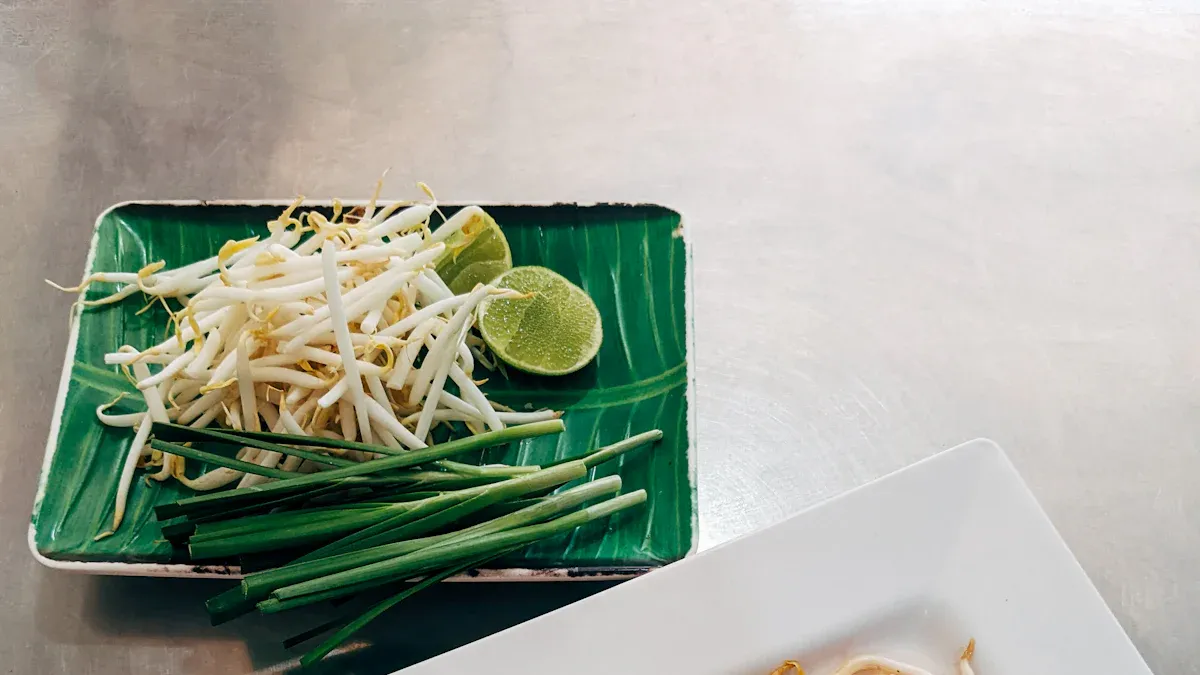
What makes pad thai truly special? The garnishes. They add crunch, freshness, and a burst of flavor. Top your pad thai with crushed peanuts, fresh lime wedges, and chili flakes. These classic garnishes balance the sweet, sour, and savory notes of the noodles and sauce. Chinese chives add a mild onion flavor and a pop of color.
Garnish | Effect on Dish |
|---|---|
Lime wedges | Adds acidity and freshness |
Crushed peanuts | Crunchy texture and nutty flavor |
Chinese chives | Mild onion flavor and color contrast |
Serve your pad thai hot, just like you’d find at a street food stall in Bangkok. Most people in Thailand grab pad thai for a quick lunch, often for just a few dollars. You can pair your pad thai with spring rolls, green papaya salad, or mango sticky rice for a full Thai meal.
Tip: Always serve garnishes on the side. Let everyone customize their own plate.
What Makes This Pad Thai Recipe Easy to Make?
You can prep the sauce and soak the noodles ahead of time. That means you spend less time cooking and more time enjoying your meal. The instructions are simple, and you only need a few key steps. This easy pad thai recipe works for busy weeknights or when you want to impress friends with homemade pad thai.
What Are Some Pad Thai Variations?
Pad thai changes from region to region in Thailand. In Central Thailand, you might find a sweeter version. Down south, it gets spicier. Some cooks add curry or extra veggies. You can try different proteins like spam or just stick with tofu for a vegetarian twist. The most important thing is to use a homemade pad thai sauce and keep the dish packed with flavor.
What Are the Most Common Mistakes?
Don’t overcook the noodles. Don’t use too many ingredients. Stick to the basics: noodles, protein, egg, bean sprouts, and chives. Use chili flakes, not American chili powder blends. Always taste your sauce before adding it to the pan.
What Are the Best Tips for Restaurant-Quality Pad Thai?
Prep all your ingredients before you start.
Use a hot wok for quick cooking.
Make your homemade pad thai sauce in advance.
Toss the noodles gently to keep them from breaking.
Finish with fresh garnishes for the best flavor.
With these instructions, you can make easy, authentic pad thai at home. The noodles, sauce, and toppings come together for a dish that’s easy to make and packed with flavor.
You can make pad thai at home with just a few steps.
Organize your ingredients and choose crunchy veggies for the best results.
Use authentic sauces and add eggs after coating noodles for a fluffy texture.
Try your own twist—pad thai is easy to customize and always full of flavor.
FAQ
What makes pad thai different from other noodle dishes?
You get a unique mix of sweet, sour, and savory flavors. The sauce and fresh toppings set pad thai apart from other recipes.
What is the best way to store leftover pad thai?
You should place leftovers in an airtight container. Keep it in the fridge. Reheat gently to keep the noodles soft.
What easy side dishes go well with pad thai?
You can serve spring rolls, cucumber salad, or mango sticky rice. These sides add crunch and sweetness to your meal.