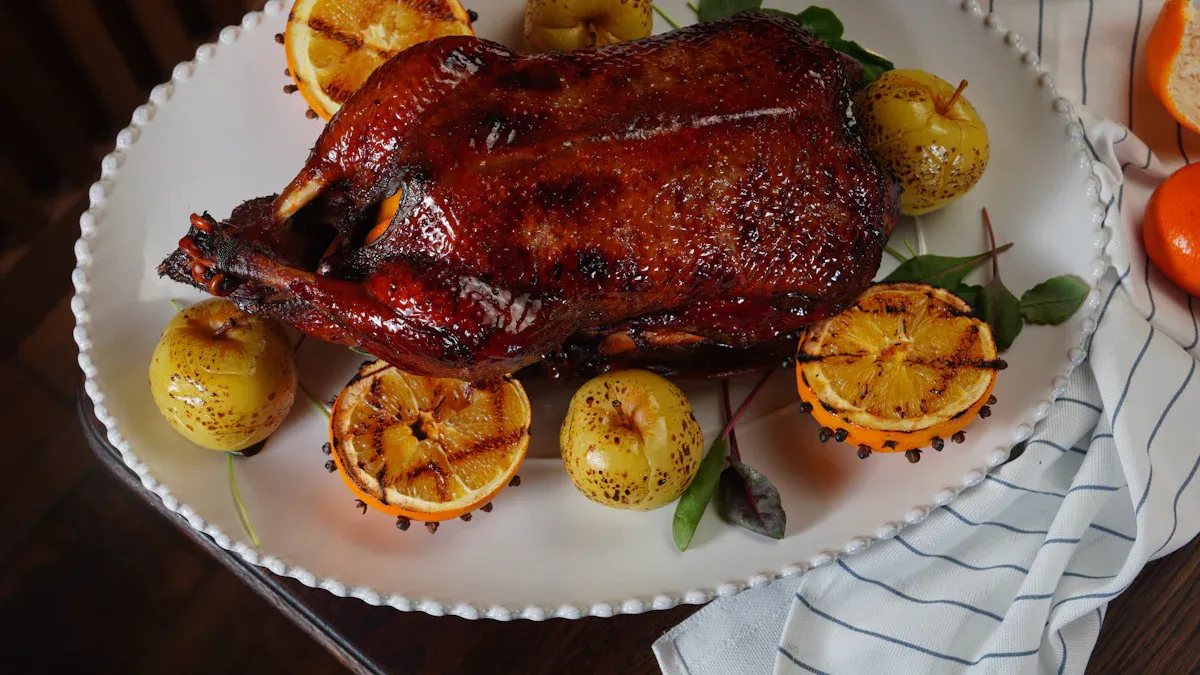
Imagine biting into a slice of Peking duck with skin so crispy it crackles, and meat so tender it almost melts in your mouth. This legendary dish has delighted diners for over 1600 years, first gracing royal tables during the Northern and Southern Dynasties. You know you’ve got authentic Peking duck when you see that deep maroon color and glossy burnished skin, which comes from:
Baking powder that boosts browning
Maltose and soy sauce brushed on for a rich, tanned finish
Careful rendering of fat and drying that creates the perfect texture
Plates of thin pancakes, fresh spring onions, and sweet plum sauce often sit nearby, ready for you to wrap up each savory bite.
Key Takeaways
Peking duck is famous for its crispy skin and tender meat, achieved through careful preparation and roasting techniques.
Air-drying the duck is crucial. It helps the skin become crispy and enhances the overall texture of the dish.
Use maltose syrup for glazing. This gives the duck its signature glossy finish and rich flavor.
Serve Peking duck with thin pancakes, hoisin sauce, and fresh vegetables. This makes the meal interactive and enjoyable.
Avoid common mistakes like skipping air-drying or rushing the marinating process. These can lead to soggy skin and bland meat.
What is Peking Duck
Signature Dish
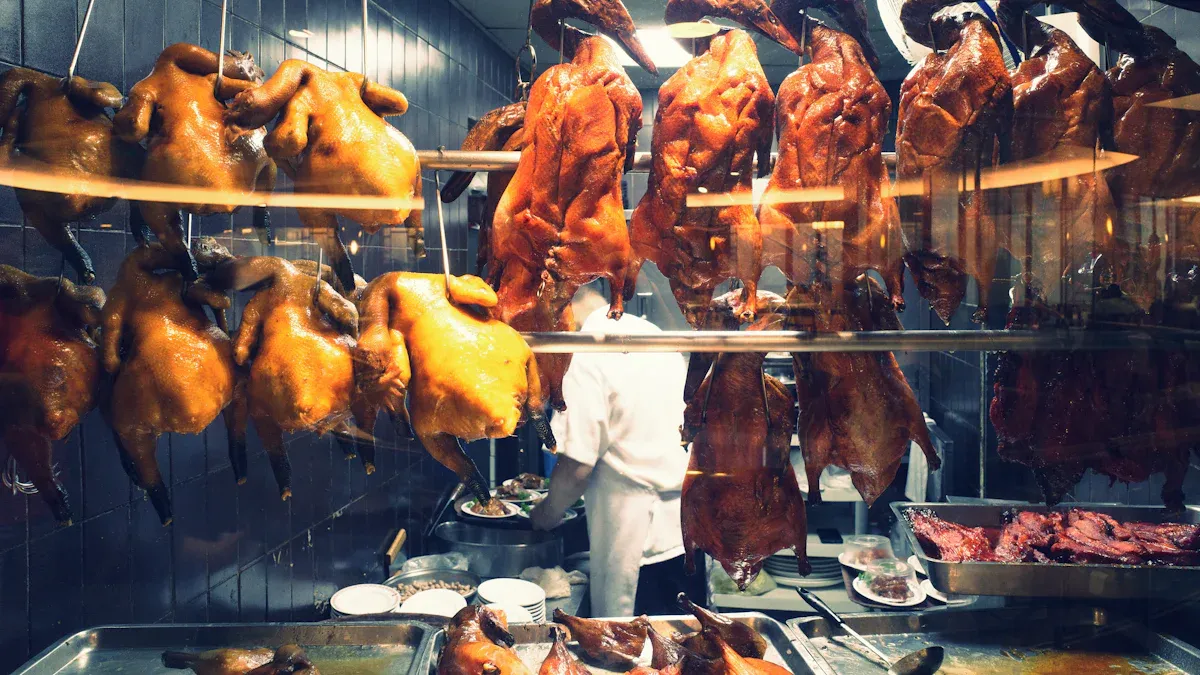
You might wonder what sets Peking duck apart from other Chinese dishes. This dish stands out as a true icon of Beijing cuisine. When you order Peking duck at a specialty restaurant, you get more than just food—you experience a tradition. Chefs use specially bred ducks for their flavor and tenderness. They roast the duck in a closed oven, often wood-fired, which gives the meat a unique taste and aroma.
The chef slices the duck right in front of you, turning the meal into a show.
You see thin slices of glossy skin and meat, ready to wrap in pancakes with sweet bean or hoisin sauce, leeks, and cucumber.
Peking duck often appears at special occasions, showing off Chinese culinary excellence.
Watching the chef carve the duck table-side feels like seeing an artist at work. Each slice is thin and perfect, making every bite memorable.
Peking duck is not just a dish; it is a celebration. The presentation is elaborate, and the flavors are balanced. You get a visual feast along with a delicious meal.
Crispy Skin Importance
The crispy skin is the star of Peking duck. You taste the crunch before the tender meat melts in your mouth. The secret lies in the preparation. Chefs force air between the skin and flesh, which puffs up the skin. This step helps the fat render out during roasting, so the skin becomes extra crispy.
Air pumped under the skin separates it from the meat.
Roasting lets the fat drip away, leaving the skin light and crunchy.
The Imperial Peking duck breed gives you tender meat that matches the crispy skin.
The crackling sound when you bite into the skin is a sign you have real Peking duck. That texture is what makes this dish famous around the world.
You see why crispy skin matters. It is the reason people travel far just to taste authentic Peking duck.
Ingredients & Tools
Essential Ingredients
You want to make Peking duck at home, so you need the right ingredients. The classic recipe calls for a mix of savory, sweet, and aromatic flavors. Here’s a handy table to show you what goes into authentic Peking duck:
Ingredient | Quantity |
|---|---|
Duck | 1 (around 1000g) |
White vinegar | 1 tsp. |
Oyster sauce | 2 tbsp. |
Chinese five spice powder | 1 tsp. |
Maltose | 2 tbsp. |
Boiling water | 2 tbsp. |
Chinese cooking wine | 1.5 tbsp. |
Peking duck pancakes | 10 |
Sweet bean sauce | 2 tbsp. |
Sesame oil | 1 tbsp. |
English cucumber | 1 |
Leek onions (white part only) | 2 |
You also need a few extras to boost the flavor and texture:
Whole duck (3–5 lbs.)
Hoisin sauce
Five-spice powder
Garlic, ginger, and chile peppers
Salt and soy sauce
Maltose syrup for that shiny skin
Canola oil for basting
Tip: Maltose syrup gives the duck its famous glossy finish. You can find it at Asian grocery stores.
Equipment Needed
Getting crispy skin and juicy meat at home means you need some special tools. You don’t need a restaurant kitchen, but a few items make a big difference:
Large pot for boiling water (tightens the skin)
Roasting rack and tray
CHEF iQ Smart Thermometer or any reliable meat thermometer
Air pump (optional, for separating skin from meat)
Basting brush
Sharp carving knife
Steamer or pan for warming pancakes
Pro tip: Use a thermometer to check the duck’s internal temperature. This helps you avoid undercooked or dry meat.
Peking duck is rich and satisfying. One serving packs about 809 calories, 67 grams of fat, and 36 grams of protein. You get a hearty meal that’s perfect for sharing with friends or family.
Peking Duck Recipe Steps
Preparation
What makes the preparation for peking duck so special? You start with a whole duck and focus on creating that signature crispy skin. The process involves several important steps:
Marinate the duck breasts and let them air-dry in your fridge, uncovered, for up to 48 hours. This step helps the skin become crispier when cooked.
Hang the duck in the fridge for 24 to 48 hours. The skin dries completely, which is essential for crispiness during roasting.
Traditional cooks emphasize air-drying as a key technique. You can leave the duck uncovered overnight or hang it for several hours until the skin feels dry and slightly leathery.
After inflating the duck, continue air-drying until the skin is as dry as paper. Then, rub the skin with maltose and vinegar for color.
Tip: Air-drying overnight in the fridge gives you the best texture for the skin. The duck should feel dry to the touch before you move to the next step.
The maltose syrup coating is what gives peking duck its rich mahogany color and crispy texture. You paint the skin with maltose syrup, which helps the skin caramelize and become glossy during roasting.
Roasting
What happens during roasting? You use a two-stage roasting method to get tender meat and crispy skin. First, you boil the duck for about three minutes. This tightens the skin and gets it ready for roasting. After sprinkling salt and brushing the skin with a maltose and water mixture, you air-dry the duck for 24 hours.
You roast the duck at 400°F (200°C) to start. Then, you lower the temperature to 356°F (180°C) and continue roasting for about an hour. The internal temperature should reach 165°F (75°C). Let the duck rest for 15 minutes before carving. This resting period helps the skin stay crispy.
When you use the two-stage roasting and basting techniques, the skin crackles and crunches with every bite. The meat stays moist, tender, and full of flavor.
Roasting time and temperature affect the texture. During the first 20 minutes, the duck becomes more tender. The proteins change, and the muscle fibers contract, making the meat juicy. The roasting method also impacts flavor. Closed oven roasting gives you improved tenderness and enriches the flavor compounds.
Roasting Method | Water-Holding Capacity (WHC) | Tenderness | Flavor Compounds Enriched |
|---|---|---|---|
CO | Higher WHC | Improved | Benzaldehyde, Pentanal, Hexanal |
OV | Lower WHC | Less | Fewer volatile compounds |
AF | Lower WHC | Less | Fewer volatile compounds |
You whip up a basting liquid using hot water, vinegar, and maltose. Basting helps the skin develop an even color and renders the fat well. This process usually takes 25 to 30 minutes for full, even color.
Glazing
What does glazing add to the perfect peking duck recipe? The glazing process uses a maltose-based glaze that caramelizes during roasting. This creates a glossy, bronzed skin that looks amazing and tastes even better.
The glaze adds a layer of umami flavor, which complements the rich taste of the duck. You paint a layer of glaze onto the skin and let it dry in the air from a fan. Repeat this process until you build up a substantial, toffee-like coating.
The duck skin becomes less treacly than what you find in some restaurants. The flavors stay subtle, and most of the fat cooks out. What remains combines with the umami glaze and dipping sauce for a mouthwatering bite.
If you want to know how to make peking duck at home, these steps show you what goes into the process. The perfect peking duck recipe always includes multi-day marinating, air-drying, maltose syrup coating, two-stage roasting, and careful glazing. Each step creates the crispy skin and tender meat that make peking duck famous.
Serving
Pancakes & Sauces
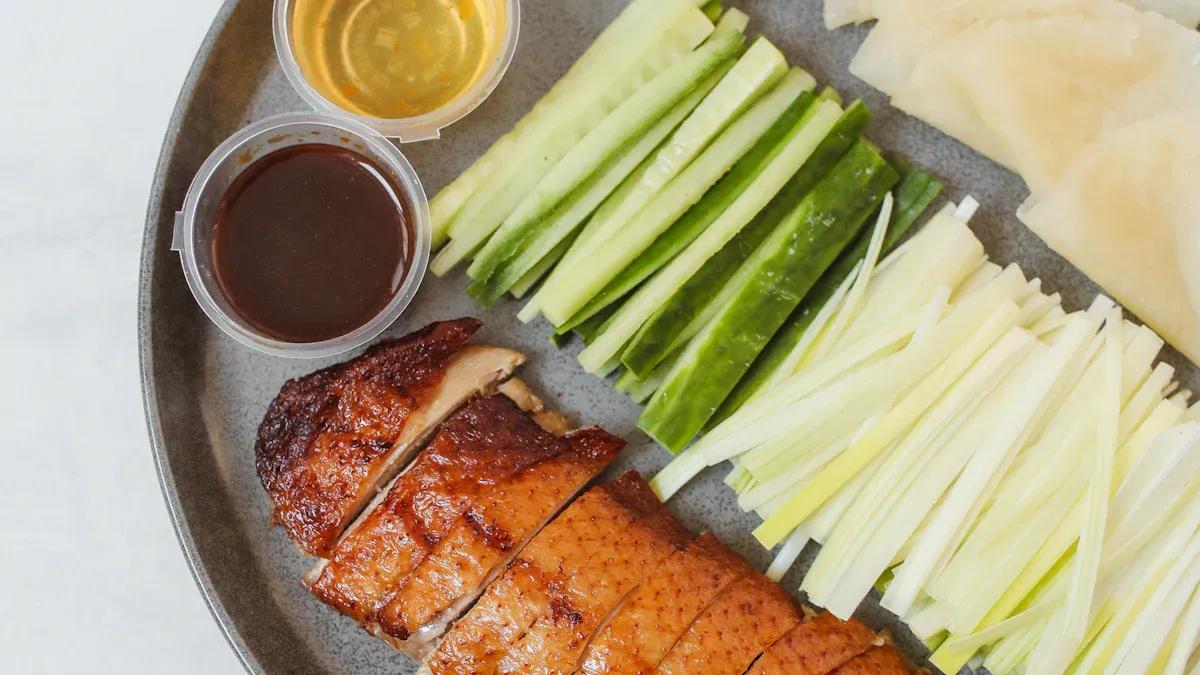
When you sit down for peking duck, you get more than just crispy skin and juicy meat. You see a spread of classic accompaniments that make every bite special. What comes with your duck? Here’s what you usually find:
Thin mandarin pancakes, sometimes called duck pancake, ready for wrapping
Julienned green onions and cucumbers for crunch and freshness
Sweet bean sauce or hoisin sauce for a savory kick
Sugar for dipping crispy skin, if you want a touch of sweetness
Lettuce cups, sometimes offered for leftover meat
You use a duck pancake to wrap slices of duck, crispy skin, and veggies. You smear a little hoisin sauce on the pancake, add green onions and cucumber, then top with duck. Fold it up and enjoy the perfect bite. Some restaurants offer pomegranate sauce, which adds a sweet and tart flavor that pairs well with the rich duck. You might also see the server dip the skin in sugar for a unique taste.
Tip: Try dipping the crispy skin in sugar before wrapping it in a duck pancake. The sweet crunch is unforgettable.
Presentation
What makes the presentation of peking duck so memorable? You watch as the whole duck arrives at your table. The chef carves the duck right in front of you, turning the meal into a show. You see the glossy skin and juicy meat sliced with skill and care.
High-end restaurants treat peking duck as an art form. The carving happens tableside, and the chef pays attention to every detail. You get thin slices of skin and meat, arranged neatly for easy wrapping. The accompaniments sit nearby, so you can build your own wraps.
If you wonder how to serve peking duck at home, focus on the arrangement. Place the duck pancake, sauces, and veggies in small bowls. Slice the duck and skin, then let everyone make their own wraps. This setup makes the meal interactive and fun.
Presentation matters. A beautiful spread invites everyone to dig in and enjoy the flavors together.
Homemade Peking Duck Tips
Success Tips
You want your homemade peking duck to taste just like the restaurant version. What can you do to get that crispy skin and juicy meat? Here are some tips that really work:
Use a baking powder rub on the skin. This raises the pH and helps the skin brown and crisp up.
Mix maltose and soy sauce for a sticky glaze. This gives your duck a deep color and crunchy texture.
Inflate the skin with a straw or pump. This creates space for fat to drain away, so the skin gets crisp instead of soggy.
Hang your duck vertically in a hot oven. Fat will drip off, leaving the skin light and crunchy.
Scald the duck with boiling water before drying. This tightens the skin and makes it easier to get that classic texture.
Let the duck dry uncovered overnight after scalding. The skin should feel dry and leathery before you roast it.
Tip: If you want to know how to cut the duck, use a sharp knife and slice thin pieces. This keeps the skin attached to the meat and makes each bite perfect.
Mistakes to Avoid
What should you watch out for when making homemade peking duck? Some mistakes can ruin your hard work. Here’s what you need to avoid:
Don’t cook duck like chicken. Duck has more fat and needs a different method.
Always brine your duck. This boosts flavor and cuts down on any gamey taste.
Marinate your duck long enough. Rushing this step means tough meat and bland flavor.
Never cook the duck without its skin. The skin is the best part and helps keep the meat moist.
Make sure you prepare a tasty sauce. A good sauce brings out the flavor of homemade peking duck.
If you want to know how to cut the duck, slice across the grain for tender pieces.
Note: Homemade peking duck takes time, but following these tips helps you get crispy skin and tender meat every time.
You now know what makes peking duck so special at home. The process includes air-drying, glazing with maltose, and roasting for crispy skin. Using authentic ingredients keeps the flavor true. Check out this table to see how technique changes the dish:
Technique | Effect on Peking Duck |
|---|---|
Air-drying the duck overnight | Enhances skin crispiness |
Baking powder and salt | Increases browning and crispiness |
Air-chilled ducks | Boosts flavor and crisping |
Maltose gives a unique taste.
Real ingredients keep the classic look.
Try making it yourself. Share your results or ask questions below. I’d love to hear what you think!
FAQ
What makes Peking Duck skin so crispy?
You get crispy skin by air-drying the duck and brushing it with maltose syrup. Roasting at high heat helps the fat melt away. The skin turns crunchy and golden.
Tip: Drying the skin overnight gives you the best crunch!
What is the best way to serve Peking Duck at home?
You slice the duck thin. You set out pancakes, hoisin sauce, and sliced veggies. Everyone builds their own wraps. This makes your meal fun and interactive.
Pancakes
Hoisin sauce
Green onions
Cucumber
What kind of duck should you use for Peking Duck?
You want a fresh, plump duck with lots of skin. Pekin or Long Island ducks work well. These ducks have tender meat and enough fat for crispy skin.
Duck Type | Why Use It? |
|---|---|
Pekin/Long Island | Tender, fatty skin |
What is maltose syrup, and can you substitute it?
Maltose syrup is a thick, sweet syrup. You use it to glaze the duck for shine and crunch. If you can’t find maltose, honey works, but the flavor changes a bit.
Note: Maltose gives you that classic glossy look.
What mistakes should you avoid when making Peking Duck?
You should not skip air-drying. Don’t rush the marinating. Never roast at low heat. These mistakes make the skin soggy and the meat bland.
Skip air-drying = soggy skin
Low heat = chewy meat