


You want to know what makes traditional valencia paella so special? It’s all about using authentic ingredients and following the classic methods from valencia. When you start making paella, you choose rice, saffron, chicken, and seafood for that delicious taste. Traditional valencia recipes often include rabbit or snails, but seafood and chicken are the stars in authentic paella. If you wonder how to make seafood paella, you need fresh seafood, tender chicken, and the best paella rice. Authentic paella from valencia brings delicious flavor and tradition to your table. Making paella feels like you’re part of something authentic and traditional.
Key Takeaways
Use authentic ingredients like bomba rice, saffron, chicken, and fresh seafood for the best paella flavor.
Follow traditional cooking methods, such as creating a sofrito and allowing the rice to cook uncovered, to achieve the perfect texture.
Embrace the communal aspect of paella by cooking and sharing it with family and friends, enhancing the experience.
Focus on achieving the socarrat, the crispy bottom layer, for a rich, toasted flavor that many consider the best part of paella.
Store leftovers properly in airtight containers to maintain flavor, and enjoy them within a few days for the best taste.
Traditional Valencia Paella
History and Origins
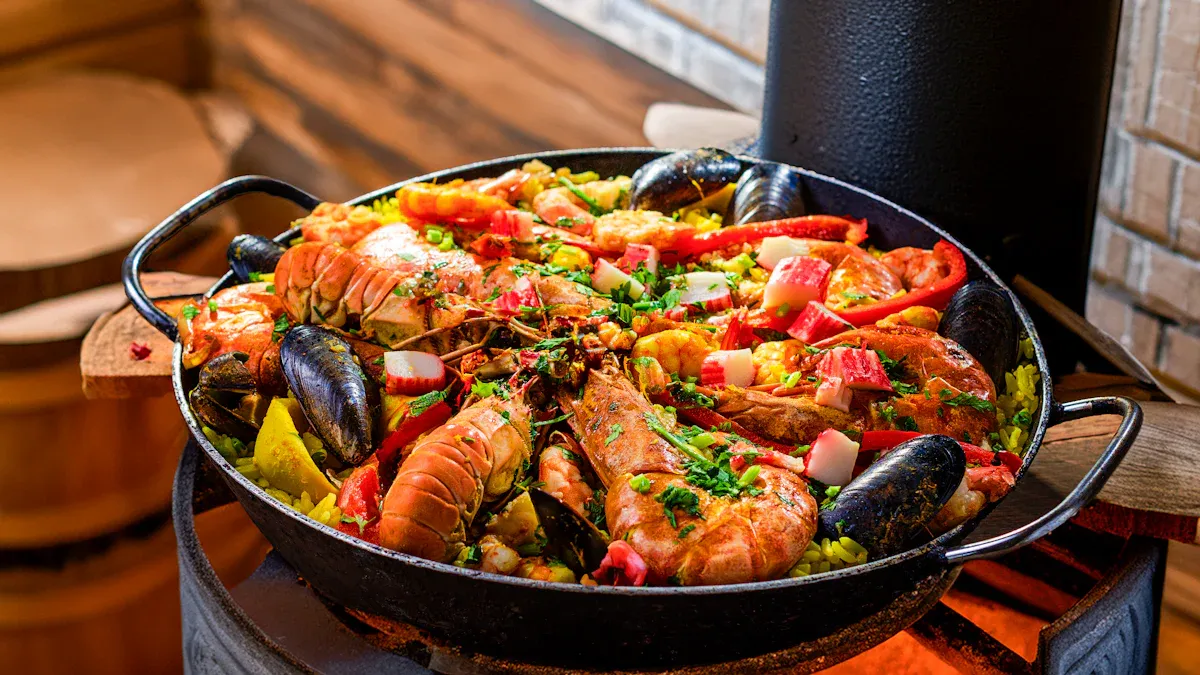
You might wonder what makes paella such a big deal in Valencian culture. The story of paella starts in the fields near the Albufera lagoon. Farmers and workers cooked rice with whatever they had on hand.
The origin of paella dates back to the fifteenth and sixteenth centuries, closely linked to rural communities who created the dish with available ingredients, primarily around the Albufera region.
Rice became a staple for Valencians because the Mediterranean climate and irrigation systems made rice farming easy. The Arabs brought rice to the region in the 8th century. Over time, paella grew from a simple rural meal to a dish everyone in Valencia loves.
The introduction of rice during the Arabic occupation in the 8th century.
The establishment of sophisticated irrigation systems in the Valencia region.
The evolution of paella from a rural meal to a celebrated dish in urban areas.
Paella is more than just food. It brings people together.
Paella has transitioned from a humble peasant dish to a celebrated symbol of social gatherings.
It is recognized as a way to unite people through communal preparation and consumption.
Recent efforts aim to officially recognize paella as a cultural heritage object, emphasizing its importance in Valencian life.
Key Ingredients
When you make traditional paella valenciana, you use a few key ingredients. The rice is the heart of the dish. For authentic paella valenciana, you want short-grain rice. Here are the most common types:
Bomba: Absorbs lots of liquid and stays firm.
Senia and Bahia: Creamy texture and great for flavor.
Calasparra: Known for its quality and flavor absorption.
Albufera: Mixes the best traits of bomba and senia.
Marisma: Delicate flavor and smooth texture.
Saffron gives traditional spanish paella its golden color and unique taste.
Spice | Flavor Profile | Aroma Characteristics |
|---|---|---|
Saffron | Sweet, floral, earthy | Captivating, honey-like nuances |
Turmeric | Earthy, slightly bitter | Musty, can dominate if unbalanced |
You also need chicken, seafood, and sometimes rabbit or snails for traditional valencian paellas. Valencian seafood paella uses fresh shellfish and fish. Chicken adds richness. Some families add rabbit or snails for a true authentic spanish paella. Olive oil, tomatoes, green beans, and sometimes artichokes round out the flavors. When you gather these ingredients, you get the real taste of spanish paella and traditional paella valenciana. Every bite connects you to the long history of authentic paella valenciana and the spirit of valencian seafood paella.
Seafood Paella Valenciana Recipe
Ingredient List
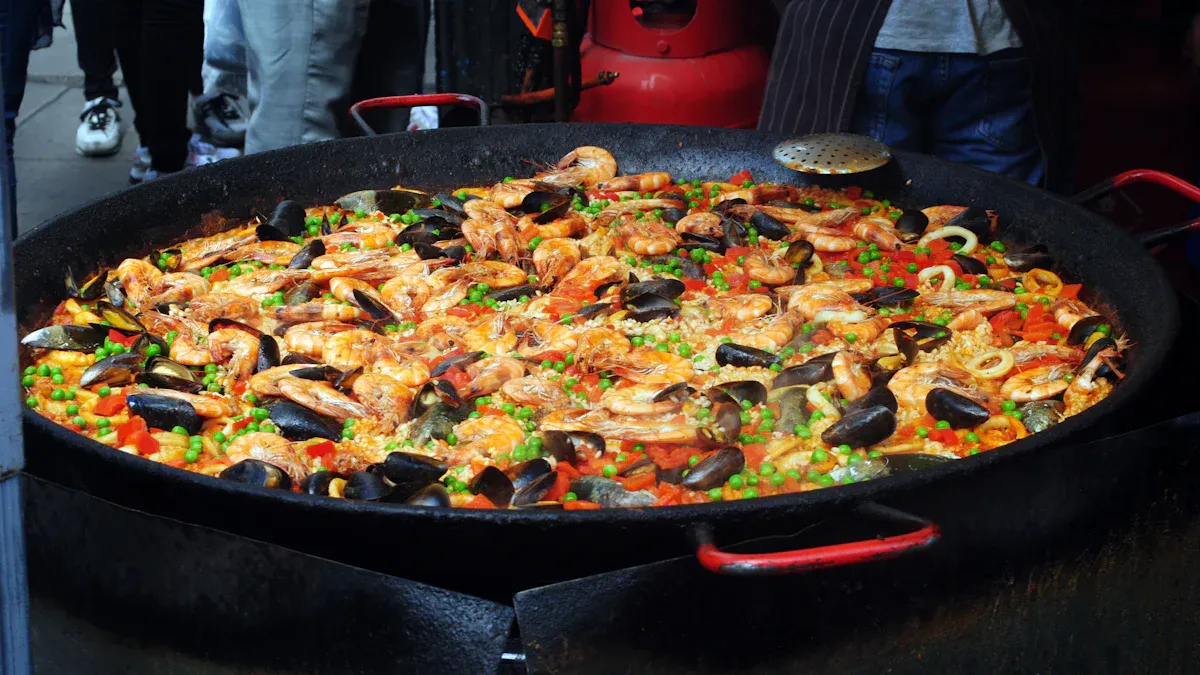
When you want to make a true seafood paella valenciana, you need to gather the right ingredients. This recipe brings together the best of both land and sea. You get the classic flavors of chicken and the fresh taste of the ocean. Here’s what you need for a delicious chicken and seafood paella:
Rice
2 cups bomba rice (or other short-grain Spanish rice)
Chicken
1.5 pounds chicken thighs or drumsticks, cut into pieces
Seafood
12 large shrimp (peeled and deveined)
12 mussels (scrubbed and debearded)
8-10 clams (cleaned)
1/2 pound squid rings
1/2 pound firm white fish (like cod), cut into chunks
Vegetables
1 cup green beans (cut into 2-inch pieces)
1/2 cup diced tomatoes (fresh or canned)
1/2 cup frozen green peas
1 red bell pepper (sliced into strips)
2 cloves garlic (minced)
Seasonings & Liquids
4 tablespoons extra virgin olive oil
1-2 grams saffron threads (soaked in 2 tablespoons warm water)
1 teaspoon smoked paprika
Salt and black pepper (to taste)
5 cups chicken or seafood stock (homemade or low-sodium)
Lemon wedges (for serving)
Fresh parsley (chopped, for garnish)
Note: Traditional paella recipes often use rabbit and lima beans, but modern seafood paella valenciana recipes focus on chicken and a variety of fresh seafood. You can adjust the vegetables based on what you have at home.
Ingredient Comparison Table
Ingredient | Traditional Quantity | Modern Quantity |
|---|---|---|
Extra virgin olive oil | 4 tbsp | 4 tbsp |
Chicken | 3 lbs thighs/drumsticks | 1.5 lbs |
Rabbit | 2 lbs | Not included |
Saffron | 1-2 grams | 1-2 grams |
Paella rice (bomba) | 4 cups | 2 cups |
Seafood | Not included | 2 lbs mixed seafood |
Green peas | 16 oz | 1/2 cup |
Tomatoes | 2 (diced) | 1/2 cup |
Garlic | 2 cloves (minced) | 2 cloves |
Water/Stock | About 5 cups | 5 cups |
Paprika | 5 teaspoons | 1 teaspoon |
Salt and black pepper | To taste | To taste |
Preparation Steps
You can make a fantastic spanish seafood paella at home with a few simple steps. This one pot paella recipe brings out the best flavors when you follow the right order. Here’s what you do:
Prep the Ingredients
Wash and cut all your vegetables. Clean the seafood. Cut the chicken into bite-sized pieces. Soak the saffron threads in warm water.Heat the Pan
Place your paella pan on medium-high heat. Pour in the olive oil. When the oil shimmers, add the chicken. Brown the chicken on all sides. Remove and set aside.Sauté the Vegetables
Add green beans and bell pepper to the pan. Sauté for 2-3 minutes. Stir in the garlic and tomatoes. Cook until the tomatoes thicken and the mixture becomes a sofrito.Add the Rice and Seasonings
Pour in the rice. Stir gently to coat the grains in the sofrito. Sprinkle in the smoked paprika and saffron (with its soaking water). Season with salt and pepper.Pour in the Stock
Add the chicken or seafood stock. Stir once to distribute the rice evenly. Return the chicken to the pan. Let everything come to a gentle simmer.Add the Seafood
After 10 minutes, nestle the shrimp, mussels, clams, squid, and fish into the rice. Scatter the peas on top. Do not stir the rice after this point. This helps you get the perfect texture for spanish seafood paella.Simmer and Cook
Let the paella cook uncovered. Watch as the liquid gets absorbed. The rice should stay in a thin layer. If the top looks dry but the rice is still firm, drizzle a little more stock.Create the Socarrat
When the liquid is almost gone, increase the heat for 1-2 minutes. Listen for a gentle crackling sound. This means the socarrat, or crispy bottom layer, is forming. Turn off the heat.Rest and Serve
Cover the pan with a clean towel. Let the paella rest for 5 minutes. Garnish with parsley and lemon wedges. Serve straight from the pan for the best spanish seafood paella experience.
Tip: Don’t stir the rice after adding the stock. This helps you get the classic paella texture. Onions are not part of the traditional process because they can make the rice mushy.
Cooking Time and Techniques
Cooking paella takes patience and attention. Most spanish seafood paella recipes need about 45 minutes to 1 hour from start to finish. Here’s a quick look at the timing from expert chefs:
Source | Cooking Time |
|---|---|
Farm to Jar | 1 hour |
The Spanish Chef | 45 minutes |
Food52 | 1 hour |
You want to use a wide, shallow paella pan. This helps the rice cook evenly and lets you create the famous socarrat. Keep the heat even under the pan. If you use a grill or two burners, move the pan around so every part gets heat.
The secret to a great spanish seafood paella is the socarrat. You know it’s ready when you hear a gentle crackle and smell a toasty aroma. Use a fork to check for a golden crust at the bottom. This step makes your paella de mariscos truly special.
Nutritional Breakdown
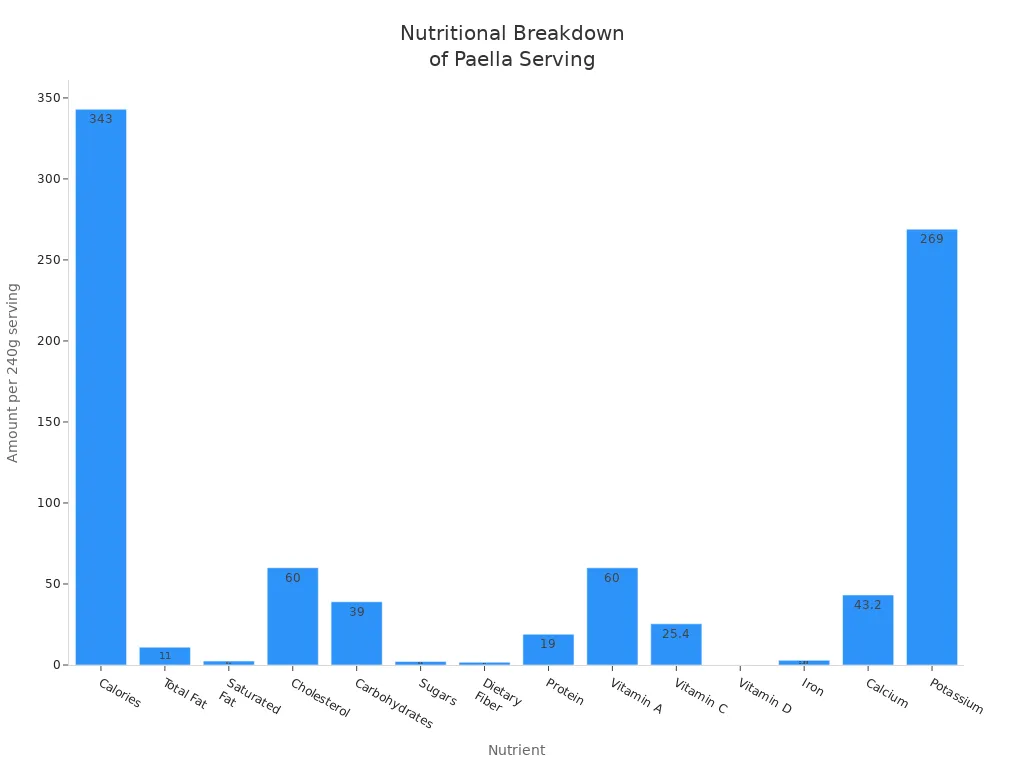
A serving of seafood paella valenciana gives you a balanced meal. You get protein from chicken and seafood, healthy carbs from rice, and vitamins from vegetables. Here’s a look at the nutrition in a typical serving (240g):
Nutrient | Amount per 240g serving |
|---|---|
Calories | 343 |
Total Fat | 11 g |
Saturated Fat | 2.4 g |
Cholesterol | 60 mg |
Carbohydrates | 39 g |
Sugars | 2.2 g |
Dietary Fiber | 1.7 g |
Protein | 19 g |
Vitamin A | 60.00 mcg |
Vitamin C | 25.4 mg |
Vitamin D | 0.00 mcg |
Iron | 2.88 mg |
Calcium | 43.20 mg |
Potassium | 269 mg |
When you make this one pot paella recipe, you bring the flavors of Spain to your table. Spanish seafood paella is a celebration of fresh ingredients and simple techniques. You can enjoy paella de mariscos with family and friends, knowing you made an authentic chicken paella that honors tradition. Every bite of this paella recipe tells the story of Valencia’s rich food culture. Try this spanish seafood paella at home and discover why it’s loved around the world. With this paella de mariscos, you get a taste of the Mediterranean in every spoonful. Cooking paella is more than just following a recipe—it’s about sharing a meal and making memories.
Tips and Equipment
Rice Selection
What rice you choose makes a big difference in your paella. You want grains that soak up flavor but stay firm. Here’s a quick guide to help you pick the best rice for your dish:
Rice Variety | Key Characteristics | Ideal Use |
|---|---|---|
Bomba Rice | High resistance to overcooking, great broth absorption capacity | Traditional paellas, dry rice dishes |
Senia Rice | Absorbs flavors intensely, less resistance to overcooking, creamier texture | Creamy and brothy rice dishes |
Albufera Rice | Hybrid between Bomba and Senia, firm texture, deep flavor | Valencian paella, senyoret rice |
You want rice that absorbs broth and flavor. Bomba rice stands out for its ability to soak up liquid and stay firm. Senia rice gives you a creamy texture, but you need to watch it closely. Albufera rice offers a balance between flavor and structure. Picking the right rice is one of the top tips for a great seafood paella.
Rice Type | Flavor Absorption Characteristics | Cooking Properties |
|---|---|---|
Bomba Rice | Exceptional ability to absorb large amounts of liquid | High resistance to overcooking |
Senia Rice | Absorbs flavors intensely, less resistant to overcooking | Requires greater technical precision |
Albufera Rice | Balance between flavor and structure | Firm texture, shorter cooking time |
Choosing Seafood and Chicken
What seafood and chicken you use affects the taste and texture of your paella. Freshness is key. Here’s what to look for:
Seafood Type | Freshness Indicators |
|---|---|
Shrimp | Firm texture, sweet smell |
Mussels | Tight, unbroken shells |
Fish | White color, smells of the sea |
Pick chicken that is tender and flavorful. Smaller, bite-sized pieces cook evenly and stay juicy. This gives your paella a balanced taste. High-quality cuts of meat make a big difference. If you want more tips for a great seafood paella, always check the freshness of your ingredients.
High-quality cuts of chicken add flavor.
Bite-sized pieces keep the meat juicy.
Larger chunks may turn tough or dry.
Paella Pan and Alternatives
What pan you use changes how your paella cooks. A traditional paella pan gives you even heat and helps form the socarrat. Here’s a look at your options:
Advantage | Description |
|---|---|
Traditional Appeal | Polished steel pans reflect the traditional cookware used in Spain, enhancing authenticity. |
Excellent Heat Conduction | These pans provide superior heat conduction, essential for achieving socarrat and even cooking. |
If you don’t have a paella pan, you can use other cookware. Here’s what works:
Cookware Type | Pros | Cons |
|---|---|---|
Garamica | Excellent heat distribution, easy to clean, aesthetic appeal | Prone to chipping if not handled carefully |
Enameled Steel | Rust-resistant, easy maintenance, durable | Nonstick finish may not be as effective as carbon steel, enamel may chip |
Garcima Carbon Steel | Durable, withstands high heat, versatile | Can react with acidic ingredients, may rust if not maintained |
Stainless Steel | Rust-resistant, compatible with various cooktops, easy to clean | Limited heat conductivity, may cause sticking without seasoning |
Cast Iron | Excellent heat retention, ideal for socarrat | Heavy, requires maintenance to prevent rust |
You can also use a large skillet. Many home cooks do this and still enjoy the festive feeling of making paella together.
Socarrat Layer
What makes paella special is the socarrat. This is the crispy, golden layer at the bottom of the pan. The socarrat forms when rice sticks to the pan and browns from high heat. The Maillard reaction causes the rice to develop rich flavors and aromas. You know you have a good socarrat when you hear a gentle crackle and smell a toasty scent. This crunchy layer adds depth to your paella and makes every bite memorable.
Note: If you need to substitute ingredients, you can use risotto rice, Calasparra rice, or even Japanese rice. Tofu works as a meat substitute. Try green beans instead of peas or mild peppers instead of bell peppers. Extra virgin olive oil is best, but vegetable oil or coconut oil can work in a pinch.
Serving and Storage
Presentation
When you bring paella to the table, you create a moment everyone remembers. You want your dish to look as good as it tastes. A beautiful paella draws people in and sets the mood for a festive meal. You can serve paella straight from the pan. This tradition lets everyone see the golden rice and colorful seafood. The arrangement of shrimp, mussels, and chicken on top tells a story of flavors and textures.
Beautiful plating makes your guests curious and excited.
Thoughtful ingredient placement helps everyone enjoy each bite in harmony.
The way you present paella shares the journey of Spanish cooking.
If you plan a family gathering, you need to think about serving sizes. Here’s a quick guide:
Pan Size | Servings |
|---|---|
Medium to Large | 10 to 16 servings |
Large (70 cm) | Up to 25 servings |
For a big party, you use about 1kg of rice for every 10 people. If you have 30 guests, you need around 3kg of raw rice. This helps you make sure everyone gets a generous portion.
Tip: Serve paella with lemon wedges and fresh parsley. These touches add color and a burst of flavor.
Storing Leftovers
You might have leftovers after a big meal. Paella keeps its flavor if you store it the right way. Let your paella cool to room temperature before you put it away. Use an airtight container to keep the rice and seafood fresh. You can refrigerate paella for up to four days, but it tastes best in the first two or three days.
Store in airtight containers to lock in flavor.
Refrigerate for up to four days.
Freeze for up to three months in a freezer-safe container.
If you freeze paella, thaw it overnight in the fridge. When you reheat, use a skillet with a splash of olive oil or broth. This brings back moisture and keeps the rice from drying out. Make sure the internal temperature reaches 165°F before you serve it again.
Note: Paella tastes great the next day. You get deeper flavors after the rice and seafood rest together. Enjoy your leftovers as a quick lunch or a cozy dinner.
Traditional paella Valenciana brings real Spanish flavor to your kitchen. You can make it at home because it uses simple ingredients like garlic, tomatoes, and rice. You just need to follow a few classic steps, like making a sofrito and cooking the rice uncovered.
Cooking together creates a fun, friendly atmosphere. Sharing paella with family and friends helps everyone enjoy the tradition.
Many home cooks use paprika instead of saffron, so you can adapt the recipe to fit your pantry.
Pick good rice and olive oil for the best taste.
Focus on the rice—let it shine.
Add rice and liquid carefully for perfect texture.
Try this recipe, share it, and make new memories around your table!
FAQ
What rice works best for paella?
You want short-grain rice like bomba or calasparra. These types soak up flavor and stay firm. Long-grain rice turns mushy and does not give you the right texture.
What makes the socarrat so special?
Socarrat is the crispy layer at the bottom of the pan. You get a rich, toasted flavor. Many people say this is the best part of paella.
What seafood can you use in paella?
You can use shrimp, mussels, clams, squid, or firm white fish. Fresh seafood gives you the best taste. Mix different types for more flavor.
What is the secret to authentic paella flavor?
Saffron gives paella its golden color and unique taste. Good olive oil and fresh ingredients help you get real Spanish flavor. Cooking in a wide pan lets the rice cook evenly.