Cats with sensitive stomachs often need treats that are simple, dry, and free from unnecessary grain or filler. I’ve focused on single-ingredient meat, high-moisture pâté, and plant-based grass snacks that suit different routines, from quick training rewards to indoor chewing. The right choice depends on the specific cat, ingredient history, and whether mealtime toppers or occasional treats work better.
How The Shortlist Stacks Up

PETS ON STRIKE Freeze-Dried Chicken Hearts 3oz
PETS ON STRIKE Chicken Hearts Bulk Treats 16oz

PETS ON STRIKE Chicken Hearts 1.5oz

Onzzyl Cat Grass Treats 120g

Beefeaters Lickable Cat Treats 48 Count

LAZY PET Freeze-Dried Chicken Liver Treats 4oz

Feline Natural Freeze-Dried Treats
The Strengths Of Each Pick
A short bag makes this a sensible first trial for a cat that reacts to elaborate treats. Chicken hearts are the only featured ingredient, with no grain or filler added, while freeze-drying removes moisture and leaves lightweight pieces.
Those pieces break into small rewards without adding a soft, rich coating to the daily diet. I favor this format for short training sessions, though a cat that dislikes organ meat may not take to it.
Everyday Advantages
- Single-ingredient simplicity reduces the number of added ingredients to consider.
- The 3-ounce pouch is manageable for sampling before committing to a larger bag.
- Lightweight pieces suit frequent reward-based training.
- Freeze-drying produces a dry texture that many cats enjoy.
Small Caveats
- Chicken hearts may be too rich for some sensitive stomachs, so portions should remain modest.
- Owners should reseal the package promptly after use because freeze-dried pieces absorb moisture.
At A Glance
Right Fit For
This option fits cats that tolerate chicken and react poorly to treats containing several added ingredients.
A Better Fit Elsewhere
Beefeaters Lickable Cat Treats offer softer, high-moisture portions for cats that dislike dry organ meat.
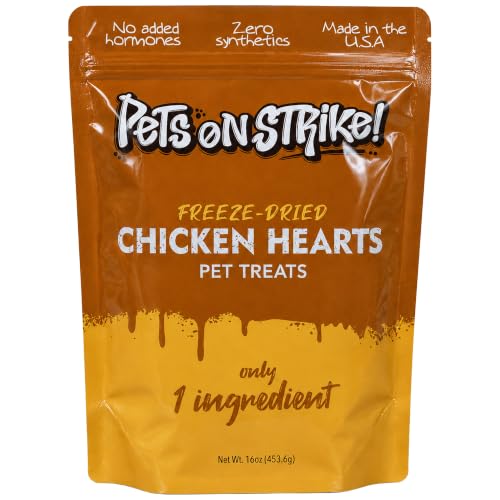
The 16-ounce format carries the same chicken-heart focus as PETS ON STRIKE’s 3-ounce pouch, simply in a larger supply. That makes more sense for repeated training, multi-cat homes, or cats that already know they enjoy the flavor.
In a busy household, fewer packages can simplify treat storage. The trade-off is greater commitment, and a cat with a newly unsettled stomach may be better served by the smaller PETS ON STRIKE option first.
What Earns Its Place
- A large supply suits homes that use tiny rewards throughout the day.
- Single-ingredient chicken hearts keep the ingredient list straightforward.
- The lightweight pieces are easy to split into training-sized portions.
- Dry bites can be tossed into a secure feeder for puzzle-style play.
- One meat option may appeal to cats sensitive to mixed proteins.
Practical Considerations
- The larger quantity offers little value for a cat whose taste or tolerance remains uncertain.
- Airtight storage helps preserve the crisp texture after every use.
- Organ meat can be rich, so daily portions still need restraint.
Built With In Mind
This bulk option is built for frequent training sessions and households that already know the cat tolerates chicken hearts well.
Another Choice May Suit
Feline Natural Freeze-Dried Treats suit travelers who want individually packed meat-and-organ snacks in a resealable pouch.
At 1.5 ounces, this may be the least committal PETS ON STRIKE option in the roundup. The single-ingredient chicken-heart format gives a cat with a grain-sensitive diet a very narrow selection to evaluate.
I find that size useful for travel, first nights in a new home, or figuring out portion size without leaving a large bag open. The compact supply is less suitable for a cat already established on heart pieces.
Why It Works Well
- The small quantity limits waste during a flavor trial.
- Chicken is the featured protein with no grain or filler listed.
- Freeze-drying concentrates flavor without creating a wet pouch.
Details To Watch
- Very small pieces can crumble during travel, so a secondary container helps.
- Cats that avoid organ tissue may prefer a conventional meat treat.
- Limited quantity may run out quickly with two active cats.
Key Specs
Made For
This package suits tentative households checking chicken hearts as part of a restricted ingredient routine.
Where A Sibling Pick Shines
PETS ON STRIKE Freeze-Dried Chicken Hearts 3oz work better for routine training that outlasts a 1.5-ounce trial pack.
This is the only plant-led option here, using oat grass and wheat grass in bite-sized crunchy treats. It serves a different purpose from the meat snacks: satisfying an indoor cat’s interest in chewing grass without access to living plants.
The resealable 120-gram package is easy to keep near an indoor feeding area. Still, the ingredient list deserves careful attention because a product described as grass-based can still include plant ingredients that a particular cat may not tolerate.
Good Reasons To Consider
- Grass ingredients fit the chewing habits of indoor cats.
- Bite-sized pieces can be offered by hand or scattered over food.
- The resealable bag supports tidy storage between servings.
- Plant-based variety helps households tired of offering meat pieces.
Points To Keep In Mind
- This is not a meat treat, so cats seeking animal protein may show less interest.
- The oat-and-wheat grass blend may not suit every grain-restricted diet.
- Owners should keep the bag sealed to preserve crispness.
- Individual pieces may become less appealing after prolonged moisture exposure.
Feature Snapshot
Whose Shelf It Belongs On
This option belongs on the shelf of an indoor household seeking a plant-based chewing snack rather than another frozen or pâté meat treat.
Consider Something Else When
PETS ON STRIKE Freeze-Dried Chicken Hearts 1.5oz suit a cat that wants animal-protein bites and responds poorly to wheat-containing snacks.
Beefeaters takes a completely different approach with creamy squeeze tubes rather than dry bites. Salmon, tuna, and chicken give a cat three familiar protein options, while the soft texture works for picky eaters that ignore crunchy food.
I see the 48-count pack as practical for meal toppers and calm indoor routines. The stated 87% moisture distinguishes it from the freeze-dried selections, although rich wet food still calls for measured portions.
Positive Takeaways
- Three flavors help a selective cat find an acceptable option.
- The soft tubes can be squeezed directly onto a meal or plate.
- Individual portions simplify storage and daily use.
- High moisture offers a different texture for cats tired of dry treats.
- Taurine is included in the product formulation.
Honest Caveats
- Wet, creamy treats may not suit a routine built around bite-sized dry rewards.
- Chubby tubes can leave residue on dishes, so utensils help with cleanup.
- A cat that reacts to several proteins may still need a single-flavor option.
Feature Facts
Best Suited To
This variety pack suits indoor cats that prefer soft meals, reject dry treats, or need several protein options to discover a favorite.
Swap It Out When
Feline Natural Freeze-Dried Treats suit a cat that thrives on dry meat-and-organ pieces and dislikes wet textures.
Chicken liver brings a strong aroma and rich flavor that can help during training, especially for a cat that already reacts to ordinary biscuits. Freeze-drying creates small, crunchy pieces designed to be broken into rewards or scattered over a meal.
The 4-ounce package is a middle ground between a tiny trial pouch and PETS ON STRIKE’s bulk bag. In my view, liver deserves particular restraint because a single-ingredient label does not make a rich organ meat gentle for every digestive routine.
Notable Gains
- Small dry pieces work for clicker training and behavior rewards.
- The single featured ingredient keeps the treat base simple.
- A 4-ounce pouch balances trial potential and moderate supply.
- Chicken liver gives strong aroma and flavor for selective cats.
Possible Compromises
- Liver is rich, making frequent or large portions unsuitable for some cats.
- The crumble-prone texture requires resealing to keep it dry.
- Cats avoiding organ meat may show more interest in ordinary poultry.
- The available product information is thinner than for the other shortlist choices.
Who Should Grab It
This choice fits an experienced training routine that needs small aromatic rewards and a cat already familiar with liver.
Not Your Match When
Onzzyl Cat Grass Treats 120g make more sense for an indoor cat seeking a plant-based crunchy snack instead of organ meat.
Feline Natural uses a meat-and-organ format with no gluten or listed additives, giving this a close fit for cats that respond well to minimal ingredient lists. The freeze-drying process preserves a strong aroma and dry crunch without relying on moisture or a soft coating.
Its resealable, odor-conscious pouch makes sense at home and on trips, where dry pieces are easier to divide than a full meal. The catch is limited flavor detail, so checking the current label and protein identity matters before introducing it into a restricted diet.
Benefits That Matter
- Meat and organs provide an animal-protein-led snack.
- The pouch has no listed gluten or additives.
- Freeze-dried pieces offer a crisp texture and strong aroma.
- Resealable packaging suits travel and odor-conscious storage.
- Small pieces can serve as rewards or meal toppers.
Less-Strong Areas
- The specific meat variety is not clear from the supplied listing details.
- Organ-based flavor may not appeal to every cat.
- Owners should reseal the pouch promptly to limit moisture and odor.
Core Details
The Right Fit
This pick suits cats that thrive on dry meat-and-organ treats and need a resealable option for travel or scattered rewards.
Reach For A Different Pick When
Beefeaters Lickable Cat Treats 48 Count suit cats that prefer moist, creamy food and strongly reject dry pieces.
How To Choose A Gentle Treat For A Sensitive Cat
Start With The Cat’s Known Reactions
A genuinely sensitive cat may react to added grain, dairy, flavoring, or a protein that has never appeared in its diet. I start with a short ingredient list, but “grain-free” alone is not enough; a cat already doing well on chicken gains little from replacing a familiar treat with a novel meat.
Match Texture To Feeding Style
Freeze-dried meat works well for training because the dry pieces can be broken into tiny rewards. Beefeaters tubes suit a softer feeding style, while Onzzyl grass bites cater to an indoor cat’s interest in chewing plants rather than eating meat-based snacks.
Keep New Treats Small And Routine
Introduce one new treat at a time and use a small portion before expanding the routine. This makes an upset easier to trace and prevents a novelty food from replacing substantial parts of the daily diet.
Look At Handling And Storage
Resealable packaging matters more than it sounds. Freeze-dried treats absorb surrounding moisture, while soft tubes can leave residue on bowls, hands, and counters, so each format has a different cleanup routine.
What Matters Before Adding A New Snack
Wrong Turns To Avoid
Choosing by packaging claims alone can lead to unnecessary diet changes. I compare the current label with treats the cat already tolerates, then account for texture, portion size, and storage rather than assuming every minimal-ingredient food will suit a sensitive stomach.
What Separates Premium From Basic
Higher-tier treats may emphasize fewer ingredients, specific sourcing, resealable packaging, or a dedicated flavor within a variety pack. Those details can matter for travel, multi-cat homes, or strict routines, but a pricier package is not automatically gentler; the individual cat’s ingredient history matters more.
Frequently Asked Questions
Are Single-Ingredient Treats Better For Sensitive Stomachs?
A narrow ingredient list can make a treat easier to evaluate against the cat’s current diet. It does not guarantee tolerance, especially with rich organ meats or a protein the cat has rarely eaten.
Are Freeze-Dried Treats Easy To Store?
The dry pieces need a sealed container or tightly closed original pouch to limit moisture exposure. Soft purée tubes also need refrigeration after opening, following the package directions.
Can Cats Eat Cat Grass Treats Every Day?
Daily serving depends on the complete ingredient list and the cat’s individual response. Cats that dislike grass, react to wheat or oat ingredients, or require a specific veterinary diet may need another approach.
Are Wet Tube Treats Better Than Dry Ones?
A wet tube may suit a cat that prefers creamy food and rejects crunchy pieces. A dry treat can be easier to divide for training, so texture matters more than moisture alone.
How Much Of A Freeze-Dried Treat Is Normal?
Portion size depends on the cat’s size, daily diet, and ingredient history. Since these treats can be rich, I use the smallest reward that remains motivating and account for them within the day’s overall intake.
Wrap Up
The best match comes down to the cat’s ingredient history and preferred texture, not a package claim alone. Single-meat freeze-dried pieces suit training, soft tubes suit selective eaters, and grass snacks cater to indoor chewing habits. A small first package remains the most sensible way to see how a new treat fits the routine.