

Understanding fruit carbohydrate content is crucial for your low-carb diet. Not every fruit is suitable for your goals. Selecting the right fruits enhances your low-carb lifestyle. This helps you avoid compromising your progress. This post provides a clear guide. It includes a detailed low carb fruit chart. You will also find best practices for smart fruit consumption.
Key Takeaways
Choose berries like strawberries, raspberries, and blackberries. They are good low-carb fruit options.
Control your portion sizes. Even low-carb fruits have carbs, so eat them in moderation.
Always pick fresh fruit. Avoid processed options like juices or dried fruit, as they have more sugar.
Avocados and tomatoes are fruits. They are very low in carbs and good for your diet.
Low-carb fruits give you vitamins, minerals, and fiber. These help your body stay healthy.
Understanding Low-Carb Fruits
Defining Low Carb for Fruit Choices
You want to know what makes a fruit “low-carb.” This definition depends on your specific low-carb diet. Different diets have different daily carbohydrate limits.
If you follow a moderate low-carb diet, you aim for 100–150 grams of carbohydrates each day. You can easily include several pieces of fruit. Your carb budget allows for more variety.
If you are on a very low-carb diet, like a ketogenic diet, your daily carb intake is under 50 grams. Some people on a ketogenic diet aim for 20–50 grams of carbohydrates per day. This leaves limited room for fruit. You often prioritize low-carb vegetables instead. They offer more nutrients for fewer carbs. Therefore, choosing the right low-carb fruit is essential.
Natural Sugars vs. Added Sugars in Fruit
Fruits naturally contain sugars, mainly fructose. These are natural sugars. They are different from added sugars. Added sugars appear in processed foods. Examples include canned fruit in syrup or fruit juices.
When you eat fresh fruit, you consume natural sugars along with fiber, vitamins, and minerals. This is a good thing. These natural sugars still contribute to your daily carbohydrate count. You must track them.
Processed fruit products often have added sugars. These products can quickly increase your carb intake. They often lack the fiber of whole fruit. Always choose fresh, whole low sugar fruits. Avoid items with added sugars. This helps you stay within your carb limits. Focus on truly low sugar fruits for the best results.
Your Essential Low Carb Fruit Chart

You need a clear guide to help you choose the best low-carb fruits. This section provides a detailed low carb fruit chart. It helps you make smart choices. You can enjoy delicious fruits without exceeding your daily carb limits. Remember, you can find printable PDF lists and charts for detailed planning.
Berries: Top Low Carb Fruit Choices
Berries are often your best friends on a low-carb diet. They offer great flavor and many nutrients. They are among the best low sugar fruits to eat.
Strawberries: These red gems are a fantastic choice. A quarter cup of sliced strawberries has about 2.5 grams of net carbs. For a larger view, consider this:
Source | Net Carbohydrates (per 100g) |
|---|---|
Foodstruct | 5.7g |
Foodstruct | 6 grams |
You get a good amount of fruit for a low carb count.
Raspberries: You will love raspberries for their tartness and low carb count. Fresh raspberries contain 5.4 grams of net carbohydrates per 100 grams. A half cup (60g) of raspberries gives you about 3 grams of net carbs. They are truly low sugar fruits.
Blackberries: Blackberries are another excellent option. They offer a rich, deep flavor. Blackberries contain 4.3 grams of net carbs per 100 grams. A half cup (70g) of blackberries has about 4 grams of net carbs. This makes them a great addition to your list of low sugar fruits to eat.
Blueberries: Blueberries are slightly higher in carbs than other berries. You can still enjoy them in moderation. A 100-gram serving of blueberries contains 14.5g of carbohydrates. About 83% of these are net carbs. This means a 100-gram serving has roughly 12 grams of net carbs. A quarter cup offers about 4.5 grams of net carbs.
Other Low Carb Fruit Options
Beyond berries, you have other delicious fruits with less than 15 grams of carbs. These can fit into your low-carb plan.
Watermelon: This refreshing fruit is surprisingly low in carbs. Watermelon contains 7 grams of net carbohydrates per 100 grams. The pulp specifically contains 7.15 grams of net carbs. A half cup of diced watermelon has about 5.5 grams of carbs. You can enjoy watermelon in small portions.
Cantaloupe: Cantaloupe is another hydrating choice. It offers a sweet taste. Cantaloupe contains 7.3g of net carbs per 100 grams. Fresh cut cantaloupe has 8g of net carbs per 100 grams. You can enjoy a small slice.
Peaches: Peaches bring a sweet, juicy flavor. They are a good option in moderation. A 100-gram serving of peaches has about 8 grams of net carbs. This makes them a fruit you can enjoy carefully.
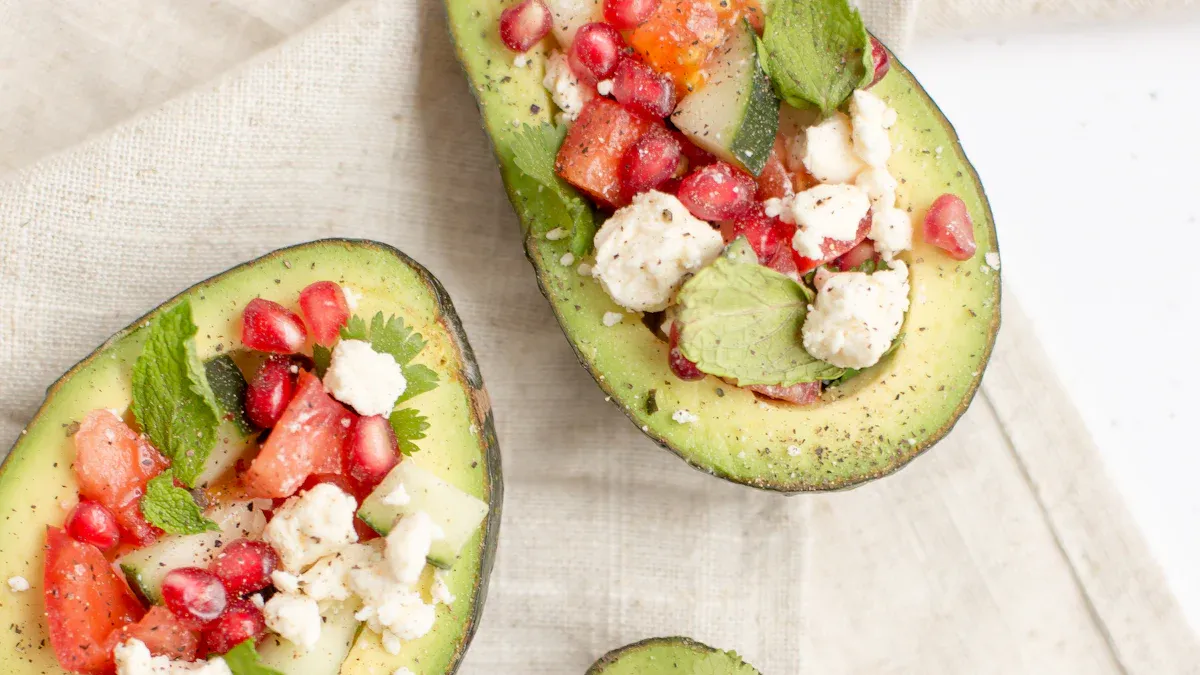
Avocados: Many people consider avocados a vegetable. They are botanically a fruit. Avocados are incredibly low in net carbs.
Nutrient | Amount |
|---|---|
Net Carbs | 2 grams |
Serving Size | 100 grams |
Another source shows 1.8 grams of net carbs per 100 grams. Avocados are rich in healthy fats. They are a staple for many low-carb diets.
Tomatoes: Tomatoes are also botanically fruits. They are very versatile. They have a low carb count. A small (100-gram) raw tomato contains 3.9 grams of carbohydrates. Red, ripe, cooked tomatoes contain 3 grams of net carbohydrates per 100 grams. Raw green tomatoes contain 4 grams of net carbohydrates per 100 grams. You can use them in many dishes.
Nutritional Benefits of Low-Carb Fruits

Low-carb fruits offer more than just low sugar. They provide essential nutrients. You get many health benefits from them.
Vitamins, Minerals, and Antioxidants
Low-carb fruits are packed with vitamins, minerals, and antioxidants. These compounds protect your body. They support your overall health. Berries are especially rich in these beneficial elements.
Consider these examples of the nutritional values of fruits:
Berry | Vitamin C (% DV) | Vitamin A (% DV) | Iron (% DV) | Manganese (% DV) |
|---|---|---|---|---|
Goji Berries | 15% | 42% | 11% | N/A |
Strawberries | 94% | N/A | N/A | 24% |
Bilberries | 49% | N/A | N/A | 143% |
Strawberries are rich in Vitamin C and phytonutrients. Raspberries also contain Vitamin C. Blackberries are high in antioxidants. These nutrients help fight inflammation. They support your immune system.
Fiber for Digestive Health
Fiber is crucial for your digestive system. Low-carb fruits provide a good source of fiber. This fiber helps you feel full. It also supports a healthy gut.
Fiber in whole fruit slows down digestion. It helps prevent blood sugar spikes. This is different from refined sugars. For example, one cup of raspberries contains 8 grams of fiber. This aids in stabilizing your blood sugar. Berries, in general, are high in fiber. They offer nearly 8 grams per 1-cup serving. Avocado also has high fiber content along with healthy fats.
Many people on low-carbohydrate diets do not get enough fiber. Men aged 19–30 on an LCD, for instance, average only 11.01 grams per day. Most people need more. You should aim for about 14 grams of fiber for every 1,000 calories you eat. This means women need an estimated 25 to 28 grams of fiber daily. Men need between 28 and 34 grams. Low-carb fruits help you meet these important daily fiber goals.
Smart Consumption of Low Carb Fruits
You can enjoy low-carb fruits as part of your diet. Smart choices and careful eating are important. You need to understand how much to eat. You also need to know the difference between fresh and processed options.
Portion Control is Key
You must control your portion sizes. This helps you stay within your daily carbohydrate limits. Even low sugar fruits have carbs. Eating too much can quickly add up. For example, eight medium-sized strawberries are a good portion. This amount weighs about 100 grams. It contains 6 grams of total carbohydrates. This includes 6 grams of net carbs and 2 grams of fiber. Knowing these details helps you manage your carb count. This is especially important for managing your weight and controlling diabetes.
Fresh vs. Processed Fruit Considerations
Always choose fresh fruit over processed options. Processing changes the carbohydrate content. Canned, dried, or juiced fruits often have more carbs. They can also lack important fiber.
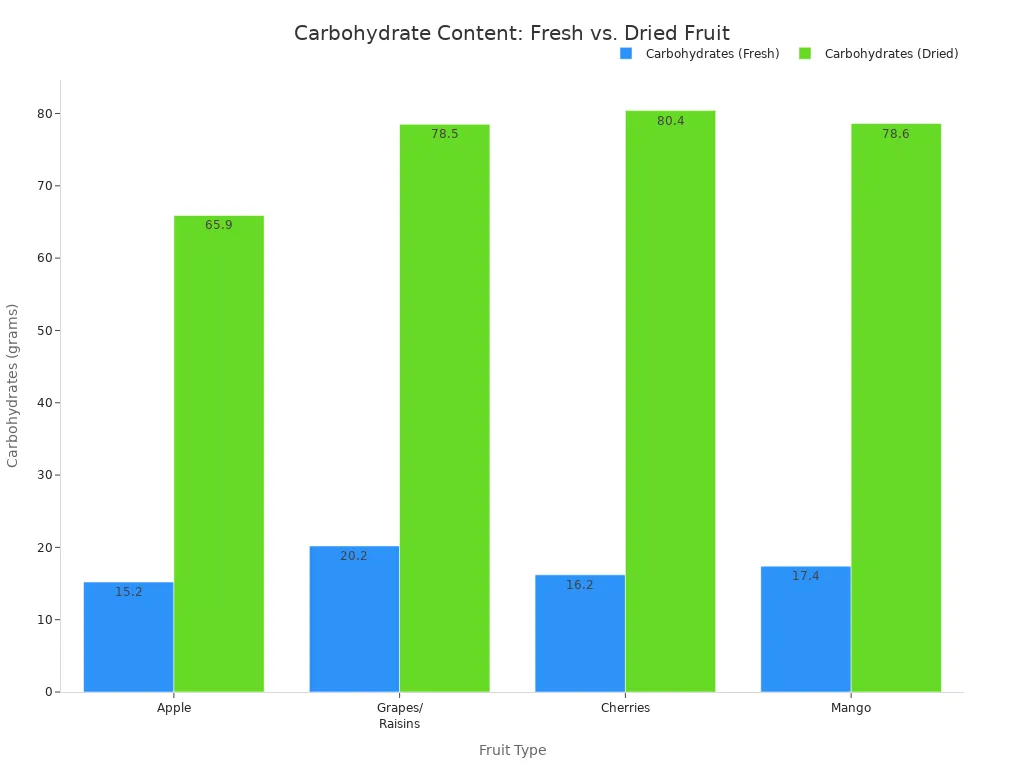
Look at dried fruit. It has much more sugar and carbs than fresh fruit.
Fruit | Carbohydrates (Fresh) | Carbohydrates (Dried) |
|---|---|---|
Apple | 15.2 grams | 65.9 grams |
Grapes/Raisins | 20.2 grams | 78.5 grams |
Cherries | 16.2 grams | 80.4 grams |
Mango | 17.4 grams | 78.6 grams |
You can see the big difference. Dried fruit concentrates sugars. This makes it unsuitable for a low-carb diet.
Fruit juice is another example. It often has more carbs than whole fruit.
Form of Orange | Carbohydrate (g) |
|---|---|
0.5-cup Sections | 11.5 |
0.5 cup, 100% Orange Juice | 14.4 |
1 Medium Whole Orange | 16.3 |
0.5 cup, Canned 100% Orange Juice | 13.7 |
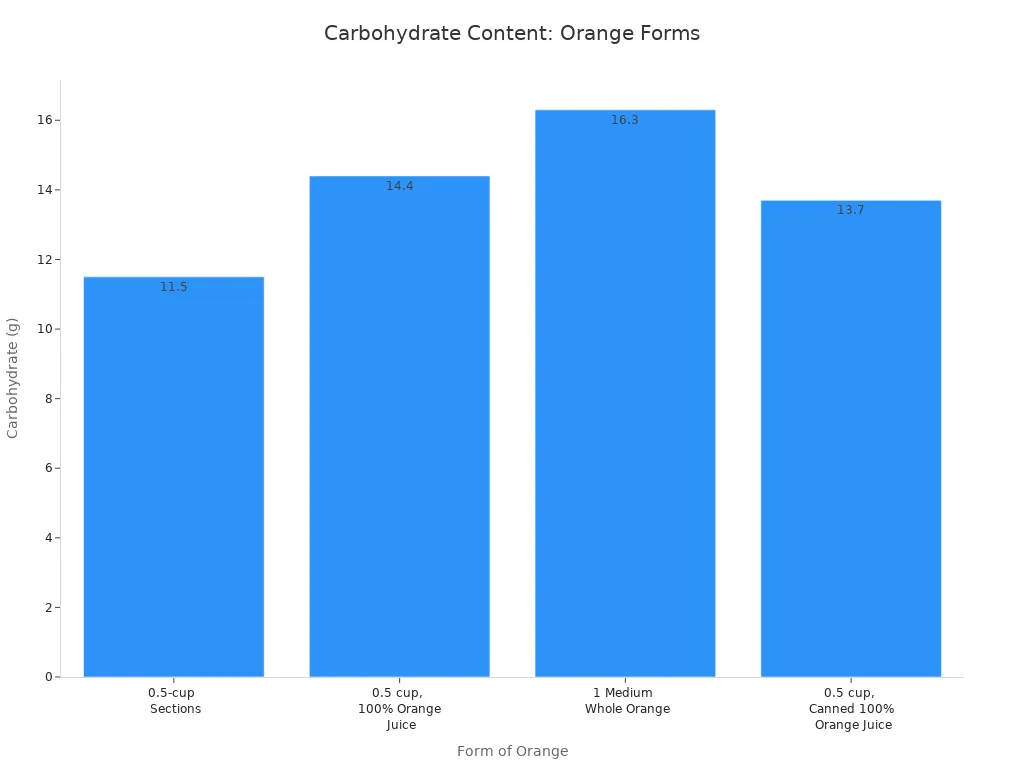
Juice also lacks fiber. Fiber slows sugar absorption. Without fiber, fruit juice spikes your blood glucose and insulin levels faster. This can increase your risk for type 2 diabetes. Whole fruit, like a low-carb fruit, helps lower that risk. Understanding this carb count difference is vital for managing your weight and controlling diabetes. It helps you make better choices for your health and to manage diabetes effectively.
You can successfully incorporate low-carb fruits into your diet. They offer great nutrition without high sugar. Always practice mindful consumption. Control your portions. Choose fresh options over processed ones. Use the provided low carb fruit chart. It helps you make informed, delicious choices. Enjoy a variety of nutritious foods. You can easily stick to your low-carb lifestyle.