

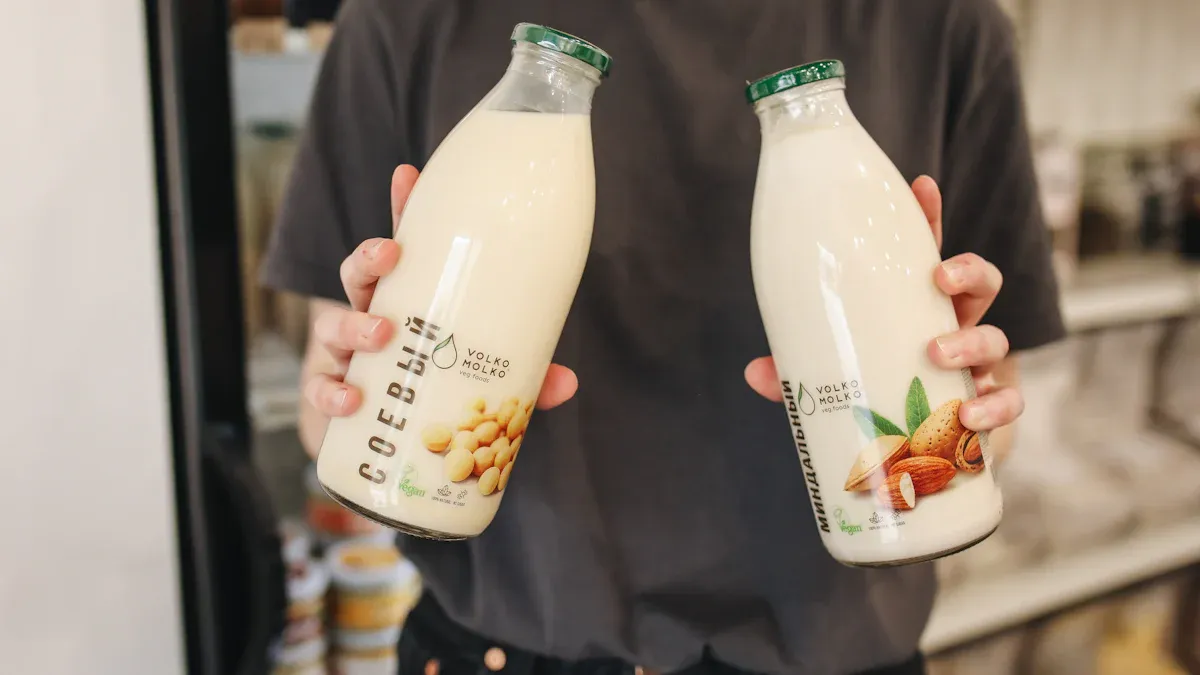
Soy milk has become a popular plant-based dairy alternative. The global soy milk market was valued at USD 5.51 billion in 2024 and will reach USD 7.40 billion by 2030. This growth highlights its increasing acceptance. Many people consider soy milk a nutrient-rich beverage, especially for plant-based diets. This post explores soy milk nutrition, its health benefits, comparisons, and practical uses. It helps readers make informed choices about soy milk.
Key Takeaways
Soy milk is a good plant-based drink. It has protein, vitamins, and healthy fats.
Soy milk helps your heart and bones. It has nutrients that keep them strong.
You can use soy milk in many ways. Drink it, cook with it, or add it to coffee.
Soy milk has complete protein. This means it has all the building blocks your body needs.
Choose unsweetened soy milk. It has less sugar and fewer calories.
Soy Milk Nutrition: A Nutritional Powerhouse
Soy milk stands out as a true nutritional powerhouse among plant-based beverages. Its comprehensive nutrition facts make it a valuable addition to many diets. A typical serving of soy milk offers approximately 93 calories, 5 grams of fat, 3 grams of carbohydrates, 0 grams of fiber, and 8.7 grams of protein. This nutritional composition is remarkably similar to cow’s milk, especially when fortified with essential vitamins and minerals. Understanding soy milk nutrition helps people make informed dietary choices.
Complete Protein: Essential Amino Acids
One of the most significant advantages of soy milk is its complete protein profile. Unlike many other plant-based proteins, soy protein contains all nine essential amino acids that the human body needs but cannot produce on its own. This makes soy milk a rare plant-based exception, similar to animal proteins in its completeness.
Soy protein offers a more complete nutrient profile in terms of amino acids compared to other plant-based proteins, closely resembling animal sources. It contains nearly every essential amino acid, with methionine being a minor exception and considered a limiting amino acid. In contrast, other plant-based proteins might lack two, three, or even four essential amino acids.
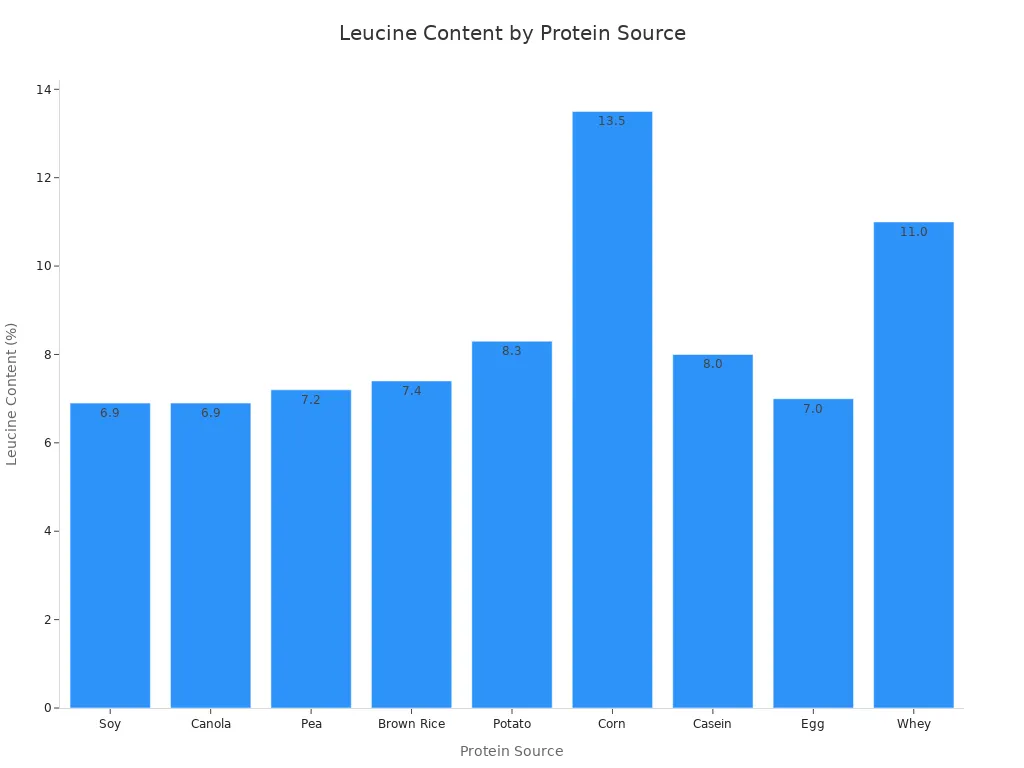
This table shows the leucine content in various protein sources:
Protein Source | Leucine Content (%) |
|---|---|
Soy | 6.9 |
Canola | 6.9 |
Pea | 7.2 |
Brown Rice | 7.4 |
Potato | 8.3 |
Corn | 13.5 |
Casein | 8.0 |
Egg | 7.0 |
Whey | 11.0 |
Complete proteins contain all nine essential amino acids.
Incomplete proteins lack one or more essential amino acids.
Most animal meats and dairy are complete proteins.
Soy foods (tofu, edamame, tempeh, soy milk) are among the few plant-based exceptions that are complete proteins, containing all nine essential amino acids.
The high-quality protein in soy milk supports muscle growth and repair, making it an excellent choice for athletes and active individuals.
Key Vitamins and Minerals
Fortified soy milk often provides a rich source of essential vitamins and minerals, boosting its overall nutrition facts. These additions help bridge potential nutrient gaps in plant-based diets. For instance, many brands fortify soy milk with calcium, vitamin D, and vitamin B12.
Nutrient | Amount per Serving |
|---|---|
Vitamin D | 3mcg |
Calcium | 470mg |
Vitamin B12 | 2.5mcg |
This fortification ensures that soy milk contributes significantly to bone health, providing a substantial amount of calcium. The presence of vitamin D helps the body absorb calcium effectively. Vitamin B12 is crucial for nerve function and red blood cell formation, a nutrient often lacking in unfortified plant-based foods. These nutrition facts highlight the benefits of choosing fortified soy milk.
Healthy Fats Profile
Soy milk contains healthy fats that contribute to its overall nutritional value. A typical serving has about 5 grams of fat. This includes both monounsaturated and polyunsaturated fats, which are beneficial for heart health.
Fat Type | Amount (g) |
|---|---|
Monounsaturated fat | 0.6 |
Polyunsaturated fat | 1.2 |
The healthy fats in soy milk are naturally low in saturated fat and contain no cholesterol, further enhancing its appeal as a heart-friendly beverage.
Carbohydrates and Fiber for Energy
Soy milk provides carbohydrates for energy. A standard serving contains about 3 grams of carbohydrates. However, the carbohydrate and fiber content can vary significantly between sweetened and unsweetened varieties.
A 243 mL serving of generic unsweetened commercial fortified soy milk contains 4 g of carbohydrates (including 1 g of sugar).
Another entry for soy milk lists 4.23 g of carbohydrates and 1.2 g of fiber.
Sweetened soy milk often has added sugars, which increases its carbohydrate content.
Sweetened soy milk has a median total (added) sugars of 6.9 g per 250 mL (ranging from 1 to 16 g per 250 mL).
Unsweetened soy milk offers a lower carbohydrate option, with typically 0 grams of fiber.
Unsweetened soy milk (1 cup serving):
Carbohydrates: 3 g
Fiber: 0 g
People can choose unsweetened soy milk to manage sugar intake while still enjoying its other nutrition facts.
Calorie Content: Varieties Compared
The calorie content of soy milk varies depending on the type and whether it is sweetened or unsweetened. A standard serving of soy milk has approximately 93 calories.
Organic Unsweet Soymilk has 80 calories per 1 cup (240ml) serving. This makes unsweetened soy a good choice for those watching their calorie intake.
Soy Milk – Original Light contains 49 calories per 240 grams (approximately 8 fl oz). Light versions offer an even lower-calorie option, providing similar nutrition facts with fewer calories. These variations allow consumers to select the soy milk that best fits their dietary needs and preferences.
Soy Milk Health Benefits for Plant-Based Diets
Soy milk offers numerous health benefits, making it a valuable component of plant-based diets. Its rich nutritional profile supports overall well-being. Understanding these health benefits helps individuals make informed dietary choices.
Heart Health and Cardiovascular Support
Soy milk significantly contributes to heart health. It is naturally low in saturated fat and contains no cholesterol. These characteristics are crucial for maintaining a healthy cardiovascular system. The presence of beneficial phytochemicals, such as phytosterols, further enhances its positive impact.
A meta-analysis of 46 studies showed that soy protein significantly reduced LDL cholesterol by approximately 3–4% in adults. This finding supports the general advice to increase plant protein intake for preventing heart disease. Soy milk contains soy protein, making these findings relevant to its potential effects. Studies involving soy milk were included in broader assessments of soy protein’s impact on LDL cholesterol, suggesting its role in reduction. One randomized trial specifically investigated the impact of two types of soy milk on plasma lipids, including LDL cholesterol, in adults with high cholesterol.
Phytosterols in soy milk primarily contribute to cardiovascular health by reducing LDL-cholesterol levels. Soy milk effectively carries phytosterols. Phytosterol-enriched soy milk shows LDL-c reductions of 7-13%. This reduction is comparable to other low-fat carriers like yogurt and milk. A significant decrease in LDL-c is important because every 1 mg/dL decrease can lower the risk of a coronary event by 1%. Phytosterol-enriched soy milk has a neutral effect on triglyceride and HDL-c levels in metabolically lean individuals. These factors highlight the role of soy milk in preventing heart disease.
Bone Health: Fortification for Strong Bones
Fortified soy milk plays a vital role in supporting bone health. Many brands fortify soy milk with calcium and vitamin D. These nutrients are essential for strong bones.
The bioavailability of calcium from fortified plant-based beverages can vary. Factors like nutrient interactions and the type of calcium supplement used for fortification influence absorption. One study showed that calcium-fortified soy milk, when fortified with calcium citrate, provided absorbable calcium equivalent to cow’s milk. However, it provided a slightly lower amount when fortified with tricalcium phosphate. Vitamin D aids calcium absorption. Fortified soy milk often contains vitamin D, similar to how cow’s milk is fortified.
Fractional calcium absorption from calcium carbonate-fortified soy milk was statistically equivalent to that from cow’s milk. Both calcium carbonate-fortified soy milk and cow’s milk showed significantly higher fractional calcium absorption compared to tricalcium phosphate-fortified soy milk. These findings confirm that fortified soy milk provides a reliable source of calcium for bone health.
Muscle Growth and Repair
Soy milk, with its complete protein profile, supports muscle growth and repair. Soy protein contains all nine essential amino acids. This makes it an excellent choice for individuals seeking to build or maintain muscle mass.
Favorable responses after soy protein supplementation in young athletes and non-athletes are consistent with literature on soy protein’s effects in young adults. A randomized controlled trial showed that whey, soy, or leucine-enriched soy protein, along with carbohydrate intake, resulted in similar muscle protein synthesis rates after resistance and endurance exercise. This indicates that co-ingestion of carbohydrates with 20g soy protein provides similar benefits in myofibrillar and mitochondrial protein synthesis rates in young, healthy, recreationally active men compared to whey and leucine-enriched soy protein.
Another study found that both a soy-dairy protein blend and whey protein increased phenylalanine transport into muscle and mRNA expression of amino acid transporters in recreationally active young individuals. The protein blend led to a prolonged and favorable net phenylalanine balance during post-exercise recovery. Both groups experienced similar increases in myofibrillar protein synthesis. Soy protein supplementation may be an effective alternative to whey for promoting optimal muscle mass and strength gains in young athletic populations, especially with a protein intake of ≥ 1.6 g/kg BW/day. This is likely due to amino acid availability being compensated at higher doses.
Menopausal Relief: Isoflavones
Soy milk contains isoflavones, which offer potential relief for menopausal symptoms. These compounds are phytoestrogens. They share structural similarities with human estrogen.
Soy isoflavones, including genistein, daidzein, and glycitein, bind to estrogen receptors, particularly ER-β. This binding induces a mild estrogenic effect. It helps compensate for hormonal deficiencies during menopause. This action can alleviate symptoms like hot flashes. Soy and soy-based products, such as soy milk, are rich in isoflavones. These compounds have shown a beneficial effect on the frequency and intensity of hot flashes. They offer an alternative approach for women experiencing menopausal symptoms.
Soy and Disease Risk
Research continues to explore the relationship between soy consumption and the risk of various diseases. Soy milk nutrition contributes to these broader discussions. A systematic review and meta-analysis of observational studies titled “Soy Product Consumption and the Risk of Cancer” directly examines the relationship between soy consumption and the risk of various cancers. This study includes epidemiological studies and analyzes their findings regarding soy products like tofu and soy milk and their association with cancer risk. These ongoing studies help clarify the long-term health benefits of soy.
Soy Milk vs. Other Plant Milks: Nutritional Comparison

Soy milk offers a distinct nutritional profile compared to other milk alternatives. Understanding these differences helps consumers choose the best option for their dietary needs.
Soy Milk vs. Almond Milk: Protein Density
When comparing soy milk to almond milk, protein density stands out. Soy milk contains about 7 grams of protein per cup. Traditional almond milk, however, provides just 1 gram per cup. This makes soy milk a much more substantial source of protein for those seeking to meet their daily needs. People often choose almond milk for its lower calorie count, but it lacks the significant protein content found in soy milk.
Soy Milk vs. Oat Milk: Fiber and Carbs
Oat milk and soy milk also show differences, especially in carbohydrates and fiber.
Nutrient | Soy Milk (per 1 cup/240 mL) | Oat Milk (per 1 cup/240 mL) |
|---|---|---|
Carbs | 5 grams | 14 grams |
Fiber | 1 gram | 1.92 grams |
Oat milk typically has more carbohydrates and fiber than soy milk. For example, per 100 grams, soy milk contains 4.9g of total carbohydrates, while oat milk has 7.1g. Regarding dietary fiber, soy milk offers 0.2g per 100 grams, whereas oat milk provides 0.8g. This indicates oat milk has significantly more fiber. People choose oat milk for its creamy texture and fiber content, but soy milk offers a lower carbohydrate option. |
Soy Milk vs. Rice Milk: Allergen-Friendly
Rice milk often serves as an allergen-friendly nondairy milk option. Many people with allergies to nuts, soy, or dairy choose rice milk. However, rice milk typically has a lower protein content and higher carbohydrate levels than soy milk. It also often lacks the fortification of vitamins and minerals found in many soy milk varieties. People who avoid soy due to allergies find rice milk a suitable alternative.
Soy Milk vs. Cow’s Milk: Key Differences
Soy milk and cow’s milk share many nutritional similarities, especially when fortified. However, key differences exist. Soy milk contains no cholesterol and is naturally lactose-free, making it suitable for individuals with lactose intolerance. Cow’s milk provides a natural source of calcium and protein, but soy milk often matches this through fortification. Both offer complete protein, but soy milk remains a popular plant-based milk choice for ethical or dietary reasons.
Practical Uses for Incorporating Soy Milk
Soy milk offers remarkable versatility in the kitchen. People can easily integrate it into various recipes and beverages. Its unique properties make it a valuable plant-based staple.
Cooking and Baking Versatility
Soy milk excels as a dairy substitute in cooking and baking. Its high protein content provides structure and rise, similar to dairy milk. For optimal results, bakers should choose high-protein options like soy milk. They should always use unsweetened varieties unless a recipe specifically calls for sweetened milk. Plain soy milk is best, as vanilla or chocolate flavors can alter the taste of baked goods. People can use soy milk as a direct 1:1 replacement for dairy milk in most recipes.
Soy milk is a reliable choice for cakes, cupcakes, and muffins. Its protein content closely mimics dairy milk, leading to good rise and structure without density. For instance, vanilla cupcakes made with soy milk consistently turn out fluffy and tender. In yeast breads, soy milk’s protein encourages stronger gluten development. This results in a higher rise, an elastic crumb, and a golden, crisp crust. Mandy Naglich from Allrecipes states that soy milk is one of the best dairy-free options for baking projects needing significant structure. To mimic buttermilk, stir 1 tablespoon of lemon juice into 1 cup of soy milk and let it sit until it curdles. High-protein plant milks like soy milk are recommended for consistent curdling. For optimal flavor and texture, choose an unsweetened, neutral-tasting soy milk.
Smoothies and Beverages
Soy milk blends seamlessly into smoothies and other beverages. Its creamy texture enhances drinks without overpowering other flavors. People can use it as a base for fruit smoothies, protein shakes, or even hot chocolates. It adds a nutritional boost, including complete protein, to any drink. Many find soy milk a satisfying and healthy addition to their daily liquid intake.
Coffee and Tea: Frothing Tips
Soy milk can create excellent foam for coffee and tea. Barista-friendly editions of plant milks are specifically formulated for coffee. They foam better and facilitate latte art. Lindsay Selker, Channel Marketing Manager for Chobani, explains these formulations. Kai Custodio, a barista at Joe Coffee Company, notes that the type of oil in a product significantly impacts steaming performance. Plant-based milks benefit from added oils and stabilizers like gellan gum to improve texture and frothing. Allen recommends Pacific Foods Barista Series for optimal frothing. An expert advises purchasing alternative milk specifically formulated for baristas or steaming. These products are engineered to produce foam and withstand heat effectively.
Choosing the Right Soy Milk
Selecting the right soy milk depends on its intended use. For baking and cooking, unsweetened soy milk is generally preferred. This avoids unwanted sweetness or flavors. For coffee and frothing, look for “barista blend” soy milk. These varieties are designed for superior performance. Always check labels for fortification with vitamins and minerals, especially calcium and vitamin D, to maximize health benefits.
Addressing Soy Milk Concerns
Concerns about soy milk often arise. People frequently ask about genetically modified organisms (GMOs), phytoestrogens, and potential allergies. Understanding these points helps consumers make informed decisions.
GMO Soy: Labeling and Organic Choices
Consumers often have questions about genetically modified organisms (GMOs) in their food. Soy is a common crop that can be genetically modified. Many countries have different rules for labeling GMOs. Some countries, like Benin and Serbia, officially ban GE food imports and cultivation. Others have mandatory labeling laws.
Country | Labeling Law | Labeling Threshold |
|---|---|---|
Benin | Official ban on GE food imports and cultivation | 0 threshold |
Serbia | Official ban on GE food imports and cultivation | 0 threshold |
Zambia | Official ban on GE food imports and cultivation | 0 threshold |
Canada | No GE food labeling laws | N/A |
Mexico | No GE food labeling laws | N/A |
United States | No GE food labeling laws | N/A |
Australia | Mandatory labeling of nearly all GE foods | 0.9 – 1% GMO content |
Austria | Mandatory labeling of nearly all GE foods | 0.9 – 1% GMO content |
Belarus | Mandatory labeling of nearly all GE foods | 0.9 – 1% GMO content |
Belgium | Mandatory labeling of nearly all GE foods | 0.9 – 1% GMO content |
Bosnia and Herzegovina | Mandatory labeling of nearly all GE foods | 0.9 – 1% GMO content |
Bulgaria | Mandatory labeling of nearly all GE foods | 0.9 – 1% GMO content |
Croatia | Mandatory labeling of nearly all GE foods | 0.9 – 1% GMO content |
Slovenia | Mandatory labeling of nearly all GE foods | 0.9 – 1% GMO content |
Spain | Mandatory labeling of nearly all GE foods | 0.9 – 1% GMO content |
Sweden | Mandatory labeling of nearly all GE foods | 0.9 – 1% GMO content |
Switzerland | Mandatory labeling of nearly all GE foods | 0.9 – 1% GMO content |
Turkey | Mandatory labeling of nearly all GE foods | 0.9 – 1% GMO content |
United Kingdom | Mandatory labeling of nearly all GE foods | 0.9 – 1% GMO content |
Brazil | Mandatory labeling of many GE foods | 1% or higher or undefined GMO content |
China | Mandatory labeling of many GE foods | 1% or higher or undefined GMO content |
Indonesia | Mandatory labeling of many GE foods | 1% or higher or undefined GMO content |
Japan | Mandatory labeling of many GE foods | 1% or higher or undefined GMO content |
Kenya | Mandatory labeling of many GE foods | 1% or higher or undefined GMO content |
Malaysia | Mandatory labeling of many GE foods | 1% or higher or undefined GMO content |
South Africa | Mandatory labeling of many GE foods | 1% or higher or undefined GMO content |
South Korea | Mandatory labeling of many GE foods | 1% or higher or undefined GMO content |
Sri Lanka | Mandatory labeling of many GE foods | 1% or higher or undefined GMO content |
Ukraine | Mandatory labeling of many GE foods | 1% or higher or undefined GMO content |
Bolivia | Mandatory labeling of some GE foods with many exceptions | Not defined |
Ecuador | Mandatory labeling of some GE foods with many exceptions | Not defined |
India | Mandatory labeling of some GE foods with many exceptions | Not defined |
Jordan | Mandatory labeling of some GE foods with many exceptions | Not defined |
Mauritius | Mandatory labeling of some GE foods with many exceptions | Not defined |
Peru | Mandatory labeling of some GE foods with many exceptions | Not defined |
Senegal | Mandatory labeling of some GE foods with many exceptions | Not defined |
Taiwan | Mandatory labeling of some GE foods with many exceptions | Not defined |
Thailand | Mandatory labeling of some GE foods with many exceptions | Not defined |
Tunisia | Mandatory labeling of some GE foods with many exceptions | Not defined |
Vietnam | Mandatory labeling of some GE foods with many exceptions | Not defined |
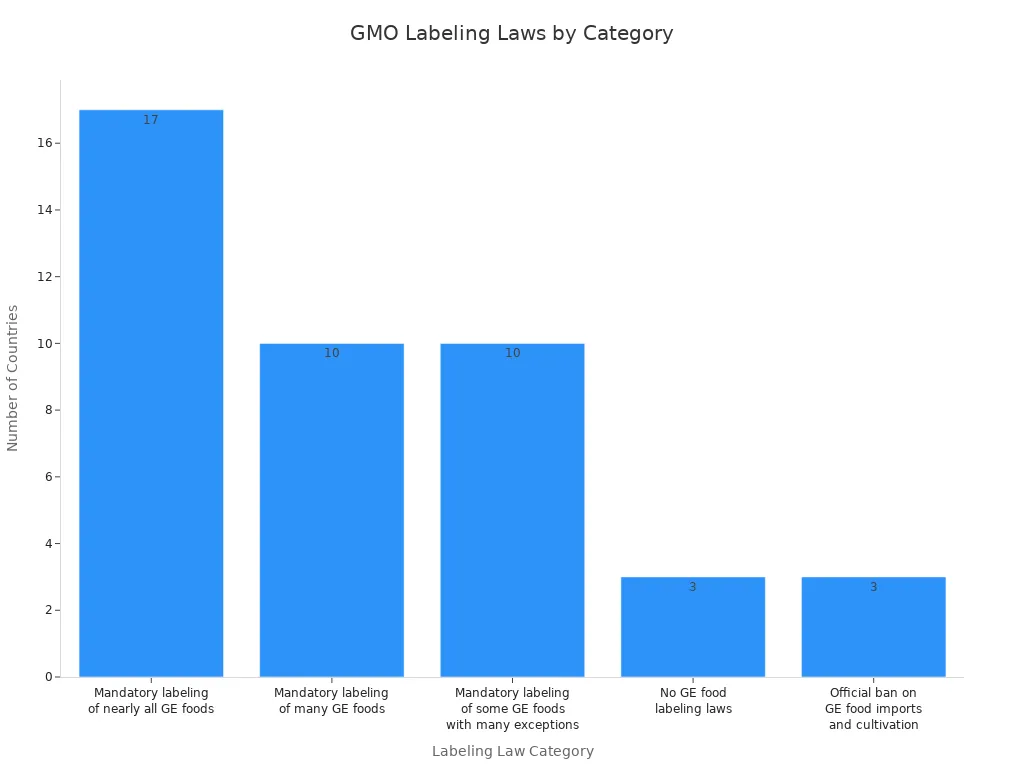
The United States and Canada do not have mandatory GMO labeling laws. The European Union, however, has a clear legal framework for GM labeling. Consumers can choose organic soy milk to avoid GMOs. Organic standards prohibit the use of genetically modified ingredients. This ensures the soy milk is non-GMO. Many brands offer organic soy milk options.
Phytoestrogens: Hormonal Effects Clarified
People sometimes worry about phytoestrogens in soy milk. Phytoestrogens are plant compounds. They act like weak estrogen in the body. Research shows that isoflavone supplements and soy products do not typically change testosterone or estrogen levels in men. One case report linked high soy intake to elevated estradiol in a man. His hormone levels returned to normal after he stopped eating soy. Phytoestrogens are selective receptor modulators. This means they can have different effects than natural estrogens. Their feminizing effects in humans are often subtle. Most studies find no significant hormonal impact from regular soy milk consumption. Enjoying soy milk as part of a balanced diet is generally safe.
Allergies and Sensitivities
Soy allergies are another concern. Soy allergy affects about 0.3% of the general population. It is more common in infants and young children. About 0.4% of infants in the U.S. have a soy allergy. Many children outgrow this allergy. Symptoms can include stomach issues, skin reactions, or breathing problems. Severe reactions like anaphylaxis are rare but possible. Adults can also have soy allergies. Their symptoms are often mild. They can include mucosal reactions due to cross-reactivity with birch pollen. However, severe reactions can occur in adults too. If someone suspects a soy milk allergy, they should consult a doctor. They can then explore other plant-based milk alternatives to soy milk. Soy milk remains a popular choice for many.
Soy milk offers a highly nutritious and versatile plant-based option. It provides complete protein, essential vitamins, and healthy fats. These benefits are especially valuable for those on plant-based diets. Readers can confidently integrate soy milk into their meals. It supports overall health and well-being. Understanding soy milk nutrition helps make informed dietary choices for a healthier lifestyle.
FAQ
Is soy milk a healthy choice?
Yes, soy milk is a nutritious plant-based drink. It offers complete protein, healthy fats, and essential vitamins and minerals, especially when fortified. It supports heart health and bone strength.
How much protein does soy milk contain?
Soy milk is rich in protein. A typical serving provides about 8.7 grams of complete protein. This includes all nine essential amino acids the body needs.
Can soy milk help with weight management?
Unsweetened soy milk can fit into a weight management plan. It is relatively low in calories and provides protein, which helps with satiety. People should choose unsweetened varieties to avoid added sugars.
Do phytoestrogens in soy milk affect hormones?
Research generally shows that phytoestrogens in soy milk do not significantly alter hormone levels in men or women with typical consumption. They act as weak estrogens, but their effects are often subtle.
Is soy milk suitable for people with lactose intolerance?
Yes, soy milk is naturally lactose-free. This makes it an excellent dairy alternative for individuals who cannot digest lactose. It provides similar nutrients to cow’s milk when fortified.