

Chicken salad is a popular choice for many. It offers a great option for a healthy, protein-rich meal. This high-protein meal provides excellent nutrition. However, its overall nutrition varies greatly with ingredients. This guide explores key chicken salad nutrition data. It helps you make healthier choices for your health. You can also discover versatile uses for a balanced diet, making your chicken meal truly nutritious.
Understanding Chicken Salad Nutrition

You want to understand the nutrition of your chicken salad. Its overall nutritional value depends on its basic components. Each ingredient adds to the total calories, protein, fats, and other nutrients. Knowing these parts helps you make smart choices.
Chicken: The Protein Powerhouse
Chicken is the main ingredient in chicken salad. It provides a great source of protein. Chicken breast is especially lean. It offers a high protein content without much fat. This makes it a fantastic base for a high-protein meal. A cooked, skinless chicken breast contains significant protein.
Protein Source | Protein (g) | Calories |
|---|---|---|
Chicken Breast | ~31g | ~165 |
You get about 31 grams of protein per 100 grams of chicken breast. This high protein helps you feel full and supports muscle health.
Mayonnaise and Dressings: Fat and Calorie Impact
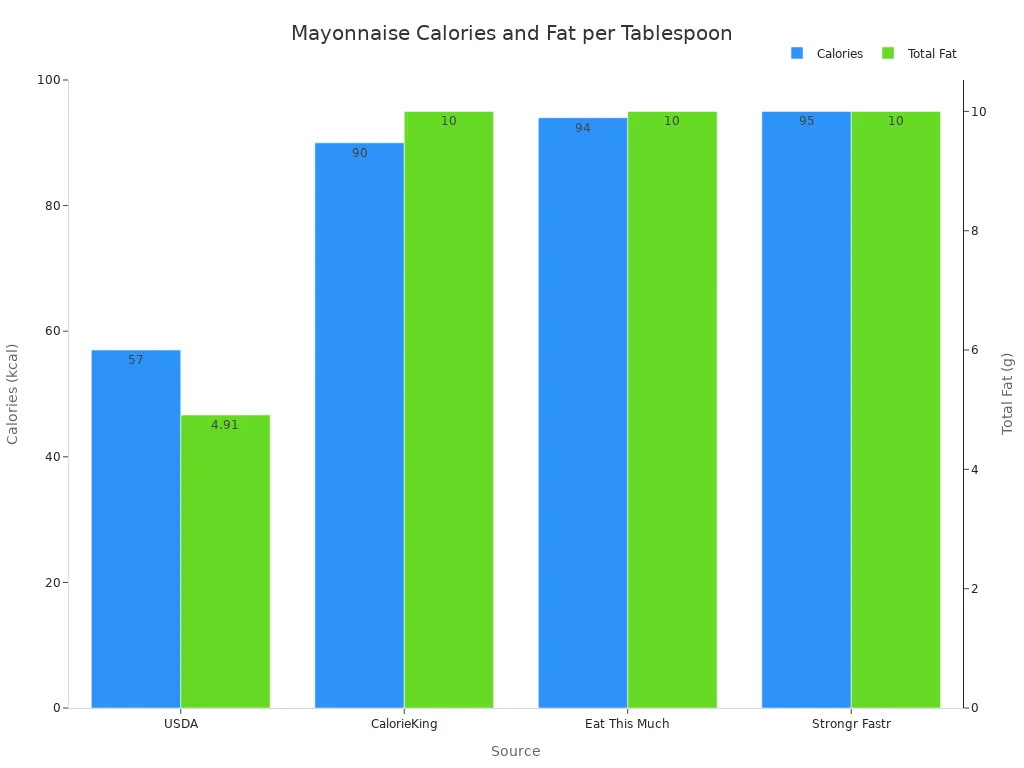
Mayonnaise often binds chicken salad ingredients. It significantly impacts the total calories and fat. Mayonnaise is high in fat. Even a small amount adds many calories. Look at how much fat and calories a tablespoon can add:
Source | Calories (per tbsp) | Total Fat (per tbsp) |
|---|---|---|
USDA (FatSecret) | 57 | 4.91g |
CalorieKing | 90 | 10g |
Eat This Much | 94 | 10g |
Strongr Fastr | 95 | 10g |
Dressings also contribute to the overall nutrition. They can increase the calorie count.
Vegetables and Fruits: Fiber and Micronutrients
Adding fresh vegetables and fruits boosts your chicken salad’s health benefits. These ingredients provide essential fiber, vitamins, and minerals. They add volume and crunch without many calories.
Grapes, celery, and apples are common additions. They provide extra fiber, vitamins, and minerals.
Other beneficial ingredients include fennel, radishes, chickpeas, cucumber, shredded cabbage, artichoke hearts, and roasted red peppers. All these vegetables contribute to the dish’s nutritional value.
You get important micronutrients from these additions.
Other Mix-ins: Nuts, Seeds, and Grapes
Beyond vegetables, other mix-ins enhance your chicken salad. Nuts and seeds add healthy fats and more protein. Grapes offer natural sweetness and fiber. These additions can improve the texture and flavor. They also provide additional nutrient benefits.
Detailed Chicken Salad Nutrition Data
You want to understand the specific nutrition information for chicken salad. This section breaks down the key nutritional values. You will see how different preparations change these numbers.
Calorie Counts and Variations
The number of calories in chicken salad can vary a lot. It depends on the ingredients you choose. A standard serving often falls within a certain range.
For example, 100 grams of chicken salad typically contains around 133 calories. However, this number changes based on what you add.
Serving Size | Calories |
|---|---|
100 g | 133 |
Different types of chicken salad have different calorie counts. You can see how ingredients impact the total:
Type of Chicken Salad | Calories (Kcal) per 100g |
|---|---|
Healthy (fat-free dressing) | 111 |
With nuts and/or fruits | 235 |
With light mayonnaise | 146 |
Classic (with mayonnaise) | 235 |
This chart shows the calorie differences clearly:
Calories in 100g of chicken salad generally range from about 110 to 250 calories. Mayo-based salads and those with dried fruits usually have higher calorie counts. A grilled chicken salad often has fewer calories than a classic version. For instance, a standard chicken salad might have 300-500 calories per serving. A grilled chicken salad can be around 250 calories. A Mediterranean-style chicken salad might be about 285 calories.
Protein: Essential for Satiety
Protein is a key nutrient in chicken salad. Chicken is an excellent source of protein. This nutrient helps you feel full. It also supports muscle health. A grilled chicken salad is especially rich in protein. You can expect about 22 grams of protein per 100g in a grilled chicken salad. This makes it a great high-protein meal.
Your daily protein needs vary. For healthy adults, protein should make up 10% to 35% of your total daily calories. If you eat 2000 calories a day, you could aim for 100 grams of protein. This provides 20% of your daily calories. One gram of protein gives you 4 calories.
Here are some guidelines for protein intake:
The National Academy of Medicine suggests at least 0.8 grams of protein per kilogram of body weight daily for adults. This is about 7 grams for every 20 pounds of body weight.
A 140-pound person needs about 50 grams of protein daily.
A 200-pound person needs about 70 grams of protein daily.
The Recommended Dietary Allowance (RDA) for protein is 0.8 grams per kilogram of body weight per day for healthy adults with minimal physical activity.
If you are active, your protein needs increase:
Minimal physical activity: 1.0 g per kg of body weight.
Moderate physical activity: 1.3 g per kg of body weight.
Intense physical activity: 1.6 g per kg of body weight.
Long-term consumption of up to 2 grams of protein per kilogram of body weight per day is safe for healthy adults. A grilled chicken salad helps you meet these high protein goals.
Fats: Healthy vs. Unhealthy
Fats in chicken salad come mainly from the dressing. Mayonnaise is high in fat. Greek yogurt is a lighter option. You can see the difference in fat content per 100 grams:
Fat Type | Greek Yogurt (per 100g) | Mayonnaise (per 100g) |
|---|---|---|
Saturated Fat | 1.2g | 11.7g |
Trans Fat | 0.06g | 0.19g |
Cholesterol | 10mg | 42mg |
Omega-3 (Total) | 0.007g | 5.461g |
Omega-6 (Total) | 0.065g | 39.271g |
This chart clearly shows mayonnaise has much more fat:
Greek yogurt is much lighter in fat than mayonnaise. Mayonnaise gets 99% of its calories from fat. Greek yogurt gets 24% of its calories from fat.
You can also add healthy fats to your chicken salad.
Slivered almonds contain healthy monounsaturated fats. These fats may help lower cholesterol. They can also reduce your risk of heart disease. Almonds also help you feel full, which aids in weight management.
You can include heart-healthy monounsaturated fats by adding avocado. You can also use olive-oil-based mayonnaise. These choices improve the overall nutrition of your chicken.
Carbohydrates: Sources and Impact
Chicken salad is usually low in carbohydrates. The carbs often come from added vegetables or fruits. For example, grapes or apples add some natural sugars and fiber.
Here is a typical carbohydrate breakdown:
Nutrients per 100 g | Value | % |
|---|---|---|
Carbs | 4 g | 1.45% |
Sugars | 1 g | 2% |
Glycemic Index | 0 | – |
Chicken spread likely has a low glycemic index. This means it does not cause a rapid spike in your blood sugar. This is good for stable energy levels. A grilled chicken salad with lots of vegetables will keep its carb count low.
Sodium: A Key Consideration
Sodium content in chicken salad can be high. It often comes from mayonnaise, seasonings, or processed chicken. You should pay attention to sodium levels.
Here is the average sodium content for a serving:
Item | Serving Size | Sodium Content |
|---|---|---|
Chicken or Turkey Salad | 1 cup | 290 mg |
Chicken or Turkey Salad | 1 cup | 288 mg |
Most adults and teens should consume no more than 2,300 mg of sodium per day.
Here are recommended daily sodium limits from different organizations:
Organization | Recommended Daily Sodium Limit |
|---|---|
World Health Organization | Under 2,300 mg |
Centers for Disease Control and Prevention | Under 2,300 mg |
American Heart Association | Under 2,300 mg |
Institute of Medicine (IOM) | About 1,500 mg |
This chart shows the different recommendations:
The American Heart Association suggests an ideal goal of no more than 1,500 mg of sodium per day for most adults. You can control sodium by making your own chicken salad. Choose low-sodium ingredients. A grilled chicken salad made at home gives you more control over sodium.
Key Nutrition Information: Vitamins and Minerals
Chicken salad provides various vitamins and minerals. These micronutrients are important for your overall health. The specific amounts depend on your ingredients.
Here are some key vitamins and minerals you might find:
Nutrient | Amount | Daily Value (%) |
|---|---|---|
Calcium | 38mg | 3% |
Iron | 1.47mg | 8% |
Potassium | 319mg | 7% |
Vitamin A | 51mcg | 6% |
Vitamin C | 1.5mg | 2% |
This chart shows the daily value percentages for these nutrients:
Chicken salad can also offer a range of B vitamins, vitamin E, and important minerals like selenium and zinc. These nutrients support many body functions. For example, selenium is great for your immune system. Zinc helps with cell growth. A grilled chicken salad with fresh vegetables boosts these nutrient levels.
Nutrient | Amount | Daily Value (%) |
|---|---|---|
Vitamin B1 | 0.050 mg | 4% |
Vitamin B2 | 0.148 mg | 11% |
Vitamin B3 | 3.472 mg | 22% |
Vitamin B6 | 0.229 mg | 13% |
Vitamin B12 | 0.79 mcg | 33% |
Vitamin B9 | 10.40 mcg | 3% |
Vitamin C | 2.1 mg | 2% |
Vitamin D | 0.42 mcg | 2% |
Vitamin E | 4.58 mg | 31% |
Vitamin K | 0.0 mcg | 0% |
Choline | 103.2 mg | 19% |
Calcium | 20.80 mg | 2% |
Copper | 0.06 mg | 7% |
Iron | 1.27 mg | 7% |
Magnesium | 20.80 mg | 5% |
Phosphorus | 68.64 mg | 5% |
Potassium | 380.64 mg | 8% |
Selenium | 22.67 mcg | 41% |
Sodium | 1358.24 mg | 59% |
Zinc | 2.16 mg | 20% |
This chart provides a more detailed look at the daily values: You get a good range of essential nutrients from a well-prepared chicken salad. This nutrition information helps you make informed choices.
Making Chicken Salad Healthy
You can easily transform chicken salad into a truly healthy meal. Focus on smart ingredient choices and careful preparation. These tips help you reduce unwanted fats and boost essential nutrients.
Ingredient Swaps for Lighter Profiles
You can make your chicken salad much lighter. The key is to swap out high-calorie ingredients. Mayonnaise is often the biggest source of extra calories and fat. Consider using plain Greek yogurt instead. This simple change significantly reduces your meal’s calorie and fat content.
Here is how Greek yogurt compares to mayonnaise:
Ingredient | Calories per serving |
|---|---|
Plain Greek Yogurt, 0% | 16 |
Hellman’s Mayonnaise | 180 |
Substituting Greek yogurt for mayonnaise in chicken salad helps you reduce both calories and fat. This modification creates a healthier version of chicken salad. It does not compromise flavor. This makes it a low-calorie option compared to traditional recipes.
You have other healthy alternatives too.
Greek yogurt can replace some or all of the mayonnaise. This makes your chicken salad lighter and tangier.
Mashed avocado offers another creamy and healthy alternative to mayonnaise. It adds good fats and a rich texture.
You can add water chestnuts or bell peppers for a crisp texture. These additions boost your chicken salad’s crunch without adding many calories.
Boosting Fiber and Nutrients
You can easily boost the health benefits of your chicken salad. Add more fresh vegetables and fruits. These ingredients provide essential fiber, vitamins, and minerals. They increase the volume of your meal. They also add crunch and flavor.
Consider adding:
Finely diced celery or carrots for crunch and vitamin A.
Chopped apples or grapes for natural sweetness and fiber.
Spinach or mixed greens as a base for your chicken salad.
Bell peppers, cucumbers, or cherry tomatoes for extra vitamins and antioxidants.
These additions make your chicken salad more satisfying. They also provide vital nutrients for your overall health. You get more health benefits from your meal.
Portion Control for Calorie Management
Managing your portion sizes is crucial for calorie control. Even healthy foods can lead to excess calories if you eat too much. Understand typical serving sizes for chicken salad. This helps you stay within your daily calorie goals.
Here are typical calorie counts for different chicken salad types:
Chicken Salad Type | Serving Size | Calories |
|---|---|---|
Greek Yogurt | ½ cup | 190 |
Traditional | ½ cup | 230 |
A typical chicken salad portion includes 2–3 cups of leafy greens. It also has 3–4 ounces of cooked chicken. This serving size generally contains 300–400 calories. The exact number varies with your dressing and other ingredients. You control your calorie intake by watching your portions. This supports your weight management goals.
Avoiding Common Pitfalls
Some ingredients can quickly turn a healthy chicken salad into a calorie bomb. You should be aware of these common pitfalls. Avoid them to keep your chicken salad light and nutritious.
High-calorie ingredients to limit or avoid include:
Creamy dressings like ranch, Caesar, or blue cheese. These can add 140–160 kcal per 2 tablespoons.
Oil and vinegar (vinaigrette) can add 120 kcal per 2 tablespoons.
Bacon bits or lardons add about 120 kcal per 1/4 cup.
Shredded or crumbled cheese (cheddar, feta, goat) adds 110–120 kcal per 1/4 cup.
Candied nuts (pecans, walnuts) contribute 90–110 kcal per 2 tablespoons.
Regular nuts or seeds (almonds, sunflower seeds, pepitas) add 90–100 kcal per 2 tablespoons.
Half a medium avocado adds about 120 kcal.
Croutons add 70–80 kcal per 1/2 cup.
Tortilla strips or fried wontons add 70–80 kcal per 1/4 cup.
Dried fruit (cranberries, raisins) adds 60–70 kcal per 2 tablespoons.
You can enjoy a healthy chicken salad by making smart choices. Limit these high-calorie additions.
Grilled Chicken Salad: Protein and Fiber
Choosing grilled chicken for your chicken salad offers significant benefits. Grilling chicken, especially on a Foreman grill, helps remove excess juices and fats. This makes the chicken a ‘dietary marvel.’ It has fewer fats and calories compared to other meats. It still provides a great source of protein and niacin.
Cooking methods like grilling help keep calorie counts low. They do not require much added fat. In contrast, fried, breaded, canned, and processed chicken have higher fat, salt, and calorie content per serving. A grilled chicken salad is an excellent choice for a high-protein, low-calorie meal. It also provides good fiber when you add plenty of fresh vegetables. This makes it ideal for weight management and overall health.
Versatile Healthy Chicken Salad Uses
You can enjoy chicken salad in many ways. It goes beyond just a sandwich. You can make it a versatile part of your healthy eating plan.
Classic Sandwiches and Wraps
You often think of chicken salad in sandwiches. You can make this a good choice. Choose 100% whole-grain products for your wraps and sandwiches. Taylor recommends this. Whole grains offer many benefits:
Rich in Fiber: Whole grains are packed with dietary fiber. This aids digestion. It keeps you feeling full longer.
Packed with Nutrients: They contain essential vitamins and minerals. These include B vitamins, iron, and magnesium.
Supports Heart Health: Studies show whole grains can lower cholesterol. They reduce heart disease risk.
Helps with Weight Management: Fiber promotes satiety. Whole grain sandwiches help control appetite. They support a healthy weight. A typical chicken salad sandwich can provide good nutrition.
Nutrient | Value |
|---|---|
Calories | 540 |
Fats | 25g |
Saturated fats | 4g |
Cholesterol | 50mg |
Sodium | 940mg |
Carbs | 55g |
Fiber | 2g |
Sugar | 9g |
Protein | 21g |
Calcium | 195mg |
Iron | 4mg |
Vitamin A | 30μg |
Vitamin C | 90mg |
This makes a satisfying meal.
Salad Toppers on Greens
You can use chicken salad as a topper for mixed green salads. This creates a high-protein meal. It contributes significantly to your nutritional profile. It is high in lean protein. This supports muscle health. It provides essential vitamins and minerals. Fiber from the greens aids digestion. The overall dish is relatively low in calories. This makes it suitable for weight management. However, heavy dressings or extra toppings increase calories. Here is a nutritional breakdown for a chicken salad topper:
Nutrient | Amount per Serving (415g) | % Daily Value |
|---|---|---|
Calories | 309 | N/A |
Fats | 12g | N/A |
Saturated fats | 2g | N/A |
Cholesterol | 73mg | N/A |
Sodium | 253mg | N/A |
Carbs | 15g | N/A |
Net carbs | 8g | N/A |
Fiber | 7g | N/A |
Sugar | 5g | N/A |
Protein | 35g | N/A |
Calcium | 222mg | N/A |
Iron | 4mg | N/A |
Potassium | 1215mg | N/A |
Vitamin D | 0.3μg | N/A |
Alpha carotene | 2121μg | N/A |
Beta carotene | 5056μg | N/A |
Choline | 85mg | N/A |
Copper | 0.3mg | N/A |
Folate (B9) | 28μg | N/A |
Magnesium | 52mg | N/A |
Manganese | 1mg | N/A |
Niacin | 9mg | N/A |
Pantothenic acid | 1mg | N/A |
Phosphorus | 227mg | N/A |
Retinol | 6μg | N/A |
Riboflavin (B2) | 0.2mg | N/A |
Selenium | 22μg | N/A |
Thiamine | 0.1mg | N/A |
This shows a grilled chicken salad can be a very nutritious option.
Stuffed Vegetables and Avocados
You can stuff chicken salad into various vegetables. Bell peppers, tomatoes, or hollowed-out cucumbers work well. You can also fill avocado halves. This creates a fresh, low-carb option. It boosts your intake of healthy fats. A grilled chicken salad works perfectly here.
Lettuce Wraps: Low-Carb Option
Lettuce wraps offer a great low-carb alternative. You simply spoon your grilled chicken salad into large lettuce leaves. This provides a crisp, refreshing way to enjoy your chicken. It is perfect for a light lunch.
Quick Snacks with Whole Grains
You can pair grilled chicken salad with whole-grain crackers. This enhances its overall health. Chicken salad offers lean protein, vitamins, and minerals. Whole-grain crackers boost fiber content. They help keep calorie counts low. This makes them a beneficial pairing. You can also serve grilled chicken salad with raw vegetable sticks. This provides a fresh and healthy accompaniment. It offers a cool and enjoyable option for snacks. This is great for meal prep. This offers a high protein snack.
Chicken salad offers a highly nutritious and satisfying part of your healthy lunch. You now understand key chicken salad nutrition data. Making smart ingredient choices and practicing portion control are crucial for your health. Experiment with different variations and uses. This keeps your meals exciting and supports a balanced diet. Enjoy this versatile meal while meeting your dietary goals.