
Chicken is a staple in kitchens worldwide. You often find it on dinner tables because of its taste and versatility. Many people love the chicken leg for its flavor and affordability. However, you might underestimate its true chicken leg nutrition. This post uncovers key facts about this popular chicken. We will explore the health benefits and practical uses of chicken. You will make informed choices about incorporating this delicious chicken into your daily nutrition.
Chicken Leg Nutrition: Key Facts

You might think chicken legs are just a tasty part of the bird. However, they offer a solid nutritional profile. Understanding the chicken leg nutrition helps you make smart food choices. This section breaks down what you get from this popular chicken cut. A typical chicken leg provides a good mix of macronutrients. You will find about 4% carbohydrates, 53% fat, and 43% protein in its overall nutritional breakdown.
Chicken Leg Protein: Building Blocks
Chicken legs are an excellent source of protein. Protein is vital for building and repairing your body’s tissues. It also helps make enzymes and hormones. When you eat chicken, you give your body the building blocks it needs. For example, a chicken drumstick offers about 24 grams of protein per 100 grams. Chicken thighs, another part of the leg, provide around 25 grams of protein per 100 grams. This high protein content makes chicken leg protein a great choice for muscle growth and recovery. The protein content of chicken drumsticks is very beneficial for your health.
Fat Content: Skin-On vs. Skinless
The fat content in chicken legs changes a lot depending on the skin. You can choose between skin-on or skinless options. This choice affects the total fat you consume. For instance, a chicken drumstick with skin contains about 12 grams of fat per 100 grams. If you remove the skin, the fat content drops significantly. A drumstick without skin has only about 6.8 grams of fat per 100 grams. This shows you can easily control the fat in your meal. Removing the skin makes drumsticks a leaner option.
Calorie Count for Chicken Legs
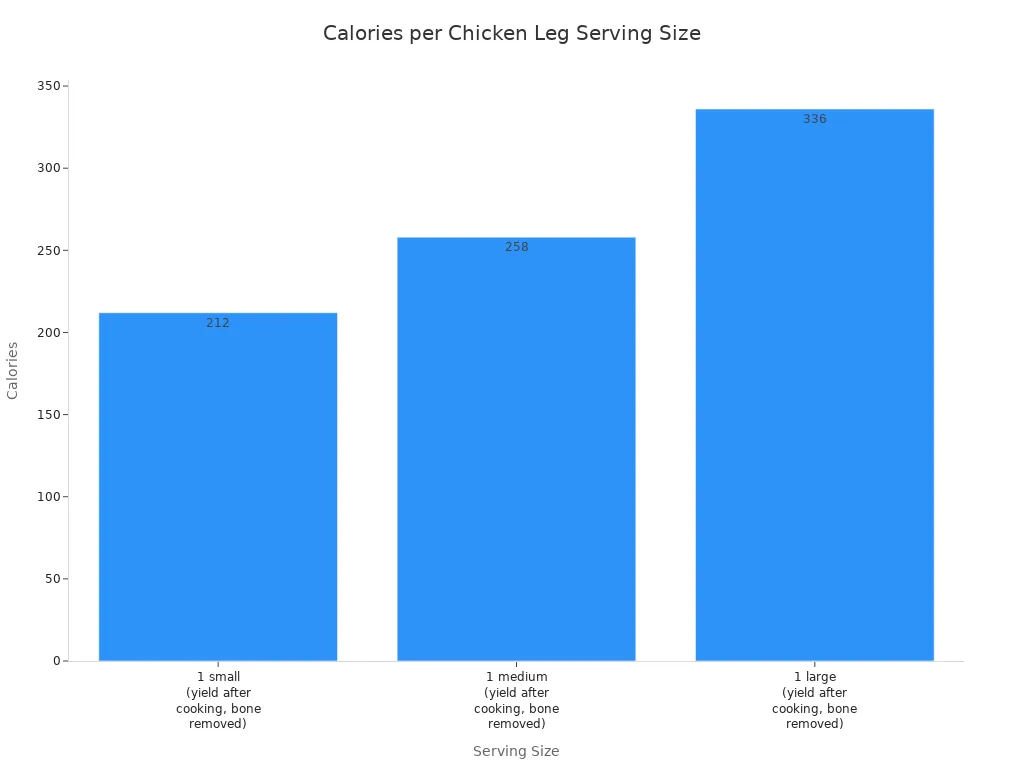
Knowing the calorie count for chicken legs helps you manage your energy intake. The calories in chicken legs can vary. A small chicken leg contains about 212 calories per 100 grams. If you look at chicken drumsticks specifically, they have around 155 calories per 3.5 ounces (100 grams). Skinless chicken drumsticks are slightly higher, with about 172 calories. A whole chicken leg (112g, bone removed) can have around 284 calories.
Here is a look at the calories for different serving sizes of chicken legs:
Serving Size | Calories |
|---|---|
1 small (yield after cooking, bone removed) | 212 |
1 medium (yield after cooking, bone removed) | 258 |
1 large (yield after cooking, bone removed) | 336 |
You can see how the size of your chicken leg impacts the total calorie count.
Essential Vitamins and Minerals
Chicken legs offer more than just protein and fat. They also provide important vitamins and minerals. These micronutrients play key roles in your body’s functions. For example, chicken drumsticks are rich in Selenium. You get about 66.3 mcg of Selenium, which is more than 100% of your daily value.
Selenium is important for your immune system and thyroid function. You also get a good amount of Niacin (Vitamin B3), around 15.6 mg. Niacin helps convert food into energy. Vitamin B6 is another key nutrient, providing about 29% of your daily value. This vitamin supports brain development and function. The nutritional breakdown of chicken drumsticks shows they are a valuable source of these essential minerals and vitamins. This makes chicken drumsticks nutrition a great addition to your diet.
Chicken Leg Comparison to Other Chicken Cuts
You often wonder how chicken legs stack up against other popular chicken parts. Many people think chicken legs are “less useful meat” because of their fat content. However, skinless options change this perception. You can make informed choices when you understand the differences.
Breast vs. Leg: Nutritional Differences
Chicken breast is famous for being lean. You might choose it for its high protein. Chicken legs, including drumsticks, offer different nutritional benefits. Look at the protein content per 100g:
Chicken Part | Protein per 100g |
|---|---|
Chicken Breast | 31g |
Chicken Leg | 16.4g |
Chicken breast provides more protein per serving. However, chicken legs, especially drumsticks, still give you a good amount of protein. They also contain more healthy fats and flavor. You get a richer taste from chicken legs.
Thigh vs. Leg: Similarities & Distinctions
A chicken leg includes both the thigh and the drumstick. So, when you talk about chicken legs, you are often talking about these two parts together. Chicken thighs and drumsticks are both dark meat. They share similar fat content and rich flavor. Drumsticks are smaller and easier to handle. Thighs offer more surface area for cooking. Both are excellent choices for hearty meals. You find them both juicy and flavorful.
Cost-Effectiveness & Value
Chicken legs, including drumsticks, offer great value. They are often much more affordable than chicken breasts. This makes them a smart choice for budget-friendly meals. Consider the average prices:
Item (U.S. city avg) | Sep 2025 price ($/lb) |
|---|---|
Chicken breast, boneless | 4.172 |
Chicken legs, bone-in | 1.796 |
You save money when you buy chicken legs. This allows you to stretch your food budget further. You get delicious, nutritious meat without breaking the bank. Chicken drumsticks are especially economical. You can feed your family well with these versatile chicken parts.
Health Benefits and Considerations
Chicken legs offer many health advantages. You can enjoy them as part of a balanced diet. However, you also need to consider some important dietary factors. While chicken can be low in saturated fat, chicken legs with skin have higher fat content. You can manage this by choosing skinless options or cooking methods.
Key Minerals: Iron & Zinc
Chicken legs provide essential minerals your body needs. Iron and zinc are two important examples. These minerals play vital roles in your overall health. Iron helps carry oxygen in your blood. Zinc supports your immune system and helps with wound healing.
You get a good amount of these minerals from chicken. For example, a serving of chicken leg provides:
Nutrient | Amount |
|---|---|
Iron | 2.1mg |
Zinc | 4.7mg |
These amounts contribute significantly to your daily needs. You support many bodily functions when you include chicken in your meals.
Muscle Growth and Repair
Chicken is well-known as a great source of protein. Chicken legs are no exception. They are high in protein, which is crucial for your body. Protein helps build and repair muscle tissues. If you are active, you need enough protein to recover and grow stronger. The protein in chicken drumsticks supports this process. You give your muscles the building blocks they need to thrive. This makes chicken an excellent choice for muscle health.
Bone Strength and Health
You might not think of chicken legs for bone health, but they offer benefits. Chicken, especially if you cook it with the bone, provides nutrients that support strong bones.
Collagen: Chicken feet are rich in collagen. This structural protein gives strength to your bones.
Bone Formation and Density: Collagen intake can improve bone formation and density. This is especially true for postmenopausal women.
Bone Mineral Density: Studies show that collagen supplementation can increase bone mineral density. It also helps reduce bone degradation.
Major Constituent: Collagen is a primary component of bone mass. Its positive effects on bones come from this role.
Chicken also contains other important minerals for your bones:
Phosphorus: This mineral works with calcium to build strong bones and teeth.
Trace Minerals: Keeping the bone in during cooking can add these minerals. They are beneficial for bone health.
You can support your skeletal system by including chicken in your diet.
Fat Content & Heart Health
The fat content in chicken legs can vary. This depends on whether you eat the skin. Chicken skin contains fat, but not all of it is “bad.”
An ounce of chicken skin contains:
Component | Amount (per 1 ounce chicken skin) |
|---|---|
Total Fat | 8.1g |
Saturated Fat | 2.3g |
Monounsaturated Fat | 3.4g |
Polyunsaturated Fat | 1.7g |
You can see that unsaturated fat makes up most of the fat in chicken skin. Unsaturated fat can help lower ‘bad’ cholesterol. It can also boost ‘good’ cholesterol. This reduces your risk of stroke and heart disease. These fats also support your brain and cell health.
However, you should also be aware of saturated fat. High saturated fat intake consistently increases total cholesterol, LDL cholesterol, and non-HDL cholesterol. This happens regardless of the protein source. Current dietary guidelines prioritize limiting saturated fat intake. Saturated fats have a greater impact on LDL cholesterol levels. Consuming foods high in saturated fats, including some chicken meat, increases your body’s production of LDL cholesterol.
A 2019 study suggests that both red and white meat may have similar effects on cholesterol. Researchers found that high saturated fat intake was linked to increased cholesterol. This was true regardless of the type of meat consumed. Both protein types also led to higher cholesterol levels compared to a non-meat diet. You can manage your fat intake by removing the skin from chicken drumsticks.
Potential Drawbacks and Moderation
While chicken legs offer many benefits, you should also consider potential drawbacks. Moderation is key for any food.
High calories and cholesterol content: The fat and skin on chicken legs contribute to higher calories and cholesterol levels. This can negatively impact atherosclerotic diseases if consumed in excess. You can reduce these risks by removing the skin and visible fat.
Chicken allergy: Some people have allergies to chicken dietary fiber. This can cause reactions like skin rashes, itching, coughing, and swelling. This is especially important when introducing chicken to children’s diets.
Excessive consumption: A study in southern Italy suggests that consuming excessive poultry may be linked to increased all-cause mortality and gastrointestinal cancers. Consuming over 300 grams of poultry per week may increase these risks. Specifically, consuming more than 300 grams of poultry per week was associated with a 2.3% increased overall risk of gastrointestinal cancers in the study population. This rose to 2.6% for men.
You can enjoy the chicken leg nutrition and its benefits. Just remember to practice moderation. You can also choose leaner preparation methods. This helps you avoid potential harms.
Cooking for Optimal Chicken Leg Nutrition
You can maximize the nutritional value and taste of chicken legs with smart cooking choices. This section gives you practical advice. You will learn how to prepare delicious and healthy meals.
Healthy Cooking Methods
Choose healthy cooking methods for your chicken. You can reduce fat content significantly. Grilling, baking, broiling, or poaching are excellent choices. These methods do not require extra fats. Air frying is another innovative cooking method. It gives you the taste of fried chicken with much less oil.
Air frying uses hot air to cook food evenly. This makes crispy and tasty drumsticks with reduced fat. You can also boil chicken. Boiling chicken can slow fat oxidation. It reduces particle size and enhances lipid digestion. Boiled chicken shows the lowest fat oxidation. It also has decreased levels of saturated and monounsaturated fatty acids. Fat droplets are smallest in boiled chicken.
This leads to higher fat digestibility. This is the healthiest way to cook chicken drumsticks if you want to reduce fat. Always remove the skin from chicken drumsticks before cooking or eating. Trim any visible fat from the meat.
Flavorful Seasoning and Marinades
Marinades add great flavor without excess sodium. A low-sodium and nutrient-rich marinade for chicken drumsticks uses fresh ingredients. Orange juice and shallots infuse flavor without adding salt.
This marinade works well for grilling chicken drumsticks or baking. Another option includes 1 cup pineapple juice, 1 tbsp olive oil, 1 tsp garlic powder, 1 tsp onion powder, 1/2 tsp black pepper, 1/2 tsp paprika, and 1 tbsp chopped fresh cilantro. This marinade offers good nutritional value. Remember, chicken absorbs only about 25-50% of marinade ingredients.
Smart Pairings for a Balanced Meal
Pair your chicken drumsticks with nutrient-rich sides. This creates a balanced meal. You can include carrots, green beans, or Brussels sprouts. Potatoes, like red baby potatoes or sweet potatoes, also pair well. Red onion and bell peppers add flavor and nutrients. These pairings complement the meat and provide essential vitamins.
Skin-On Versus Skinless Strategies
Cooking chicken with the skin on helps keep the meat moist. However, removing the skin before eating significantly reduces the calorie and saturated fat content. You can cook drumsticks with the skin for flavor. Then, remove the skin before serving. This strategy gives you the best of both worlds. Roasting chicken drumsticks with skin can enhance flavor. You still control fat intake by removing it later.
Versatile Uses for Chicken Legs

Chicken legs offer incredible versatility in your kitchen. You can transform them into countless delicious meals. This section provides various ways to incorporate chicken legs into your diet.
Everyday Dinner Inspirations
You can easily turn chicken legs into a delicious weeknight meal. Roast drumsticks with herbs and spices for a simple yet flavorful dish. You can also braise these cuts in a rich sauce. This creates tender, fall-off-the-bone meat. Consider making a sheet pan dinner. Combine drumsticks with your favorite vegetables. This makes a complete and easy meal.
Budget-Friendly Meal Planning
Chicken legs are a smart choice for saving money. You can stretch your food budget with this versatile meat. Think of this meat as a “condiment” rather than the main component. This helps you maximize its value. You can create a variety of meals. Include dishes like soup, pasta, quesadillas, and tacos.
This keeps your meals interesting. Accommodate picky eaters by separating components. For example, offer a baked sweet potato bar or chicken tacos. Cook once and eat all week. Double or triple parts of meals during initial cooking. This reduces daily cooking time. Prep ingredients in advance for quicker weeknight meals. This makes your meal planning efficient.
Global Cuisine Applications
Chicken legs shine in many international dishes. You can explore flavors from around the world. Try Lu Jitui, a Taiwanese braised soy sauce chicken. Nigerian Chicken Suya features marinated and grilled drumsticks. Filipino Chicken Inasal offers juicy grilled meat. Mexican Chicken Mole provides a rich, complex sauce over this meat. Filipino Chicken Adobo simmers chicken legs and thighs in vinegar and soy sauce. French Coq au Vin braises these cuts with wine and mushrooms. These dishes showcase the versatility of the drumstick.
Meal Prep Advantages
Chicken legs are perfect for meal prepping. You can cook a large batch of these cuts at the beginning of the week. Then, use them in various meals. Shred the cooked meat for salads or sandwiches. Add it to stir-fries or wraps. This saves you time during busy weeknights. You can quickly assemble a healthy diet dinner. This makes meal prep simple and effective.
You now understand the excellent chicken leg nutrition. This versatile chicken leg offers great protein and essential nutrients. It is an affordable and healthy protein source. This protein helps build your body. Proper cooking methods and preparation maximize its protein benefits and taste. You can confidently add chicken to your hearty dinners. With the right approach, this protein-rich chicken becomes a delicious, nutritious part of a balanced diet. Enjoy wholesome meals with plenty of protein.