

Many people want to cook salmon perfectly. It is frustrating when it turns out overcooked or undercooked. I will show you how to cook salmon that is consistently moist, flaky, and full of flavor. This guide gives you the knowledge and techniques. We will cover selecting your fish, preparing it, various cooking methods, and achieving perfect doneness. Learning the best way to cook salmon is achievable for everyone with my approach.
Selecting & Prepping Your Salmon
To cook salmon perfectly, I always start with the best ingredients. This means choosing the right fillet and preparing it correctly.
Choosing the Best Salmon Fillet
When I pick out salmon, I look for specific signs of freshness. First, I check the color. High-quality salmon has vibrant, even coloring. It ranges from pink to reddish-orange. I avoid any pale, dull, or grayish areas. These colors mean the fish is not fresh. Next, I use my nose. Fresh salmon has a mild, clean scent. It smells like the ocean. If it smells sour, like ammonia, or very “fishy,” I know it is not fresh. I also gently press the flesh. It should feel firm and spring back. If it stays indented, the salmon is not at its best. The surface should look smooth and slightly moist. I avoid slimy or dry fish.
Fresh vs. Frozen Salmon
You can use either fresh or frozen salmon. Fresh salmon is great if you plan to cook it soon. It often has the best texture. However, frozen salmon is a good option too. It is often more convenient. I make sure to thaw frozen salmon properly. I usually move it from the freezer to the refrigerator the night before I plan to cook. This slow thawing helps keep the texture nice.
Preparing Salmon for Cooking
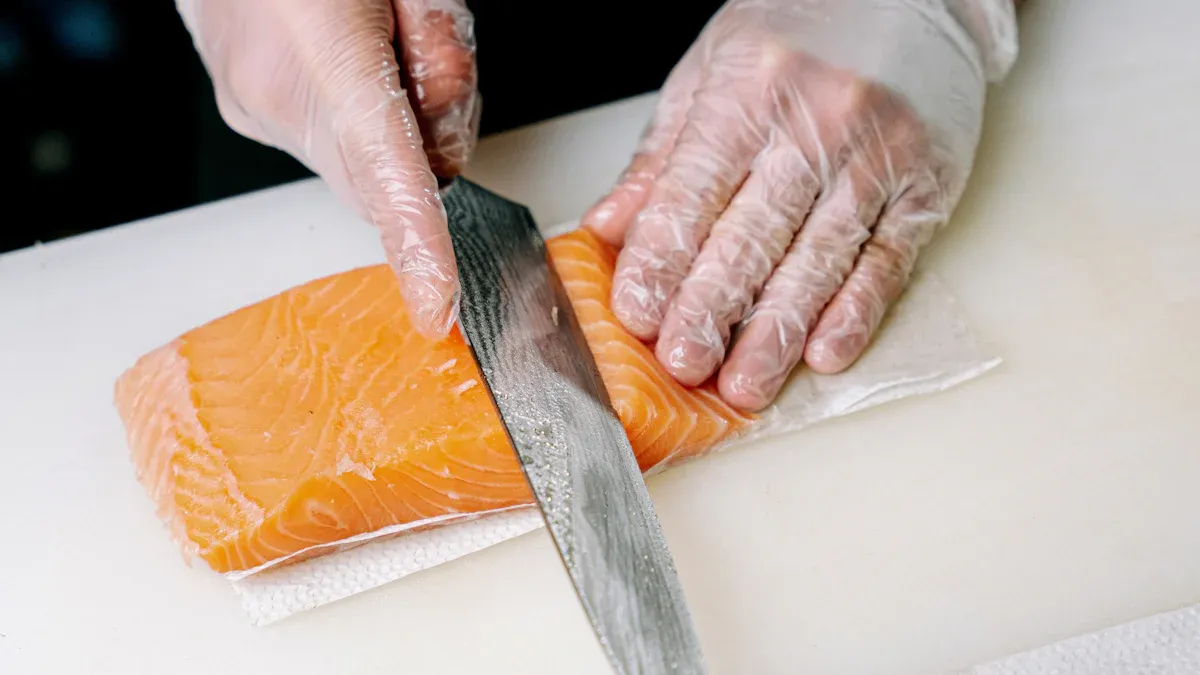
Before I cook salmon, I always bring it to room temperature. I take it out of the fridge about 15-20 minutes before cooking. This helps the salmon cook more evenly. Next, I pat the salmon fillets very dry with paper towels. Removing extra moisture helps the skin get crispy. It also helps the seasoning stick better. Finally, I season it simply. I use salt, black pepper, and sometimes a little olive oil. This simple preparation sets the stage for delicious results.
Top Ways to Cook Salmon Perfectly
I will show you several excellent ways to cook salmon. Each method offers unique flavors and textures. You can choose the best way to cook salmon for your meal.
Pan-Searing for Crispy Skin
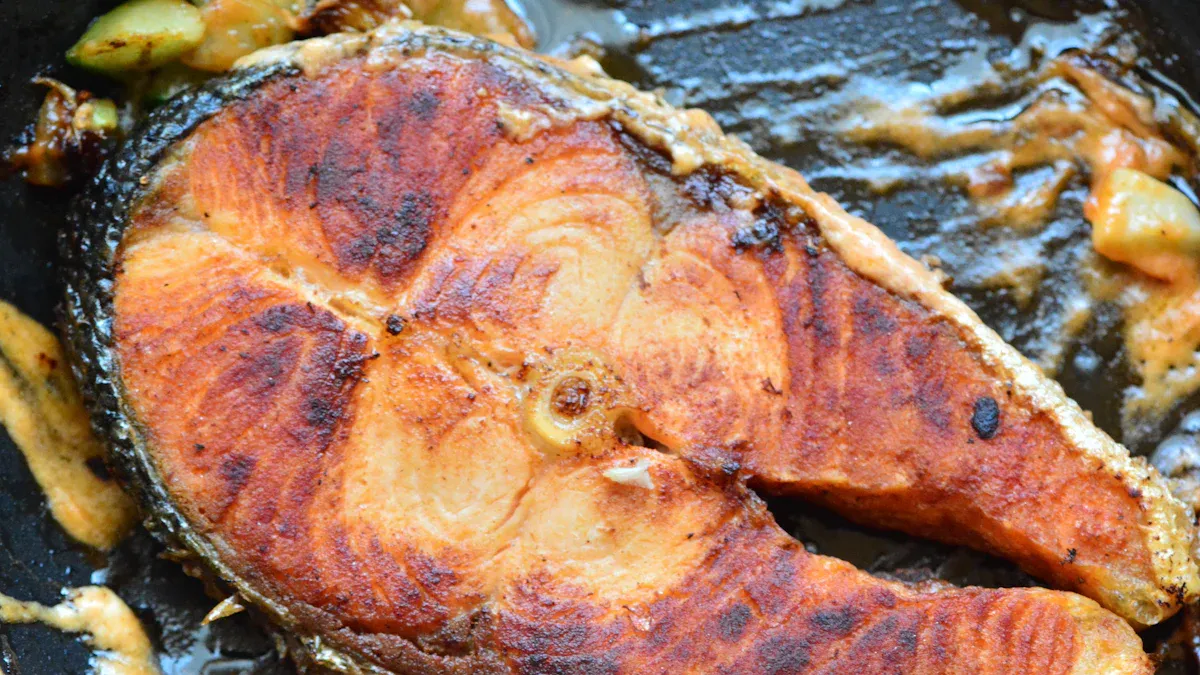
Pan-searing is my favorite method for achieving crispy skin. I heat a skillet over medium-high heat. I add a little high-heat oil. Once the oil shimmers, I place the salmon fillet skin-side down. I cook it for about 4 minutes. The skin becomes beautifully golden and crisp. Then, I flip the salmon. I reduce the heat. I often baste the salmon with garlic butter. This butter basting adds amazing flavor. Many people enjoy pan seared salmon with garlic butter. Other great flavor profiles include creamy herb and garlic sauce, lemon honey glazed salmon, honey garlic salmon, or sesame crusted salmon. For medium doneness, I aim for an internal temperature of about 125°F. This gives me tender, flaky salmon that is still slightly pink. If I want it fully cooked, 140°F is enough.
Easy Healthy Baked Salmon Recipe
My easy healthy baked salmon recipe is simple and delicious. This is a fantastic way to cook salmon. I preheat my oven to 400°F. I place the salmon on a baking sheet. I often arrange it on top of lemon slices. This adds a bright, fresh flavor. I drizzle the salmon with olive oil. Then, I season it with salt, pepper, and minced garlic. I also like to add fresh herbs. Tarragon, parsley, dill, and fennel all work well. Sometimes I use an Italian herb blend. This baked salmon recipe is very versatile. I bake it for 12-15 minutes. The exact time depends on the thickness of the fillet. For a quick salmon recipe, this method is perfect. It is also a great easy healthy baked salmon option. I find that 10-15 minutes per inch of thickness works well. This is the best temperature for baking salmon. These tips for perfectly baked salmon ensure a great meal. I often make this easy healthy baked salmon for dinner. It is a reliable baked salmon recipe. This easy healthy baked salmon is always a hit. I love this easy healthy baked salmon recipe. It is truly an easy healthy baked salmon. This baked salmon recipe is one of my go-to meals. I always recommend this easy healthy baked salmon. This baked salmon recipe is a staple in my kitchen.
Pan-Roasting for Flaky Results
Pan-roasting gives me wonderfully flaky results. I start by searing the salmon in a very hot, oven-safe skillet. I add oil to the skillet. I sear one side for 3-4 minutes. The recipe instructs to sear each side for 2 minutes. Then, I transfer the skillet to a 400°F oven. I cook it for another 15-20 minutes. This method creates a beautiful crust. I often use glazes for my pan-roasted salmon. A honey-mustard glaze is delicious. I also like a soy sauce and honey glaze. I add about 1 teaspoon of soy sauce and honey per fillet after searing. I reduce the heat, cover, and cook for 4 minutes. This helps the glaze form. This is another excellent salmon recipe. This pan-roasted salmon recipe is a favorite.
Grilling Salmon for Smoky Flavor
Grilling salmon gives it a wonderful smoky flavor. I preheat my grill to medium heat. This is usually between 350-400°F. I clean the grates well. Then, I oil them to prevent sticking. I rub the salmon with oil and seasoning. To prevent sticking, I make sure the grill is hot. I also pat the fish dry. Seasoning the fish creates a barrier. I can also use aluminum foil or a cedar plank. For a cedar plank, I soak it first. Then, I place the seasoned fish skin-side down. I grill it over indirect heat. This is a great way to cook salmon. I aim for an internal temperature of 125°F for medium doneness. If I prefer it fully cooked, 135-140°F is my target. I always enjoy how to cook salmon this way.
How to Cook Salmon to Perfect Doneness
I always aim for the right doneness when I cook salmon. This is the most reliable way to ensure safety and perfect texture.
Understanding Internal Temperature
I always use a good quality instant-read thermometer. I insert it into the thickest part of the fillet. I make sure it does not touch the bone or the pan. According to the USDA, salmon should reach an internal temperature of 145°F (63°C) to be considered safe to eat. Cooking salmon to an internal temperature below this recommendation can increase the risk of foodborne illness.
Consuming undercooked salmon can lead to foodborne illnesses from pathogens like Salmonella (causing diarrhea, fever, abdominal cramps), Norovirus (nausea, vomiting, diarrhea), and Vibrio bacteria (fever, vomiting, diarrhea, and in severe cases, blood infections and other complications). In extreme cases, these illnesses can result in life-threatening complications such as sepsis.
Individuals who are pregnant or require a low-microbial diet should avoid undercooked salmon. Eating undercooked seafood, including salmon, increases the risk of contracting foodborne illnesses. Symptoms can include fever, nausea, vomiting, diarrhea, dehydration, and in severe cases, blood infections. These often appear as soon as six hours after consumption.
I know the risks of undercooked fish. I always prioritize safety. The correct internal temperature of cooked salmon is key.
Visual Cues for Doneness
While a thermometer is best, I also look for visual cues. This helps me know how to know when salmon is done baking. Salmon is done when its flesh turns opaque. It should also flake easily with a fork. I gently press on the thickest part of the fillet. If it separates into layers without resistance, it is ready. The center should still look slightly translucent. This means it is moist and not overcooked.
The Importance of Resting
I always remove my salmon from the heat a few degrees before it reaches its target internal temperature. This is called “pull temperature.” The salmon continues to cook even after I take it off the heat source. This is “carryover cooking.” The heat from the outer parts of the fish moves inward. This raises the internal temperature of cooked salmon by several degrees.
The scientific explanation for carryover cooking is rooted in the heat equation. This equation describes how heat distributes itself through a substance over time. Heat transfers directly between adjacent points. It moves from areas of higher energy to lower energy. The greater the temperature difference between areas, the faster the heat transfer. This principle explains why the hotter outer surface transfers heat inward to the cooler center. This happens even after I remove the food from the heat source.
I have seen this effect many times. The final internal temperature of cooked salmon will be higher than when I pulled it.
Cooking Temperature | Initial Temperature | Final Temperature | Carryover Temperature Rise |
|---|---|---|---|
300°F | 140°F | 147.3°F | 7.3°F |
425°F | 140°F | 159.0°F | 19°F |
Several factors influence carryover cooking:
Thermal Mass: Larger pieces of food have more heat to distribute. This leads to greater carryover.
Geometry (Shape): The shape of the food affects how much surface area vents heat. Spherical shapes have less surface area for their volume. They are more prone to carryover cooking.
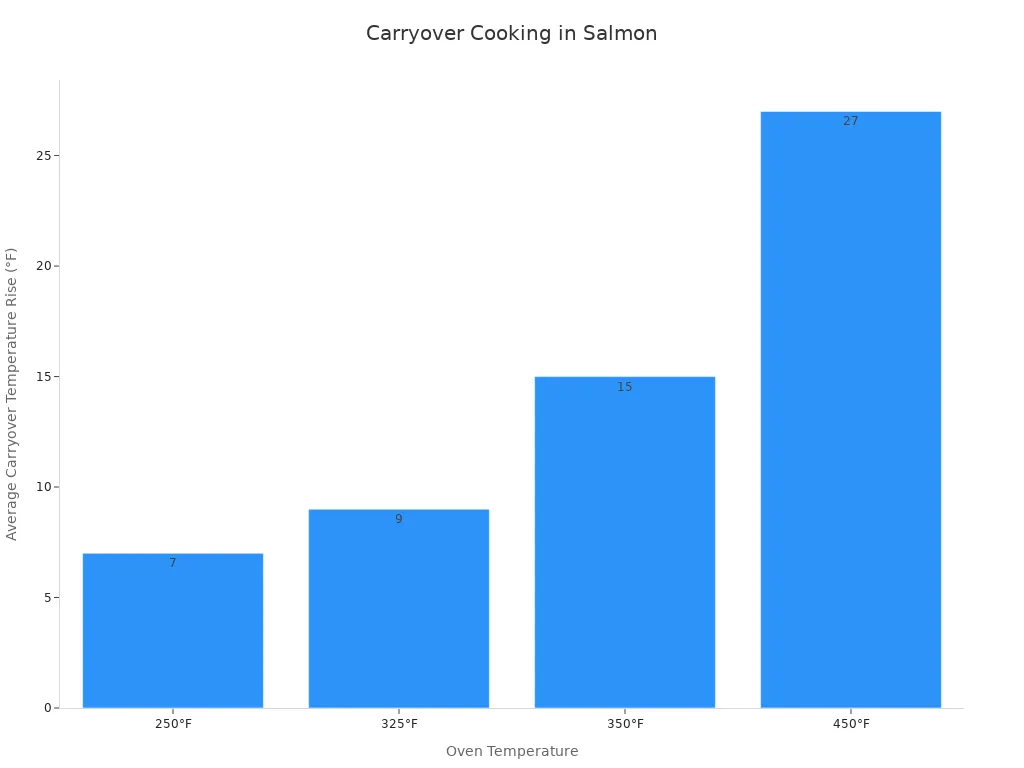
Cooking Temperature: Higher cooking temperatures create a larger temperature difference. This is between the food’s surface and its center. This results in more significant carryover cooking.
Oven Temperature | Average Carryover Temperature Rise (after 5 minutes) |
|---|---|
250°F | 7°F |
325°F | 9°F |
350°F | 15°F |
450°F | 27°F |
I usually let my salmon rest for 5-10 minutes. I cover it loosely with foil. This allows the juices to redistribute. It also ensures the fish finishes cooking to perfection. This resting period is crucial for moist, flaky results. It is how I cook salmon perfectly every time. Knowing the best temperature for baking salmon and understanding carryover cooking helps me achieve this. This knowledge also helps me know how to know when salmon is done baking. I always consider this when I decide how to cook salmon.
Troubleshooting & Serving Your Salmon
I want you to enjoy your salmon. So, I will share some common pitfalls and how to avoid them. I will also give you ideas for serving and storing your delicious fish.
Avoiding Common Cooking Mistakes
I have seen many home cooks make mistakes with salmon. I want to help you avoid them. One common error is not starting the salmon skin-side down. This is important for maximum crispiness. Another mistake is cooking at too high a temperature. This can dry out the fish. It can also cause that white goo to appear. I always check the internal temperature. This ensures I cook it to medium or medium-rare. I also check for and remove pin bones. They can be a choking hazard. Finally, I use enough fat in the pan. Too little fat can make the fish stick. It also impacts the flavor. These are important tips for perfectly baked salmon and other cooking methods.
Flavor Pairings & Simple Sauces
I love to pair salmon with different flavors. This makes each salmon recipe exciting. Classic pairings include roasted fennel and charred onion sauce. I also enjoy radicchio, endives, and dill with my salmon. Mango miso sauce with asparagus is another great choice. Demi-sec tomatoes and olive basil vinaigrette also complement salmon well.
I often make a simple sauce for my salmon. It transforms a basic fish dinner. This homemade sauce for salmon is one of the easiest and quickest recipes. It comes together in minutes. I melt unsalted butter in a large skillet over medium heat. I sprinkle in all-purpose flour and whisk for about one minute. Then, I slowly pour in light cream while stirring. This keeps it smooth. I stir in minced garlic, lemon juice, lemon zest, dried basil, dried parsley flakes, red pepper flakes, salt, and pepper. I let the sauce simmer gently. Then, I lower the heat. I stir in freshly grated Parmesan cheese until it melts. This sauce is buttery, creamy, and a little zesty. It is full of flavors. Butter and cream provide richness. Lemon and garlic add brightness. Dried herbs and Parmesan create a savory layer. This sauce perfectly adheres to the salmon. It makes any salmon recipe feel restaurant-quality.
Storing Leftover Cooked Salmon
I always make sure to store leftover cooked salmon properly. This keeps it fresh and safe. First, I allow the cooked salmon to cool to room temperature. Then, I store the cooled salmon in an airtight container. I can also wrap it tightly in plastic wrap or aluminum foil. Cooked salmon can be safely stored in the refrigerator for 3 to 4 days. I always refrigerate it within two hours of cooking. I keep it at or below 40°F. This prevents bacterial growth. This ensures my leftover salmon recipe is still delicious and safe to eat.
I have shown you that cooking perfect salmon is an achievable goal. You now have the techniques. Remember, proper selection, understanding cooking methods, and mastering doneness are key. I encourage you to experiment with different methods and flavors. Go ahead. Enjoy perfectly cooked salmon in your own kitchen tonight! 🐟