

You want a forged chef knife that feels right, holds an edge, and lasts through daily use. Pick from these five: a 4-piece hand-forged butcher and chef set for heavy work, the Farberware Edgekeeper 8″ for low-maintenance cooks, the Dalstrong 8″ Vanquish for precise, razor-sharp performance, a six-piece hand-forged high carbon set for traditional feel and nonstick hammered finish, and the Henckels Forged Accent 8″ for reliable balance and comfort; keep reading to learn what fits you best.
| 4-Piece Hand-Forged Butcher & Chef Knife Set |
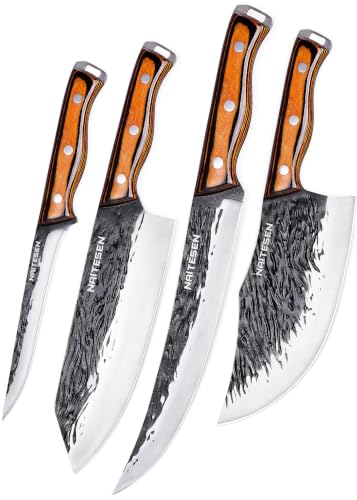
| Best for Butchery | Blade Material: 5Cr15MoV high‑carbon steel | Construction: Hand‑forged, full tang | Edge/Sharpness: Factory water‑wheel sharpened | VIEW LATEST PRICE | Read Our Analysis |
| Farberware Edgekeeper 8″ Chef Knife with Self-Sharpener |

| Best for Maintenance | Blade Material: High carbon stainless steel | Construction: Forged (triple‑riveted handle) | Edge/Sharpness: Self‑sharpening sheath (Edgekeeper) | VIEW LATEST PRICE | Read Our Analysis |
| Dalstrong 8″ Vanquish Forged High-Carbon Chef Knife |

| Professional Performance | Blade Material: High‑carbon German steel | Construction: Forged (taper‑ground) | Edge/Sharpness: Hand‑sharpened (9–11° per side) | VIEW LATEST PRICE | Read Our Analysis |
| Hand-Forged High Carbon Steel Chef & Knife Set |

| Complete Knife Kit | Blade Material: High carbon steel | Construction: Forged, full tang | Edge/Sharpness: Holds sharp edge (requires maintenance) | VIEW LATEST PRICE | Read Our Analysis |
| Henckels Forged Accent 8-inch Chef’s Knife Black |

| Reliable Everyday Knife | Blade Material: German stainless steel | Construction: Forged bolster construction | Edge/Sharpness: Precision finely honed edge | VIEW LATEST PRICE | Read Our Analysis |
More Details on Our Top Picks
4-Piece Hand-Forged Butcher & Chef Knife Set
If you cook for a big family, cater events, or love weekend barbecues, this 4-piece hand-forged butcher and chef knife set is built to make your work easier and more reliable. You get an 8.5″ cleaver for bones and game, a 9″ breaking knife for large cuts and turkey, an 8″ Serbian chef knife for slicing and veg, and a 6.5″ boning knife for trimming and deboning. Each blade is hand forged from 5Cr15MoV steel, quenched, and hardened to 56+ HRC with a protective black finish. The full tang gold-black handle feels balanced, sturdy, and comfortable. Care is simple: wipe dry, avoid harsh detergents, and oil before first use.
- Blade Material:5Cr15MoV high‑carbon steel
- Construction:Hand‑forged, full tang
- Edge/Sharpness:Factory water‑wheel sharpened
- Handle:Gold‑black wooden, three rivets
- Care Requirements:Hand wash; dry; avoid corrosives
- Warranty/Support:Lifetime manufacturer warranty; 24/7 support
- Additional Feature:Heavy-duty cleaver included
- Additional Feature:Deeply oxidized black finish
- Additional Feature:Gold-black three-rivet handle
Farberware Edgekeeper 8″ Chef Knife with Self-Sharpener
You’ll appreciate the Farberware Edgekeeper 8″ Chef Knife when you want a reliable, low-maintenance blade that stays sharp with almost no fuss, especially if you cook often and hate stopping to sharpen knives. You get an 8 inch forged high carbon stainless blade and a triple-riveted ergonomic handle that fits your hand for long prep sessions. The protective sheath contains a built-in sharpener that hones the edge as you slide the knife in and out, so you maintain a keen edge without skill. Hand wash only, wipe the sleeve, and use gentle motion when inserting the knife.
- Blade Material:High carbon stainless steel
- Construction:Forged (triple‑riveted handle)
- Edge/Sharpness:Self‑sharpening sheath (Edgekeeper)
- Handle:Ergonomic plastic/stainless, triple rivets
- Care Requirements:Hand wash recommended; dry; wipe sheath
- Warranty/Support:(Manufacturer info provided; standard support) Lifetime Brands product info
- Additional Feature:Built-in sheath sharpener
- Additional Feature:Lightweight (11.3 oz)
- Additional Feature:Triple-riveted forged handle
Dalstrong 8″ Vanquish Forged High-Carbon Chef Knife
Chefs who want a dependable, razor-sharp workhorse will reach for the Dalstrong 8″ Vanquish. You’ll notice its forged high-carbon German steel blade holds an edge with 55+ Rockwell hardness, so it stays keen through heavy prep. The taper-ground, stone-polished surface and 9–11 degree hand-sharpened angle per side give you clean, precise cuts whether you’re mincing, slicing, chopping, or disjointing. The midnight black POM handle resists water and heat and feels comfortable for long shifts, with a distinctive Lion Head pin for grip and style. NSF certified, it comes with a sheath, lifetime warranty, and Dalstrong luxury packaging.
- Blade Material:High‑carbon German steel
- Construction:Forged (taper‑ground)
- Edge/Sharpness:Hand‑sharpened (9–11° per side)
- Handle:Midnight black POM handle
- Care Requirements:Hand wash implied; stone‑polish/maintenance
- Warranty/Support:Lifetime warranty; satisfaction guarantee
- Additional Feature:9–11° hand-sharpened edge
- Additional Feature:NSF certified
- Additional Feature:Custom-fit protective sheath
Hand-Forged High Carbon Steel Chef & Knife Set
This hand-forged high carbon steel chef and knife set is best for home cooks who want restaurant-level performance without a steep learning curve, because the full-tang, ergonomic design gives steady balance and confidence at the cutting board. You get six knives that cover every task: chef, santoku, nakiri, Serbian chef, boning, and utility. The blades are forged, stonewashed, and hammered for toughness and a nonstick feel, though they need regular care to avoid rust. Premium wood handles feel secure. A canvas and leather bag stores knives, shears, honing steel, and pocket items, so you can cook at home or outdoors.
- Blade Material:High carbon steel
- Construction:Forged, full tang
- Edge/Sharpness:Holds sharp edge (requires maintenance)
- Handle:Premium wood, ergonomic full tang
- Care Requirements:Hand wash; dry; oil before first use
- Warranty/Support:(Manufacturer support implied) Care/warranty details included
- Additional Feature:Includes canvas-leather knife bag
- Additional Feature:Comes with poultry shears
- Additional Feature:Stonewashed hammer-finish blades
Henckels Forged Accent 8-inch Chef’s Knife Black
If you want a reliable all-purpose chef’s knife that feels familiar from the first cut, the Henckels Forged Accent 8-inch in black is a great pick for home cooks who want pro-level steel without a high price. You’ll notice the German stainless steel blade quickly, since its satin finish looks sharp and the edge is finely honed to hold its bite. The forged bolster gives balance and a seamless flow into the triple-riveted ergonomic handle, so your grip stays sure during long prep. It’s dishwasher safe but you’ll want to hand wash to protect the finish and edge over time.
- Blade Material:German stainless steel
- Construction:Forged bolster construction
- Edge/Sharpness:Precision finely honed edge
- Handle:Ergonomic triple‑riveted handle
- Care Requirements:Dishwasher safe but hand wash recommended
- Warranty/Support:(Brand support implied) Henckels product warranty info
- Additional Feature:Forged bolster construction
- Additional Feature:Stainless-steel endcap logo
- Additional Feature:Professional satin finish
Factors to Consider When Choosing Forged Chef Knives
When you pick a forged chef knife, start by checking the blade steel, its hardness, and how long the edge will hold up under regular use. You’ll also want to note the forging and overall construction because that affects balance and durability, while the blade profile and grind determine how the knife slices and what tasks it handles best. Don’t forget the handle material and ergonomics since a comfortable grip keeps you safe and confident during long prep sessions.
Blade Steel Type
Because the steel under the blade decides how your knife will behave, you should start by learning the basics of blade types and what they mean for everyday use. You’ll choose between high carbon stainless steels that balance edge life and rust resistance and plain high carbon steels that get keener yet need more care. Pay attention to alloying elements like vanadium, molybdenum, and chromium since they refine grain structure and boost wear resistance, toughness, and corrosion protection. Also note that heat treatment and tempering shape final performance, so the same steel can act very different depending on factory processes. Match edge geometry to steel: harder steels take slimmer angles, softer steels suit thicker, tougher edges that are easier to sharpen.
Hardness And Edge Retention
You already learned how steel type and heat treatment shape a blade’s character, so let’s look at how hardness ties into edge life and everyday use. Hardness, measured in HRC, tells you how long a knife will stay sharp. Steels around 55 to 62 HRC hold edges longer but can be more brittle. That means you’ll sharpen less, yet you must avoid impacts that chip the edge. Tempering and heat treatment set the final HRC, so makers aim for a balance between toughness and edge life. Edge geometry also matters; narrow angles like 9 to 15 degrees per side cut cleaner and keep sharpness, but they demand harder steel and careful handling. For most cooks, 56 to 58 HRC is a safe, durable choice.
Forging And Construction
Feel the difference in a forged chef knife the moment you pick it up; the blade was shaped from a single piece of heated steel and hammered into form, and that process refines the grain and gives the knife extra toughness. You’ll notice full-tang construction next, where steel runs through the handle, giving better balance and less chance of handle cracking. Pay attention to heat treatment too, since hardening and tempering set Rockwell hardness, usually 55–62 HRC, which affects edge life and brittleness. Forging often leaves texture and lets makers add thicker heels and bolsters for cutting power. Many blades get surface treatments and careful hand finishing like taper-grinding and hand-sharpening to boost sharpness, corrosion resistance, and food release.
Blade Profile And Grind
Think about how a knife moves through food and you’ll see why blade profile and grind matter so much; they set the knife’s personality and decide how you’ll cut. You want a blade shape that matches your motion. A curved chef’s profile favors rocking. A straighter nakiri suits push cuts on vegetables. A drop point balances slicing and control. Next, pay attention to the grind. Full flat, hollow, saber, or compound grinds change edge angle, sharpness, and sharpening ease. Thinner primary bevels with lower included angles around 9 to 15 degrees per side slice beautifully but wear faster. Blade thickness and distal taper also matter. Thin tapers reduce drag and help precision. Thicker spines add strength for tougher chores, so choose based on how you cook.
Handle Material And Ergonomics
You’ve already learned how blade shape and grind shape the way a knife moves through food, so handle design will decide whether that motion feels natural or fights you. You want a full-tang build because steel running the full handle cuts risk of cracking and loosening. Choose materials like POM, stabilized wood, or premium plastics so water and heat won’t swell the scales or invite bacteria. Look for ergonomic contours, finger guards, and smooth bolsters to reduce wrist strain and keep a sure grip during long prep. Triple or multi-rivet fastening keeps scales pinned tight under heavy use. Pay attention to how the handle feels in your hand and how secure it stays when wet. Small choices here make big differences in comfort and safety.
Balance And Weight Distribution
When you hold a forged chef knife the first time, balance will tell you more than length or shine, so pay close attention to where the knife naturally pivots in your hand. You want that pivot near the bolster or where blade meets handle. A neutral pivot makes the knife feel neither blade heavy nor handle heavy, so you stay steady during long prep. Full tang and even steel distribution along the spine and handle improve control for slicing and rocking. Heavier, forward balanced blades help when you chop dense items. Lighter, handle balanced knives give more precision and reduce fatigue for detailed work. Remember handle shape, material, and rivet placement shift the center of mass, so test in your dominant grip for comfort.
Maintenance And Care
Because a forged chef knife is an investment, you’ll want simple routines that keep it sharp and rust-free so it serves you every day. Hand-wash your knife right after use with warm water and mild soap, then dry it completely to stop surface oxidation and stains. Don’t put forged blades in the dishwasher, and avoid leaving them in contact with acidic or alkaline foods for long. Hone the edge with a steel before or after use to keep the blade aligned, and sharpen on a whetstone or by a pro when it dulls, typically every few months. If you have high carbon steel, rub a thin coat of food safe mineral oil on the blade before storage. Store knives in a block, on a magnetic strip, or in sheaths to protect the edge.
Warranty And Support
While a great forged chef knife can feel like a lifelong companion, its real value depends a lot on the warranty and support that stand behind it. You should confirm the warranty length and what it covers, like defects in materials and workmanship, versus normal wear or misuse. Check whether sharpening, edge repairs, or rehandles are included, and read exclusions for corrosion or improper maintenance. Look for clear return, repair, and replacement procedures and note required proof, such as receipt, serial number, or registration, and any fees. Make sure the maker offers accessible customer support by phone, email, or chat with stated response times. Also verify transferability and extra resources like care guides, sharpening help, and parts availability to keep your knife reliable.