

Long shelf life matters, but packaging, serving count, preparation, and portability can be just as important during a storm, outage, or camping trip. I’ve compared eight emergency food options spanning compact bars, freeze-dried meals, breakfast buckets, fruit-and-vegetable mixes, and metal-packaged rations. My focus is straightforward: food that remains practical after months in storage and still fits the way it will actually be used.
The Choices Worth Comparing

HIISIIN Caramel Cinnamon 20-Year Ration Bars

Ready Hour 120-Serving Freeze-Dried Entree Bucket
72 HRS 3600-Calorie 72-Hour Rations, 9 Bars

The Survival Tabs Original Bulk Tabs
The Survival Tabs 8-Day Original Tabs

Ready Hour Fruit & Veggie Mix, 56 Servings

Ready Hour Breakfast Bucket, 128 Servings
BDH Emergency Food Rations Tin Pack
More Details On Our Top Picks
HIISIIN takes a bar-based approach that suits small emergency kits, hiking packs, and households that need food without refrigerator space. The caramel cinnamon flavor gives the ration format a more approachable profile than a plain compressed bar, although one package may not provide a complete meal plan for several adults.
The claimed 20-year shelf life is the main appeal for long-term storage. In a closet, garage shelf, or vehicle kit, the compact format takes less room than a large meal bucket, but I would treat it as a supplement to a more varied food supply rather than the only reserve in the home.
The Upside
- Compact bar format simplifies packing
- Caramel cinnamon flavor improves variety
- Twenty-year storage claim supports long-term planning
Things To Consider
- The one-pack format may offer limited serving flexibility
- Storage conditions still matter for packaged food
Made For
This option best fits hikers, commuters, and small-kit planners who value compact packaging over a full meal rotation.
Where Another Pick Suits Better
Ready Hour 120-Serving Freeze-Dried Entree Bucket suits households wanting multiple prepared meals and broader serving capacity.
Ready Hour 120-Serving Freeze-Dried Entree Bucket is built around a larger household reserve rather than a single-person snack supply. Freeze-drying removes much of the water from food, which reduces storage demands while preserving a meal that can be rehydrated with water.
The 120-serving count and durable, flood-safe container make this a strong fit for a basement pantry, garage, or vacation-home emergency cache. It needs a cool, dry storage area, so the container should remain sealed and protected from moisture.
Practical Advantages
- 120 servings support household-scale planning
- Flood-safe container improves storage protection
- No refrigeration simplifies pantry use
- Freeze-dried meals offer broader meal coverage
Honest Caveats
- Rehydration adds a preparation step
- Free space is greater than with compact bars
Key Specs
Who It Suits Best
It suits families, apartment dwellers, and campers who want a substantial meal reserve with a manageable serving format.
A Better Fit Elsewhere
HIISIIN Caramel Cinnamon 20-Year Ration Bars fit smaller kits more neatly than this larger meal bucket.
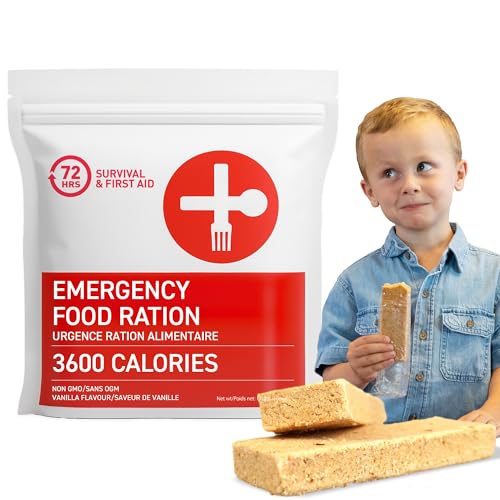
72 HRS 3600-Calorie 72-Hour Rations uses a defined energy target and a three-day format, which makes it easy to organize for a power outage, earthquake response, or roadside emergency. Each pouch contains nine bars, and each bar supplies 400 calories according to the product description.
The vacuum-sealed packaging is heat-sealed and resealable, helping protect unfinished contents from exposure. I would still keep the pouch in a dry, stable location and rotate portions instead of storing the entire package open.
What It Does Well
- 3,600-calorie package supports a three-day plan
- Individual bars simplify portioning
- Sealed packaging supports storage protection
- Wide temperature claim suits varied conditions
Worth Noting
- Nutrition is calorie-focused rather than meal-focused
- The pouch should be kept properly sealed
Feature Snapshot
Built With In Mind
It fits people who need compact, pre-portioned energy for a short disruption and value a clearly stated calorie target.
Consider Something Else
Ready Hour 120-Serving Freeze-Dried Entree Bucket serves people who prefer prepared meals over bars.
The Survival Tabs Original Bulk Tabs are built around volume reduction, making them relevant for personal emergency kits and small apartments where a bucket would occupy too much space. The source describes a pouch format intended to provide compact nutrition during natural disasters and similar disruptions.
That low-volume design is the advantage. The trade-off is that a tab format is less satisfying for people who want recognizable meals or ingredients, and the listed 45-day figure is based on an average person rather than every individual.
Useful Highlights
- Compact design reduces storage volume
- Personal pouches are easy to distribute
- Includes 15 vitamins and minerals
- Protein-based nutrition supports compact meals
Room For Improvement
- Consumption needs vary by person
- Tab format offers less meal variety
- Individual serving details are limited
Who Should Grab It
This choice suits solo preparedness kits, dorm rooms, and anyone who prioritizes storage efficiency over meal variety.
Another Choice May Suit
Ready Hour Breakfast Bucket, 128 Servings better fits families that want named breakfast options and larger serving volume.
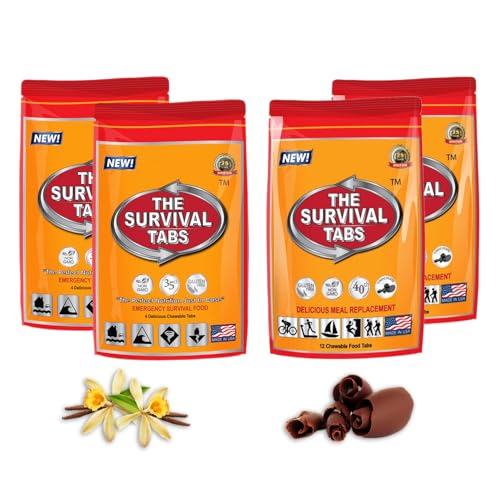
The Survival Tabs 8-Day Original Tabs narrow the bulk-style format into a stated eight-day personal supply. That makes the product easier to think about for a go-bag, vehicle kit, or short emergency where carrying one pouch matters more than stocking many meals.
Its compact nutrient-dense approach is useful for minimizing volume, while the listed vitamin and mineral content gives shoppers something concrete to compare. As with the original bulk tabs, the eight-day figure represents an average-person scenario, so individual requirements may differ.
Where It Excels
- Eight-day format is easy to plan around
- Compact pouch travels well in a go-bag
- Includes 15 vitamins and minerals
- Designed for disaster and survival kits
Points To Keep In Mind
- Eight-day coverage is based on an average person
- Tab format may not provide satisfying variety
Core Details
The Right Fit
It fits travelers, apartment residents, and everyday preparedness planners who need one-person kit efficiency.
Where A Sibling Pick Shines
Ready Hour 120-Serving Freeze-Dried Entree Bucket is the stronger fit for households seeking prepared meals and broader serving capacity.
Ready Hour Fruit & Veggie Mix, 56 Servings fills a different role from the entree bucket: it supplies produce rather than a full meal. That makes it useful alongside grains, beans, or another entrée, particularly for shoppers who want to avoid a reserve made entirely of bars and buckets.
The stated 30-year shelf life is the standout storage attribute, while the flood-safe container and carry handle improve handling. Rehydration is still part of the routine, and the mix is less convenient for eating straight from the package during a fast-moving situation.
The Case For It
- Thirty-year shelf-life claim supports long planning
- Fruit-and-vegetable variety complements entrées
- 56 servings fit a moderate household reserve
- Flood-safe container supports protected storage
Trade Offs
- Needs rehydration before eating
- Does not replace complete meals on its own
Feature Facts
Who Will Love This
It suits long-term planners and families who want a shelf-stable produce component beside their main emergency meals.
Skip It When
72 HRS 3600-Calorie 72-Hour Rations, 9 Bars is more convenient for pre-portioned energy that requires no rehydration step.
Ready Hour Breakfast Bucket, 128 Servings takes a focused approach to morning food, offering seven food and drink varieties rather than one repetitive item. Oatmeal, pancakes, scrambled eggs, and other breakfast choices give households more rotation during an extended outage or camping stay.
Preparation is straightforward: add water, heat, and eat, although some items need no preparation. The stated daily calorie figure exceeds 2,000, and the 25-year shelf life is useful for a pantry reserve, though breakfast-only coverage means I would pair it with entrées and fruit or vegetables.
The Value In It
- Seven breakfast choices reduce repetition
- 128 servings support household planning
- Daily calorie figure exceeds 2,000
- Some varieties need no preparation
Points To Note
- Most meals require added water
- Breakfast specialization leaves gaps in full-meal coverage
Made For
It suits families, morning commuters, and camp hosts who want a dedicated breakfast reserve with selectable varieties.
Look Elsewhere
Ready Hour 120-Serving Freeze-Dried Entree Bucket better fits households seeking savory meal options beyond breakfast.
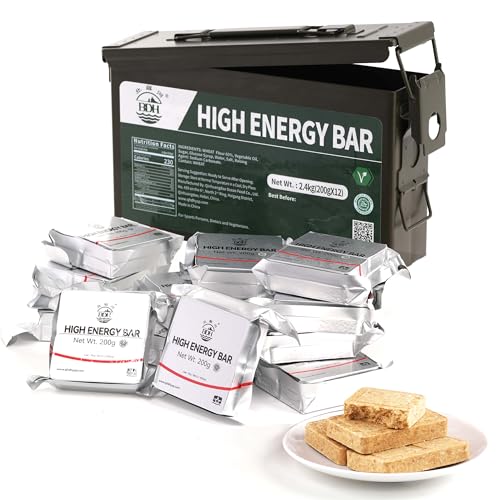
BDH Emergency Food Rations Tin Pack brings a metal container into a category dominated by foil, paper, and plastic packaging. That distinction may appeal to shoppers who want a rigid package for transport, stacking, or storage in a less sheltered location.
Available options include original flavor six-pack and 12-pack formats, plus an original wheat flavor 12-pack. The source describes the contents as ration bars, but it does not provide the same serving and shelf-life detail shown for several competing options, so I would confirm package size and storage information before making a large reserve the centerpiece of a plan.
Standout Benefits
- Rigid tin packaging supports compact stacking
- Multiple flavor and pack options
- Metal container suits dry storage areas
Details To Watch
- Serving details are limited in the source information
- Flavor options may not suit every emergency kit
- Rigid packaging adds weight compared with soft wraps
Feature Rundown
The Right Fit
It suits campers and preparedness planners who prefer a rigid metal package and want to compare quantity options.
A Better Fit Elsewhere
72 HRS 3600-Calorie 72-Hour Rations, 9 Bars is clearer for shoppers who need an explicit calorie and duration target.
What Matters Before Building an Emergency Pantry
Long shelf life is only one layer of preparedness. I also compare the number of servings, storage footprint, preparation requirements, and whether the food can realistically be divided among the people relying on it.
Shelf Life and Storage Conditions
A 20-, 25-, or 30-year claim can make long-term planning easier, but the container and storage environment still matter. Cool, dry conditions are explicitly called for in the Ready Hour products, while sealed pouches and rigid tins offer different levels of physical protection. I would rotate packages, keep food away from moisture, and check the packaging periodically for tears or contamination.
Serving Capacity and Household Size
Serving counts tell a more useful story than the number of packages alone. 72 HRS offers nine bars for a defined 72-hour period, while Ready Hour buckets provide 56, 120, or 128 servings depending on the item. Families should compare daily household needs with the stated serving format instead of assuming one package covers everyone equally.
Convenience During an Outage
Freeze-dried meals require water and preparation, while bars and tabs are easier to eat on short notice. That convenience can matter in a kitchen with limited power, during a camping trip, or after a storm interrupts normal cooking. The best format is the one people can realistically store, carry, and serve under stress.
Nutrition and Variety
A reserve containing only one type of food may be practical for a short disruption, but variety improves long-term usability. The Survival Tabs emphasize vitamins, minerals, and protein, the fruit-and-vegetable mix adds produce, and the breakfast bucket provides several morning choices. Combining formats usually creates a more useful pantry than relying on a single category.
Key Considerations Across These Picks
Mistakes Worth Dodging
One common mistake is treating a long shelf life as permission to skip realistic meal planning. Another is buying a large bucket before checking pantry space, water access, and household serving needs. I would also avoid storing food in a damp garage or beside a risk of flooding, since packaging alone cannot prevent moisture damage.
The Upgrade Payoff
Higher-tier emergency food often adds serving volume, preparation flexibility, stronger containers, or a broader choice of meals. Those upgrades matter most for families, frequent campers, and households that may lose power for several days. For a single-person kit, a compact pouch or bar set may provide a more practical balance than a large bucket.
Frequently Asked Questions
What does a 25-year shelf life mean?
It means the manufacturer states the food can remain stored for up to 25 years under suitable conditions. It does not remove the need to keep packaging sealed, dry, and away from damage.
Are freeze-dried emergency meals ready to eat?
Most Ready Hour freeze-dried meals need water and preparation. Some breakfast varieties may require no preparation, so I would read the directions for each individual item.
Which option is best for a small emergency kit?
HIISIIN Caramel Cinnamon 20-Year Ration Bars and The Survival Tabs 8-Day Original Tabs are compact choices. Kit size, serving duration, and preferred food format should guide the final selection.
Can emergency food replace a full pantry?
No single item should be treated as a complete substitute for fresh food, water, and a varied diet. A mixed reserve with meals, produce, and easy-to-eat portions is more useful for extended disruptions.
How should I store long-lasting emergency food?
I would keep the food in a cool, dry place, protect it from pests and moisture, and inspect the packaging periodically. Buckets and tins should sit on stable surfaces, while individual pouches belong inside a larger sealed organizer.
Final Thoughts
I find Ready Hour 120-Serving Freeze-Dried Entree Bucket the most balanced all-around reserve, while the breakfast bucket and fruit-and-vegetable mix make useful additions. For small kits, HIISIIN Caramel Cinnamon 20-Year Ration Bars or The Survival Tabs 8-Day Original Tabs take up less room. The right choice is the one that matches household size, storage space, and the kind of food everyone will actually eat.