

Tough steaks and lean cuts can turn an ordinary dinner into a frustrating chewing exercise. I rely on tenderizers to break dense muscle fibers, distribute marinades, or flatten uneven pieces before cooking, and the right tool makes the job faster without taking over the kitchen.
A mallet suits cooks who want broader control over thickness and texture. Needle-style tools suit cooks preparing marinated beef, pork, or chicken, while ground-meat mashers solve a different task: breaking raw crumbles into smaller, more uniform pieces in the pan. I’ve separated those jobs so each option can be judged by the cooking task it genuinely handles best.
The Leading Options At A Glance

Gourmet Easy Classic Meat Tenderizer
Reginsnow 18/8 Meat Tenderizer

ZASZO 5-Blade Ground Beef Masher

Gourmet Easy 60-Needle Tenderizer
Gourmet Easy 60-Blade Tenderizer

HaverlyStore 21-Needle Meat Tenderizer

EoaMen Heat-Resistant Beef Masher

MEATNED + MEATNEDLUX
A Closer Look At Each Pick
Large, uneven steaks benefit from a mallet that can do more than one job. The Gourmet Easy Classic Meat Tenderizer combines a textured face for breaking dense fibers with a flat side for bringing uneven cuts toward an even thickness, while stainless steel provides the core weight.
For weeknight meals, that dual-sided layout reduces tool switching. The non-slip grip also seems more relevant with thick, slippery beef than it would be with small boneless portions, and the broad faces cover a useful amount of surface with each strike.
The Case For It
- Two working faces handle pounding and flattening.
- Textured steel targets compact muscle sections.
- The broad mallet suits steaks and large cuts.
- A non-slip grip adds leverage during heavier prep.
Small Limitations
- Repeated impacts can flatten the steak too much.
- Owners should wash and dry the textured face promptly to keep food residue from settling into its pattern.
Feature Snapshot
Who It Suits Best
Home cooks preparing thick steaks, chuck cuts, or bone-in portions benefit most from its broad dual-sided head.
Another Choice May Suit
The MEATNED + MEATNEDLUX offers a better fit for cooks who prefer concentrated needle punctures over mallet impacts.
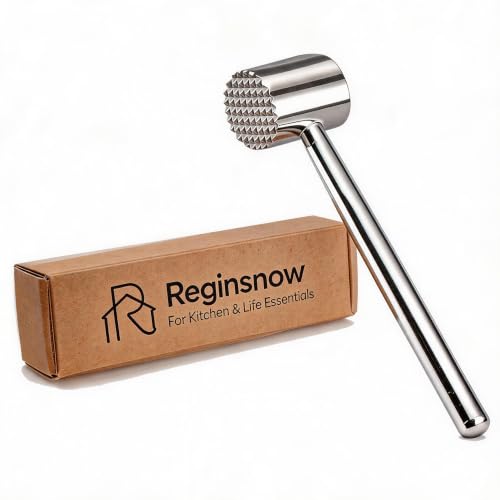
The Reginsnow 18/8 Meat Tenderizer focuses on straightforward metal construction and cleanup. Its dual-sided mallet format makes it more versatile than the Reginsnow’s single-purpose reputation may suggest, particularly for cooks alternating between flattening and fiber-breaking.
Dishwasher compatibility makes this the cleaner choice for busy kitchens. In practical use, material and handling matter more than a complex mechanism, and this model keeps the process familiar from the first piece of meat onward.
Points In Its Favor
- 18/8 stainless steel suits daily kitchen use.
- Dishwasher placement simplifies post-prep cleanup.
- Dual faces expand the tool’s range of tasks.
- It works with beef, poultry, and flattened steaks.
Honest Caveats
- The steel body may feel heavy for very small cuts.
- Marinades benefit from even striking, since concentrated hits can thin one section more than another.
Technical Sheet
Built With In Mind
Cooks who prepare meat regularly and prefer simple stainless steel tools will find the cleanup profile especially practical.
A Better Fit Elsewhere
The ZASZO 5-Blade Ground Beef Masher is the stronger option for breaking raw crumbles directly inside a cooking pan.
Ground beef needs a different kind of tenderizer, and the ZASZO 5-Blade Ground Beef Masher makes that distinction clear. Its curved blades are intended to mince and mix raw meat rather than pierce a whole steak, giving it a narrower role in the kitchen.
During taco night, chili, or meat sauce preparation, the tool can divide large clumps while combining seasonings through the crumbles. The nylon construction and non-slip handle favor a lighter, more maneuverable approach than the steel mallets earlier in this list.
Where It Delivers
- Five curved blades divide raw ground meat.
- The head mixes crumbles and incorporated ingredients.
- A non-slip handle supports repeated downward pressure.
- Nylon construction keeps the tool lighter than steel.
Where It May Fall Short
- It does not flatten whole steaks or distribute marinade through solid cuts.
- Cleaning trapped material between curved blades requires attention during rinsing.
- Its benefits may be subtle in a very small quantity of meat.
Right Fit For
Home cooks making ground beef for tacos, chili, sauces, or stuffed peppers gain more from this masher than from a needle tool.
Look Elsewhere When
The Gourmet Easy Classic Meat Tenderizer serves cooks preparing thick whole cuts rather than meat that has already been ground.
Needle tenderizers trade sweeping impact for concentrated punctures, and the Gourmet Easy 60-Needle Tenderizer covers a generous area in that style. Sixty stainless steel needles give the head a dense working pattern for steak, pork, beef, and chicken.
The one-piece format removes assembly from the process. In a marinade-based meal, that simplicity is valuable: the meat can be seasoned, pierced, turned, and returned to its dish without managing removable parts.
What It Does Well
- Sixty needles cover broad sections of meat.
- The pattern helps marinades enter puncture channels.
- One-piece construction avoids loose components.
- The tool handles several common meat types.
Practical Considerations
- Deep punctures are less useful for flattening uneven cuts.
- Needles require careful rinsing after use, especially after garlic, herbs, or sticky sauces have been applied.
Quick Facts
Made For
Cooks preparing marinated steaks, pork chops, or boneless chicken benefit from the broad needle arrangement.
Where A Sibling Pick Shines
The HaverlyStore 21-Needle Meat Tenderizer may appeal more to cooks who prefer fewer punctures with specified dimensions.
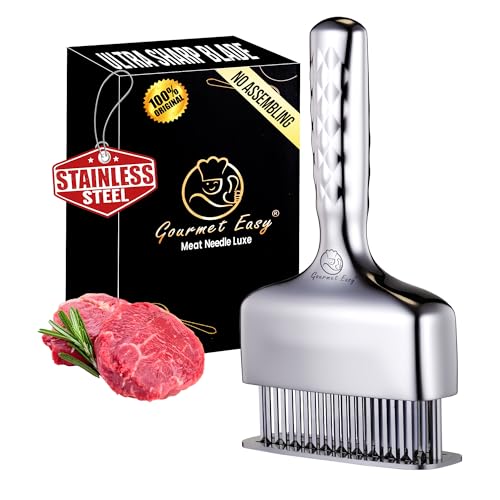
The Gourmet Easy 60-Blade Tenderizer shares the dense needle concept of the earlier Gourmet Easy pick, but its non-slip handle gives it a distinct ergonomic angle. That detail matters during repeated prep, especially when the hand becomes slick from marinade or meat juices.
Nothing needs assembly, so this suits a quick routine involving several chicken portions or a batch of marinated steak. The metal head appears designed to handle solid cuts rather than raw ground beef, keeping the task straightforward for everyday cooks.
The Practical Payoff
- The non-slip handle supports steadier presses.
- Sixty blades create a broad puncturing area.
- The single-piece format starts working immediately.
- It suits frequently marinated beef and poultry.
Details To Watch
- The blade density may be excessive for small or already delicate portions.
- Cleaning between closely spaced blades takes deliberate rinsing.
Who Will Love This
Cooks preparing multiple marinated portions by hand favor the combination of dense blades and a stabilizing grip.
Another Choice May Suit
The HaverlyStore 21-Needle Meat Tenderizer offers a more measured puncture pattern for precise portions.
Unlike the 60-blade models, the HaverlyStore 21-Needle Meat Tenderizer takes a more measured approach. Its 21 needles measure 0.12 inch in diameter and extend 0.8 inch, giving cooks specific penetration dimensions rather than relying on density alone.
That profile may work well for thinner steaks and chicken portions where broad puncturing feels excessive. An automatic rebound mechanism retracts the needles after use, which makes storage tidier than a tool left with its points exposed.
Well-Handled Touches
- Specified needle size supports consistent punctures.
- The 0.8-inch depth reaches beyond the surface.
- Retracting needles improve exposed storage.
- The compact pattern suits controlled portioning.
Less-Strong Areas
- Fewer needles cover less surface per press than the 60-blade models.
- Marinated herbs or garlic can cling around the needle base, so owners should rinse promptly.
Feature Breakdown
Built With In Mind
Cooks who value specified dimensions and compact storage prefer this more measured tool over a broad field of spikes.
Consider Something Else When
The Gourmet Easy 60-Needle Tenderizer suits larger sections requiring more puncture coverage in a single pass.
The EoaMen Heat-Resistant Beef Masher targets the moment after ground beef starts cooking. Unlike the ZASZO masher intended for raw preparation, this model is built for breaking and combining crumbles in a hot pan, with a five-blade head and heat-resistant construction.
That positioning makes it especially useful for weeknight taco meat, sloppy sauces, and skillet dinners. BPA-free material forms the body, while the non-stick designation describes the contact surface and may simplify routine cleanup around cooked meat.
Standout Benefits
- Five blades divide uneven cooked crumbles.
- Heat resistance suits use during pan cooking.
- The non-stick surface reduces sticky-meat contact.
- One tool handles breaking and mixing duties.
Possible Compromises
- It is not designed for flattening whole steaks.
- Residue around the blade junctions requires prompt washing, regardless of the coated surface.
Core Details
The Right Fit
Cooks browning ground beef in a skillet benefit from using the masher after the meat has begun to cook.
A Better Fit Elsewhere
The ZASZO 5-Blade Ground Beef Masher serves cooks who need to divide raw crumbles before heat reaches the pan.
MEATNED + MEATNEDLUX combines two approaches under one metal design: impact for working dense fibers and needle punctures for opening channels into the meat. That versatility distinguishes it from the single-face mallet and pure ground-meat tools covered earlier.
Sixty stainless steel needles cover the precision side, while the solid body requires no assembly. For mixed meal prep, that combination may reduce tool changes, though cooks working primarily with ground beef would still gain more from a dedicated blade masher.
A Few Strong Suits
- One tool combines mallet and needle functions.
- Sixty needles cover a broad puncturing area.
- The one-piece metal body needs no setup.
- Both steak and marinated meat prep are supported.
Some Limits To Know
- The combined head does not specialize in ground-beef crumbles.
- Cleaning between the needles takes more care than wiping a flat mallet face.
- More punctures may be unnecessary for small portions.
Who Should Grab It
Cooks alternating between flattening and marinating solid cuts benefit from having both techniques in one tool.
Reach For A Different Pick When
The EoaMen Heat-Resistant Beef Masher is a better fit for breaking ground beef directly inside a hot skillet.
Choosing The Right Meat Preparation Tool
Start with the cut. Dense whole steaks and thick chops benefit from impact or deep puncturing, while ground beef needs a blade tool that separates and mixes crumbles. A dual-sided mallet serves the widest range of solid-meat tasks, whereas a needle tenderizer is most useful alongside marinade.
Next comes control. Broad faces cover more meat in one strike, but even pressure matters because concentrated blows can make one section thinner than the rest. Needle count also shapes the work: a dense 60-needle pattern provides broad coverage, while a 21-needle layout offers more defined puncture placement.
Handle and cleanup details influence regular ownership. A non-slip grip helps during repeated use, while dishwasher compatibility makes stainless steel mallets easier to maintain. Needle tools require more deliberate rinsing because herbs, garlic, and sauce can collect around the shafts and base.
For ground meat, placement in the cooking process matters. A raw-meat masher divides crumbles before cooking, while a heat-resistant model can remain useful as browned meat cooks in the pan. Matching the tool to that moment prevents a useful utensil from becoming an unnecessary extra.
Practical Details That Change Meat Prep
Common Shopping Slip Ups
Choosing by style alone can lead to the wrong tool. A mallet addresses thickness, a needle head addresses marinade access, and a masher addresses crumbles. Storage matters too, since exposed needles need careful handling and a wide steel head requires more drawer space.
What Separates Premium From Basic
The meaningful upgrade is usually task-specific. More needles increase puncture coverage, a defined spring can improve storage, and dishwasher-safe steel simplifies cleanup. The extra cost is less compelling for cooks who rarely prepare large cuts or ground-beef batches.
Frequently Asked Questions About Beef Tenderizers
Can a meat tenderizer make tough beef easier to chew?
Mechanical tenderizing can break or puncture dense fibers, changing how the cut feels and behaves. The result varies with the cut, pressure, and cooking method.
Should a tenderizer be used before marinating beef?
Using a needle tool before marinating can create additional channels for seasoning and liquid. Mallets also help thinner pieces absorb marinades more evenly.
Is a metal mallet easier to clean than a needle tool?
A flat metal face is generally simpler to rinse because it has fewer gaps. Closely spaced needles need more attention around their bases and shafts.
Do meat mashers replace tenderizing hammers?
No. Meat mashers break and mix ground-beef crumbles, while hammers flatten and tenderize whole cuts.
Are dishwasher-safe tenderizers suitable for regular use?
Dishwasher compatibility simplifies cleanup, provided the tool is placed where it can drain properly. Hand washing remains useful for punctured heads with sauce or herb residue.
Final Verdict
The Gourmet Easy Classic Meat Tenderizer is the most flexible choice for whole cuts, while the 60-needle models suit cooks focused on marinated beef. HaverlyStore 21-Needle Meat Tenderizer fits more measured puncturing, and the EoaMen and ZASZO mashers handle ground beef at different stages. Matching the mechanism to the actual cut makes all eight choices easier to use.