

Canned meat matters during severe weather, power outages, camping trips, and abrupt supply interruptions because it provides substantial food without refrigeration. I compare shelf-stable proteins, fully cooked convenience, serving volume, storage needs, and meal flexibility across eight practical options, including freeze-dried meals and breakfast foods that round out an emergency pantry. Ready-to-eat cans suit people prioritizing fast meals, while freeze-dried buckets offer broader entrée and produce coverage.
A Side-By-Side Look

Ready Hour 120-Serving Freeze-Dried Entree Bucket

Ready Hour Fruit & Veggie Mix 30-Year Shelf Life 56 Servings

Ready Hour Breakfast Bucket 128 Servings 25-Year Shelf Life

Wertz’s Ready-to-Eat Canned Homegrown Beef & Pork Variety 12 Pack, 28 oz
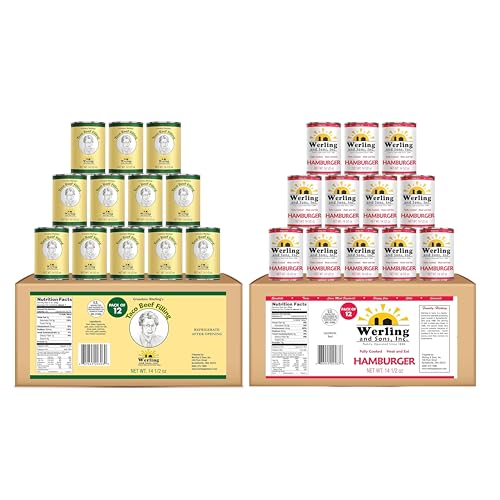
Werling Premium Canned Hamburger & Taco Beef Bundle, Fully Cooked, 24 Cans

Werling Canned Fully Cooked Bacon & Beef Variety Bundle, 24 Cans

Werling Canned Beef, Chicken & Goetta Variety Bundle, 36 Cans

Werling Canned Hamburger & Beef 5-Year Shelf Life, 24 Cans
The Details Behind The Selections
The large serving count makes this bucket practical for households that need several days of shelf-stable meals without frequent pantry runs. Freeze-drying removes moisture, which slows spoilage, though each serving still requires water and cooking equipment. Compared with the canned meats later in this roundup, it trades eating convenience for greater storage flexibility and a stated shelf life of up to 25 years.
For disaster preparation, camping, and hiking, the flood-safe container and carrying handle simplify transport and storage. The honest read is that this is a substantial reserve, but not a complete diet by itself; Ready Hour Fruit & Veggie Mix 56 Servings is the stronger companion for produce coverage.
What Works In Its Favor
- Up to 120 servings support relatively long household coverage.
- Freeze-dried food requires no refrigerator, which helps during outages.
- The handled, flood-safe container protects and simplifies transport.
- A cool, dry location makes rotation and long-term storage easier.
- The meals can also serve as convenient camping provisions.
Trade Offs
- Water and heat are required for many meals.
- The 25-year figure is a maximum shelf-life claim, not a universal storage expectation.
The Numbers That Matter
Built With In Mind
This option suits multi-person households and campers seeking a large, nonrefrigerated entrée reserve.
Another Choice May Suit
Werling Canned Hamburger & Beef 24 Cans fits people who prefer shelf-stable protein that can be eaten without a cooking setup.
This mix fills the produce gap left by a meat-heavy pantry. Freeze-drying preserves fruit and vegetables in a compact form that needs no refrigeration, making it useful during power failures, camping trips, and household stockpiling. It is not canned meat, but it is a sensible preparedness companion to the entrées and proteins in this roundup.
For most emergency pantries, the stated 30-year shelf life is more than enough time to rotate through the supply while retaining room for grains, drinks, and other staples. Preparation details were not provided, so I would not assume every serving cooks identically; following the package directions remains the sensible approach.
Bright Spots
- Fifty-six servings add meaningful fruit and vegetable coverage.
- No refrigeration is required for storage.
- The long stated shelf life suits rotating emergency supplies.
- A handled, flood-safe container improves portability.
Small Caveats
- It complements rather than replaces a complete emergency pantry.
- Exact preparation instructions and individual serving details are not stated here.
- The container needs a cool, dry storage area for long-term use.
Made For
Prepared households will find this useful for adding produce to a pantry dominated by canned protein and freeze-dried entrées.
A Better Fit Elsewhere
Ready Hour 120-Serving Freeze-Dried Entree Bucket is the stronger companion for households seeking prepared meal coverage rather than produce alone.
Morning routines rarely survive a power cut gracefully, and this bucket addresses that gap with oatmeal, pancakes, scrambled eggs, and other breakfast choices. Seven food and drink varieties offer more rotation than a stack of identical servings, while most meals reportedly prepare in minutes after adding water. Some selections are also listed as requiring no preparation.
I view the 128-serving count as the main attraction for a family that eats breakfast together every day. The manufacturer states more than 2,000 calories per day from the kit, but an emergency pantry still benefits from separate water, produce, snacks, and entrée planning.
What Helps Most
- Seven breakfast varieties reduce menu repetition.
- Most meals can be prepared in a matter of minutes.
- Some foods require no cooking.
- The stated 25-year shelf life supports household rotation.
- Breakfast coverage reduces reliance on morning supplies.
Where It May Fall Short
- The breakfast focus leaves lunch, dinner, and produce uncovered.
- Hot preparation may not suit every outage scenario.
Core Details
Who Will Love This
Families with hungry morning routines will appreciate the broad serving count and variety during travel or outages.
Swap It Out When
Ready Hour Fruit & Veggie Mix 56 Servings is a better fit for households needing longer-term produce coverage rather than breakfast meals.
Six cans of beef and six cans of pork create a straightforward mix for camping, backpacking, and pantry storage. Both meats are fully cooked and ready to eat, avoiding the raw-food handling associated with fresh provisions. For trips with limited cooking gear, that convenience may matter more than having two ground-beef styles.
The source identifies pork and beef as the sole meat ingredients and states that no preservatives are added. Shelf-life duration and exact heating guidance are not included in the supplied details, so storage and preparation claims beyond the listed can size should come from the product label.
Practical Advantages
- Twelve cans provide six servings of each listed meat.
- Ready-to-eat beef and pork simplify outage meals.
- The beef-and-pork mix offers more rotation than a single variety.
- No preservatives are listed among the ingredients.
Details To Watch
- No stated shelf-life duration makes dated rotation harder to plan.
- The 28-ounce format makes bulk can handling less convenient.
- Cans add weight to a backpacking load.
- Heating requirements are not described in the available details.
The Right Fit
Campers and backpackers favor it for simple beef and pork portions that need no raw-meal preparation.
Where A Sibling Pick Shines
Werling Premium Canned Hamburger & Taco Beef Bundle suits people wanting more recipe variation and a stated five-year storage period.
Two fully cooked beef options make this bundle useful beyond basic emergency eating. Hamburger filling suits pasta, rice, and skillet dishes, while taco beef fits wraps, bowls, and tacos. The 24-can format gives households enough stock for repeat meals without splitting the purchase into separate beef categories.
Meals can be eaten directly from the can or heated, depending on preference and package directions. For a daily commute, a single can is easier to carry than the Ready Hour 120-Serving Entree Bucket, though this Werling set requires a can opener and adds weight to long outdoor routes.
Everyday Perks
- Twelve cans each of hamburger and taco beef provide variety.
- Fully cooked meat reduces kitchen preparation.
- Both options heat quickly or work in simple meals.
- A five-year stated shelf life supports pantry rotation.
Points To Note
- The cans are heavier than freeze-dried meal portions.
- Both meats share a beef base, so this is variety of flavor rather than protein type.
- Storage requires a dry, stable location and careful can rotation.
Feature Snapshot
Who Should Grab It
Busy households and campers gain the most from two cooked beef fillings that adapt to quick meals.
Look Elsewhere When
Werling Canned Beef, Chicken & Goetta Variety Bundle is a better fit for households wanting beef, poultry, and pork-based choices.
Bacon and beef cover familiar meal roles without requiring raw-meal preparation. The bacon cans are 12 ounces, while the beef cans are 14.5 ounces, and the bundle includes 12 of each. That mix works for breakfast, sandwiches, skillet dishes, or a fast pantry meal when cooking time is limited.
Compared with Werling Premium Canned Hamburger & Taco Beef Bundle, this set emphasizes bacon rather than taco seasoning. It may suit long-distance travel where cans are convenient, but the larger pack can become substantial cargo for a compact hiking kit.
Benefits That Matter
- Fully cooked meats support quick meal assembly.
- Twelve bacon and twelve beef cans prevent short-term repetition.
- Different can sizes suit varied serving needs.
- The beef and pairing work across breakfast and dinner dishes.
- A stated shelf life of up to five years supports long-term storage.
Less-Stong Areas
- Twenty-four cans create a large storage and carrying load.
- Bacon adds a narrower flavor profile than a three-meat assortment.
Right Fit For
Campers and busy households benefit from cooked bacon and beef that fit simple, fast meals.
Not Your Match When
Werling Canned Hamburger & Beef 24 Cans serves people wanting two all-beef fillings and a larger uniform can size.
Three meat categories give this assortment the broadest protein rotation in the roundup. Beef, chicken, and pork-based goetta work in casseroles, sandwiches, soups, pasta, and skillet meals. Every component is fully cooked, so the cans function as pantry ingredients rather than raw foods requiring extended handling.
With 12 packs of each listed 14.5-ounce can, the total reaches 36 cans. In my view, that scale is useful for a family pantry, although a solo camper may find it excessive and need to manage rotating cans carefully.
Where It Excels
- Beef, chicken, and goetta provide three distinct choices.
- All three meats are pre-cooked.
- Direct-use filling supports many familiar recipes.
- Uniform 14.5-ounce cans simplify stacking and storage.
- The assortment supports cabinet or outdoor-gear organization.
Practical Considerations
- Thirty-six cans consume substantial cabinet space.
- The three styles still require a can opener and meal ingredients.
- Heavy canned stock adds bulk to vehicle-based camping kits.
Quick Facts
Best Suited To
Households seeking the widest meat variety will appreciate beef, chicken, and pork-based options in one pantry collection.
Reach For A Different Pick When
Werling Premium Canned Hamburger & Taco Beef Bundle is more suitable for people prioritizing two ready-to-eat beef styles over three meat categories.
Twenty-four fully cooked cans create a straightforward household protein reserve for emergencies, camping, hiking, and RV travel. The bundle pairs 14.5-ounce cans of hamburger and canned beef, giving two all-beef preparations rather than three meat types. Meals can be heated and served quickly, which helps in homes with limited cooking time or on trips with basic equipment.
The stated five-year shelf life makes this easier to place in a rotating pantry plan. Compared with Wertz’s Ready-to-Eat Beef & Pork Variety 12 Pack, this set offers twice the can count but less meat variety, so personal meal preferences should guide the choice.
Good Reasons To Consider
- Twenty-four cans support repeated household meals.
- Both fillings arrive fully cooked.
- Fast heating suits travel and outage routines.
- The stated five-year shelf life supports rotation.
- Equal can sizes simplify stackable storage.
Honest Caveats
- Both varieties are beef products, limiting protein diversity.
- The full case requires cabinet space and can rotation.
Whose Shelf It Belongs On
Families building a straightforward all-beef reserve will find the 24-can format practical for pantry meals and travel.
A Better Fit Elsewhere
Werling Canned Beef, Chicken & Goetta Variety Bundle fits households that prefer broader meat variety over a larger two-beef selection.
What Matters In A Preparedness Pantry
Serving count alone does not determine preparedness value. I start with realistic meal patterns, available cooking equipment, storage conditions, and the kinds of food that can realistically be used before rotating supplies.
Serving and household fit A family of four will consume canned meat much faster than a single-person household. Ready-to-eat options suit people with limited kitchens, while freeze-dried meals need hot water, cookware, and more hands-on preparation. Larger buckets may offer better per-serving coverage, but cans are simpler during a brief outage.
Shelf life and storage Long shelf-life claims make rotation easier, but storage conditions still matter. I favor a cool, dry location away from temperature swings and moisture, plus a system that brings older cans forward first. Pack size should match available cabinet space rather than an arbitrary target.
Variety and complete coverage Meat is only part of an emergency pantry. Ready Hour Fruit & Veggie Mix 56 Servings adds produce, while the breakfast bucket covers a meal that canned meat alone does not address. Water, snacks, fruit, vegetables, and usable cookware remain important additions.
Portability and meal use Cans are shelf-stable and compact on a pantry shelf, but their weight becomes noticeable during hiking or backpacking. Freeze-dried food weighs less, yet it may require more preparation. The right balance depends on whether the main scenario is a household outage, vehicle camping, or a long outdoor route.
Practical Pantry Details
Mistakes Worth Dodging Counting cans without estimating actual meals leads to poor portion planning. I also avoid choosing a large package merely because it looks impressive, since unused shelf space and cans that age past their intended rotation reduce its value.
What Separates Premium From Basic Higher spending may buy more cans, greater meat variety, or longer stated storage life rather than better nutrition. Those additions help only when they match the intended meals and the available space.
Frequently Asked Questions
Are canned meats easier to store than freeze-dried meals?
Canned meats need no refrigeration and can be eaten with minimal preparation. Freeze-dried meals also avoid refrigeration, although many require water and cooking equipment.
How many canned meat cans should a household keep?
The number depends on household size, meal length, and available storage. I calculate daily portions, then add a margin for weather-related access problems or disrupted supply routes.
Can canned meat provide a complete emergency diet?
No single category supplies everything a household may need. Canned meat covers protein, but water, produce, grains, snacks, and other pantry foods should accompany it.
Which Werling bundle offers the most variety?
Werling Canned Beef, Chicken & Goetta Variety Bundle includes three meat choices. The hamburger, taco beef, bacon, and beef bundles offer fewer flavor or protein distinctions.
Are five-year shelf-life claims universal?
Shelf life depends on proper storage, can integrity, and package guidance. I store these products in cool, dry conditions and rotate them according to the manufacturer’s dating and storage information.
Final Verdict
I favor Werling Canned Hamburger & Beef 24 Cans for a straightforward household meat reserve, while the three-meat Werling bundle offers broader rotation. Ready Hour’s freeze-dried options serve a different purpose: entrée volume, breakfast coverage, and produce without refrigeration. The strongest pantry balances these formats with water, produce, snacks, and realistic serving estimates.