

Cold-pressed olive oil has to earn its pantry space through flavor, aroma, and how gracefully it moves between raw and cooked dishes. I considered single-origin oils, Mediterranean blends, garlic infusions, citrus finishes, and larger formats for households that cook daily. The right bottle changes a simple salad, roast, or weeknight pasta more than most people expect.
A Side-By-Side Look

SEASON Extra Virgin Olive Oil 500 mL

SEASON Organic Desert Olive Tree Pearls 100 g

SEASON Organic Extra Virgin Olive Oil 500 mL 2-Pack

Lucini Italia Robust Garlic Olive Oil 250 mL 2-Pack
Partanna Sicilian Lemon Olive Oil 8.45 oz

Bellucci Premium Organic Olive Oil 16.9 fl oz

Colavita First Cold Pressed Olive Oil 68 fl oz

Colavita Mediterranean Olive Oil 1 L
A Breakdown Of The Leading Choices
SEASON presents this as a finishing oil rather than an all-purpose bottle. Its 500 mL size suits a kitchen that regularly dresses salads, pasta, vegetables, toast, grain bowls, and bread with oil close at hand. Single-origin sourcing from Morocco gives the profile a clear place in the lineup, although the exact tasting notes may depend on the harvest.
Compared with Colavita Mediterranean Olive Oil 1 L, this bottle is smaller and positioned more deliberately around the final course. I favor it for cooks who want an aromatic drizzle after cooking instead of using the same oil for every task. Nothing flashy, just a focused format that can make simple vegetables taste less like an afterthought.
The Value In It
- Single-origin Moroccan sourcing gives the oil a traceable identity.
- The 500 mL bottle suits people who finish dishes daily but cook modestly.
- Its designated role works especially well with greens, pasta, and bread.
- First cold pressing preserves the source’s intended flavor profile.
Details To Watch
- The focused finishing role is less versatile than a larger cooking-oil jug.
- Repeated light and heat exposure can reduce the aroma, so storage away from the stove matters.
Key Facts
Made For
This bottle fits home cooks who frequently drizzle olive oil over vegetables, grains, pasta, or bread.
Another Choice May Suit
SEASON Organic Extra Virgin Olive Oil 500 mL 2-Pack serves people who need a milder, dual-bottle supply for frequent sautéing and roasting.
SEASON Organic Desert Olive Tree Pearls are a category detour: these are concentrated olive pieces, not a bottle of extra-virgin oil. The 100 g format is intriguing for tasting, cheese boards, and people curious about whole olives, but it cannot replace liquid olive oil in a vinaigrette or hot pan. That distinction matters before placing it beside the oils in this roundup.
The product centers on olives grown in Morocco’s desert and lists 71 mg of hydroxytyrosol per teaspoon. Hydroxytyrosol is a naturally occurring olive compound, but I would evaluate this item on flavor, texture, and format rather than extrapolating a health outcome from one measurement. Compared with SEASON Extra Virgin Olive Oil 500 mL, it offers intensity in a spoonable form.
The Practical Payoff
- The 100 g package offers a compact alternative to liquid oil.
- Whole olive pieces bring texture to cheese boards and tasting plates.
- Moroccan desert-grown sourcing provides a clear regional identity.
- The stated hydroxytyrosol amount adds a measurable compound detail.
A Few Limitations
- It is not a liquid olive oil and will not perform standard cooking or dressing tasks.
- Olive texture and seasoning preferences can make the format less versatile.
- Once opened, owners commonly need to reseal the package carefully and follow its storage directions.
Quick Facts
Right Fit For
This specialty item suits olive enthusiasts who enjoy whole fruit, concentrated flavor, and compact pantry formats.
Look Elsewhere When
Partanna Sicilian Lemon Olive Oil 8.45 oz is a better fit for cooks who need a pourable oil for fish, salads, and finished dishes.
The two-bottle format changes SEASON’s proposition from a single finishing purchase to a recurring kitchen supply. Each bottle holds 500 mL, giving me enough separation to keep one bottle in active rotation and preserve another from frequent handling. The mild, balanced profile is aimed at sautéing, roasting, and baking rather than a bold finishing role.
Where SEASON Extra Virgin Olive Oil 500 mL emphasizes final drizzles, this version is more useful for cooks running the stove several times a week. Its single-origin Moroccan profile may still interest flavor-focused cooks, though the restrained character likely fits dishes better than dishes seeking a pronounced peppery note. The honest read is straightforward: this is a supply-conscious cooking option.
What Works In Its Favor
- Two 500 mL bottles reduce the need for constant replenishment.
- The mild taste suits baking and vegetables without dominating delicate recipes.
- Single-origin Moroccan sourcing keeps the product identity clear.
- First cold pressing supports a traditional mechanical extraction method.
- Separate bottles can make rotating between open and reserve oil easier.
Trade Offs
- The understated profile may not satisfy cooks seeking a peppery finishing oil.
- Glass bottles are practical but require careful handling around a busy stove.
At A Glance
Built With In Mind
It serves busy home cooks who sauté, roast, and bake several times each week.
Where A Sibling Pick Shines
SEASON Extra Virgin Olive Oil 500 mL is the better choice for frequent raw finishes and aromatic drizzles.
Lucini Italia’s garlic infusion removes the need to mince garlic and combine it with oil before grilling, roasting, or marinating. The robust flavor is the attraction, not a subtle finish. For a cool weeknight salad, I would use the plain SEASON finishing oil instead, but for chicken, vegetables, or bread dipped straight from the plate, this format saves useful preparation time.
Two 250 mL bottles also create a useful reserve for households that cook with garlic frequently. Garlic tends to become a dominant note, especially after the oil has marinated ingredients, so cooks who prefer delicate aromas may find it too assertive. It works best where the rest of the dish is simple enough to accommodate that intensity.
Useful Strengths
- Garlic and olive oil arrive together, reducing marinating prep.
- The robust profile suits grilled vegetables, meat, and bread.
- Two smaller bottles provide storage flexibility and a reserve.
Where It May Fall Short
- Garlic can overwhelm salads, delicate fish, and lightly seasoned foods.
- Two open bottles may be more than a small household needs, making careful resealing important.
- The product is infusion-led, so it is less versatile than a plain finishing oil.
Who Should Grab It
This two-pack suits grill-focused cooks who want a ready garlic-and-olive oil combination for marinades and roasted vegetables.
Reach For A Different Pick When
Partanna Sicilian Lemon Olive Oil 8.45 oz offers a brighter flavor direction for seafood, greens, and lighter dishes.
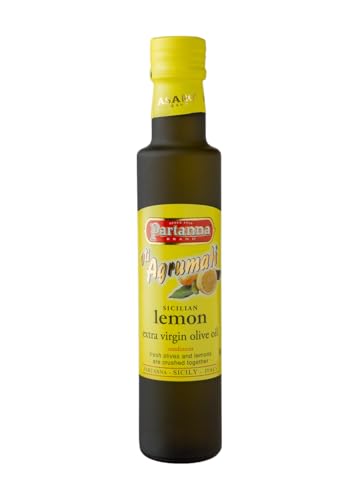
Partanna takes a different route through agrumato-style oil by crushing fresh olives together with Sicilian citrus fruit. The resulting flavor carries a bright citrus finish, making it especially interesting over fish, scallions, fennel, soft cheese, and winter greens. I would keep it away from dishes already dominated by lemon or vinegar, because the citrus character can become redundant.
Unlike SEASON’s restrained Moroccan cooking oil, this bottle is designed as a sensory accent. The 8.45 oz size suits a home kitchen more than a restaurant line, and the narrow profile may feel precious around casual pasta. That is not a flaw, though; measured use lets the oil remain distinct from the olive base.
Benefits That Matter
- Fresh citrus and olives create a more vivid finish than plain oil.
- The flavor pairs naturally with fish and bitter or peppery greens.
- The compact bottle supports a measured specialty use.
Possible Compromises
- Citrus-heavy recipes may need less added acid or no additional lemon.
- The 8.45 oz format is less convenient for high-volume daily cooking.
- Warm storage and long exposure can flatten the fruit-forward aroma.
Technical Sheet
Whose Shelf It Belongs On
This oil belongs in a compact kitchen collection focused on fish, vegetables, and bright Mediterranean-inspired plates.
A Better Fit Elsewhere
Colavita Mediterranean Olive Oil 1 L is the stronger choice for daily cooking with greater volume and a less specialized profile.
Bellucci’s 16.9 fl oz bottle is a practical middle ground between a small specialty oil and a large pantry jug. The organic extra-virgin format gives home cooks a familiar option for dressings, sautéing, and table service. Because the source data provides little flavor detail, I would not assign it the citrus brightness of Partanna or the strong garlic character of Lucini Italia.
Its main advantage is a restrained middle path. A household that cooks daily may find 16.9 ounces easier to manage than a jug but more practical than an 8.45-ounce bottle, depending on the frequency of use. I’d keep this near the prep area for quick drizzles and dressings, while storing reserve oil in a cool cabinet.
The Upside
- The half-liter format balances convenience with pantry capacity.
- Organic extra-virgin labeling gives shoppers a clear product category.
- The size suits both quick salads and recurring stovetop use.
Small Caveats
- The supplied details do not identify the origin, tasting profile, or extraction method.
- A half-liter bottle may still run quickly in a household that finishes vegetables every night.
- Repeated heat and light exposure can reduce the aroma, so a cool storage spot is preferable.
Who It Suits Best
Bellucci fits everyday cooks seeking a manageable organic bottle without a highly specialized flavor direction.
Another Choice May Suit
SEASON Organic Extra Virgin Olive Oil 500 mL 2-Pack is a better fit for frequent cooking with two single-origin bottles.
At 68 fl oz, this Colavita bottle is built for households that would repeatedly run through smaller oils. The source material describes a smooth, balanced Italian-style profile intended for everyday use, with first cold pressing as its defining production detail. That makes it more of a pantry staple than a delicate finishing experiment.
I’d reserve the smaller SEASON and Partanna bottles for dishes where the final aroma carries more weight. This Colavita format is better for dressing pasta, sautéing vegetables, and cooking across several meals. The tradeoff is a 2-quart volume that demands storage planning and prompt resealing after each use.
Everyday Perks
- The 68 fl oz size supports frequent household cooking.
- A smooth, balanced profile is broadly useful for dressings and stovetop dishes.
- First cold pressing provides a clear extraction-method detail.
- The Italian profile suits familiar Mediterranean-style cooking.
Room For Improvement
- The large format may be unnecessary for one-person households or occasional cooks.
- A broad everyday profile will not replace a bright or highly aromatic finishing oil.
- Storage space and steady turnover matter because 68 ounces can be used gradually.
Feature Snapshot
Made For
This size fits large households or frequent cooks who use olive oil for both dressings and stovetop preparation.
Another Choice May Suit
Bellucci Premium Organic Olive Oil 16.9 fl oz is a better fit for cooks who want a smaller container with less storage overhead.
Colavita Mediterranean Olive Oil 1 L brings together olives from Italy, Greece, Spain, Tunisia, Turkey, and Morocco. A multi-country blend is a practical response to cooks who want a broad, familiar profile rather than a single-region accent. The listed character combines smoothness, fruit-forward bitterness, and an almond finish, which sounds particularly reasonable for daily dressings and roasting.
Unlike the smaller SEASON finishing oil, this bottle is designed to cover sautéing, roasting, baking, dressing, and dipping. The 34 fl oz container reduces refills, though it also requires a cool, stable place away from the cooktop. I’d use Partanna for a citrus accent and reserve this larger Colavita for the dishes that make up most of the week.
Points In Its Favor
- Six-country sourcing gives the blend a distinct Mediterranean identity.
- The 1 L size supports frequent cooking with fewer refills.
- The profile works across dressings, roasting, baking, and dipping.
- Fruit-forward bitterness adds interest without requiring a separate specialty bottle.
- The almond finish suits many savory dishes and aged cheeses.
Practical Considerations
- The large container needs a stable storage location away from heat and light.
- Multi-country blending is less focused for shoppers prioritizing a single origin.
- Its general profile is less distinctive than the garlic or citrus oils in this list.
Built With In Mind
This format serves high-volume home cooks who want one oil for raw dressings, roasted food, and everyday dipping.
Swap It Out When
SEASON Extra Virgin Olive Oil 500 mL serves cooks who prioritize single-origin identity and a dedicated finishing role.
What Matters Before Choosing a Bottle
Cold pressing means the olives are mechanically pressed without chemical extraction, but it does not tell the whole flavor story. Single-origin oils can provide a clearer sense of place, while blends may offer a more consistent profile across batches. Start by matching the oil to the role: finishing, cooking, or both.
Origin and ingredient details deserve attention next. A bottle sourced from one country may appeal to shoppers who value traceability, while a Mediterranean blend can be more flexible in a mixed household. The format should reflect actual use, since a small specialty bottle is useful for finishing but less efficient for frequent cooking.
The bottle size influences storage and freshness as much as convenience. A one-liter container suits a high-use kitchen, while 500 mL or 250 mL bottles make rotation easier. Keep oil away from heat, light, and repeated warm handling to preserve its aroma and flavor.
Flavor direction is the final practical decision. Garlic, citrus, peppery greens, and almond-like notes create distinct profiles, and one bottle rarely serves every recipe. A plain or balanced oil belongs near the stove; a bright or aromatic oil belongs near the salad bowl or serving area.
Everyday Olive Oil Details
Pitfalls Shoppers Hit
A common mistake is judging olive oil only by the word extra virgin and ignoring origin, harvest, or extraction details. Another trap is buying a huge bottle for occasional use, then leaving it open near the stove. Choose a format that matches how quickly the oil will actually leave the pantry.
What The Higher Tier Buys
A higher-priced bottle may offer a more specific origin, a more distinctive tasting profile, or a specialized infusion. That difference matters most for raw finishes and dishes where a small drizzle carries the flavor. For daily cooking, a balanced oil with a dependable format may deliver more practical value than a niche bottle used sparingly.
Frequently Asked Questions
Is cold-pressed olive oil suitable for salad dressings?
Yes. Cold pressing produces an oil suited to dressings and direct finishing, where the aroma is easy to notice.
Which bottle is best for frequent cooking?
Colavita First Cold Pressed Olive Oil 68 fl oz and Colavita Mediterranean Olive Oil 1 L offer the most substantial formats for high-volume kitchens.
Are garlic-infused oils suitable for grilling?
Yes. Lucini Italia Robust Garlic Olive Oil is designed for marinades, grilling, and roasted dishes where garlic is a central flavor.
What is the most compact option?
Partanna Sicilian Lemon Olive Oil 8.45 oz is the smallest liquid-oil format in this selection, while SEASON Organic Desert Olive Tree Pearls use a compact non-liquid format.
Should olive oil be stored beside the stove?
No. Cool, dark storage helps protect the aroma and reduces the effects of heat, light, and repeated handling.
Final Verdict
I would choose SEASON Organic Extra Virgin Olive Oil 500 mL 2-Pack for regular cooking, Partanna Sicilian Lemon Olive Oil 8.45 oz for citrus-forward finishes, and Lucini Italia Robust Garlic Olive Oil 250 mL 2-Pack for grilling. Larger kitchens may prefer the Colavita blends for volume. The right choice is the bottle whose flavor and format fit how the household actually cooks.