Food scraps collect quickly in an active kitchen, especially during a week of meal prep or family dinners. Composting bins for kitchen use range from simple countertop pails to powered processors that reduce waste and manage moisture. I’ve narrowed the field by considering capacity, odor control, cleaning needs, placement, and the amount of attention each system requires.
Apartment residents, RV travelers, and small households may prioritize a compact footprint, while frequent home cooks might favor a larger manual bin or an electric model. Two specialized filter options also appear below for maintaining compatible composting systems.
A Quick View Of The Lineup

Growell Electric Composter for Kitchen 4L

Reallnaive Activated Carbon Filter Sheets

Airthereal Revive R500 and R500-V Filters
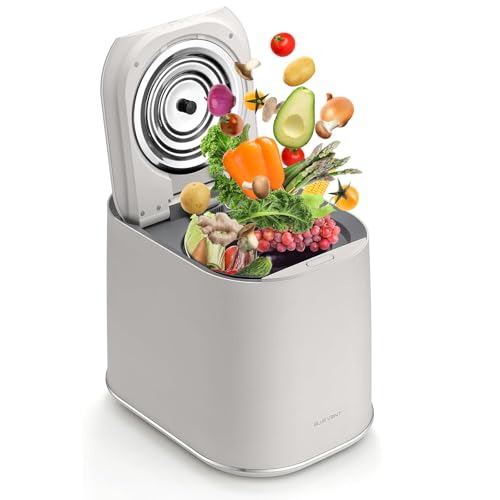
THINKWARE BLUEVENT MUMU 4L Smart Composter

Growell 3.2L Electric Kitchen Composter

Ouaken 8L Stainless Steel Hanging Compost Bin with Lid

Morezi 1-Gallon Carbon Steel Compost Pail

Rotho Albula 3.2L Compost Bin with Handle
More Details On Our Top Picks
The 4L chamber offers more room than the compact electric option that follows it, making this model relevant to households producing several days of food scraps at once. Its countertop format suits apartments and busy kitchens that lack an outdoor compost pile.
Processing depends on powered grinding, heated drying, and cooling rather than slow anaerobic decomposition, where oxygen-starved material breaks down without air. That distinction matters in an enclosed kitchen. Compared with a manual pail, the Growell trades hands-on mixing for electrical operation and maintenance.
Features That Help
- The 4L capacity reduces countertop clutter while accepting a useful weekly accumulation.
- Heated drying limits the wet, heavy scraps that require repeated draining from manual bins.
- Grinding and cooling form a contained processing sequence suited to compact homes.
- The stated 3–6 hour cycle could streamline evening kitchen routines.
Points To Note
- Power and a nearby outlet are required, which may reduce flexibility in an older kitchen.
- The processing chamber and heating system will need more attention than a passive pail.
Key Specs
Right Fit For
This model suits apartment households that want a hands-off processing cycle and have a reliable counter outlet.
Another Choice May Suit
The Morezi 1-Gallon Carbon Steel Compost Pail suits households that prefer manual handling and zero electrical setup.
This is a maintenance accessory rather than a complete compost bin. It fits the practical role of replacing odor-control media in a compatible square indoor container, particularly for a household that already separates food scraps regularly.
Activated carbon is porous material designed to capture odor molecules on a large surface area. Sheets make the media easy to install and remove, although odor control still depends on closing the container lid and avoiding a severely overloaded mix. That maintenance reality keeps it below a full bin in everyday versatility.
Strengths Worth Knowing
- Carbon media helps manage odors before they spread through an open-plan kitchen.
- Sheet construction supports simple replacement without handling loose material.
- The roll format can suit compatible countertop bins used throughout the home.
Small Caveats
- It cannot collect scraps or process waste on its own.
- Odor performance can decline as the sheet becomes saturated, so regular replacement matters.
- Compatibility should be checked against the bin’s dimensions and filter placement.
Made For
These sheets suit existing owners of a compatible square compost bin who need routine odor-control replacements.
A Better Fit Elsewhere
The Rotho Albula 3.2L Compost Bin with Handle serves households that need a complete lidded container rather than filter media alone.
Model-specific replacement media makes this useful for households already operating a Revive R500 or R500-V. The narrower fit means it serves an established machine rather than acting as a universal filter for the category.
Electric food composters dry and grind scraps, but activated carbon still handles the remaining odors carried through the processing chamber. Owners commonly need to replace such media as odor-control performance fades. The specification-supported Revive R500 and R500-V compatibility is the decisive advantage here.
The Value In It
- Direct support for two named Revive models simplifies replacement selection.
- Carbon media helps contain odors during repeated processing cycles.
- The accessory preserves use of an existing electric composter without replacing the whole machine.
Honest Caveats
- The filter has little standalone value without a compatible Revive unit.
- Routine replacement adds a recurring maintenance task to powered composter ownership.
Feature Snapshot
Built With In Mind
This filter fits frequent Revive R500 or R500-V users who already understand the machine’s upkeep schedule.
Look Elsewhere When
The Reallnaive Activated Carbon Filter Sheets suit households using a square manual bin rather than a Revive electric model.
Automated recognition and processing distinguish the MUMU from basic storage pails, particularly during weekday meal preparation. Its 4L body offers the same general capacity class as the first Growell, but a different operating approach and quieter stated output.
The listed 20 dB operating level matters more in an open kitchen than a larger processing claim would. Smart recognition may reduce the number of manual starts, yet powered equipment still asks for an outlet, occasional internal cleaning, and filter upkeep. In most kitchens, the automation justifies that extra involvement for busy households.
Standout Benefits
- Automatic waste recognition reduces repetitive controls during daily use.
- The 4L chamber accepts a moderate household accumulation.
- A built-in charcoal layer supports odor containment.
- The stated 20 dB operation suits kitchens where appliance noise is closely noticed.
Practical Considerations
- Electrical placement may be inconvenient beside an island or in an older kitchen.
- Green mode uses lower processing temperature, which may take longer in cooler rooms.
Quick Facts
Who Will Love This
The MUMU suits busy households that value automatic operation and low noise over a manual, passive setup.
Where Another Pick Shines
The Growell Electric Composter for Kitchen 4L suits households that want a larger chamber without paying for the stated smart recognition mode.
The 3.2L chamber targets counters where every centimeter matters, such as a narrow galley or compact apartment kitchen. It is smaller than the first Growell model, but its brushless motor and stated 50–65 dB range make the design more relevant to prolonged processing.
That operating range appears suitable for many background kitchen environments, though the higher end will be more noticeable in a quiet home. Unlike the MUMU, the source does not identify automatic food recognition, so this is a straightforward powered processor for routine food-scrap handling.
Benefits That Matter
- The smaller 3.2L body preserves limited counter space.
- A brushless motor avoids the friction associated with a conventional brushed motor.
- The stated 50–65 dB range supports many routine kitchen placements.
- Electric processing removes the repeated mixing required by a manual pail.
Trade Offs
- Less capacity than the 4L Growell may require more frequent emptying.
- Night processing can still be noticeable despite the relatively quiet specification.
Small-Space Match
This composter fits small kitchens needing powered processing, limited capacity, and an outlet close to the prep counter.
Consider Something Else When
The THINKWARE BLUEVENT MUMU 4L Smart Composter suits households prioritizing automatic recognition and a stated 20 dB operating level.
Unlike countertop pails, this 8L bin can hang from a compatible cabinet door or another suitable mounting point. That vertical placement makes it useful in apartments, offices, RVs, and kitchens where floor or counter space is limited. Capacity is generous for the class, but installation clearance matters.
Stainless steel brings a durable, easy-wipe surface that resists water and rust compared with painted carbon steel. The fitted lid helps contain scraps and limit exposure to insects. Owners must still check the surrounding cabinet for weight, door movement, and moisture around wet food waste.
Useful Highlights
- The 8L capacity reduces emptying frequency in active kitchens.
- Hanging placement keeps food scraps away from the working counter.
- Stainless steel wipes clean and resists kitchen moisture.
- The lid adds containment during short-term collection.
Details To Watch
- A load of wet scraps can be heavier than dry refuse and deserves care around cabinet hardware.
- Interior residue may require regular washing to preserve a clean appearance.
Core Details
Whose Shelf It Belongs On
The Ouaken bin fits compact kitchens with a secure hanging point and enough clearance to open the container.
Another Choice May Suit
The Morezi Carbon Steel Compost Pail suits counterside placement without requiring a cabinet or wall mounting point.
The Morezi pail brings a familiar one-gallon format to small kitchens, rentals, and offices that prefer manual collection. Handles make it portable from the prep counter to an outdoor pile, while carbon steel gives it a substantial appearance without the footprint of an electric system.
Its included activated charcoal filter supports odor control, though carbon steel can show wear at the rim and may need drying after washing. I regard this as a sensible first composting container for modest food volumes. Larger households may move toward the Ouaken hanging bin or an electric processor sooner.
The Practical Payoff
- The one-gallon capacity fits routine household food scraps.
- Side handles simplify transport during countertop emptying.
- The included charcoal filter helps limit odor during collection.
- No power connection is required for daily use.
Where It May Fall Short
- Manual aeration and outside disposal are necessary to continue decomposition.
- A smaller chamber fills quickly during family meals or heavy produce preparation.
- Moisture left on the carbon steel can cause surface wear or corrosion over time.
Best Suited To
This pail suits beginners, renters, and small households seeking a simple container with no electrical maintenance.
Skip It When
The Growell Electric Composter for Kitchen 4L suits households that want automated processing and reduced mixing.
Albula sits between a plain food-scrap pail and a larger modular sorting system. Its 3.2L body handles useful kitchen capacity, while the plastic handle supports movement around a kitchen or office. Stacked Rotho containers create a broader waste-separation setup.
The brown lidded design favors organization over a purely decorative look, and the bucket format is easier to scrub than many narrow containers. A compost filter isn’t identified, so odor control may depend more heavily on the lid, balanced scraps, and emptying frequency. That maintenance tradeoff is modest for many small spaces.
Key Advantages
- The 3.2L capacity suits everyday food-scrap collection.
- A plastic handle simplifies carrying between rooms.
- Stackable buckets support a modular separation arrangement.
- The lid helps contain collected organic material.
Factors To Consider
- No included charcoal filter is identified, so wet scraps need regular attention.
- Its 3.2L capacity is smaller than the Ouaken 8L hanging bin.
Product Snapshot
Who Should Grab It
Albula fits compact kitchens and offices that value stackable waste separation more than powered processing.
Reach For A Different Pick When
The Ouaken 8L Stainless Steel Hanging Compost Bin suits households needing greater capacity and vertical storage.
What Counts Before Choosing a Kitchen Composter
Capacity should match the amount of food waste generated between emptying days. A one-gallon pail works for modest kitchens, while active households may appreciate 3.2L to 8L. Oversizing creates extra cleanup and odor exposure when scraps sit longer than necessary.
Placement also changes the practical choice. Countertop models need nearby clearance, hanging bins require secure mounting, and powered units depend on a suitable outlet. I would measure the available area and account for lid and door movement before selecting a container.
Electric operation trades manual mixing for heating, grinding, filter upkeep, and electrical cleaning. The convenience can suit frequent food preparation, but a manual pail costs nothing to operate and gives the household more direct control over aeration and outside disposal.
Materials deserve equal attention. Stainless steel wipes clean and handles moisture well, carbon steel offers durability but benefits from thorough drying, and plastic containers are lightweight. The right material depends on cleaning habits, available storage, and willingness to replace filters.
3.2L To 8L Capacity
Capacity should match the amount of food waste generated between emptying days. A one-gallon pail works for modest kitchens, while active households may appreciate 3.2L to 8L. Oversizing creates extra cleanup and odor exposure when scraps sit longer than necessary.
Placement Shapes Daily Use
Placement also changes the practical choice. Countertop models need nearby clearance, hanging bins require secure mounting, and powered units depend on a suitable outlet. I would measure the available area and account for lid and door movement before selecting a container.
Electric Versus Manual Upkeep
Electric operation trades manual mixing for heating, grinding, filter upkeep, and electrical cleaning. The convenience can suit frequent food preparation, but a manual pail costs nothing to operate and gives the household more direct control over aeration and outside disposal.
Materials And Cleaning
Materials deserve equal attention. Stainless steel wipes clean and handles moisture well, carbon steel offers durability but benefits from thorough drying, and plastic containers are lightweight. The right material depends on cleaning habits, available storage, and willingness to replace filters.
Avoiding Composting Bin Setbacks
Where Shoppers Go Wrong
Capacity often receives more attention than emptying routines. A bin that is too small fills during heavy meal prep, while an oversized container allows scraps to sit longer. I would choose volume based on a typical week, not the largest possible weekend.
Another common mismatch involves placement. Counter clearance, outlet access, and hanging hardware can defeat an otherwise suitable container. Odor control also depends on using the lid and maintaining the filter, rather than relying on a bin alone.
When Paying More Pays Off
Higher-cost electric models add automated processing, quieter operation, or larger internal systems. Those additions suit frequent home cooks who want less manual mixing and moisture handling. A basic pail remains more practical for small amounts of waste, limited electrical access, or first-time composting.
Frequently Asked Questions
Are electric kitchen composters quieter than manual bins?
Electric models add motor and fan noise, although the THINKWARE MUMU lists a 20 dB operating level. Manual pails remain mechanically quiet because they require no powered processing.
How often should compost bin filters change?
Replacement timing depends on scraps, moisture, container ventilation, and odor-control performance. Saturated carbon loses its available capacity, so inspection matters more than following a fixed date blindly.
Is a stainless steel compost bin difficult to maintain?
Stainless steel usually wipes clean and resists water-related wear. Food residue can still settle into seams, so the interior should be washed before the next collection cycle.
Can countertop compost bins handle fruit scraps?
Yes, small amounts of fruit can be added to a managed compost system. A balanced mix with dry material and regular turning generally works better than a container filled solely with wet fruit.
Do I need an outdoor pile after using a kitchen bin?
A kitchen bin collects and processes food scraps, but most manual systems still need periodic outdoor disposal. Electric processors can reduce the material substantially, though finished material still needs an appropriate use or disposal route.
Final Verdict
The most practical option depends on space, waste volume, and tolerance for upkeep. I favor a manual pail for small amounts of food waste, the Rotho Albula for modular sorting, and an electric model for frequent processing. Match the container to the household routine rather than choosing the largest or most feature-heavy design available.