

You want knives that slice clean, fight saltwater, and fit your hands and fish. Choose a 5 to 9 inch blade depending on task, with thin flexible steel for fillets and stiffer short blades for bait. Look for high-carbon stainless or alloys like 10Cr15CoMoV, G4116, or 8Cr13MOV and a slim 12 to 20 degree edge. Pick a non-slip or pakkawood handle and a draining lock sheath. Keep a sharpener handy to maintain performance, and keep going to learn which models match your trips.
| HOSHANHO 9″ High-Carbon Fillet & Boning Knife |

| Professional Precision | Blade material: 10Cr15CoMoV high‑carbon Japanese stainless steel | Blade lengths available: 9″ blade | Primary use: Filleting, boning, skinning fish (also other meats) | VIEW LATEST PRICE | Read Our Analysis |
| HOSHANHO 7″ High-Carbon Fillet & Boning Knife |

| Best for Control | Blade material: 10Cr15CoMoV high‑carbon Japanese stainless steel | Blade lengths available: 7″ blade | Primary use: Filleting, boning, skinning fish (also other meats) | VIEW LATEST PRICE | Read Our Analysis |
| KastKing Speed Demon Pro Fillet Knife |

| Saltwater Specialist | Blade material: G4116 German stainless steel | Blade lengths available: Multiple options - 5″, 6″, 7″, 9″ | Primary use: Filleting and steaking fish; bait cutting (depends on model) | VIEW LATEST PRICE | Read Our Analysis |
| FLISSA Fillet Knife Set with Sharpener & Roll Bag |

| Complete Field Kit | Blade material: 8Cr13MOV stainless steel | Blade lengths available: Set with 5″, 6″, 7″, 9″ | Primary use: Filleting and fish preparation (field use) | VIEW LATEST PRICE | Read Our Analysis |
| 3-Piece Fish Fillet Knife Set with Sheaths |
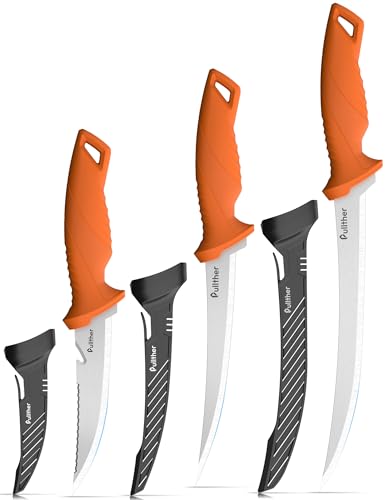
| Angler’s Essential | Blade material: Corrosion‑resistant stainless steel | Blade lengths available: Set with 9″, 7″, 5″ | Primary use: Filleting, bait prep, general angler use | VIEW LATEST PRICE | Read Our Analysis |
More Details on Our Top Picks
HOSHANHO 9″ High-Carbon Fillet & Boning Knife
If you love filleting fish and want a single knife that handles delicate slices and tougher trimming, the HOSHANHO 9 inch High-Carbon Fillet and Boning Knife will fit right into your kitchen. You’ll notice the thin nine inch blade made from Japanese 10Cr15CoMoV high-carbon stainless steel. It’s hand polished to a 15 degree edge each side, so you get sharp, precise cuts. The blade stays flexible enough to follow curves, yet strong enough to handle bones. The pakkawood handle feels ergonomic and resists wear, while the lightweight, frosted texture improves control and portability for busy cooks.
- Blade material:10Cr15CoMoV high‑carbon Japanese stainless steel
- Blade lengths available:9″ blade
- Primary use:Filleting, boning, skinning fish (also other meats)
- Handle type / grip:Pakkawood ergonomic handle (frosted texture)
- Portability / storage:Lightweight, portable (no sheath specified)
- Corrosion / saltwater suitability:Corrosion‑resistant Japanese stainless (suitable for fish)
- Additional Feature:Hand-polished 15° edge
- Additional Feature:Pakkawood ergonomic handle
- Additional Feature:Frosted texture finish
HOSHANHO 7″ High-Carbon Fillet & Boning Knife
You’ll appreciate the HOSHANHO 7″ High-Carbon Fillet and Boning Knife when you want precise, low-waste fillets without fighting the blade. You hold a thin, flexible 7-inch blade made from 10Cr15CoMoV high-carbon Japanese stainless steel. It arrives hand-polished at 15 degrees per side, so slices glide cleanly through flesh and around bones. The pakkawood handle feels ergonomic and steady, with a frosted texture that resists slips and wears well. It’s lightweight and portable, so you switch tasks fast, from filleting fish to trimming meat or removing scales. You’ll trust it as a practical, long-lasting kitchen tool or gift.
- Blade material:10Cr15CoMoV high‑carbon Japanese stainless steel
- Blade lengths available:7″ blade
- Primary use:Filleting, boning, skinning fish (also other meats)
- Handle type / grip:Pakkawood ergonomic handle (frosted texture)
- Portability / storage:Lightweight, portable (no sheath specified)
- Corrosion / saltwater suitability:Corrosion‑resistant Japanese stainless (suitable for fish)
- Additional Feature:Hand-polished 15° edge
- Additional Feature:Pakkawood ergonomic handle
- Additional Feature:Frosted texture finish
KastKing Speed Demon Pro Fillet Knife
For anglers who want a reliable, do-it-all fillet knife that holds an edge in both fresh and saltwater, the KastKing Speed Demon Pro is a smart pick. You get G4116 German stainless steel with a black finish that resists corrosion and stays sharp. Choose from 5, 6, 7, or 9 inch blades for bait work, delicate fillets, or steaking big fish. The 5 inch bait knife is stiff with a serrated spine for frozen bait, while longer blades flex to follow contours. Non slip polymer handles feel secure and clean easily. A locking sheath with drainage keeps blades safe and dry, and a warranty protects you.
- Blade material:G4116 German stainless steel
- Blade lengths available:Multiple options - 5″, 6″, 7″, 9″
- Primary use:Filleting and steaking fish; bait cutting (depends on model)
- Handle type / grip:Non‑slip super polymer grip
- Portability / storage:Includes protective sheath (lightweight, drains)
- Corrosion / saltwater suitability:Designed for freshwater and saltwater use; black finish for protection
- Additional Feature:Multiple blade lengths
- Additional Feature:Sheath with drainage slots
- Additional Feature:German G4116 black finish
FLISSA Fillet Knife Set with Sharpener & Roll Bag
Anglers who want a ready-to-go, all-in-one fillet kit will love the FLISSA set, because it bundles four blade lengths, a built-in sharpener, and a roll bag so you can grab everything and head out the door. You’ll get 5″, 6″, 7″, and 9″ blades to match fish size and tasks. The 8Cr13MOV stainless steel holds a razor-sharp edge and the black coated finish fights corrosion in saltwater. Each knife slips into its own protective sheath inside a handy roll bag, and the included sharpener keeps edges keen on the bank. It’s portable, practical, and gift-ready for anglers.
- Blade material:8Cr13MOV stainless steel
- Blade lengths available:Set with 5″, 6″, 7″, 9″
- Primary use:Filleting and fish preparation (field use)
- Handle type / grip:(Not explicitly named) ergonomic handles in set (portable)
- Portability / storage:Protective sheaths + roll bag for transport
- Corrosion / saltwater suitability:Black coated 8Cr13MOV for enhanced corrosion resistance (saltwater suitable)
- Additional Feature:Includes built-in sharpener
- Additional Feature:Portable roll bag
- Additional Feature:Black coated 8Cr13MOV blades
3-Piece Fish Fillet Knife Set with Sheaths
If you want a simple, dependable kit that handles everything from dressing bait to filleting a big catch, this 3-piece fillet knife set with sheaths fits the bill. You get a 9-inch and 7-inch flexible fillet blade plus a 5-inch bait knife made from corrosion-resistant stainless steel. The longer blades flex for clean cuts while the short blade tackles bait, scales, and frozen pieces. Ergonomic, non-slip handles stay secure when wet, and the lightweight feel reduces fatigue. Durable wide-opening sheaths hold blades safely and lock them in. You’ll appreciate this set for everyday and gift-ready use.
- Blade material:Corrosion‑resistant stainless steel
- Blade lengths available:Set with 9″, 7″, 5″
- Primary use:Filleting, bait prep, general angler use
- Handle type / grip:Ergonomic non‑slip handles
- Portability / storage:Protective sheaths (wide‑opening) for storage
- Corrosion / saltwater suitability:Corrosion‑resistant stainless steel for freshwater and saltwater use
- Additional Feature:Variety: bait + fillets
- Additional Feature:Wide-opening protective sheaths
- Additional Feature:Non-slip ergonomic handles
Factors to Consider When Choosing Fillet Knives
When you shop for a fillet knife you’ll want to weigh five key factors that really change your experience: blade material, blade length, flexibility and thickness, edge sharpness, and handle comfort grip. Start with the blade material and length because they set the stage for how the knife will cut and hold an edge, then think about flexibility and thickness together since they control how precisely you can follow a fish’s bones. Finally don’t forget edge sharpness and a comfortable grip, because a keen blade and a secure handle keep you safe and make filleting feel almost effortless.
Blade Material Choice
Choosing the right blade material can make filleting easier and keep your knives lasting longer, so let’s walk through what really matters. You’ll want high-carbon stainless steels when you need both edge life and rust resistance, especially for wet or saltwater outings. At the same time, softer, more flexible steels help you follow bone and contour closely, so your fillets look cleaner. Consider alloys and heat treatment next because vanadium, molybdenum, or cobalt improve edge stability and reduce chipping during long sessions. For saltwater use, higher chromium content or a protective coating cuts down on pitting and upkeep. Balance hardness, toughness, and corrosion resistance based on the fish you catch and how much maintenance you’ll do.
Blade Length Matters
Because the length of your fillet knife shapes how you work, picking the right blade will make filleting faster, cleaner, and less frustrating. Short blades, about 4 to 6 inches, give you tight control for small fish, bait prep, skinning, and removing pin bones. You’ll feel steadier and make neater cuts. Move up to medium blades, 7 to 8 inches, when you want one knife that handles most freshwater and inshore jobs. They balance reach and control so you waste less time switching tools. For big fish, choose long blades, 9 to 11 inches, to make smooth long strokes that save meat. Match blade length to fish length, roughly half to two thirds of the fish. Remember longer blades can be harder to maneuver around bones, so plan accordingly.
Flexibility And Thickness
You picked the right blade length for your fish, now think about how the blade flexes and how thick it is, since those traits decide how the knife feels and performs. You want a thin blade, about 0.5 to 1.5 mm, when you work small, delicate fish. Thin blades bend easily along curves, hug bones, and give cleaner fillets. That flexibility comes from softer tempering that lets the tip deflect under pressure for precise curved cuts without tearing. On the other hand, thicker blades around 1.5 to 3.0 mm stay stiff and help you cut through thicker skin or small bones. Pick flex by fish size: very flexible for small fish, medium for average species, stiff for large or frozen bait. Remember thinner steel dulls faster and needs gentler maintenance.
Edge Sharpness Level
Feel the difference a knife’s edge makes the first time you slice through fresh fish; the angle and sharpness decide how clean your cuts are and how often you’ll need to sharpen. You’ll find edges set between 12 and 20 degrees per side. Lower angles, about 12 to 15 degrees, give razor-like sharpness that makes thin, precise fillets and reduces tearing. Those edges need more care though. Thinner edges chip or roll if you press against bones or frozen fish, so match angle to the fish you handle. Edge life ties to steel hardness. Harder steels keep fine edges longer but are harder to re-sharpen. Plan regular honing and full sharpening based on use, from weekly for heavy work to monthly or less for casual anglers.
Handle Comfort Grip
Often you’ll notice how much a handle changes the feel of a fillet knife after just a few cuts, so choosing the right grip matters more than you might expect. You want an ergonomic shape with contoured finger grooves and a fuller palm swell so your hand rests naturally and tires less during long fillet sessions. Pick water resistant, nonporous materials like stabilized wood composites, polymer, or rubberized grips to avoid swelling, cracking, and bacteria buildup. Look for non slip textures or overmolded surfaces and a pronounced bolster to keep control when hands are wet, oily, or bloody. Make sure handle length and balance match your hand size, and favor full tang or seamless tang construction with corrosion resistant fasteners for lasting stability.
Corrosion Resistance Coating
Why should corrosion resistance matter to you when picking a fillet knife? It keeps your blade reliable after saltwater trips and messy fish gutting. Coatings like black oxide, ceramic, or DLC form a barrier that slows rust and pitting when the blade meets salt and acidic fluids. They also cut down on sticking and friction, so slices feel smoother and stains wipe away easier. But coatings wear, especially thin finishes, so check edges, tangs, and grind lines for uniform coverage. Pair a good coating with stainless or high alloy steel for best results, since the metal still matters. If you plan heavy use, choose a tougher finish or be ready to maintain and touch up the coating.
Storage And Portability
When you pack a fillet knife, think of protection and ease together so your blade stays sharp and you stay safe. Pick a sheath or cover that fully encloses the blade and locks or snaps shut so you avoid cuts and edge damage. For wet outings choose corrosion resistant materials like sealed leather, polymer, or plastic and find cases with drainage or vents to stop rust. If you travel or fish from a boat, go with lightweight roll bags or modular cases that organize multiple blades and sharpeners while saving space. Match storage to blade length and flexibility by using full length, form fitting sheaths or tubes to prevent bending. At home use a magnetic strip, long slot block, or drawer tray that keeps blades separated.