

Beef tallow brings a distinctly savory flavor to potatoes, vegetables, eggs, and meat while remaining useful for frying and roasting. I created this guide for home cooks comparing source details, fat type, package size, storage needs, and cooking applications.
The practical difference matters. A 14-ounce jar suits occasional cooks and small households, while a 7.2-pound tub makes more sense for frequent use, commercial kitchens, or families already comfortable rendering and storing large quantities of fat.
An Overview Of The Picks

Wrath & Remedy Pure Beef Tallow 14oz

Fat Brothers Original Grass-Fed Beef Tallow 14oz
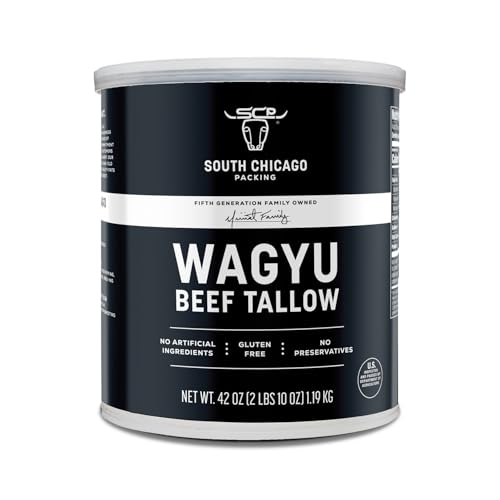
South Chicago Packing Pure Wagyu Beef Tallow 42oz

Traditional Nutrients Pasture-Raised Beef Tallow 7.2lb

Traditional Nutrients Beef Tallow 14oz Glass Jar
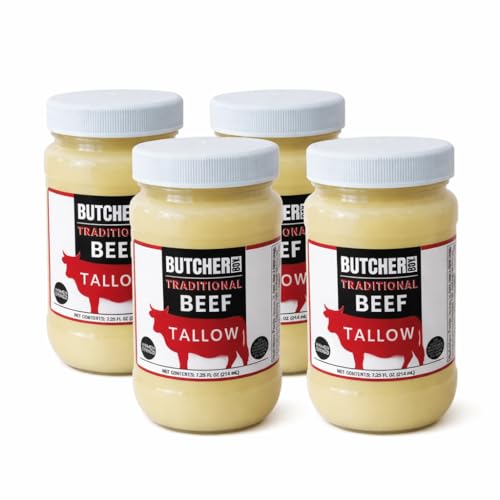
Generic Rendered Beef Tallow Cooking Fat

Stella & Milo’s Grass-Fed Beef Tallow 14oz

Stella & Milo’s Tallow-Cooked Potato Chips 5oz 2-Pack
Inside Each Recommended Option
The 14-ounce format makes this a practical entry point for cooks learning how tallow behaves. Its beef profile suits steaks, fried potatoes, sautéed vegetables, and baking, while the stated grass-fed and grass-finished sourcing gives shoppers a clear production criterion.
Compared with the larger Traditional Nutrients tub, this jar creates less storage pressure. I see it fitting a busy home kitchen better than a tiny household that uses a spoonful occasionally.
Useful Touches
- Fourteen-ounce size suits measured, moderate use.
- Pure beef fat keeps the ingredient profile direct.
- Works across searing, frying, roasting, and baking.
Small Caveats
- A high smoke point supports high heat, though solid fat still needs gradual heating.
- Frequent fryers may exhaust a 14-ounce supply faster than a bulk container.
Feature Snapshot
Who It Suits Best
Home cooks seeking a compact grass-fed fat for everyday meat, vegetable, and potato preparation will find this format easy to manage.
A Better Fit Elsewhere
Fat Brothers Original Grass-Fed Beef Tallow 14oz offers a more explicit wide-mouth design for cooks who prioritize effortless scooping.
The wide-mouth jar distinguishes Fat Brothers from the smaller package language used by the first pick. That opening makes portioning easier after the fat softens, a useful detail for daily cooking and for avoiding repeated spooning from a narrow container.
Made entirely from beef suet, this tallow is positioned for frying, baking, sautéing, and roasting. Depending on preferred flavor, some cooks may find its traditional character stronger than that of neutral oils, but that richness works particularly well with potatoes and beef.
Well-Handled Touches
- Wide mouth improves access during portioning.
- Single-ingredient suet offers a straightforward composition.
- Fourteen ounces remains practical for a home pantry.
- USA sourcing provides a defined origin detail.
Worth Bearing In Mind
- The broad opening may make accidental splashing during scooping more likely.
- Rendered fat still needs clean, cool storage to remain an orderly pantry staple.
Quick Facts
Made For
Frequent home cooks who portion tallow several times a week will appreciate the jar opening and clearly defined sourcing.
Where Another Pick Shines
Traditional Nutrients Pasture-Raised Beef Tallow 7.2lb better serves high-volume kitchens that repeatedly sear or fry large batches.
At 42 ounces, this jar offers three times the quantity of the leading 14-ounce choices. That scale suits households that sear steak often, sauté vegetables in batches, or want enough fat stored for several cooking sessions.
Wagyu is the defining attribute here, so this pick targets cooks seeking a premium beef-fat identity rather than a basic rendered fat. Compared with Generic Rendered Beef Tallow Cooking Fat, the sourcing story is more specific, although the listing gives no comparable package detail for that option.
Practical Pluses
- Forty-two-ounce quantity supports repeat use.
- Wagyu source creates a premium positioning.
- Pure tallow suits meat, vegetables, and fried foods.
- Pack-of-two options appear in the available variants.
Trade-Offs To Consider
- The larger jar needs more storage space than a 14-ounce container.
- Full-bodied beef flavor may be assertive for dishes built around neutral oil.
Best Suited To
Steak-oriented home cooks who regularly prepare meat and want a premium, larger-format tallow will find the attributes well aligned.
Another Choice May Suit
Stella & Milo’s Grass-Fed Beef Tallow 14oz is a more practical alternative for cooks prioritizing a compact jar and broad cooking applications.
The 7.2-pound tub marks a major shift from pantry-sized jars to high-volume storage. For a restaurant kitchen, serious home cook, or household frequently frying potatoes, that quantity can reduce the inconvenience of replenishment and simplify portion planning.
Grass-fed, grass-finished cattle and a suet-based composition define this option. The trade-off appears before cooking begins: a full tub demands a cool storage area, an airtight container, and enough cabinet space for something much bulkier than Wrath & Remedy’s 14-ounce jar.
Advantages To Know
- Large quantity suits high-volume daily cooking.
- Suet-based composition keeps the ingredient singular.
- Defined pasture-raising profile supports informed selection.
- A smaller 14-ounce variant is also listed.
- Bulk storage reduces frequent replenishment for heavy users.
Practical Considerations
- A 7.2-pound container can be impractical for limited cabinet space.
- Rendered beef fat remains temperature-sensitive during storage, and owners commonly need to keep it sealed.
Feature Card
Built With In Mind
High-volume cooks with dedicated cool storage will find the seven-pound format more practical than repeatedly managing small jars.
Reach For A Different Pick
Fat Brothers Original Grass-Fed Beef Tallow 14oz better fits limited kitchens that need less fat on hand and easier portion control.
Glass storage and a 14-ounce quantity make this jar easier to place on a normal pantry shelf than Traditional Nutrients’ seven-pound tub. The format also works for cooks trying tallow in a few recipes before committing to bulk storage.
Pasture-raised, grass-fed, grass-finished cattle provide the main sourcing distinctions. For sautéing, frying, and baking, the useful question is quantity: this smaller package is more manageable for modest households, while heavy users may run out quickly.
Strong Points
- Glass jar provides straightforward pantry visibility.
- Compact size supports occasional cooking.
- Suet-based tallow serves familiar frying and baking tasks.
Minor Gripes
- Glass is convenient for display but heavier than lighter plastic containers.
- The available listing also includes a much larger 115.2-ounce variant, so packaging selection deserves attention.
The Right Fit
Occasional cooks and smaller households that want a manageable glass jar will find this format easier to store and measure.
Consider Something Else
Fat Brothers Original Grass-Fed Beef Tallow 14oz may be easier to portion because its wide-mouth opening reduces the need to work around a narrow jar neck.
This option presents a narrower case around high-temperature cooking. A high smoke point, which describes the temperature at which a fat begins producing visible smoke, makes the product relevant to steak searing, sautéing, and traditional frying.
Unlike the preceding Traditional Nutrients jar, no cattle-raising details or container size are provided. The straightforward rendering theme may appeal to cooks who prioritize a traditional cooking fat over specific provenance claims, but the available information leaves less context for comparison.
Real-World Strengths
- High smoke point suits seared steaks and hot pans.
- Rendered beef fat adds savory character to fried foods.
- The simple focus covers several high-heat techniques.
- No artificial additives are specified.
Points To Note
- Package size is not specified, so storage planning remains uncertain.
- Cattle sourcing is not detailed, limiting comparison with the grass-fed picks.
At A Glance
Who Should Grab It
Cooks focused on steak searing and traditional frying will find the high-heat positioning more relevant than detailed sourcing labels.
Not Your Match
South Chicago Packing Pure Wagyu Beef Tallow 42oz better serves shoppers who want both a defined cattle source and a large stated quantity.
Stella & Milo’s places the most emphasis on culinary range: searing, baking, roasting, sautéing, and deep frying all appear in its positioning. That makes it a natural fit for cooks who want one beef fat for several parts of a meal rather than a single technique.
The 14-ounce jar returns to a manageable scale after the preceding 42-ounce and seven-pound containers. The source data also identifies grass-fed and grass-finished cattle, USA production, and a seed-oil-free formulation, giving pantry shoppers several concrete details to assess.
Reasons It Performs
- Supports multiple cooking methods in one jar.
- Grass-fed and grass-finished sourcing is clearly stated.
- Seed-oil-free positioning suits certain meal plans.
- USA production gives the product a stated origin.
- Fourteen ounces remains manageable for regular use.
A Few Limitations
- The advertised rich flavor may be too pronounced for cooks wanting a neutral frying medium.
- Deep-frying users may need faster replenishment than occasional cooks.
Key Product Details
Who Will Love This
Home cooks using several cooking methods and seeking a compact, clearly positioned grass-fed tallow will find this format adaptable.
Swap It Out
Traditional Nutrients Pasture-Raised Beef Tallow 7.2lb better fits cooks whose fryer and roasting duties require far more fat.
This entry is not a cooking-fat supply, so I treat it as a prepared-food alternative. The potatoes are kettle-cooked in grass-fed beef tallow and finished with three stated ingredients: potatoes, tallow, and mineral salt, which keeps the ingredient explanation easy to understand.
For a gathering, the two five-ounce bags offer a ready-made alternative to frying a separate batch. Compared with Stella & Milo’s 14-ounce tallow jar, this option consumes no cooking fat at home but trades control over portioning and seasoning for convenience.
Features That Help
- Two five-ounce bags suit casual serving.
- Tallow frying supports a sturdy, deeply flavored chip.
- Three stated ingredients simplify label evaluation.
- Larger multipack variants provide more serving options.
Where It Is Less Suited
- It does not replace cooking fat for frying, roasting, or baking.
- Mineral salt is the only stated seasoning, leaving no flavor variations in the source data.
- Opened bags may become less crisp, so transferring the chips to an airtight container is sensible.
Perfect Match For
Hosts seeking a ready-made beef-tallow-cooked snack for casual gatherings will find the two-pack practical.
A Better Fit Elsewhere
Wrath & Remedy Pure Beef Tallow 14oz is the better fit for cooks who need an actual fat for searing, frying, roasting, and baking.
What Matters Before Choosing a Beef Tallow
Source And Ingredient Details
Grass-fed and grass-finished labels tell me more about the cattle-raising profile than the rendering method itself. Tallow is rendered animal fat, and suet describes the firm fat associated with cattle. Closely packed listings can make these terms look similar, so reading the complete product description matters.
Quantity And Storage
A 14-ounce jar fits occasional use and limited pantry space, while a seven-pound tub suits high-volume cooking. Solid tallow needs a clean, cool storage spot, and a larger container also requires a stable shelf plus an airtight lid to reduce contamination and odor transfer.
Cooking Compatibility
Tallow suits high-heat searing, frying, roasting, and sautéing, with baking also covered by several listings. Cooks making delicate foods may prefer a milder oil because beef tallow can contribute a noticeable savory flavor.
Separate Cooking Fat From Tallow-Fried Snacks
Common Shopping Slip Ups
Grass-fed sourcing does not tell me the package size, storage design, or precise cooking role. I would avoid choosing solely by the word Wagyu or by a dietary label, especially because Stella & Milo’s potato chips are prepared foods rather than jars of cooking fat.
What Separates Premium From Basic
Premium positioning often points to a specific cattle source, larger quantity, or narrower fat description. The extra cost can be worthwhile for steak-focused cooking or frequent batch frying, while occasional cooks may gain more from convenient packaging than from a prestigious cattle designation.
Frequently Asked Questions
Is Grass-Fed Beef Tallow Suitable For High-Heat Cooking?
Yes, tallow is suited to frying, searing, and roasting because it tolerates high cooking temperatures. The pan and food still determine how quickly browning occurs.
Which Container Size Is Most Practical?
A 14-ounce jar works well for occasional or moderate use. High-volume kitchens may prefer a 42-ounce jar or a seven-pound tub with adequate storage.
Does Beef Tallow Taste Like Butter?
It has a more pronounced savory beef character than neutral cooking oils. The flavor works especially well with steak, potatoes, eggs, and roasted vegetables.
Can Grass-Fed Tallow Be Used For Baking?
Several listings identify baking as a suitable use. Substituting it for butter or shortening can change texture and flavor, so recipes may need minor adjustment.
Is Tallow-Cooked Potato Chips the Same as Cooking Fat?
No. Tallow-cooked chips are a finished snack, while a tallow jar supplies the fat needed to fry, sear, sauté, roast, or bake food.
Final Verdict
Wrath & Remedy Pure Beef Tallow 14oz offers the most balanced starting point for ordinary home cooking, while Fat Brothers leads on jar access and Traditional Nutrients handles bulk use. South Chicago Packing provides the premium Wagyu identity, and Stella & Milo’s covers compact cooking fat plus a ready-made snack option. Choose the format that matches cooking frequency, available storage, and the flavor you actually want on the plate.