

A stocked pantry needs options that fit real schedules, not just idealized nutrition plans. I rely on canned soups for lunch breaks, travel days, late dinners, and meals that need to heat quickly. The trick is comparing protein, sodium, ingredients, serving format, and dietary fit rather than assuming every can meets the same definition of healthy.
A Snapshot Of The Selections

Campbell’s Chunky Steak and Potato Soup

Bear Creek TORTILLA Soup Mix 8.8oz

Paleovalley Bone Broth Protein Powder, Chocolate

Amy’s Light in Sodium Lentil Vegetable Soup

Paleovalley Bone Broth Protein Powder, Vanilla

True Primal Roasted Chicken Soup 8-Pack

True Primal Tuscan-Style Chicken Soup 8-Pack
True Primal Beef Chili 8-Pack
What Each Pick Brings To The Table
Campbell’s Chunky brings the familiar heft of a traditional beef-and-vegetable soup, with potatoes providing the sort of substance that holds up through a busy afternoon. Each 16.3-ounce can lists 12 grams of protein, so the eight-can pack works better for regular pantry lunch rotation than for highly specialized diets.
Compared with Amy’s Light in Sodium Lentil Vegetable Soup, this option has a more conventional beef base and a chunkier profile. In my view, that makes it most useful for commuters, office lunches, and home cooks seeking a filling can rather than a delicate bowl.
Notable Upsides
- Beef, potatoes, and vegetables create a more substantial profile than many plant-based cans.
- Twelve grams of protein per can adds useful staying power to a workday lunch.
- Eight cans simplify stocking a pantry for repeated meals.
- The 16.3-ounce format works as a larger lunch without requiring assembly.
Small Caveats
- The beef base makes it unsuitable for vegetarian meal planning.
- Owners wanting tighter sodium control will need to check the current label carefully.
- Opened portions require refrigeration and prompt reheating to keep quality.
Who It Suits Best
This soup suits commuters and busy households that value a filling, meat-based canned lunch with minimal preparation.
A Better Fit Elsewhere
Amy’s Light in Sodium Lentil Vegetable Soup suits plant-forward households that prefer lentils and organic vegetables instead of beef.
The Bear Creek mix is a dry soup base, not a ready-to-eat can, so it belongs in a different part of the pantry plan. That distinction matters for storage and meal planning, but the three-pack format gives home cooks control over water, portion size, and added ingredients.
Its tortilla-style identity should appeal more to someone starting from scratch than to the hurried commuter served by Campbell’s Chunky. The listing provides 830 milligrams of sodium per serving, making the label worth examining for anyone managing a low-sodium pattern.
Points In Its Favor
- The dry mix stores compactly without refrigeration.
- Cooks can adjust the amount of water and add vegetables or proteins.
- Three 8.8-ounce packages offer a practical pantry format.
- Preparation remains simple enough for a weeknight meal.
Points To Keep In Mind
- It requires cooking time and access to a saucepan or pot.
- The stated serving and salt level should guide portion choices.
- Dry mixes may clump during storage, so keeping the package sealed is important.
At A Glance
Made For
This mix fits home cooks who prefer customizing a soup base instead of heating a complete meal from a can.
Look Elsewhere When
Campbell’s Chunky Steak and Potato Soup offers a more convenient option for lunches that need no stovetop cooking.
Chocolate changes the Paleovalley format from savory soup into a drinkable protein powder, so I would not count it as a canned-soup substitute. Its value is narrower: people already using a protein powder may appreciate a chocolate option made from grass-fed beef bones and filtered water.
The product avoids grain, soy, and dairy ingredients according to its source information. That profile may fit several dietary patterns, though people sensitive to beef-derived ingredients or strong chocolate flavor will want to consider those trade-offs first.
Everyday Perks
- Chocolate flavor is easier to mix into a cold drink than a savory broth powder.
- Beef bones are simmered in filtered water before drying into powder.
- The ingredient profile excludes grain, soy, and dairy.
- Grass-fed sourcing provides a clearly defined origin for the protein.
Trade Offs
- It is a supplement powder rather than a ready-to-eat meal.
- Serving information and nutrition amounts may vary, so the current label deserves close attention.
- Moisture exposure can reduce mixability and shorten practical storage quality after opening.
Right Fit For
This powder suits people who want a chocolate protein mixer and already recognize its role outside the soup aisle.
Another Choice May Suit
Paleovalley Bone Broth Protein Powder, Vanilla may fit people who prefer a less strongly flavored mixing option.
Lentils and assorted vegetables give this Amy’s soup a steadier plant-based profile than a broth-and-vegetable can built mainly for flavor. The 14.5-ounce size and eight-can pack are practical for desk lunches, while the light-in-sodium positioning gives shoppers a useful starting point for label comparison.
Unlike Campbell’s Chunky Steak and Potato Soup, this choice contains no beef, but a complete nutritional picture still depends on the can label. For vegetarian households, the combination of lentils, organic ingredients, and minimal preparation makes it an easy pantry addition.
The Practical Payoff
- Lentils add a more substantial base than many vegetable soups.
- Organic ingredients support shoppers seeking a more deliberate pantry list.
- Eight cans make regular office or home lunches easier to plan.
- The ready-to-heat format reduces cooking and cleanup.
Worth Noting
- Light in sodium does not mean sodium-free, so the label remains essential.
- Vegetable textures vary from can to can, a common characteristic of pantry soups.
- Unopened cans need storage space, and leftovers require refrigeration.
Key Specs
Who It Suits Best
Amy’s fits plant-forward households that want an easy lunch with lentils and organic vegetables in the can.
A Better Fit Elsewhere
True Primal Roasted Chicken Soup suits people seeking a chicken-based pantry meal with bone broth rather than lentils.
Vanilla makes the second Paleovalley powder easier to fold into smoothies, coffee, or plain water. Compared with the chocolate version, it is the quieter flavor choice, which may work better for people who dislike a pronounced cocoa taste.
It is still a powder, not a canned soup, and that distinction should guide expectations. The source identifies grass-fed beef bones, filtered water, and no grain, soy, or dairy ingredients, so it belongs beside a protein-purchase decision rather than in a soup rotation.
Real Benefits
- Vanilla is flexible for mixing with several drink styles.
- Filtered water is the only processing liquid described in the source.
- The powder contains no grain, soy, or dairy ingredients.
- Grass-fed beef sourcing gives the ingredient a specific origin.
Less-Strong Areas
- It does not provide the convenience of a ready-to-eat canned meal.
- Flavor intensity may depend on the liquid used for mixing.
- Because the source does not list complete serving information, users should read the package before buying.
Built With In Mind
This option suits people who prefer vanilla protein powder and want a simple powder format for shakes or coffee.
Consider Something Else When
Campbell’s Chunky Steak and Potato Soup suits those who want a ready-to-heat meal rather than a drink-mixing supplement.
True Primal Roasted Chicken Soup is built around a ready-to-eat format, with chicken and vegetables served in a bone-broth-style base. It offers a more specialized profile than Campbell’s Chunky, particularly for people avoiding several common food categories and following an AIP or Paleo-oriented pattern.
That positioning helps explain why I would not treat it as a universal lunch can. The eight-pack is useful for a home freezer or a rotating pantry, while the pouch format means people should follow the heating directions and avoid storing opened portions at room temperature.
A Few Strong Suits
- Ready-to-eat soup reduces meal planning to a simple heat-and-serve step.
- Pastured chicken and vegetables provide a more defined savory profile.
- The source describes gluten-free, grain-free, dairy-free, and seed-oil-free preparation.
- Bone broth is included for shoppers seeking a broth-forward base.
A Few Limitations
- Specialty ingredient language may not match casual pantry shopping needs.
- Pouch portions can be less familiar than a standard can.
- Opened soup needs prompt refrigeration and reheating.
Feature Snapshot
Who Should Grab It
This soup suits people following a specialized grain-conscious or AIP-oriented eating pattern who want chicken soup without a stovetop recipe.
Where A Sibling Pick Shines
True Primal Tuscan-Style Chicken Soup may suit people who prefer a different chicken-and-vegetable flavor profile.
The Tuscan-style designation gives this chicken soup a more specific identity than the generic roasted option. Its ready-to-eat format is useful for busy kitchens, and the eight-pack keeps the meal rotation simple for people already buying True Primal products.
As with the roasted version, the ingredient profile is specialized: chicken, vegetables, bone broth, and the absence of several common ingredients are central to the listing. I would still check the current nutrition panel for exact quantities, especially for anyone comparing protein or sodium across lunches.
Practical Advantages
- Ready-to-eat pouches suit travel days and quick lunches.
- Chicken and vegetables create a savory base without recipe work.
- Bone broth gives the soup a broth-forward identity.
- The eight-pack makes repeat stocking straightforward.
Possible Compromises
- The specialty format may be less familiar than a conventional can.
- Flavor preferences will vary between plain chicken soup and a Tuscan profile.
- Opened portions need refrigeration and prompt reheating.
Whose Shelf It Belongs On
It belongs on the shelf of a person wanting a flavorful chicken soup with an easy, ready-to-eat preparation.
Reach For A Different Pick When
True Primal Roasted Chicken Soup may be a better fit for people who prefer roasted chicken flavor over the Tuscan-style profile.
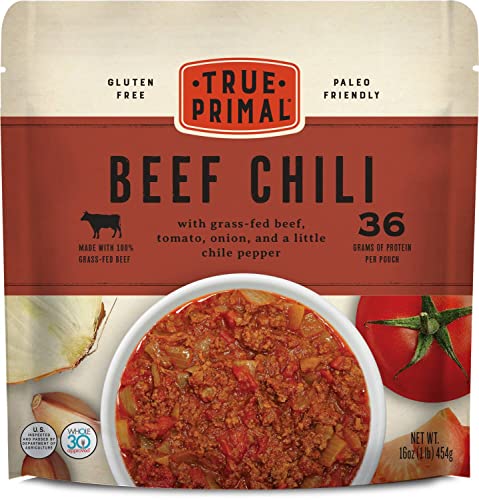
True Primal Beef Chili changes the format from soup to a ready-to-eat, bean-free chili pouch. That distinction gives it a place in meal planning for people seeking a higher-protein pantry item, with the listing naming 36 grams of protein per pouch.
Grass-fed beef, tomato, onion, and chile pepper form the core profile. I see it as a useful option for travel, desk lunches, or quick dinners, though the specialized ingredients and pouch packaging may be less convenient for shoppers who prefer a standard can.
The Case For It
- Thirty-six grams of protein per pouch support a filling meal format.
- Bean-free chili suits people avoiding legumes in that dish.
- Ready-to-eat preparation works in a microwave or on a stovetop.
- Grass-fed beef, tomato, onion, and chile create a clear flavor profile.
- The eight-pack helps with repeated pantry lunches.
Details To Watch
- Bean-free does not mean every other dietary preference is automatically covered.
- Chili may be less versatile than a mild soup base.
- Opened pouches need refrigeration, and reheating instructions should be followed.
Technical Highlights
Best Suited To
This chili suits people prioritizing protein, beef flavor, and a portable pouch format for quick meals.
Swap It Out When
Campbell’s Chunky Steak and Potato Soup may suit someone who prefers a traditional soup with potatoes instead of a bean-free chili.
How I Compare Canned Soup Pantry Picks
Start With The Meal Format
Canned soup, dry soup mix, and protein powder solve different problems. A can is convenient for lunches, Bear Creek requires a pot, and Paleovalley is intended for drink mixing. Comparing format first prevents a convenient meal from becoming a pantry product that never fits the routine.
Check Sodium Against The Serving
Sodium is a practical comparison point, especially across soup cans, dry mixes, and packaged meals. Amy’s is labeled light in sodium, while Bear Creek lists 830 milligrams per serving; the remaining items still require a direct label check for an accurate comparison.
Match Ingredients To Your Routine
Lentils suit plant-forward lunch planning, beef and chicken suit meat-based meals, and the chili offers a higher-protein alternative with no beans. Grass, soy, dairy, and other exclusions matter only when they correspond to an actual dietary need, not simply because a label uses a trend-oriented term.
Look At Pack Size And Storage
Eight-can and eight-pouch packs work well for repeated meals, but storage space matters in a small kitchen. Dry mixes take less room than cans, powders require careful sealing, and opened portions need refrigeration. The best pantry choice is the one that fits both the cupboard and the cooking routine.
Small Details That Change Pantry Fit
Common Shopping Slip Ups
Mixing formats can create disappointment, particularly when a protein powder is expected to taste like soup. I also compare sodium by serving size rather than assuming a lighter label applies to the entire package.
What The Higher Tier Buys
Higher-priced options often emphasize sourcing, specialized ingredients, or pouch convenience rather than extra food volume. Those features matter for a particular routine, but a conventional can may offer a more straightforward meal for someone building a simple lunch rotation.
Frequently Asked Questions
Are canned soups healthy by definition?
No. Canned soups vary widely in sodium, protein, vegetables, and serving size. Reading the label matters more than relying on the word healthy.
Which soup is easiest for a workday lunch?
Campbell’s Chunky Steak and Potato Soup is a straightforward ready-to-heat choice with a larger 16.3-ounce can. True Primal pouches are also convenient, though their specialty positioning may not suit every pantry.
Can soup mix replace a canned soup?
Bear Creek TORTILLA Soup Mix is a dry base, so it requires water and cooking. It offers customization but lacks the same immediate convenience as a ready-to-eat can.
Are these options suitable for plant-based meals?
Amy’s Light in Sodium Lentil Vegetable Soup is the clearest plant-based choice in this group. The other soups contain beef, chicken, or beef-derived ingredients.
What should I compare in a nutrition label?
I look at serving size, sodium, protein, and the ingredient list. Those details show whether a product fits a particular lunch or dietary routine.
Final Verdict
The strongest general-purpose lunch choice here is Campbell’s Chunky Steak and Potato Soup, while Amy’s offers a plant-forward path and True Primal covers more specialized pantry styles. Bear Creek suits cooks who want to customize a soup base, and Paleovalley belongs in a protein-powder routine rather than a soup rotation. I would choose by format, ingredients, and the meal that needs to happen on the busiest day of the week.