

Honey seems simple until I start comparing origin, processing style, flavor, packaging, and how often the jar has to travel. I chose these options for distinct routines, from everyday tea and baking to high-grade Manuka, large pantry jars, and individually packed servings for lunches, hiking, and travel.
UMF, or Unique Manuka Factor, is a quality measure used for Manuka honey, while MGO refers to its methylglyoxal content. Neither number needs to define a good pantry honey, but both help distinguish the New Zealand options in this roundup from the domestic wildflower and clover choices.
The Choices Worth Comparing
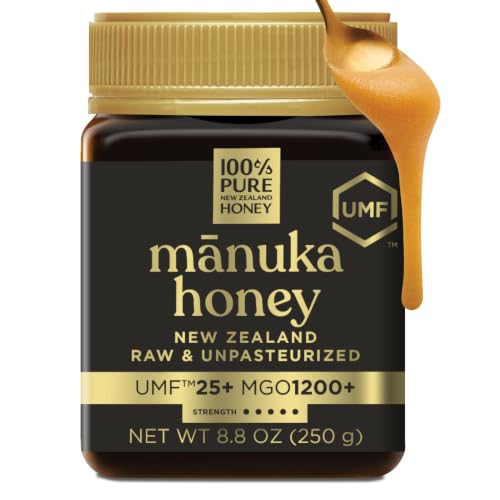
100% Pure New Zealand Honey UMF25+ MGO 1200+ 8.8 Oz

100% Pure New Zealand Honey UMF 20+ MGO 830+ 17.6 Oz

100% Pure New Zealand Honey UMF 22+ MGO 970+ 8.8 Oz

Fischer’s Pure Raw Unfiltered Honey 40 oz

Nate’s Georgia Raw Honey 32 oz Squeeze Bottle

365 Organic Light Amber Wildflower Honey 24 Ounce
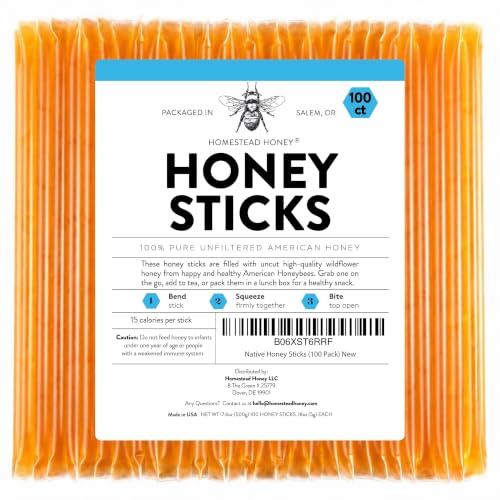
Homestead Honey Native Sticks 100 Count

Farmhouse Honey 50 Pack Clover Honey Sticks
Inside Each Recommended Option
The UMF25+ and MGO 1200+ figures put this jar at the specialty end of my Manuka comparison. I’d reserve a small 8.8-ounce portion for tasting, tea, or recipes where a distinctive flavor matters more than an everyday wildflower profile.
Compared with the larger UMF20+ jar, it offers higher stated markers in a smaller format. That may suit someone studying origin and grading, though a casual tea drinker could find the less measured options more practical.
Practical Pluses
- UMF25+ provides a clearly defined grade for comparison.
- MGO 1200+ is the highest stated MGO figure in this group.
- The 8.8-ounce jar supports measured tasting portions.
- Its New Zealand origin distinguishes it from domestic wildflower options.
Worth Noting
- The small jar offers less volume than the 17.6-ounce Manuka pick.
- Raw honey can crystallize, so storage temperature and occasional warming may affect dispensing.
Quick Facts
Specialty Focus
This format best serves Manuka enthusiasts who prioritize stated grade markers over pantry volume.
A Different Pick May Suit
100% Pure New Zealand Honey UMF 22+ MGO 970+ fits people seeking a slightly lower stated grade in another 8.8-ounce format.
Among the Manuka jars, the 17.6-ounce format is the one I’d consider for regular use rather than occasional tasting. Its UMF 20+ and MGO 830+ labels still provide useful quality references, while the larger quantity gives tea drinkers and home bakers more room.
That volume brings a trade-off. Depending on how strongly one responds to Manuka flavor, the jar may sit on the shelf longer than a domestic option, so storage becomes part of the decision.
What Helps Most
- The 17.6-ounce jar holds more than the other Manuka choices here.
- UMF 20+ gives users a straightforward grade reference.
- MGO 830+ supplies another clearly stated quality marker.
- The larger quantity works better for frequent tea or baking routines.
Small Caveats
- Its stated markers trail the UMF25+ and UMF22+ options.
- Manuka honey may crystallize, particularly in a cool pantry.
- Strong flavor preferences can make a large jar slower to finish.
At A Glance
Made For
Regular tea drinkers and home bakers benefit most from the larger Manuka quantity.
Where Another Pick Shines
365 Organic Light Amber Wildflower Honey suits everyday cooking where a lighter floral profile and standard jar format matter more than Manuka markers.
This jar lands between the two higher-specificity Manuka choices: its UMF 22+ and MGO 970+ figures exceed the UMF20+ pick, while the 8.8-ounce size remains restrained. I see that balance as useful for tasting, gifting, and recipes calling for a measured amount.
Unlike the UMF25+ option, it doesn’t push the markers as far, which may make it a more approachable specialty choice. The honest limitation is volume, since frequent users may exhaust the jar sooner.
Strong Points
- UMF 22+ sits between the other Manuka grades.
- MGO 970+ offers a higher stated figure than the UMF20+ jar.
- The smaller format keeps expensive honey in measured portions.
- It works neatly for tasting or gifting.
Points To Note
- It provides less honey than the 17.6-ounce Manuka alternative.
- Neither grade replaces personal judgment about aroma and flavor.
Built With In Mind
This choice best suits Manuka comparators who want a higher grade than UMF20+ without moving to the UMF25+ jar.
Consider Something Else When
100% Pure New Zealand Honey UMF25+ MGO 1200+ is the better fit for anyone placing the stated grade markers ahead of jar size.
Moving from graded Manuka to a domestic pantry staple changes the comparison completely. Fischer’s focuses on raw, unfiltered honey in a 40-ounce format, which fits frequent baking, large-family use, and anyone who measures honey by the cup rather than the teaspoon.
The unfiltered approach may produce more visible variation in color or texture than a highly uniform jar. For users accustomed to smooth honey, that change takes some adjustment, though it aligns with the stated processing style.
Why It Works Well
- Forty ounces supports frequent household recipes.
- Raw and unfiltered processing matches the title’s stated approach.
- The large quantity reduces the need for repeated pantry refills.
- It suits bakers who need more volume than specialty Manuka jars provide.
Practical Considerations
- Crystallization is likely with raw honey, though the exact texture can vary.
- Unfiltered honey may show particles that some spoon users dislike.
- Warmed jars need cautious handling because heated honey can soften the surrounding seal.
Feature Snapshot
The Right Fit
High-volume home bakers and large households get the most practical use from this jar.
Reach For A Different Pick When
Nate’s Georgia Honey suits people who prefer measured squeezing over scooping honey from a large jar.
The squeeze bottle is the practical shift in this roundup. I’d choose it for waffles, yogurt, oatmeal, and tea because a narrow stream is easier to control than a honey dipper, particularly during a rushed weekday morning.
Nate’s sources the honey from Georgia and U.S. beekeepers, according to the provided background. That sourcing story may matter to local-focused shoppers, although flavor and use case remain more practical daily considerations.
A Few Strong Suits
- The squeeze bottle gives precise control over thin toppings.
- Thirty-two ounces balances pantry capacity and manageability.
- Raw, unfiltered honey suits minimally processed preferences.
- Georgia sourcing provides a clear domestic origin.
Areas To Watch
- Crystallization can narrow the opening in a cool kitchen.
- The bottle may be less convenient for precise cup measurements.
- Raw honey’s texture can change with storage temperature.
Who Will Love This
Busy households and breakfast-focused users benefit from the bottle’s controlled dispensing.
A Better Fit Elsewhere
Fischer’s Pure Raw Unfiltered Honey is the stronger option for large baking quantities that call for scooping and scaling.
The light amber color and floral notes give this jar a different role from the darker, more mineral-forward Manuka options. I’d use it in tea, baking, and cooking where a rounded wildflower character works across several recipes.
Its 24-ounce size is modest beside the 40-ounce Fischer’s jar, yet that amount is easy to finish within a regular pantry rotation. The stated organic sourcing and wildflower focus are the main reasons to choose it over generic clover honey.
What Stands Out
- The light amber color suits tea and baking.
- Wildflower sourcing offers broader botanical character than clover honey.
- Twenty-four ounces works for frequent, moderate use.
- The flavor profile fits both sweet and savory cooking.
Minor Gripes
- It offers less volume than the 32- and 40-ounce pantry options.
- Light amber honey can still crystallize, despite its refined appearance.
Technical Highlights
Made For
Home cooks wanting a versatile organic wildflower honey for tea, baking, and meals benefit here.
Swap It Out When
Farmhouse Honey Clover Sticks offer a better fit for lunches and outdoor activities where individual portions matter more than a pantry jar.
A hundred individual sticks change the storage equation entirely. I’d pack these for school lunches, hiking days, tea at the office, or travel, because each serving arrives sealed and avoids carrying a sticky jar or measuring spoon.
The wildflower profile is less about careful tasting and more about convenient sweetness. That’s a fair trade for commuters and families, though anyone baking with honey may find the sticks less useful than a pantry jar.
Advantages To Know
- One hundred sticks cover frequent lunches and outings.
- Individual packets prevent drips inside bags and drawers.
- The sticks travel without a spoon, jar, or sticky residue.
- Unfiltered wildflower honey suits people wanting a simple ingredient.
Details To Watch
- Single-use packets can create more packaging waste than a refillable jar.
- The 100-count box may be excessive for occasional use.
- Individual sticks offer less control than a squeeze bottle.
Travel Ready
Commuters, hikers, and lunch-packing households get the strongest benefit from the sealed format.
Another Choice May Suit
Farmhouse Honey Clover Sticks may fit people who prefer a larger carton with more compact packet options.
The 50-stick carton offers a middle ground between a full pantry jar and a 100-count box. I’d choose it for a family that wants clover honey in lunch bags, guest snack boxes, or a moderate supply of single-serve sticks.
Clover honey tends to provide a familiar, rounded baseline, while the sticks emphasize convenience over texture or dispensing control. Compared with Homestead Honey’s wildflower packets, the flavor source differs, and the carton contains half as many sticks.
Strengths Worth Knowing
- The 50-count carton balances household use and portability.
- Clover honey gives snacks and tea a familiar sweetness.
- Single sticks prevent sticky jars in lunch bags.
- The bend, squeeze, and eat design needs no utensil.
- The source states that honey is the only ingredient.
Less-Than-Ideal Details
- Disposable packets create recurring packaging waste.
- Fifty sticks may run out quickly in a high-use household.
- Clover honey offers less floral variety than wildflower options.
Key Details
Who Should Grab It
Families and casual snackers wanting portable clover honey benefit from this moderate carton.
Where a Sibling Pick Shines
Homestead Honey Native Sticks better serve high-volume use cases that require more individual wildflower servings.
Honey Attributes That Deserve Attention
Start With the Honey Source
The source sets expectations for flavor and purchasing priorities. Wildflower honey can reflect varied regional plants, while clover honey generally offers a familiar profile. Manuka is distinguished by New Zealand origin and its own grading markers, so I treat it as a separate category rather than a direct flavor substitute.
Check the Container Before the Jar
A squeeze bottle suits breakfast toppings, a wide jar simplifies large recipe measurements, and sticks prevent sticky lunch bags. Storage needs matter too: raw honey can crystallize, so keeping the container sealed at a stable room temperature generally makes dispensing easier.
Read the Processing and Origin Claims
Raw and unfiltered describes a different handling approach from heavily processed pantry honey. Organic sourcing, wildflower sourcing, and Manuka grading communicate separate attributes, so combining several terms in one jar doesn’t automatically make one characteristic more important than another.
What Separates Premium From Basic
Higher-tier honey often costs more because of origin, grading, handling, packaging, and rarity. For me, that premium is easiest to justify for measured tasting, gifting, or a recipe where a specific Manuka profile is central. Everyday tea, baking, and lunch packing can often be handled just as well by a domestic jar or portable packet.
Frequently Asked Questions for Healthy Honeys
What does UMF mean in Manuka honey?
UMF is the Unique Manuka Factor, a grading system associated with specified Manuka honey characteristics. MGO is a separate content measure, and both figures are most relevant when comparing New Zealand Manuka options.
Does raw honey crystallize?
Raw honey can crystallize as temperature conditions change, and the rate differs by batch. Gentle warming can restore fluidity, so I avoid high heat and keep the jar tightly closed.
Is Manuka honey better for everyday cooking?
Manuka can provide a distinctive flavor, but it is not automatically the best choice for every recipe. Domestic wildflower or clover honey may blend more easily into familiar baked goods and breakfast dishes.
Which honey is easiest for travel?
Individual honey sticks are the most portable option because they are sealed and need no utensil. A squeeze bottle is also practical for controlled use, though it takes up more space and can leak after warming.
Should honey be refrigerated?
I generally store sealed honey at a stable room temperature rather than refrigerating it. Cool storage can accelerate crystallization, while warmth can make honey difficult to dispense.
Wrap Up
I’d choose Fischer’s for large-volume baking, Nate’s for controlled everyday dispensing, 365 for organic wildflower versatility, and either Manuka jar based on the stated grade and serving size. For lunches, hiking, or travel, the individual sticks solve a different problem and may be the more practical pantry choice.