

You want a bar that helps your gut and still fills you up, so pick ones with real fibers like psyllium, inulin, or oat beta glucan and a 2:1 to 4:1 protein to fiber ratio. Try Quest variety packs for 20g protein and 4–12g fiber, Pure Protein chocolate peanut butter for reliable macros, Barebells for no added sugar, and KIND Protein MAX for peanuts first and low sugar. Check labels for sweeteners and fermentable fibers to avoid gas, and keep going to see which fit your diet.
| Quest Nutrition Ultimate Variety Pack Protein Bars (12) |

| Best Variety Pack | Protein per bar: 20–21 g protein | Package count: 12-count carton | Target use / occasion: On-the-go snack / quick nutrition | VIEW LATEST PRICE | Read Our Analysis |
| Quest Nutrition Chocolate Chip Cookie Dough Protein Bars |
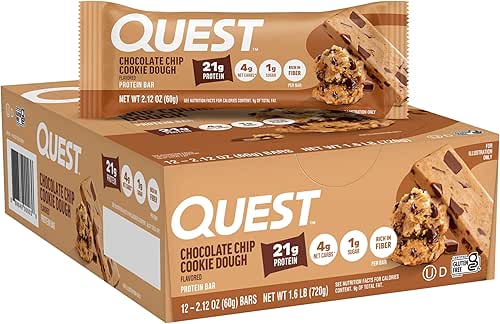
| Best Low-Sugar Treat | Protein per bar: 21 g protein | Package count: Box of 12 bars | Target use / occasion: Low-sugar sweet treat / anytime snack | VIEW LATEST PRICE | Read Our Analysis |
| Pure Protein Chocolate Peanut Butter Protein Bars (12-Pack) |

| Best Workout Fuel | Protein per bar: 20 g protein | Package count: 12-pack | Target use / occasion: Pre/post-workout and on-the-go snack | VIEW LATEST PRICE | Read Our Analysis |
| Barebells Protein Bars Variety Pack (12 Count) |

| Best Dessert Alternative | Protein per bar: 20 g protein | Package count: 12-count | Target use / occasion: On-the-go snack / pre- or post-workout | VIEW LATEST PRICE | Read Our Analysis |
| KIND Protein MAX Sweet & Salty Caramel Peanut Bars |

| Best Whole-Food Protein | Protein per bar: 20 g protein | Package count: 12-count box | Target use / occasion: High-protein convenient snack throughout the day | VIEW LATEST PRICE | Read Our Analysis |
More Details on Our Top Picks
Quest Nutrition Ultimate Variety Pack Protein Bars (12)
If you want a tasty, high protein snack that fits a busy, low carb lifestyle, Quest Nutrition Ultimate Variety Pack is a smart pick. You get twelve individually wrapped bars, each about 1.76 ounces, so you can stash them at work, in your bag, or at home. Each bar gives you 20 to 21 grams of protein with only four to five grams of net carbs and zero to two grams of sugar. They use dairy proteins for complete amino acids. They’re gluten free and keto friendly. You’ll enjoy classic Quest flavors and dependable quality when you need quick, satisfying fuel.
- Protein per bar:20–21 g protein
- Package count:12-count carton
- Target use / occasion:On-the-go snack / quick nutrition
- Dietary claim (gluten):Gluten free
- Sugar or “no added sugar” positioning:0–2 g sugar per bar (low sugar)
- Portable / individually wrapped:Individually wrapped bars (portable)
- Additional Feature:Classic flavor assortment
- Additional Feature:Bar weight 1.76 oz
- Additional Feature:Emphasis on taste quality
Quest Nutrition Chocolate Chip Cookie Dough Protein Bars
You’ll like Quest Nutrition Chocolate Chip Cookie Dough bars when you want a sweet treat that still fits a structured eating plan. You get 21 g protein per bar from dairy-based complete proteins, so your muscles and cravings both feel cared for. Each bar has 12 g fiber, which helps fullness and supports digestion while adding balance to your macros. With just 4 g net carbs and 1 g sugar, they suit low-sugar goals without tasting medicinal. The cookie-dough flavor and chocolate-flavored chips satisfy comfort cravings any time. They come in a box of 12, ready for on-the-go moments.
- Protein per bar:21 g protein
- Package count:Box of 12 bars
- Target use / occasion:Low-sugar sweet treat / anytime snack
- Dietary claim (gluten):(Not explicitly stated in summary; implied low-carb) - treat as not specified
- Sugar or “no added sugar” positioning:1 g sugar per bar; no added sugars
- Portable / individually wrapped:Individually wrapped bars (box of 12)
- Additional Feature:12 g fiber per bar
- Additional Feature:Cookie-dough-like taste
- Additional Feature:Chocolate-flavored chips
Pure Protein Chocolate Peanut Butter Protein Bars (12-Pack)
Busy people who want a real snack that fuels workouts and tames hunger will find the Pure Protein Chocolate Peanut Butter bars a smart pick. You get creamy peanut butter with dark cocoa in a rich texture that feels satisfying, not fake. Each individually wrapped bar packs 20 g protein, 190 calories, and just 3 g sugar, so you can use it before exercise, after training, or between meetings. The bars are certified gluten free, easy to toss into a bag, and come in a 12-count box. You’ll appreciate steady energy, muscle support, and a convenient candy swap you can trust.
- Protein per bar:20 g protein
- Package count:12-pack
- Target use / occasion:Pre/post-workout and on-the-go snack
- Dietary claim (gluten):Gluten free (certified)
- Sugar or “no added sugar” positioning:3 g sugar per bar (low sugar)
- Portable / individually wrapped:Individually wrapped bars (portable)
- Additional Feature:190 calories per bar
- Additional Feature:Certified gluten free
- Additional Feature:Chocolate-peanut flavor pairing
Barebells Protein Bars Variety Pack (12 Count)
For anyone who wants a dessert-like snack that still helps hit protein goals, the Barebells Protein Bars Variety Pack is a great pick. You’ll get 12 bars, each 55 g, in Cookies & Cream, Caramel Cashew, Salty Peanut, and Chocolate Dough. Each bar delivers 20 g protein and no added sugar, so you can enjoy a sweet treat that supports muscle recovery. The soft, chocolate-like texture is meant to satisfy cravings. The bars are GMO free and palm oil free, and they work well as an on-the-go snack, pre- or post-workout fuel, or an easy office breakfast.
- Protein per bar:20 g protein
- Package count:12-count
- Target use / occasion:On-the-go snack / pre- or post-workout
- Dietary claim (gluten):GMO-free / palm oil free; not listed as explicitly gluten free in summary (but marketed as macro-friendly) - treat as not specified
- Sugar or “no added sugar” positioning:No added sugar*
- Portable / individually wrapped:Individually wrapped bars (12 bars)
- Additional Feature:Swedish brand origin
- Additional Feature:Palm oil free
- Additional Feature:Soft dessert-like texture
KIND Protein MAX Sweet & Salty Caramel Peanut Bars
If you need a filling snack that keeps hunger at bay and supports muscle recovery, KIND Protein MAX Sweet & Salty Caramel Peanut Bars are a great pick. You get 20 grams of protein per bar, so you’ll feel satisfied after a busy morning or a tough workout. Peanuts are the first ingredient, giving real nutty flavor and texture. You’ll see only 1 gram total sugar and 0 grams added sugar as stated by the maker. Bars are high in fiber, keto friendly, gluten free, non GMO verified, and kosher. They use no artificial sweeteners or sugar alcohols.
- Protein per bar:20 g protein
- Package count:12-count box
- Target use / occasion:High-protein convenient snack throughout the day
- Dietary claim (gluten):Gluten free
- Sugar or “no added sugar” positioning:0 g added sugar; 1 g total sugar
- Portable / individually wrapped:Individually wrapped bars (12-count box)
- Additional Feature:Peanuts #1 ingredient
- Additional Feature:Non-GMO Project Verified
- Additional Feature:Kosher certified
Factors to Consider When Choosing High-Fiber Protein Bars
When you pick a high-fiber protein bar, look at the type and source of fiber and the total fiber amount so you know how it will affect digestion and fullness. Also check the protein to fiber ratio and watch sugar and sweeteners, because a balanced mix keeps energy steady without unwanted spikes. Finally, consider ingredient quality standards so you’re choosing bars made with real, transparent ingredients you can trust.
Fiber Type And Source
Although different fibers may look the same on a label, they work very differently in your body and deserve a closer look so you can pick a bar that matches your goals. You’ll want to know whether a bar uses soluble fibers like inulin, oat beta glucan, or psyllium because they dissolve and form a gel. Those slow digestion, help lower cholesterol, and keep blood sugar steadier. Insoluble fibers such as wheat bran or cellulose add bulk and speed transit, so they mainly help with regularity. Prebiotic fibers feed good bacteria and support gut health, but they can cause gas if you start too fast. Also note viscosity and fermentability since psyllium and beta glucan act differently than resistant starch or oligosaccharides. Check ingredient types to match your needs.
Total Fiber Amount
You learned how different fiber types act in your gut, and now you’ll want to check how much fiber is actually in a bar to match your goals. Aim for bars with at least 5 to 10 grams per serving if you want a real contribution toward daily needs. Look at the Nutrition Facts for Dietary Fiber instead of trusting “high fiber” on the wrapper. If a bar has 12 or more grams, it can keep you full longer and slow carbs, but it might also add calories or sugar alcohols, so weigh the whole label. Also note whether manufacturers list soluble versus insoluble fiber, since soluble types like inulin or psyllium affect digestion and blood sugar more. If a bar is very high in fermentable fiber, increase intake slowly to avoid bloating or gas.
Protein To Fiber Ratio
Picking a bar by its protein-to-fiber ratio helps you hit both hunger control and recovery goals without guesswork. Aim for about 2:1 to 4:1 protein to fiber. That means bars with 10 to 20 grams protein and 5 to 10 grams fiber usually work well. If you see 20-plus grams protein with under 2 grams fiber, expect less fullness and fewer gut benefits. On the other hand, very high fiber with little protein won’t support muscle needs. Look at where protein and fiber come from. Complete proteins plus a mix of soluble and insoluble fiber give better satiety and digestive support than isolates alone. Also compare serving size and calories so a large bar doesn’t hide an unbalanced ratio.
Sugar And Sweeteners
After you’ve checked protein and fiber, take a close look at the sugars and sweeteners next so your bar actually supports steady energy and a calm stomach. Read total sugars and added sugars on the label. Aim for 0–2 g added sugar per serving if you want fewer blood sugar spikes. Notice sweeteners that lower net carbs like chicory inulin or non-nutritive options, but know some fiber sweeteners can upset digestion at higher doses. Watch for sugar alcohols such as maltitol or erythritol since they can cause gas or laxative effects for sensitive people. Question net carbs claims and how manufacturers subtract fiber and certain sugar alcohols. If you prefer natural taste, pick bars with small amounts of whole-food sweeteners like dates paired with high fiber.
Ingredient Quality Standards
When you’re choosing a high-fiber protein bar, ingredient quality should feel like a promise, not a guessing game. You want whole-food fibers like oats, nuts, seeds, and fruit purées listed near the top. Those give vitamins, minerals, and mixed fiber types that support your gut. Also look for clear labeling of fiber types and amounts, such as soluble versus insoluble or named fibers like inulin, psyllium, or oat fiber. Pick bars that use simple sweeteners and binders, such as nut butters or small-ingredient syrups, rather than long lists of additives or artificial sweeteners. Check third-party certifications and transparent sourcing for integrity and contamination risk. Finally choose clean protein sources, complete proteins or clear blends, not vague proprietary isolates.
Texture And Mouthfeel
Think about texture like the handshake of a protein bar: it tells you what to expect before you even taste it. You’ll notice soluble fibers like inulin give a soft, cohesive chew that feels gentle and slightly springy. Insoluble fibers add grit and a drier bite, so you’ll sense more crunch and less give. When bars pack 8 to 12 plus grams of fiber, they often feel dense and fudgy, almost like a brownie, which makes them more filling. Some fermentable fibers can leave a cool or powdery film on your tongue if they’re high. Makers add xanthan gum or glycerin to keep bars moist and chewy. Expect more residual film or stickiness when sugar alcohols or polymeric sweeteners are present. Choose by feel as much as ingredients.
Dietary Restrictions Compatibility
If you have food rules to follow, start by checking the label closely so you know exactly what’s in a high-fiber protein bar and how it might affect you. Look at fiber type and amount per serving. Aim for 5 to 10 grams from both soluble and insoluble sources if you want digestive help. Note fermentable fibers like inulin or FOS because they can cause gas or bloating for sensitive people. Next, verify allergens and cross-contact warnings for milk, soy, nuts, and gluten. If you follow low FODMAP, keto, or diabetes plans, check net carbs and sugar alcohols since some raise blood sugar or upset your gut. If you avoid animal products, confirm plant proteins and watch for whey, casein, or gelatin. Finally check certifications like gluten free vegan kosher and clear ingredient lists.