

A successful smash burger starts long before the first patty hits the griddle. Consistent portions, even pressure, quick cleanup, and a suitable meat-to-fat ratio shape the finished sandwich, while a heavy cast iron press and a compact stainless steel press serve very different cooking styles. I focus on those practical differences for weekend cooks, busy kitchens, and anyone building a dependable backyard burger setup.
The Main Contenders

Brigii 8.5-Inch Heavy-Duty Stainless Steel Smash Burger Press

HULISEN 8.5-Inch Stainless Steel Burger Press

Gourmet Easy Cast Iron Smash Burger Press

HULISEN 6-Inch Stainless Steel Burger Smasher
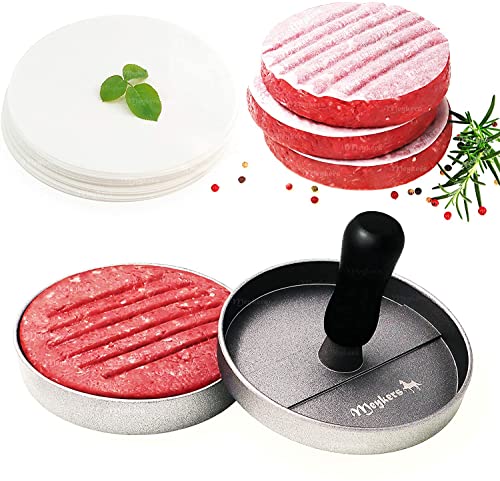
Meykers Hamburger Press Patty Maker 150 Paper

TACGEA Aluminum Burger Press with 150 Patty Papers

HULISEN 9-Inch Stainless Steel Burger Smasher

Amazon Grocery Ground Beef Burgers, 80% Lean, 8 Count
The Picks, Examined More Closely
The Brigii press brings 2.5 pounds of mass to an 8.5-inch surface, giving thin patties a firm, level foundation on a hot griddle. That weight is meaningful in a busy backyard kitchen, where several rounds of homemade hamburgers may be cooked at once and rapid, uniform contact matters.
Compared with the later Gourmet Easy cast iron option, this stainless steel design avoids the seasoning routine associated with cast iron. In most kitchens, that makes it the more convenient choice for cooks who want straightforward cleanup.
The Helpful Details
- The 2.5-pound weight supplies firm pressure without a bulky cast iron body.
- The broad surface supports even contact across a standard smashed patty.
- Stainless steel wipes clean more easily than seasoned cast iron.
- The broad wooden handle gives the press a familiar, easy-to-grip profile.
Points To Note
- The wooden handle needs occasional drying, particularly after washing or outdoor use.
- The stated dishwasher-safe feature may tempt routine washing, though hand washing better protects the wooden handle.
At A Glance
Who Will Love This
Backyard griddle cooks who want strong pressure and simple post-cookup cleanup will appreciate this design.
A Better Fit Elsewhere
Cooks already committed to cast iron gear and its seasoning routine may prefer the Gourmet Easy Cast Iron Smash Burger Press.
HULISEN combines an 8.5-inch round surface with roughly 2.6 pounds of pressing weight, landing close to the Brigii design in practical scale. The smooth steel face also suits bacon, which broadens its role beyond homemade hamburgers and makes it more useful across a mixed griddle session.
The listed 2.5-millimeter steel thickness suggests a substantial plate for a home cooking tool, while the wooden handle keeps the design approachable. Compared with the heavier cast iron pick, the maintenance tradeoff is much easier for a casual cook to manage.
What Stands Out
- The wide face gives patties and bacon a generous contact area.
- Substantial weight helps hold meat against a hot flat-top during cooking.
- Stainless steel resists staining more readily than cast iron.
- Soap-and-water cleaning fits naturally into a backyard cooking routine.
Small Caveats
- The broad plate may occupy more griddle space than the 6-inch HULISEN model.
- Sticky patties can still adhere to any hot cooking surface, so the plate requires oiling and prompt release.
Quick Facts
The Right Fit
This model suits mixed-use griddle cooks who prepare both smashed burgers and bacon in the same session.
Where A Sibling Pick Shines
Home cooks working on a smaller griddle may prefer the HULISEN 6-Inch Stainless Steel Burger Smasher for its shorter footprint.
Cast iron gives this press a dense, stable feel that carries well beyond occasional burger nights. Its two-pound weight is substantial enough for firm contact, while the silicone-covered handle adds separation from the heated surface during a long griddle session.
This is the pick for a cook already comfortable maintaining cast iron. Compared with both stainless steel HULISEN presses, it asks for more ongoing care, but that care can suit a kitchen built around well-used griddle tools.
Notable Upsides
- The two-pound cast iron body supplies steady pressure with a compact footprint.
- Cast iron retains heat better than lighter steel, which can support steadier cooking across a batch.
- The heat-resistant silicone grip improves comfort during repeated use.
Practical Considerations
- Cast iron requires drying and light oiling after washing to limit surface corrosion.
- Food residue can lodge into the textured cast iron surface and take more effort to remove.
Made For
Dedicated griddle cooks who already manage cast iron skillets and presses will find the ownership routine familiar.
Another Choice May Suit
Cooks wanting simpler cleanup and no cast iron seasoning routine may prefer the Brigii press instead.
At six inches across, this HULISEN press leaves more open griddle space than the 8.5-inch versions in the roundup. That makes it a sensible fit for a compact flat-top, a crowded cookout, or a kitchen where tools need to share limited storage.
The lighter 1.24-pound plate still offers meaningful downward force, although the two-pound cast iron model will feel more planted during aggressive pressing. The stainless steel and smooth face favor quick rinsing over the heavier maintenance profile of cast iron.
Useful Touches
- The six-inch diameter works well for one or two patties at a time.
- The lower weight is easier to reposition than the larger presses.
- A wooden handle keeps fingers raised above the hot plate.
- Stainless steel supports straightforward soap-and-water cleanup.
Worth Noting
- Less weight may produce less aggressive contact than heavier designs.
- The compact face is less suitable for pressing a broad steak or several pieces simultaneously.
- The wood needs occasional drying to stay in good condition.
Feature Snapshot
Right Fit For
Compact griddle owners and solo cooks will find the smaller surface easier to maneuver and store.
Reach For A Different Pick When
Cooks preparing larger batches may favor the wider HULISEN 8.5-Inch Stainless Steel Burger Press.
The Meykers tool changes the job by forming raw ground beef into measured 4.5-inch patties before cooking. That is useful for a picnic, camping meal, or family cookout because identical portions travel and cook more consistently than loosely shaped portions.
Its removable plastic handle separates for compact storage and returns without another tool. Unlike the metal presses earlier in the roundup, this model prepares patties rather than flattening them against a hot griddle, so it serves an earlier stage of homemade hamburger preparation.
Everyday Wins
- The 4.5-inch mold creates similarly sized patties for more uniform cooking.
- One hundred fifty included papers keep portions separated during storage.
- The detachable handle reduces the space needed in a picnic bag or kitchen drawer.
Things To Consider
- This tool shapes raw meat but does not smash patties during cooking.
- Plastic components require separate hand washing and more careful storage than a metal press.
Built With In Mind
Campers, picnic hosts, and batch preparers will find the removable mold and paper stack easy to pack.
A Better Fit Elsewhere
Cooks seeking a crisp griddle-seared surface need a press, making the Brigii model a better fit.
TACGEA combines a 4.5-inch aluminum mold with 150 wax papers, packaging the mold and its main prep supply together. That arrangement is convenient for a family producing a freezer batch or staging portions before a cookout, particularly in a kitchen where tidy separation matters.
Compared with the Meykers patty maker, both produce similarly sized portions, but TACGEA leans on aluminum construction and a larger included paper set. Neither creates the thin crust associated with pressing meat directly against a griddle.
Where It Helps
- The aluminum mold forms round 4.5-inch patties for consistent portions.
- One hundred fifty wax papers support batching, stacking, and freezer storage.
- The release design reduces direct contact between formed meat and the mold.
Possible Compromises
- Aluminum can discolor over time, so owners commonly rinse and dry it promptly.
- Wax paper is useful for storage but adds a disposable component to repeated meal preparation.
Core Details
Who Should Grab It
Batch cooks who want the mold and wrapping papers ready together will find this setup practical.
Consider Something Else When
Picnic cooks prioritizing a removable handle may favor the Meykers Hamburger Press Patty Maker.
The nine-inch face is the broadest steel design here, giving patties and strips of bacon more room for contact. Its 1.86-pound weight is lighter than the two-pound cast iron model, yet still substantial enough to serve as a general-purpose grill press.
For most backyards, the wider plate may create more of a space tradeoff than a cooking one. Compared with the 6-inch HULISEN model, I see the nine-inch version as the better batch-oriented choice, especially for a cook preparing more than one burger at a time.
Real Benefits
- The nine-inch surface offers room for large patties and bacon.
- Substantial weight promotes steady contact on a flat-top griddle.
- Stainless steel avoids the seasoning process required by cast iron.
Details To Watch
- The broad face can limit placement on a small or crowded griddle.
- Owners commonly wipe the plate clean after each session to prevent cooked residue from building up.
Best Suited To
Batch-oriented backyard cooks with a full-size griddle will get the most practical use from the wide face.
Skip It When
Compact griddle owners may find the HULISEN 6-Inch Stainless Steel Burger Smasher easier to maneuver.
These frozen portions shift the focus from shaping or pressing meat to simply cooking eight ready-made burgers. The 80% lean and 20% fat blend provides a straightforward starting point for casual homemade hamburgers, while the 32-ounce package fits an eight-person meal.
It works well for a quick kitchen dinner or a first cookout, especially in a busy home where portioning raw beef would add unnecessary work. For more control over seasoning, shape, and breading, the Meykers and TACGEA mold options provide a better starting point.
Strengths Worth Knowing
- Eight frozen portions simplify meal planning and reduce raw-meat handling time.
- The declared lean-to-fat ratio gives cooks a consistent meat blend.
- Each serving provides 19 grams of protein.
Points To Keep In Mind
- The patties need thawing time before a griddle or skillet.
- Ready portions offer less control over diameter, seasoning, and ingredients than shaping raw beef.
Quick Facts
Made For
Busy households seeking a low-lift burger meal will appreciate the ready-made portion format.
Look Elsewhere When
Cooks who prefer seasoning their own meat will have more control with the TACGEA Aluminum Burger Press.
What Matters Before Choosing a Burger Setup
A smash press is defined by a heavy, flat surface that makes direct contact with meat on a hot cooking plate. Its weight encourages rapid heat transfer, while the plate’s dimensions affect how many patties can be pressed at once.
Heat and Weight
A two-pound cast iron press stores substantial heat and feels stable on a griddle. Stainless steel presses weigh around 1.24 to 2.5 pounds, offering a broader range of handling and cleanup options. Heavier isn’t automatically better; control matters more than force once a patty has spread.
Surface Area
An eight- or nine-inch plate suits batches and broad patties. The six-inch HULISEN model preserves more griddle space and fits compact cooking areas. The patty makers work earlier in the process, producing raw portions rather than browning or flattening meat.
Material and Maintenance
Stainless steel resists staining and avoids cast iron seasoning, although it can show heat marks over time. Cast iron demands drying and light oiling after washing. Plastic patty molds clean easily but need protection from high heat, and disposable papers are mainly useful during portioning and storage.