

You’ll love loose leaf white teas that balance floral sweetness, low caffeine, and fresh aroma, like Organic Positively Tea Company White Peony for everyday pours, XIXICHA Silver Needle for delicate bud-forward sips, TIAN HU SHAN Bai Mu Dan for a fuller leaf body, VAHDAM’s fresh vacuum-sealed sampler for consistent quality, and Tiesta Tea’s sampler if you want variety; pick whole leaves, check harvest or pack dates, store airtight and cool, use 2–3 g per 200 ml at 80–90°C for short steeps, and you’ll find more brewing tips ahead.
| Organic Positively Tea Company White Peony White Tea Loose Leaf 16 Ounce |

| Best Value | Tea Type: White Peony (White tea) | Format: Loose leaf (bulk 16 oz) | Origin / Sourcing Region Mentioned: China | VIEW LATEST PRICE | Read Our Analysis |
| Tiesta Tea 8-Flavor Loose Leaf Sampler Set |

| Flavor Explorer | Tea Type: Includes white-herbal/white-style blends among 8 loose-leaf flavors (assorted sampler) | Format: Loose leaf (8 sample pouches) | Origin / Sourcing Region Mentioned: Blends sourced (varied; not single origin specified) | VIEW LATEST PRICE | Read Our Analysis |
| VAHDAM Assorted White Tea Sampler Gift Set |
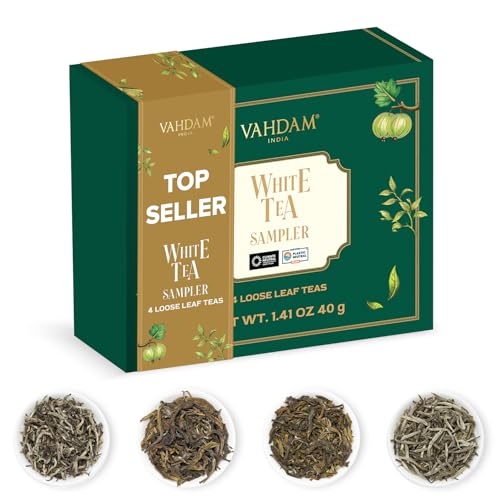
| Gift-Worthy Selection | Tea Type: Assorted white teas (4 unblended white varieties) | Format: Loose leaf (sampler gift tins/pouches) | Origin / Sourcing Region Mentioned: India (premium plantations) | VIEW LATEST PRICE | Read Our Analysis |
| XIXICHA Silver Needle (Baihao Yinzhen) White Tea 80g |

| Premium Pick | Tea Type: Silver Needle / Baihao Yinzhen (white tea) | Format: Loose leaf (80 g) | Origin / Sourcing Region Mentioned: Fuding, China | VIEW LATEST PRICE | Read Our Analysis |
| TIAN HU SHAN Bai Mu Dan White Tea Loose Leaf |
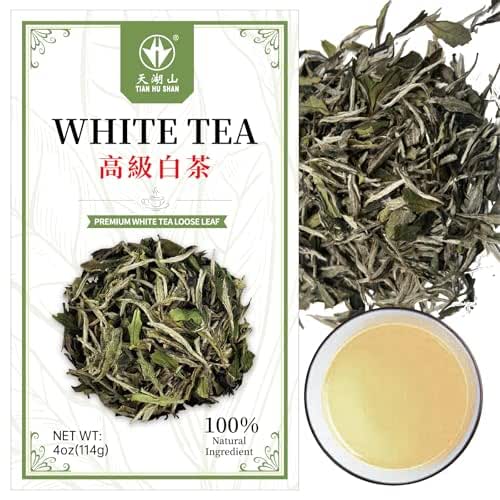
| Classic Favorite | Tea Type: Bai Mu Dan / White Tea | Format: Loose leaf | Origin / Sourcing Region Mentioned: Fuding, Fujian, China | VIEW LATEST PRICE | Read Our Analysis |
More Details on Our Top Picks
Organic Positively Tea Company White Peony White Tea Loose Leaf 16 Ounce
If you’re new to loose leaf tea or you want a gentle daily cup that won’t jolt your nerves, Organic Positively Tea Company White Peony is a perfect pick. You’ll find 100% USDA certified organic white tea from China, loose leaf in a generous 16 ounce bag. It brews a sweet golden liquor with mild flowery notes and low caffeine, so you can sip anytime. You’ll get about 150 to 240 cups depending on your scoop. It’s packed with antioxidants, vitamins, and minerals with no additives. You’ll enjoy a clear, soothing cup that feels honest and warm.
- Tea Type:White Peony (White tea)
- Format:Loose leaf (bulk 16 oz)
- Origin / Sourcing Region Mentioned:China
- Brewing Guidance:General brewing implied (low-caffeine, mild; yield guidance 150–240 cups)
- Flavor Profile / Tasting Notes:Flowery, mild, sweet; golden liquor
- Suitable Uses / Occasion:Everyday drinking; beginners and general tea drinkers
- Additional Feature:USDA Certified Organic
- Additional Feature:1 lb (16 oz) bulk size
- Additional Feature:High antioxidant content
Tiesta Tea 8-Flavor Loose Leaf Sampler Set
You’ll love the Tiesta Tea 8-Flavor Loose Leaf Sampler Set when you want a playful, easy way to explore flavored loose leaf teas without committing to a full tin. You get eight resealable pouches with fruity, herbal, and black blends like Maui Mango, Fireberry, and Lavender Chamomile. Each pouch brews about 6 to 10 cups, so you can sip hot or cold and tweak strength easily. Blends vary for freshness, so you’ll discover new notes each time. The premium loose leaf form gives bold aroma and control, making this set a warm, cheerful gift or a personal tasting adventure.
- Tea Type:Includes white-herbal/white-style blends among 8 loose-leaf flavors (assorted sampler)
- Format:Loose leaf (8 sample pouches)
- Origin / Sourcing Region Mentioned:Blends sourced (varied; not single origin specified)
- Brewing Guidance:Suitable for hot or cold/iced brewing; pouch yields 6–10 cups
- Flavor Profile / Tasting Notes:Range - fruity, herbal, energizing (examples: mango, berry, lavender chamomile)
- Suitable Uses / Occasion:Sampler/gift, hot or iced brewing, exploration
- Additional Feature:Eight-variety sampler pack
- Additional Feature:Resealable sample pouches
- Additional Feature:Hot or cold brew-friendly
VAHDAM Assorted White Tea Sampler Gift Set
VAHDAM’s Assorted White Tea Sampler Gift Set is perfect for someone who loves delicate, fresh-tasting teas and wants an easy way to try a range of high-quality loose-leaf varieties. You get four whole-leaf whites like Imperial Himalayan, Blue Mountain Nilgiri, and Imperial Earl Grey plus one surprise variety, all vacuum-sealed within 24 to 72 hours of harvest. You’ll steep 2 grams per 200 ml at 100°C for three to five minutes. VAHDAM sources directly from Indian gardens, supports farmers fairly, and sends 1% of revenue to education. The brand is carbon and plastic neutral, so you can feel good gifting this set.
- Tea Type:Assorted white teas (4 unblended white varieties)
- Format:Loose leaf (sampler gift tins/pouches)
- Origin / Sourcing Region Mentioned:India (premium plantations)
- Brewing Guidance:Specific: 2 g | 200 ml | 100°C | steep 3–5 min
- Flavor Profile / Tasting Notes:Delicate/varies by white variety (imperial, earl grey notes)
- Suitable Uses / Occasion:Gift set, special occasions (Valentine’s, gifting)
- Additional Feature:Vacuum-sealed freshness
- Additional Feature:Direct fair-trade model
- Additional Feature:1% revenue to education
XIXICHA Silver Needle (Baihao Yinzhen) White Tea 80g
This Silver Needle Baihao Yinzhen from XIXICHA is best for tea lovers who want a pure, gentle cup that soothes and refreshes, especially if you enjoy delicate floral notes and a sweet aftertaste. You’ll feel cared for knowing it comes from Fuding at 600 meters, where mist and cool nights help buds build flavor. Master Huang uses traditional withering and no kneading, so leaves stay plump and fuzzy. Brew light for a subtle aroma or strong for a fuller sip, and try cold brew for summer. Packaging protects quality, so it makes a thoughtful gift or daily treat.
- Tea Type:Silver Needle / Baihao Yinzhen (white tea)
- Format:Loose leaf (80 g)
- Origin / Sourcing Region Mentioned:Fuding, China
- Brewing Guidance:Specific: light 3 g @85°C 10–12s; strong 5 g @95°C 10s; cold brew ~4 hrs
- Flavor Profile / Tasting Notes:Floral, sweet aftertaste, baihao aroma
- Suitable Uses / Occasion:Personal enjoyment or gift; premium/ceremonial drinking
- Additional Feature:Hand-picked first buds
- Additional Feature:Master Huang craftsmanship
- Additional Feature:Limited/scarce output
TIAN HU SHAN Bai Mu Dan White Tea Loose Leaf
If you want a gentle, elegant tea that’s perfect for slow mornings and warm afternoons, TIAN HU SHAN Bai Mu Dan is a lovely choice. You’ll taste sweet, fresh notes that never overwhelm. Grown in Fuding, Fujian, the microclimate and rich soil give it a distinct aroma you’ll notice right away. The loose leaf whole leaves unfurl as they brew, revealing layered flavors and low caffeine so you can sip more. Brew 3–5 grams at 85–90 °C for 2–3 minutes, or cold brew for a bright, revitalizing cup. You can easily adjust leaf amount to suit your mood.
- Tea Type:Bai Mu Dan / White Tea
- Format:Loose leaf
- Origin / Sourcing Region Mentioned:Fuding, Fujian, China
- Brewing Guidance:Specific: 3–5 g | 85–90°C | steep 2–3 min
- Flavor Profile / Tasting Notes:Delicate, sweet, fresh
- Suitable Uses / Occasion:Everyday hot or cold brewing; refreshing summer drink
- Additional Feature:Historical/cultural pedigree
- Additional Feature:Whole-leaf unfurling
- Additional Feature:Flexible leaf-to-water ratio
Factors to Consider When Choosing Loose Leaf White Teas
When you choose a loose leaf white tea, start by thinking about origin and terroir because where the tea grows shapes its flavor and aroma. Next, pay attention to leaf grade and harvest along with processing methods since younger buds and gentler handling usually mean a sweeter, more delicate cup and lower caffeine. As you compare aroma and flavor profiles, also consider your caffeine preferences so you pick a tea that matches your mood and time of day.
Origin And Terroir
Because where tea grows shapes how it tastes, you’ll want to pay close attention to origin and terroir when choosing loose leaf white teas. Think about altitude and cool, misty slopes. Higher sites with clear day to night swings usually yield delicate, floral cups. Then notice soil and minerals. Well drained, mineral rich ground brings depth and a clean finish that feels honest on your palate. Pay attention to seasonal rain and the timing of spring bud flush. White teas depend on early buds for sweetness and low bitterness. Also consider light and canopy cover. Diffused light or shade raises theanine and aroma, making sweeter, more umami forward liquor. Remember two teas of the same bush can taste very different by place and season.
Leaf Grade And Harvest
Though leaf grade might seem like a dry label, it actually tells you a lot about how a white tea will taste and feel, and knowing what to look for will save you from disappointment. You’ll first notice bud-to-leaf ratio. Silver needle uses mostly unopened buds, while white peony includes one or more leaves. That matters because plucking standard-bud only, bud plus one, bud plus two-shifts sweetness, body, and yield. Harvest timing ties in next. First flush before Qingming gives tender buds rich in amino acids and theanine, so the liquor feels sweeter and silkier. Check appearance for fine downy hairs on buds; they signal careful early picking. Also favor small-batch hand-picked tea harvested in a tight window for rarer, higher-grade leaves and gentler processing.
Aroma And Flavor Profile
If you want a white tea that smells as bright as it tastes, start by noticing how the leaf was plucked and handled, since those choices shape aroma and flavor most of all. You’ll find bud-only teas offer a silvery, subtle perfume. When small leaves join buds, you’ll get fuller fruitier or vegetal tones. Gentle withering and low handling preserve delicate aromatics like linalool and geraniol, so the cup stays floral and fruity rather than roasted or smoky. Pay attention to brew temperature and time. Lower temps around 80–90°C and short steeps of one to three minutes bring out sweetness and florals. Hotter or longer brews pull more tannin and leafy notes. Store your tea airtight, cool, and dark to keep those fresh top notes alive.
Caffeine Level Considerations
You learned how picking and handling shape a white tea’s smell and taste, and those same choices also shape how much caffeine ends up in your cup. You’ll notice white teas usually have less caffeine than black or pu-erh, roughly 6 to 40 mg per 8 oz cup. Choose silver needle or bud-forward styles if you want a bit more kick, because buds pack more caffeine than leafy late-harvest varieties. Brewing matters a lot. Hotter water and longer steeps pull out more caffeine, while cooler water around 80–85°C and shorter steeps keep it low. Loose leaf gives you control. Use 2–3 grams per 200–250 ml for a gentle cup, or 4–5 grams for strength. If you need minimal caffeine, pick leafier, later-harvest whites and brew lighter.
Processing Methods Impact
Start by thinking about how the processing of white tea shapes what ends up in your cup. You’ll notice simple withering and gentle drying preserve delicate aromas and a light sweet liquor. If leaves sun-wither longer, sugars concentrate and fruitier notes come forward. If withering is short and indoor, you get subtler, vegetal tones. Because there’s no rolling and oxidation stays low, more intact catechins and theanine remain. That gives antioxidant benefits and a mellow umami sweet mouthfeel. Pick style matters too. Single buds brew a lighter, floral cup. Buds plus leaves yield fuller, sweeter character. Traditional hand care and careful low heat drying protect the fine down on buds, improving aroma, clarity, and a smooth aftertaste you’ll enjoy.
Brewing Flexibility And Yield
You’ve just read how gentle processing keeps white tea’s flavor light and sweet, and that care in picking and drying shapes aroma and mouthfeel. Now think about brewing flexibility and yield. You can dose 2–3 g per cup and expect a pound to make roughly 150 to 240 cups depending on strength. Whole leaves handle multiple infusions, often two to five steeps, so you stretch that pound and explore changing flavors. Because caffeine is low, you can use larger leaf to water ratios or longer steeps for more taste without jitters. Try cold brewing for four to eight hours to pull out floral sweetness and save hot leaves for extra cold infusions. Use a larger vessel and short initial steeps of 10 to 30 seconds for quick repeat pours.
Packaging And Freshness
When choosing loose leaf white tea, think about how the package keeps the leaves safe and fragrant. You want airtight, opaque containers like metal tins or dark glass jars to block light, oxygen, and moisture. Also look for vacuum sealed or nitrogen flushed packing and resealable bags that state reduced oxygen. Whole, unbroken leaves in small single batch foil or vacuum pouches with inner linings hold aroma longer than bulk, loosely packed tea. Check harvest or pack dates and plan to drink white tea within six to twelve months for the best floral and sweet notes. Avoid plastic window bags and weak seals. Finally, store tea in a cool dry place away from strong odors so subtle flavors stay clean and bright.
Ethical Sourcing Practices
If you care about the people and places behind your cup, look for clear signs that the tea was sourced fairly and responsibly. You can choose teas sold through direct-trade or fair-trade arrangements, which usually send more money to smallholder farmers and workers. Also check for transparent supply chains that show harvest-to-pack traceability, harvest dates, or farm-level sourcing reports. Producers who disclose wages, working conditions, or third-party audits lower the chance of exploitative labor. Favor suppliers who reinvest revenue in local programs like schools and clinics and who publish impact metrics that show measurable benefits. Finally, verify environmental stewardship claims such as organic certification, habitat protection, or regenerative practices that protect worker health and farm futures.