Manuka honey varies far more than its amber color suggests. I focus on the grading, origin, texture, jar size, and practical differences that matter for spoonfuls, tea, baking, and pantry use. This comparison helps people who want a specific potency level, a smooth everyday jar, or a smaller format without paying for a grade the routine will not use.
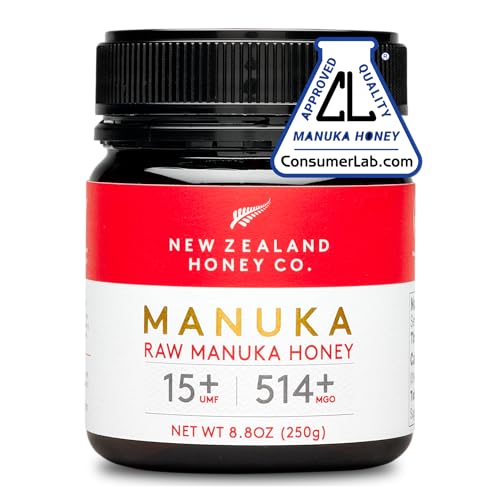
Starting at UMF 15+ makes this a sensible first stop into graded Manuka honey. UMF, or Unique Manuka Factor, is the grading scale used here, while MGO 514+ is the corresponding activity marking. The 8.8-ounce format is manageable for regular pantry use rather than a large display jar.
For someone building a breakfast or tea habit, the 15+ grade offers a clear specification without moving into the scarce upper tiers. Owners commonly keep honey sealed and dry to preserve its texture, so the straightforward pantry format works well.
This jar suits beginners and occasional users who want a measured Manuka grade for tea, toast, or daily spoonfuls.
Trader Joe’s Mother Earth New Zealand Manuka Honey is a simpler fit for people who only need UMF 10 and do not require a higher activity marking.
Stepping up from the first pick, this jar moves to UMF 20+ and MGO 829+ while keeping the same familiar 8.8-ounce scale. That makes it a practical middle ground for regular users who want a stronger stated grade without jumping to the limited availability associated with very high levels.
It fits a home routine involving tea, yogurt, toast, or baking. The 17.6-ounce listing option may suit a busier kitchen, although I would choose the smaller jar first to learn how often the pantry will actually be opened.
This format best serves regular Manuka users who want UMF 20+ and a familiar jar size for daily pantry use.
100% Pure New Zealand Manuka Honey MGO 70+ 17.6 Oz is the better fit for households prioritizing a large jar and smooth creamed texture over a higher grade.
3 / 8
UMF 24+ places this jar well above the earlier 15+ and 20+ choices, with an MGO marking of 1122+. The grading and independent testing are useful details for a shopper comparing potency rather than relying on flavor descriptions alone.
For a tasting flight, the 4.4-ounce option is especially convenient because it limits commitment. I’d favor the 8.8-ounce jar for a person already comfortable with high-grade honey, especially when the flavor is intended to stand on its own rather than disappear into a recipe.
The Practical Payoff
- ✓UMF 24+ creates a clear step up from the 20+ pick.
- ✓Three listed jar sizes support tasting and regular use.
- ✓Raw monofloral sourcing focuses the product on Manuka honey.
- ✓Independent batch testing gives shoppers a documented reference.
Practical Considerations
- •High-grade honey is overkill for recipes calling only for sweetness.
- •The 8.8-ounce jar may open slowly for occasional users.
- •Storage should remain cool and sealed to manage crystallization.
Feature Snapshot
| | Feature | Specification | Why It Matters |
|---|
| Grade | UMF 24+ | Places the honey in a high-grade tier. |
| Activity | MGO 1122+ | Adds a second potency reference. |
| Origin | New Zealand | Matches the defining source of Manuka honey. |
| Sizes | 4.4, 8.8, and 17.6 ounces | Allows tasting or longer pantry use. |
Who Will Love This
This jar suits experienced users who understand UMF grading and want a high-grade 8.8-ounce format for tasting or regular use.
Another Choice May Suit
NEW ZEALAND HONEY CO Raw Manuka Honey UMF 15+ 8.8oz is a more practical fit for people who want measured Manuka honey without moving into the 24+ grade.
Where the preceding UMF 24+ jar emphasizes graded intensity, this option shifts toward a 17.6-ounce format and MGO 70+ marking. The Pure Flow creaming process creates a smooth texture, which can be easier to spoon than a more fluid raw honey for some people.
Its larger size works well in a busy kitchen where honey is used on toast, tea, fruit, or baking. The listed MGO 70+ level is lower than the high-grade jars here, so this is the practical choice when texture and pantry volume matter more than a two-digit UMF rating.
Strong Points
- ✓The 17.6-ounce jar supports frequent household use.
- ✓Creamed texture is designed for easy spooning.
- ✓MGO 70+ gives shoppers a clear activity reference.
- ✓The product has received Supreme Honey Awards in 2021, 2022, and 2023.
Where It May Fall Short
- •MGO 70+ is lower than the 200+ through 1450+ options.
- •The large jar is less attractive for occasional tasting.
- •Very smooth creamed honey may not appeal to people who prefer a more fluid raw texture.
Core Details
| | Feature | Specification | Why It Matters |
|---|
| Activity | MGO 70+ | Offers a lower-potency reference point. |
| Format | 17.6 ounces | Provides a larger pantry supply. |
| Texture | Creamed | Supports smooth spooning and spreading. |
| Origin | New Zealand | Identifies the honey’s country of origin. |
Right Fit For
This jar suits busy households that want a large, smooth Manuka format for frequent breakfast and baking use.
Look Elsewhere When
Trader Joe’s Mother Earth New Zealand Manuka Honey is a simpler fit for a shopper who wants the lowest stated UMF grade and a basic pantry jar.
Manukora sits between the MGO 70+ option and the much higher UMF grades in this roundup. Its defining detail is the hive-to-hand traceability, paired with a 250-gram jar and a stated MGO 200+ level. That combination works for people who care about sourcing and a mid-to-upper activity reference.
The raw, multifloral description is a useful contrast to the monofloral jars from NEW ZEALAND HONEY CO. I’d consider it for tea, toast, and pantry tasting, though people who insist on a UMF number may find the MGO 200+ listing less direct.
Real Benefits
- ✓Hive-to-hand traceability gives the sourcing a clear story.
- ✓MGO 200+ lands above entry-level honey and below the high UMF jars.
- ✓The 250-gram format is easy to compare with the 8.8-ounce options.
- ✓Non-GMO sourcing may suit people who check that label detail.
Possible Compromises
- •The listing does not show a UMF grade in the supplied details.
- •The multifloral description may not appeal to shoppers seeking strictly monofloral Manuka.
- •Raw honey still benefits from tight, dry storage.
Built With In Mind
This jar suits sourcing-conscious users who value traceability and MGO 200+ more than a specific UMF label.
Consider Something Else When
NEW ZEALAND HONEY CO Raw Manuka Honey UMF 20+ 8.8oz is the better fit for people who want both a named UMF grade and a standard 8.8-ounce jar.
Mother Earth is the most straightforward option in the group: New Zealand Manuka honey with a UMF 10 designation. UMF 10 is the lowest graded level listed here, so it works best for everyday sweetness or a first taste rather than high-grade Manuka comparison.
The shorter product description leaves fewer details about texture and sourcing than the higher-grade jars provide. For a busy kitchen, that simplicity may be useful, but shoppers comparing potency should look for a clearer MGO or UMF figure before settling on a larger purchase.
Everyday Wins
- ✓UMF 10 provides a simple entry-level Manuka reference.
- ✓New Zealand origin is stated plainly.
- ✓The basic format suits toast, tea, and general pantry use.
Details To Watch
- •No MGO figure appears in the supplied product details.
- •UMF 10 sits well below every higher-grade option here.
- •Storage still requires a sealed jar to limit moisture exposure.
Quick Facts
| | Feature | Specification | Why It Matters |
|---|
| Origin | New Zealand | Identifies the country of origin. |
| Grade | UMF 10 | Places it at an entry-level grade. |
Best Suited To
This option suits occasional users who want a recognizable Manuka pantry jar without paying for a high activity level.
Reach For A Different Pick When
100% Pure New Zealand Manuka Honey MGO 70+ 17.6 Oz is the better fit for people who want a larger jar and a stated MGO reference.
Compared with the UMF 24+ jar, this option raises the grade to 26+ and lists MGO 1282+. It is intended for a more deliberate tasting, where flavor and origin matter alongside the honey’s activity marking. The 8.8-ounce format keeps the commitment smaller than a 17.6-ounce purchase.
Raw monofloral honey is the central distinction here, rather than the creamed texture of the 100% Pure New Zealand jar. I’d use the UMF 26+ option for a tasting flight or a pantry serving used straight from the spoon; baking is its least compelling use because the premium grade is masked by other ingredients.
Noteworthy Benefits
- ✓UMF 26+ moves clearly above the 24+ option.
- ✓MGO 1282+ provides a higher stated activity reference.
- ✓Raw monofloral sourcing gives the product a focused identity.
- ✓The 8.8-ounce jar suits a structured tasting.
- ✓Independent testing and UMF certification support label comparison.
Honest Caveats
- •The high grade is unnecessary for ordinary sweetening.
- •Scarcity can make availability less predictable.
- •Crystallization may occur and can be managed with gentle warming.
Who Should Grab It
This jar suits experienced Manuka users who want a rare 26+ grade for tasting rather than routine baking.
Swap It Out When
NEW ZEALAND HONEY CO Raw Manuka Honey UMF 20+ 8.8oz is the more practical choice for a daily spoonful routine.
The UMF 28+ option is the highest stated grade in this collection, paired with MGO 1450+. It is a natural fit for a tasting progression from the 15+, 20+, 24+, and 26+ jars from the same brand, where the goal is to compare grades rather than simply sweeten breakfast.
The source describes a smooth texture and rich, complex flavor, though actual character can vary by batch and storage condition. I’d choose this jar for a special occasion or a small tasting flight. Daily baking would waste the distinction and cost.
A Strong Showing
- ✓UMF 28+ leads the stated grades in this roundup.
- ✓MGO 1450+ gives the label a specific activity reference.
- ✓Single-country sourcing is stated for New Zealand.
- ✓The 8.8-ounce jar works well for tasting.
- ✓Independent testing and UMF certification aid comparison.
Soft Spots
- •It is a poor value choice for recipes requiring only sweetness.
- •High-grade honey is less practical for frequent cooking.
- •The smaller jar still needs secure storage in a cool pantry.
Technical Reference
| | Feature | Specification | Why It Matters |
|---|
| Grade | UMF 28+ | Provides the highest stated grade here. |
| Activity | MGO 1450+ | Adds a clear activity comparison point. |
| Origin | New Zealand | Keeps sourcing tied to the defining country. |
| Format | 8.8 ounces | Supports tasting and occasional use. |
The Right Fit
This jar suits collectors of graded Manuka, tasting enthusiasts, and experienced users comparing the top end of the range.
Another Choice May Suit
Manukora Raw Manuka Honey MGO 200+ 250g is a better fit for users who prioritize traceability and moderate activity over a high UMF grade.
## What Matters Before Choosing ManukasStart with the grade system, not the color. MGO expresses the activity marking, while UMF gives a broader grade category, and the same jar can be discussed in either system depending on the listing. Compare like with like and avoid assuming that a darker color means a higher grade.
Next, choose the format around the routine. A 17.6-ounce jar makes sense for frequent toast, tea, and baking use, while 4.4 ounces is more suitable for a tasting flight. The 8.8-ounce size sits between those uses and is a sensible first format for many people.
Texture deserves equal attention. Creamed honey is designed for smooth spooning, while raw grades may be more fluid or crystallized depending on storage. I prefer a texture that fits the way the jar will actually be used, rather than choosing solely from the grade number.
Origin And Label Details
New Zealand origin appears across these choices, but the listings do not provide identical sourcing details. UMF certification, independent testing, traceability, and raw or monofloral status help narrow the field, yet each describes a different part of the product’s identity.
For Daily Use
A moderate grade is usually easier to justify for a regular spoonful or tea ritual. High UMF levels make more sense for tasting, comparison, or an occasional serving, especially when the honey will not be paired with stronger ingredients.
## Common Manuka Shopping Traps### Common Shopping Slip UpsThe easiest mistake is treating every jar as interchangeable. A higher number is not automatically the better choice for baking, and a lower grade can be more rational for frequent pantry use. I also pay attention to whether the listing states UMF, MGO, or both, since an unclear label makes comparison harder.### What The Higher Tier BuysHigher grades typically reflect a narrower supply and more demanding grading, which can translate into a higher cost. The extra spend makes sense for tasting, collecting, or a routine that uses a spoonful regularly, while plain sweetening usually benefits more from a moderate grade.## Frequently Asked Questions### What is UMF in Manuka honey?UMF is a grading scale used to identify the honey’s grade category. Higher numbers represent higher-grade categories, while MGO provides a separate activity marking for comparison.### Is UMF 15+ stronger than MGO 70+?No. UMF and MGO are different measurement systems, so their numbers should not be compared directly. Look for a listing that states the grading system and the corresponding activity marking.### Is higher-grade Manuka honey better for baking?Higher grades are rarely necessary for baking because other ingredients dilute the honey’s flavor. A moderate grade is generally more practical when the honey is used mainly for sweetness.### Which Manuka honey is easiest to spread?The 100% Pure New Zealand option is explicitly creamed for a smooth texture. That makes it a practical choice for spreading, while raw options may require more handling as they crystallize.### How should Manuka honey be stored?Keep the jar tightly sealed in a cool, dry place away from moisture. Crystals can form naturally, especially with raw honey, and gentle warming can help restore a more fluid texture.## Final VerdictI would start with the UMF 15+ or 20+ jar for a manageable first purchase, then move upward only when tasting is the goal. The MGO 70+ and 200+ options make sense for everyday texture or sourcing priorities, while UMF 24+ through 28+ suits deliberate comparisons and special-occasion spoonfuls. The right Manuka is the one whose grade, texture, and jar size match the routine rather than the largest number on the shelf.