

Meal prep boxes turn a Sunday cooking session into a week of organized lunches, without making the refrigerator look like a container warehouse. I’ve focused on the details that shape daily ownership: portion control, compartment layout, material, lid security, cleaning, and how well each option fits a work lunch, family dinner, gym refill, or travel bag.
A Fast Comparison Of The Options

Dealusy 50-Pack 38 oz Reusable Meal Prep Containers
VITEVER 8-Pack 2.4 oz Stainless Steel Sauce Cups

Bayco 8-Pack 33 oz Three-Compartment Glass Containers

MUMUTOR 24-Piece Glass Meal Prep Container Set

Enstphjoy 4-Pack Five-Compartment Bento Boxes

Jaluxing 50-Pack 28 oz Stackable Meal Prep Boxes

SHANDERBAR 4-Pack 2-Qt Clear Food Containers
Rubbermaid Premier 10-Piece Food Storage Set
Taking A Closer Look At The Options
High-volume cooking calls for a bigger reserve than most refrigerated sets provide, and that’s where the Dealusy set earns its place. Fifty 38 oz containers handle generous portions, full meal batches, and several days of packed lunches without constantly running short.
Unlike the compartmented Bayco set, this model keeps every meal in one undivided space, which suits soups, pasta salads, and leftovers that need room to mix. For busy households, the stackable format may also make efficient use of limited shelf area.
What Earns Its Place
- Fifty containers support substantial weekly batches and group meal prep.
- The 38 oz capacity fits larger entrees without several small dishes.
- Stackable construction helps organize a crowded refrigerator.
- Reusable plastic offers a practical alternative to disposable takeout ware.
Practical Considerations
- The undivided format offers no built-in separation for sides or sauces.
- Owners should inspect plastic containers for cracks, especially after repeated heating or washing.
Made For
High-volume meal cooks, large families, and commuters who need generous single-container portions.
A Better Fit Elsewhere
Bayco 8-Pack 33 oz Three-Compartment Glass Containers suit people who prefer separated entrées, sides, and garnishes.
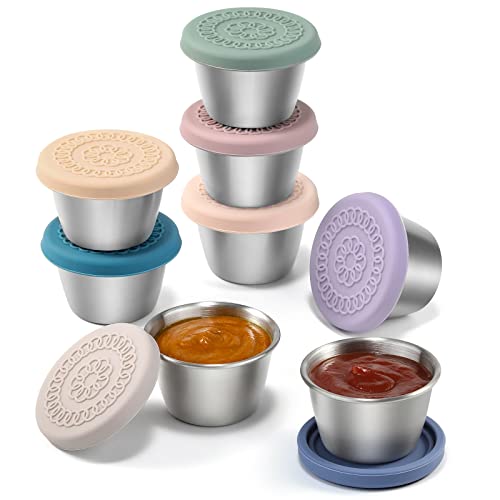
Small sauce cups solve a problem larger meal boxes often miss: keeping dressing from spreading through the entire lunch. Each VITEVER cup holds 2.4 oz, enough for a useful serving without adding unnecessary bulk to a work bag or picnic basket.
These aren’t full meal containers, but their place beside a bento box is clear. Daily commuters may carry two or three, while the eight-piece set also gives family members their own dressing containers.
What It Does Well
- Stainless steel construction suits dressings, jams, and small snacks.
- Silicone-covered lids help contain liquids during a commute.
- The 2.6 by 1.7-inch shape fits many compact lunch setups.
- Eight cups cover multiple people or several packing sessions.
Small Caveats
- These cups cannot hold a complete entrée or substantial side dish.
- Food residue around the silicone rim may need careful brushing during cleaning.
Who It Suits Best
Office commuters, picnickers, and bento users who need compact dressing or condiment compartments.
Where A Sibling Pick Shines
Enstphjoy 4-Pack Five-Compartment Bento Boxes serve people who want the sauces and entire meal organized in one reusable unit.
Portion separation makes the Bayco set practical for lunches that combine an entrée with two sides. The three sections reduce sauce leakage between foods, while the stated 33 oz capacity provides enough room for a substantial workday meal.
Compared with the 38 oz Dealusy containers, Bayco trades some undivided capacity for organization. Glass construction also makes stored food easy to identify, though the added weight can matter in a packed travel bag.
A Few Highlights
- Three compartments keep proteins, grains, and vegetables separated.
- The roughly 8.1 by 6.1 by 2.8-inch size suits full-lunch portions.
- Clear glass simplifies identification of refrigerator contents.
- Eight containers cover a typical workweek for one person.
Points To Note
- Glass is heavier than plastic and requires more careful handling.
- Three narrow sections may not suit soups or foods that need to be mixed.
Feature Snapshot
The Right Fit
Office workers and gym-goers who want balanced, sectioned meals without carrying separate sauce cups.
Consider Something Else When
Dealusy 50-Pack 38 oz Reusable Meal Prep Containers fit lighter, high-volume packing routines better.
One size rarely handles meal prep, snacks, and leftovers equally well, which makes the MUMUTOR assortment useful. Its mix of rectangular and square glass containers gives me a place for small ingredients as well as larger family portions.
That flexibility comes with more pieces to wash, wash, and store. For a shared kitchen, though, the variety can reduce the need to own several unrelated storage systems.
Real-World Strengths
- Twelve containers and twelve lids provide broad storage coverage.
- Multiple shapes make it easier to match foods to container dimensions.
- Locking lids suit leftovers that sit in the refrigerator for several days.
- Glass bases keep stored food visible during a busy workday.
Worth Bearing In Mind
- Glass adds weight and needs careful handling around children.
- The large assortment may occupy more cabinet space than a basic eight-piece set.
Whose Shelf It Belongs On
Mixed-use households that need assorted capacities for leftovers, ingredients, snacks, and daily lunches.
Another Choice May Suit
SHANDERBAR 4-Pack 2-Qt Clear Food Containers may be simpler for families focused on large, uniform leftovers.
Five small sections make the Enstphjoy boxes useful for lunches built from several components. A child can receive separated fruit, vegetables, protein, and grains, while an adult can use the same format for snacks or a light workday meal.
The four color choices also make it easier to assign a box to each family member. Compared with the VITEVER sauce cups, this is a complete organization system rather than a small accessory, though it may be bulkier in a slim work bag.
The Good Stuff
- Five compartments create clear boundaries between lunch components.
- Four color options simplify family identification.
- The stackable format supports compact storage between uses.
- Wheat-straw material gives the boxes a lighter alternative to glass.
Trade-Offs To Consider
- Multiple narrow compartments may not fit bulky sandwiches or pasta dishes.
- Crevices around the lid and dividers need attention during cleaning.
Core Details
Built With In Mind
Families packing lunches for school, work, and outings where separated portions matter more than maximum capacity.
Swap It Out When
Adults carrying large portions may prefer SHANDERBAR 4-Pack 2-Qt Clear Food Containers for more volume.
The 28 oz size lands between a light snack container and a large family dish. Fifty units make the Jaluxing set especially useful for offices, group meal prep, and anyone who wants enough single-compartment boxes for repeated weekly use.
Unlike the heavier glass choices, plastic keeps the packed load lighter. The black rectangular design looks straightforward, and the lids are designed to sit securely while the containers remain easy to stack.
Where It Delivers
- Fifty boxes accommodate large individual or shared meal-prep batches.
- Single-compartment layouts suit mixed foods and one-pot meals.
- Microwave and freezer use expands reheating and storage flexibility.
- Stackability keeps a full supply easier to organize.
A Few Limitations
- One compartment offers no built-in portion separation.
- Repeated heating and washing can gradually stress plastic, so damaged pieces should be replaced.
Ready For Routine
Office lunch programs, large families, and meal-prep routines that need many lightweight single portions.
Another Choice May Suit
Bayco 8-Pack 33 oz Three-Compartment Glass Containers better match a three-part lunch with visible refrigerator storage.
Two-quart containers are built more around family leftovers and batch cooking than individual lunch portions. Four clear boxes make the stored food visible, while the green lids create a simple visual distinction from glass containers.
The included erasable labels add practical value for a busy refrigerator. They can identify a Monday dinner or a week of lunches, and the white pen lets me update the wording as the contents change.
Benefits That Matter
- Two-quart capacity suits pasta, casseroles, and family-size leftovers.
- Clear walls make stored portions easy to identify.
- Eight labels and an erasable pen simplify refrigerator organization.
- Measuring spoon accessories support more precise kitchen tasks.
Practical Considerations
- Four large containers may be excessive for one-person lunch prep.
- Wide food residue can require thorough washing before reuse.
Feature Facts
Who Should Grab It
Households that batch large dinners and prioritize labeled refrigerator storage over compact individual portions.
Look Elsewhere When
Commuters carrying light lunches may find Enstphjoy 4-Pack Five-Compartment Bento Boxes easier to organize by food type.
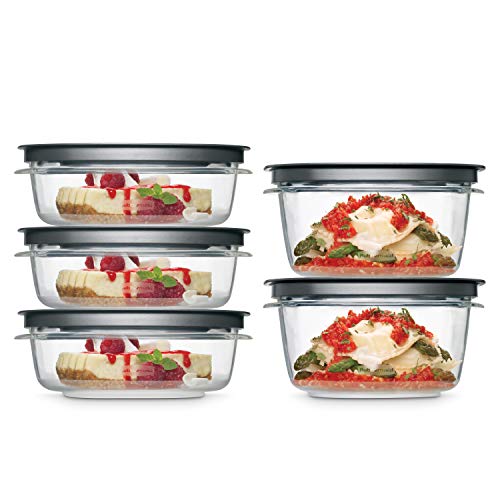
The Rubbermaid set focuses on flexible leftovers rather than a rigid meal-prep layout. Interchangeable lids can reduce the mismatch that develops when several differently shaped containers leave one missing closure in the cabinet.
Its Tritan plastic bases are described as shatterproof, clear, and resistant to staining and odors. Those traits make the set appealing in a busy kitchen, although I’d still allow more storage room than a compact glass set would require.
What Makes Sense
- Ten pieces provide several bases and matching lids for daily storage.
- Interchangeable lids reduce dependence on one exact container shape.
- Tritan plastic offers a lighter and more breakage-resistant base material.
- Stain- and odor-resistant surfaces suit frequently refrigerated foods.
Where It May Fall Short
- Plastic bases can collect visible scratches through long-term use.
- The general storage format offers less portion control than divided bento boxes.
The Right Fit
Kitchen users who want adaptable leftover storage, simple reheating, and lids that work across multiple bases.
Where A Sibling Pick Shines
Bayco 8-Pack 33 oz Three-Compartment Glass Containers better match meal prep requiring fixed portions and clear storage.
What Matters Before Choosing Meal Prep Boxes
Capacity should reflect the meal, not just the number. A 28 oz box can handle many workday lunches, while two-quart containers suit family leftovers and batch-cooked dishes. I estimate portions against the food I actually pack, including sauces, and I leave enough room for secure lid placement.
Material affects portability and maintenance. Glass gives clear storage and handles odor transfer well, but it is heavier and needs careful washing. Tritan or other reusable plastics are lighter for travel, while metal sauce cups add durability but usually aren’t intended for reheating or freezing.
Compartment Layout and Portion Control
Divided boxes suit lunches with several components, such as protein, vegetables, fruit, and grains. Single-compartment containers are more flexible for pasta, soup, and mixed leftovers, but sauces need separate vessels. The Bayco three-part layout strikes a useful middle ground for office lunches, while VITEVER cups handle dressings outside the main container.
Lid Security and Daily Handling
A lid is only as useful as its fit. I pay attention to whether it presses closed evenly, stays connected during transport, and can be opened after food has cooled. Containers for commuting also need a shape that stacks efficiently in a bag, while refrigerator storage benefits from a footprint that leaves lids accessible.
Cleaning and Long-Term Storage
Glass and metal can be scrubbed thoroughly, but silicone seams and divided plastic trays deserve extra attention around their edges. Dishwasher suitability depends on the full material construction, not just the base. I also check for discoloration, warping, and cracks before retiring an older container.
Common Mistakes In Container Shopping
Mistakes Worth Dodging
Choosing only by count can leave me short on lids or short on usable sizes. I compare the number of bases, lids, and accessories, then check whether the compartments suit the food. Oversized boxes may look generous in a product photo but become awkward in a small refrigerator or work bag.
When Paying More Pays Off
Higher spending may reflect borosilicate glass, Tritan plastic, better-fitting lids, or a larger range of useful capacities rather than a fancy badge. Those upgrades matter most for frequent refrigeration, repeated reheating, and meals that travel. For occasional leftovers, a smaller plastic set can cover the same basic need more simply.
Frequently Asked Questions
Are glass meal prep containers better than plastic ones?
Glass provides clear storage and resists odors well, while plastic is generally lighter for commuting. The better material depends on portability, cleaning, and cabinet space.
What size container works for meal prep?
Choose capacity based on the entrée and sides. Single-person lunches often work well around 28 to 33 oz, while larger batch-cooked meals may need more room.
Do meal prep containers need compartments?
Compartmented boxes help keep foods separate and control portions. Single-compartment containers are more versatile for soups, pasta, and mixed leftovers.
Can the same lids fit different containers?
Some sets use interchangeable lids, while others include a dedicated closure for each shape. I confirm the stated matching pairs before organizing mixed leftovers.
Final Verdict
The right meal prep box matches capacity, food layout, and daily transport rather than chasing the largest count. Plastic sets serve lighter and higher-volume routines, glass fits visible and odor-conscious storage, and divided boxes simplify varied lunches. Choosing one system per use pattern keeps packing and cleanup much easier.