

Red food coloring serves a very specific purpose: turning pale frosting, fondant, cookie dough, or candy into the vivid shade a celebration demands. The difficult part is choosing a formula that delivers saturated color without thinning icing, breaking an emulsion, or leaving one red shade too limited for a busy baking schedule.
I considered gel, liquid, and oil-based options for home bakers, cake decorators, and chocolatiers. Several use vegan or food-compatible formulations, but “natural” doesn’t have one universal meaning across colorants, so the available labels and formula types deserve close attention.
A Closer Look At The Lineup

ENCO 9 Basic Food Coloring Gel Set 1.41 oz

ENCO Food Coloring Gel Super Red 8.8 oz

ENCO Food Coloring Gel Red 1.41 oz

ENCO Food Coloring Gel Red 8.8 oz

Cake Mate Gel Food Coloring Set 12 Tubes
Limino Vivid Red Liquid Food Coloring 6 fl oz

Chefmaster Aqua Blue Candy Color 2 oz

ENCO Red Oil Based Food Color 1.23 oz
A Closer Look At Each Pick
A single red bottle can become a limitation in a busy kitchen, particularly for layered cakes or color-themed cookies. This ENCO set instead supplies nine 1.41 oz gel bottles spanning yellow, orange, red, pink, blue, purple, green, brown, and black, giving home bakers room to build shades rather than rely on one red.
The included mixing guide points toward as many as 60 combinations, which makes this the more flexible option than ENCO Food Coloring Gel Red 1.41 oz. For occasional decorators, that broader palette may be worthwhile; for a project requiring only deep red, one of the larger single-color bottles takes less space.
Where It Delivers
- Nine colors support mixing, shading, and contrasting decoration details.
- The 40 g bottles offer more capacity than miniature gel tubes for frequent baking.
- A separate Super Red bottle supports saturated projects without disturbing the other colors.
Things To Consider
- Nine bottles occupy more cabinet space than a dedicated red gel.
- The vegan label does not alone establish that the colors meet a specific definition of natural.
Key Specs
Made For
This set fits home bakers who regularly alternate among red, pink, brown, and contrasting colors across several desserts.
A Better Fit Elsewhere
ENCO Food Coloring Gel Super Red 8.8 oz suits a cake studio or dedicated hobbyist who needs large amounts of saturated red with little interest in a nine-color palette.
Frequent cake decorating can consume red gel quickly, especially across multiple frosting colors, fillings, and accent details. ENCO’s 8.8 oz bottle concentrates on Super Red, and its gel format is intended to disperse through frosting, fondant, royal icing, and dough with less added liquid than a thin dye.
Unlike ENCO 9 Basic Food Coloring Gel Set 1.41 oz, this choice trades palette variety for capacity. In my view, that works well for a home baker producing several red-toned cakes each month, though a single specialty shade may feel wasteful for occasional holiday cookies.
Noteworthy Benefits
- The 250 g size reduces refills during multi-project decorating schedules.
- Concentrated gel supports saturated color through small additions.
- The formula is designed to blend without noticeably loosening recipes.
Minor Gripes
- A 250 g bottle needs secure upright storage and may occupy substantial cabinet space.
- The dedicated shade offers less mixing flexibility than the ENCO nine-color set.
- Super Red is more specialized than a balanced red suitable for many recipes.
Who Will Love This
High-volume home decorators and small cake businesses can put the large bottle to use across repeated red frosting and fondant projects.
Where A Sibling Pick Shines
ENCO 9 Basic Food Coloring Gel Set 1.41 oz fits bakers who need red, pink, brown, and several contrasting colors in one coordinated set.
Not every red project needs Super Red intensity. ENCO Food Coloring Gel Red uses a compact 40 g bottle, making it a more measured option for ordinary frosting, fondant, royal icing, and cookie dough. The smaller container also fits more comfortably beside everyday baking supplies.
Compared with ENCO Food Coloring Gel Red 8.8 oz, the capacity is the primary distinction; the concentrated gel approach remains similar. For one birthday cake or a few holiday batches, the compact format may prevent unused color from lingering on the shelf.
What Makes Sense
- Small capacity suits limited-volume red projects.
- Concentrated gel can tint recipes without requiring a large quantity of liquid.
- The bottle works across several common baking and decorating mediums.
Practical Considerations
- Repeated cake production may empty the 40 g bottle sooner than an 8.8 oz option.
- A dedicated red shade does not provide colors for coordinated floral or rainbow decoration.
- The cap needs careful closing after use to help limit mess around the bottle opening.
Right Fit For
Occasional home bakers making red frosting, cookie dough, or fondant benefit from a manageable bottle that avoids committing to a large red supply.
Reach For A Different Pick When
ENCO Food Coloring Gel Super Red 8.8 oz makes more sense for decorators who repeatedly produce saturated red designs or larger batch quantities.
Large-batch bakers tend to care more about supply than a broad collection of colors, which gives this 8.8 oz red gel a clear role. Its concentrated format is designed to create bold color through a small quantity, making it practical for repeated cake batches, cookie dough, or a busy holiday production schedule.
ENCO Food Coloring Gel Super Red 8.8 oz is the more specialized alternative, and the distinction may come down to the desired red. This regular Red option could prove more versatile for a softer shade, while Super Red targets stronger visual impact.
Well-Handled Touches
- A 250 g bottle supports high-volume baking without frequent replacement.
- Small additions help limit dilution in frosting, icing, fondant, and dough.
- A single-color format simplifies inventory and repeated color matching.
Possible Compromises
- The large bottle requires more cabinet room and planned usage.
- It lacks the secondary colors available in ENCO 9 Basic Food Coloring Gel Set 1.41 oz.
- Red gel needs prompt closure and upright storage after opening.
Feature Snapshot
Built With In Mind
Batch bakers, community bake-sale organizers, and dedicated cake decorators benefit most from the larger red supply.
Another Choice May Suit
Cake Mate Gel Food Coloring Set 12 Tubes offers a broader four-color selection for decorators who alternate red, yellow, blue, and green across multiple projects.
A red-only shelf works for one project, but birthday cakes often arrive with striped layers, flowers, leaves, and contrasting lettering. Cake Mate’s set contains three tubes each of red, yellow, blue, and green, covering 12 tubes in four core hues. That distribution feels more useful for varied decorating than a single red bottle.
The tubes hold 0.67 oz each, so they are smaller than ENCO’s 8.8 oz bottles. Depending on the project, smaller containers may simplify portioning and color selection, although intense batch work could call for more units than expected.
Notable Gains
- Four colors support complementary decoration and basic color blending.
- Three tubes per hue provide some redundancy for frequently used colors.
- Thick gel can enrich frosting, icing, fondant, batter, and dough.
Details To Watch
- The palette lacks orange, purple, pink, brown, and black.
- Twelve separate tubes create more items to store and organize.
- Each 0.67 oz tube may need replenishing during heavy use.
Core Details
Whose Shelf It Belongs On
Home cake decorators who alternate primary colors across birthdays, holidays, and sheet-cake borders will find the four-hue lineup convenient.
A Better Fit Elsewhere
ENCO 9 Basic Food Coloring Gel Set 1.41 oz better serves bakers who need darker neutrals, pink, orange, and a wider mixing palette.
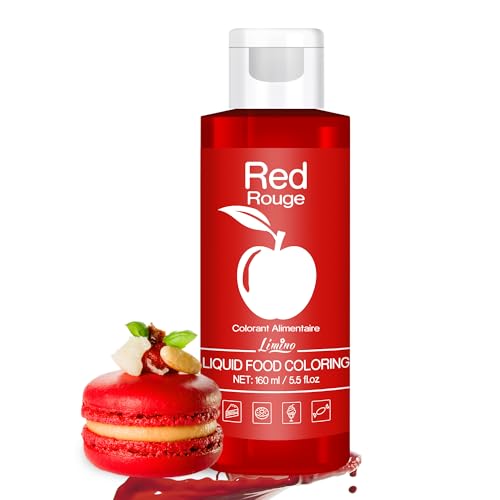
Liquid dye can suit detailed work because its consistency is easier to dispense in tiny amounts than a thick gel. Limino’s red option is listed for cakes, cookies, fondant, macarons, airbrush work, slime, and crafts, giving it broader uses than the baking-only ENCO bottles.
The 6 fl oz capacity is substantial, though the available information doesn’t clarify the complete ingredient or allergen profile. That uncertainty matters for anyone managing food allergies or requiring a defined natural standard, so ENCO’s vegan labeling gives clearer guidance for those particular needs.
Good Reasons To Consider
- Liquid format can support fine lines, airbrush application, and controlled drops.
- The same red color can serve edible and non-edible craft projects.
- A 6 fl oz bottle offers meaningful capacity for repeat work.
Less-Strong Areas
- The limited source information leaves the ingredient profile insufficiently defined for restricted diets.
- Liquid color may add more moisture than gel during heavy tinting.
- Cross-use applications require separate handling around food preparation and non-edible materials.
Who Should Grab It
Airbrush users and crafters seeking a dedicated red liquid bottle benefit most, particularly those comfortable managing the formula’s dual-use applications.
Look Elsewhere When
ENCO Food Coloring Gel Red 1.41 oz better serves a conventional home baker who values a compact, vegan-labeled gel for common cake and cookie projects.
Aqua blue is not a direct substitute for red, so I’d treat this as a specialist lesson in candy coloring rather than a fit for a strictly red pantry. Chefmaster’s oil-based dye is made for chocolate, candy, and compound coatings, where an oil-compatible color can disperse more effectively than a water-oriented gel.
The formula carries gluten-free, kosher, vegan-friendly, peanut-free, egg-free, and halal-suitable labels. Those attributes make the 2 oz bottle relevant to chocolatiers working with varied dietary requirements, though “vegan-friendly” is more specific than a universal vegan designation.
A Strong Showing
- Oil-based color is suited to chocolate, candy, and compound coatings.
- The formula is designed not to alter finished texture or consistency.
- Multiple dietary labels support specialized decorating requirements.
Where It May Fall Short
- The Aqua Blue shade does not satisfy a red-only decorating need.
- Oil-based color is less directly aligned with watery gel applications.
- Separate handling and prompt closure remain important around messy decorating sessions.
Technical Highlights
Built With In Mind
Chocolatiers and candy decorators working primarily with compound coatings benefit from an oil-compatible specialty color.
Swap It Out When
ENCO Food Coloring Gel Super Red 8.8 oz serves red-focused cake bakers who need a large water-compatible-style gel supply for frosting and fondant.
Water and fat don’t always cooperate in baked goods, and that’s where an oil-based color becomes a serious option. ENCO’s red formula is designed for Swiss buttercream, white chocolate, compound coatings, colored cocoa butter, and ganache, giving it a more specialized role than the general-purpose ENCO gel bottles.
For a decorator regularly working with emulsions and coatings, that targeted compatibility matters more than having a broad red range. The 1.23 oz size looks manageable for occasional professional or advanced-home projects, though a busy candy operation may establish a different consumption pattern.
Real-World Strengths
- Designed to color buttercream without disrupting its emulsion.
- Supports even color in white chocolate and compound coatings.
- Also applies to cocoa butter and ganache projects.
- Red gives cake and chocolate decorators a focused specialty shade.
Trade Offs To Consider
- The narrower application list makes it less flexible than a nine-color set.
- Oil-based color does not replace the ENCO gel options for every frosting.
- Cross-contamination and bottle handling deserve attention during multi-medium decorating.
The Right Fit
Advanced decorators working regularly with buttercream, chocolate coatings, cocoa butter, or ganache are the strongest candidates for this formula.
Not Your Match When
ENCO 9 Basic Food Coloring Gel Set 1.41 oz better fits general home baking that calls for red, pink, brown, and several contrasting shades across standard gel mediums.
Choosing Red Color by Recipe and Format
Gel, liquid, and oil-based color behaves differently, so the recipe should lead the choice. A gel is generally easier to control in thick frosting and dough, while a liquid dye may suit very fine application work. Oil-based color belongs in another category entirely, especially for chocolate, coatings, and some emulsions.
Concentration affects real use. A concentrated formula can create bold color through small additions, which helps preserve the consistency of buttercream, fondant, royal icing, and cookie dough. A large 8.8 oz bottle makes sense for repeat projects, while a 1.41 oz bottle or 0.67 oz tubes suit occasional work and tighter storage.
Color compatibility is just as important as capacity. An aqua blue candy color can be useful in chocolate but won’t replace red, and a four-primary-color set can’t create every shade without supporting colors. Home bakers who mix many tones should favor a broad palette, while specialists may prefer one deeper red.
Labels require precise interpretation. Vegan, halal suitable, gluten-free, and similar terms describe different parts of a formulation; none automatically means the colorant is made from botanical ingredients. Anyone requiring a specific natural standard should examine the ingredient panel and certification wording rather than relying on the product color alone.
Practical Notes Before the First Batch
Common Shopping Slip Ups
Choosing by the darkest-looking package photo can be misleading. Formula type matters because a water-based gel, liquid dye, and oil-based color behave differently in frosting, dough, and chocolate.
Another mistake is buying several tiny red tubes before confirming the recipe medium. Check the decorating material, expected batch size, and available ingredient information first.
What The Upgrade Payoff
Larger bottles mainly buy convenience and supply, not a different decorating effect. They suit frequent production, while smaller containers reduce unused product and cabinet demand. Oil-based formulas may justify the change when chocolate, buttercream, or compound coatings require that specific color behavior.
Frequently Asked Questions
Are gel and liquid food coloring interchangeable?
They can tint many similar recipes, but their consistency affects control and dilution. Gel usually offers stronger control in thick icing, while liquid color dispenses more freely for fine details.
Is vegan food coloring always natural?
No. Vegan describes the absence of animal-derived ingredients, not the source of every color compound. A specific natural standard requires its own ingredient or labeling check.
Which red color works for chocolate?
An oil-based candy color is generally the more suitable choice for chocolate and compound coatings. Water-based formulations may separate or perform poorly in fat-rich mixtures.
Is a larger bottle better for home baking?
A larger bottle is helpful for frequent projects and reduces refills. Occasional bakers may use less color and benefit more from a compact container.
Can red gel be used in royal icing?
Yes, concentrated gel can color royal icing while giving the decorator control over the final shade. Small additions help manage both color strength and icing consistency.
Wrap Up
The most useful red choice depends less on bottle size alone than on the material being colored. Compact ENCO gel suits occasional cake and cookie projects, the nine-color set supports varied decoration, and oil-based formulas make sense for emulsions, chocolate, and compound coatings. Check the formulation, application, and ingredient labels before committing.