

Pasta makes the quickest case for keeping several olive oils in the pantry. A finishing oil needs enough character to remain noticeable, while a cooking oil must handle heat and emulsify sauces; the right bottle for one may be excessive for the other. I’ve selected eight options for weeknight cooking, meal preparation, garlic-forward dishes, organic pantries, and precise finishing.
A Quick View Of The Lineup

Sonoma Gourmet Sautéed Garlic Olive Oil 8.5 oz, 2 Pack

Bertolli Dress & Drizz Olive Oil 16 fl oz

Bertolli Rich Taste Olive Oil 16.9 fl oz

Laconiko Koroneiki Extra Virgin Olive Oil 12.7 oz

Bertolli Organic Olive Oil 25.4 fl oz

O-Live&Co. Organic Extra Virgin Olive Oil 1L

Bertolli Olive Oil Spray 5 fl oz, 6 Pack
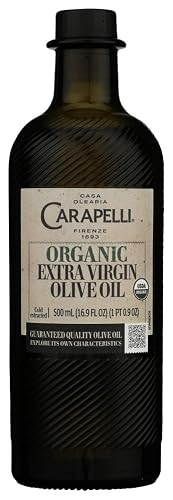
CARAPELLI Organic Extra Virgin Olive Oil 16.9 fl oz
Meet The Standout Selections
Garlic pasta rarely needs another round of chopped garlic, and that’s where Sonoma Gourmet earns its place. The sautéed garlic flavor gives spaghetti, linguine, and warm bread an immediate savory accent without changing the basic cooking method.
Unlike the single-variety oils that follow, this is a deliberately flavored option. I’d favor it for family dinners and casual meal prep, while cooks seeking a pure finishing oil may prefer more restraint. The two smaller bottles also suit kitchens that dislike carrying a large container near the stove.
What Helps Most
- Built-in garlic flavor saves time during busy weeknight preparation.
- The 8.5-ounce format suits people cooking for a small household.
- A two-bottle pack provides useful pantry separation or backup.
- California extra virgin olive oil gives the flavored base a defined origin.
Practical Considerations
- Garlic flavor may overpower delicate sauces or restrained toppings.
- Owners commonly keep flavored oils away from intense heat to preserve their aromatic character.
Quick Facts
Who Will Love This
This fits home cooks making garlic pasta, vegetable noodles, or simple family meals who value convenience over a completely neutral finish.
A Better Fit Elsewhere
Cooks seeking precise control over garlic intensity may prefer plain Bertolli Rich Taste Olive Oil 16.9 fl oz.
A squeeze bottle solves one of pasta night’s smallest but most persistent problems: adding oil without flooding the plate. Bertolli Dress & Drizz gives cooks a narrow stream for dressings, garnishes, and finishing individual bowls, which is more controlled than tipping from a conventional bottle.
Compared with Sonoma Gourmet Sautéed Garlic Olive Oil, the flavor here remains more adaptable. For shared kitchens or mixed-flavor households, that flexibility is valuable. The bottle may need regular washing around the nozzle, as a light film can gradually narrow the flow.
The Helpful Details
- Squeeze dispensing makes small additions easier to control.
- The 16-ounce capacity balances countertop use and refilling.
- Useful for plated pasta, bread dipping, and vinaigrette work.
- A neutral application format suits several pasta styles.
Small Caveats
- The narrow stream may feel slow for a large pan of pasta.
- Residual oil around the spout can require occasional cleaning.
- Squeeze bottles typically demand an upright, steady hand.
Technical Sheet
Made For
This serves people who plate individual pasta portions, mix dressings frequently, or want more control than a traditional bottle provides.
Consider Something Else When
Batch cooks preparing large pans may prefer Bertolli Organic Olive Oil 25.4 fl oz for faster pouring.
Rich Taste gives this bottle enough fruit-forward character to register after cooking without requiring a specialist tasting setup. The first-cold-pressed process refers to extracting the oil without heat from the crushed olives, a method associated with preserving the olive’s aromatic qualities.
That profile works for me in a weeknight kitchen where the same oil may handle vinaigrette, roasted vegetables, and a finishing drizzle. It is less theatrical than Laconiko Koroneiki and more versatile than the garlic option, making it an easier bridge between cooking and serving.
The Practical Payoff
- Works across both cooked pasta and raw vegetables.
- First cold pressing suits flavor-focused weeknight cooking.
- The 16.9-ounce size is approachable for a standard pantry.
- Fruit-forward character complements tomatoes, herbs, and greens.
Worth Noting
- The bottle lacks the dispensing control of the Dress & Drizz model.
- Repeated open-bottle use can expose the remaining oil to air and light, so a cool, dark cupboard is preferable.
- Its general profile may lack the distinctiveness sought by olive-oil enthusiasts.
Best Suited To
This is a practical choice for everyday cooks building one versatile bottle for sauces, salads, vegetables, and pasta finishing.
Where Another Pick Shines
Home cooks who value a pronounced olive character may prefer Laconiko Koroneiki Extra Virgin Olive Oil 12.7 oz.
Single-variety olive oil puts the spotlight on Koroneiki olives rather than a blended sensory profile. Laconiko’s Greek oil therefore makes more sense for tasting, drizzle-first cooking, and dishes where the olive itself should remain recognizable. Its stronger identity is an asset here, though not a universal preference.
Compared with Bertolli Rich Taste, this choice is more demanding and potentially more rewarding. The 12.7-ounce bottle is smaller, so using it as the sole oil for a busy household could require more frequent replenishment. In my view, that limited quantity encourages a more deliberate finish.
Standout Benefits
- Koroneiki olives create a clear single-varietal identity.
- The 0.17% acidity figure supports a technically focused profile.
- A stated 578 mg/kg polyphenol count adds measurable variety to this list.
- Smaller format supports finishing rather than heavy pouring.
Possible Compromises
- The smaller bottle may be inconvenient for large households.
- A distinct flavor can become assertive in heavily seasoned dishes.
- Container dimensions and closure design may matter more with a premium oil, so upright storage is prudent.
Key Specs
The Right Fit
This suits experienced cooks who enjoy tasting single-origin differences and use a measured drizzle over simple pasta, vegetables, or bread.
Another Choice May Suit
Beginners seeking an uncomplicated all-purpose bottle may find Bertolli Rich Taste Olive Oil 16.9 fl oz easier to manage.
Large-batch cooking rarely revolves around a teaspoon of finishing oil. This 25.4-ounce bottle better suits households that use olive oil for marinades, sautéing, vinaigrette, vegetables, and pasta recipes throughout the week. Its listed 392°F smoke point also gives it a clearer role around warm cooking than the smaller finishing-focused bottles.
The organic label appeals to shoppers building a consistent pantry around that category, although it does not guarantee a more intense flavor. Compared with O-Live&Co. Organic Extra Virgin Olive Oil 1L, this bottle uses slightly less space and offers a more familiar pour format.
Real Benefits
- The large capacity suits frequent family-scale cooking.
- A stated 392°F smoke point supports multiple warm-cooking uses.
- Organic sourcing fits established organic pantry routines.
- The bottle works for dressings, marinades, pasta, and dipping.
Practical Considerations
- The larger container needs more shelf depth than the Dress & Drizz bottle.
- Wide opening may be convenient but makes transfer and contamination control important.
- General cooking use can deplete the supply faster than a dedicated finishing oil.
Built With In Mind
Busy household cooks who use olive oil across several recipes each week will find the 25.4-ounce format less demanding to manage.
Reach For A Different Pick
People focused on early-harvest origin details may prefer O-Live&Co. Organic Extra Virgin Olive Oil 1L.
Single origin, early harvest, and cold pressing give O-Live&Co. a more specific story than a general-purpose bottle. That makes it attractive to cooks who like comparing harvest timing and origin, even though a 1-liter container serves a different ownership need from a tasting-sized olive oil.
For daily pasta work, the fresh, fruity aroma and balanced flavor described for this oil can suit both dressing and cooking. Compared with Laconiko, the profile appears more deliberately flexible; compared with Bertolli Organic Olive Oil 25.4 fl oz, it provides more origin-focused detail but occupies more space.
What Earns Its Place
- Single-origin labeling gives shoppers a clear provenance detail.
- Early harvest supports a fresh, fruit-oriented positioning.
- First cold pressing preserves the source’s natural aromatic character.
- The one-liter capacity reduces refilling for frequent cooks.
Details To Watch
- Early harvest can mean stronger character, which may not suit every recipe.
- The liter container requires meaningful cabinet or counter space.
- Frequent pouring brings greater exposure to light and air, making a dark pantry location preferable.
Feature Breakdown
Made For
This serves frequent home cooks who want organic oil, one-liter capacity, and meaningful origin information in the same bottle.
Not Your Match When
Small households that finish pasta rarely may prefer the smaller Laconiko Koroneiki Extra Virgin Olive Oil 12.7 oz.
A spray bottle changes the mechanics of pasta cooking more than the oil itself. This non-aerosol format disperses a fine mist across a pan, sheet of vegetables, or baking surface, making thin coverage easier than pouring from a large bottle. Six small containers also suit shared kitchens or different storage locations.
Compared with Bertolli Dress & Drizz, misting is less suited to controlled plate garnishes and more useful for quick coating. Depending on the nozzle, repeated use may require a short soak and gentle cleaning, since residue can affect atomization.
A Few Highlights
- Fine misting supports quick pan and vegetable coating.
- Non-aerosol format avoids traditional propellant aerosol handling.
- Six bottles allow separate kitchen, office, or picnic storage.
- The 4.9-ounce size is easy to handle with one hand.
Points To Note
- Spraying is less precise for vinaigrette or a single plated dish.
- Nozzle residue can narrow the spray pattern over time.
- Six small bottles use more storage spots than one large bottle.
Whose Shelf It Belongs On
This fits apartment cooks, shared households, and casual grillers who want an even coating without wrestling with a full bottle.
Look Elsewhere When
Cooks preparing large volumes may find Bertolli Organic Olive Oil 25.4 fl oz faster to pour.
A 16.9-ounce bottle lands in a practical middle ground between tasting oils and family-size containers. CARAPELLI brings an organic designation and kosher dietary labeling to that familiar size, which is useful for people organizing their pantry around a limited set of pantry standards.
The source information is restrained, though, so I would not assign this bottle a more detailed flavor identity based on packaging alone. For an uncomplicated everyday oil, that simplicity may be welcome. Compared with O-Live&Co. 1L, it saves space and suits lighter consumption.
Useful Touches
- Organic labeling supports established organic pantry choices.
- Kosher dietary labeling broadens its kitchen compatibility.
- The 16.9-ounce size fits a standard compact pantry space.
- A familiar capacity works for both cooking and finishing.
Honest Caveats
- The available information offers less harvest and flavor detail than several rivals.
- Large households may exhaust it faster than a 25.4-ounce bottle.
- Repeated handling calls for clean pouring practices and a dark storage area.
The Main Details
The Right Fit
This suits moderate households wanting compact organic storage and a straightforward extra virgin olive oil for pasta sauces and finishing.
A Better Fit Elsewhere
Cooks who prioritize early-harvest and single-origin details may prefer O-Live&Co. Organic Extra Virgin Olive Oil 1L.
Choosing Olive Oils for the Way You Cook
Start With The Dish
Finishing oil benefits from fresh aroma and distinct character, while sauce and sautéing calls can reward an oil that works repeatedly. A full-flavored bottle such as Laconiko may suit a sparse pasta with herbs, whereas a general pantry oil can blend more comfortably into a substantial tomato or vegetable sauce.
Match The Container To The Routine
A squeeze bottle reduces overpouring, a spray bottle creates a thin coating, and a large bottle suits batch cooking. Capacity is part of the cooking method: I’d choose the smaller Dress & Drizz format for plated portions and the 25.4-ounce Bertolli bottle for frequent household use.
Consider Origin Without Getting Oversold
Single-variety oils such as Koroneiki can offer a clearer identity, while single-origin and early-harvest labels give another form of traceability. These details may appeal to enthusiasts, but they don’t remove the need to judge aroma, balance, and compatibility with the food.
Keep A Finishing Oil Separate
A bottle used at the stove has a different role from one reserved for the table. Keeping at least one dedicated finishing oil helps preserve its purpose and makes the final drizzle more intentional. Store bottles away from prolonged light, heat, and moisture, and follow the container’s intended dispensing method.
Getting More From Every Bottle
Common Shopping Slip Ups
Buying only by bottle shape can leave a pantry with one oil forced into every role. A mist is convenient for vegetables but less precise for garnish, while a squeeze stream may be too slow for a large pan; choose the container around the actual routine.
What The Higher Tier Buys
Premium pricing may reflect single-variety sourcing, early-harvest timing, harvest dates, acidity figures, or phenolic measurements. Those details help me compare identity and production, but the upgrade matters most when a distinct olive profile is central to the dish.
Frequently Asked Questions
Is extra virgin olive oil suitable for pasta?
Yes, extra virgin olive oil works for sauces, sautéing, dressings, and finishing. The best choice depends on the recipe and the amount of flavor you want the oil to contribute.
Should olive oil be added before or after pasta cooks?
Finishing oil is commonly added after draining or serving, while olive oil can also cook with aromatics or appear earlier in a sauce. Late addition makes the oil’s aroma easier to perceive.
What works best with garlic pasta?
Plain olive oil leaves room for fresh garlic, herbs, and Parmesan to lead. Sonoma Gourmet Sautéed Garlic Olive Oil 8.5 oz, 2 Pack is more convenient when built-in garlic flavor suits the recipe.
Is a larger olive oil bottle better?
A larger bottle reduces refilling during frequent cooking, but it requires more storage space. Smaller bottles make more sense for light use, separated finishing oils, or kitchens with limited cabinet room.
Can olive oil spray be used on pasta?
A spray works well for lightly coating pasta, vegetables, or pans before adding other ingredients. It offers less control than a squeeze bottle for a precise finishing drizzle.
Final Take
The strongest pasta setup often includes two roles: a dependable oil for cooking and a more aromatic bottle for finishing. Sonoma Gourmet adds convenience, Bertolli covers controlled dispensing, everyday cooking, and spraying, while Laconiko, O-Live&Co., and CARAPELLI provide distinct organic or origin-focused options. Choose by recipe, container, and pantry size rather than treating one oil as suited to every plate.