

Oxygen absorbers can make a meaningful difference inside properly sealed dry-food containers, but capacity and container volume matter more than the number of packets. I’ve organized this roundup around common Mylar bag sizes, smaller storage jars, and moisture-control setups so home food preservers can match each option to the job. I’ll also distinguish true oxygen absorbers from silica gel packets, which control moisture rather than oxygen.
The Shortlist At A Glance

Wallaby 300cc Oxygen Absorbers

Wallaby 500cc Oxygen Absorbers 100 Count

Wallaby 2500cc Oxygen Absorbers
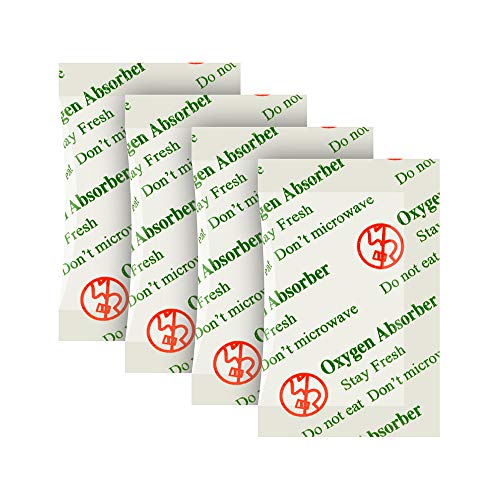
VacYaYa 200cc Oxygen Absorbers, 110 Packets

VOISEN 20g Silica Gel Packets

VOISEN 50g Silica Gel Packets

Midukit 500cc Oxygen Absorbers 50 Packs

Sophos Survival 500cc Oxygen Absorbers 50 Packs
More On The Choices That Made The List
Wallaby’s 300cc format is a sensible starting point for a one-gallon Mylar bag, especially for a pantry stocked with flour, spices, or another dry good. Capacity describes how much oxygen the packet is designed to absorb, so matching it to the container gives me more confidence than choosing a large packet for a small jar.
The ten-packet sets suit home preservers working through modest harvests rather than filling oversized buckets. Compared with the 500cc options later in the roundup, this one sacrifices capacity for easier sizing in common one-gallon containers.
Features That Help
- The 300cc capacity is matched to Wallaby one-gallon Mylar bags.
- Ten-packet sets distribute storage across several smaller projects.
- Color indicators show when a packet has encountered air.
- Immediate heat sealing helps limit exposure before use.
Practical Considerations
- Unopened packets need cool, dry storage because early air exposure can reduce their useful life.
- The smaller capacity offers less margin for oversized or loosely sealed containers.
Core Details
Who It Suits Best
This option fits home preservers filling several one-gallon bags with moderate quantities of dry food.
A Better Fit Elsewhere
Wallaby 2500cc Oxygen Absorbers suit households filling five-gallon Mylar bags rather than one-gallon packages.
A large batch of 500cc packets makes sense for someone preserving foods throughout the season. I see this format fitting repeated one-gallon projects, including dry grains, dehydrated ingredients, and foods packed in larger airtight containers that need more absorption capacity than the Wallaby 300cc model provides.
The 100-count format reduces the need to reorder between sessions, which is convenient for regular home canners and dehydrating households. The trade-off is storage space: keeping many unused packets properly sealed becomes part of pantry management.
The Practical Payoff
- One hundred packets support many separate food-storage fills.
- The 500cc size is appropriate for one-gallon Mylar bags.
- Ten-packet heat-sealed groups limit repeated opening.
- The format suits canning, dehydrating, and freeze-drying workflows.
- Color indicators provide a quick air-exposure check.
Worth Noting
- Owners commonly need a dry storage area for the full 100-count supply.
- Using an oversized packet in a small container offers no practical advantage and can waste material.
Made For
Seasonal preservers and dedicated home food storers benefit most from the 100-count supply.
Where Another Pick Shines
Midukit 500cc Oxygen Absorbers 50 Packs offer a more accessible format for people preserving food only a few times each year.
Five-gallon Mylar bags change the capacity equation, and that is where Wallaby’s 2500cc packet becomes relevant. I associate this option with bulk pantry fills, garden harvests, and households dividing larger quantities of rice, beans, or dehydrated foods among several substantial containers.
Each packet comes individually vacuum-sealed, so only one needs opening at a time. Compared with grouped small packets, that arrangement can reduce waste during intermittent use, assuming the remaining packets stay dry and undamaged.
Where It Helps
- High 2500cc capacity suits five-gallon Mylar bags.
- Single-packet packaging supports partial use without opening a full set.
- The format works for bulk dry-food pantry organization.
- Large capacity reduces the need for multiple packets in an appropriately sized container.
Trade Offs
- It is excessive for small jars and one-gallon bags.
- Vacuum-sealed packets still need a cool, dry storage area and careful handling.
Feature Snapshot
Built With In Mind
Bulk-storage households and harvesters packing five-gallon bags receive the most useful capacity match here.
Reach For A Different Pick When
Wallaby 300cc Oxygen Absorbers fit smaller one-gallon projects without introducing unnecessary packet capacity.
VacYaYa’s 200cc packet keeps the capacity lower than Wallaby’s 300cc option, while the 110-packet count supports a substantial number of small projects. I see that combination fitting tightly sized dry-goods containers and pantry experiments where oversized absorption capacity would remain unused.
The smaller format may also be easier to distribute among starter emergency-supply kits. Still, container volume and remaining headspace determine practical performance, so packet dimensions alone do not tell the complete storage story.
Real-World Strengths
- A 200cc format suits smaller airtight storage spaces.
- One hundred ten packets cover many separate projects.
- Food-grade packet material is specified for direct food-storage use.
- The small capacity avoids the excess found in a 2500cc packet.
Details To Watch
- The listing does not identify one specific matching container size, so size matching remains an ownership task.
- Large quantities of unused packets require proper sealing and dry storage.
Right Fit For
This option suits beginners organizing many small jars or cooks building compact dry-food storage sets.
Consider Something Else When
Wallaby 300cc Oxygen Absorbers offer a stated one-gallon container match for larger household storage bags.
Silica gel packets belong in a different conversation from oxygen absorbers. A desiccant draws moisture into its bead structure, while an oxygen absorber removes oxygen from a sealed environment, so I would not count VOISEN packets as a substitute for the Wallaby products.
The 20-gram packets fit compact situations such as enclosed dry-goods organizers or equipment storage where humidity control is the immediate concern. Their color indication makes it easier to recognize a packet that has absorbed moisture.
Real Benefits
- The 20-gram size fits compact storage spaces.
- One hundred packets support repeated moisture-control placements.
- Color indication gives a visible saturation cue.
- Silica gel provides moisture control without serving as an oxygen absorber.
A Few Limitations
- Silica gel does not replace oxygen absorption for dry-food preservation.
- Saturated packets generally require replacement, and unused packets need airtight storage.
Quick Facts
Who Should Grab It
These packets suit people managing humidity in small dry-storage spaces rather than packing long-term food reserves.
Another Choice May Suit
Wallaby 300cc Oxygen Absorbers serve food preservers who need oxygen control inside a sealed Mylar bag.
At 50 grams per packet, VOISEN carries more desiccant than the 20-gram version, making it more relevant to larger enclosed spaces. The source describes coverage of roughly 3.47 cubic feet for one packet, though humid conditions and container design may call for additional packets.
That distinction matters because silica gel manages moisture only. I would consider it a companion product for a dry pantry, not the main oxygen-control component in food-storage bags.
What Helps Most
- Fifty grams provides more moisture-control capacity per packet.
- Fifty packets allow placement across multiple enclosed spaces.
- Color indication makes saturation easier to notice.
- The stated coverage reference gives a useful sizing starting point.
Practical Considerations
- This remains a desiccant and not a true oxygen absorber.
- Owners commonly need to replace or regenerate silica gel once it becomes saturated, according to its condition and storage environment.
Feature Breakdown
Best Suited To
This format fits households managing humidity across several larger enclosed containers.
Swap It Out When
Wallaby 2500cc Oxygen Absorbers are the more relevant choice for oxygen control in a five-gallon Mylar bag.
Midukit combines 500cc packets with an individually sealed, one-at-a-time format. I see the arrangement benefiting people who fill containers over time, since opening a single packet avoids exposing an entire group to air before its intended use.
The 50-pack count lands between Wallaby’s smaller ten-packet sets and its 100-count supply. That middle ground can feel sensible for frequent preservers who want regular access without maintaining a much larger inventory.
Benefits That Matter
- Individual vacuum sealing protects each unused packet.
- One-at-a-time use suits staggered preserving projects.
- Fifty packets support recurring one-gallon food-storage fills.
- The 500cc capacity matches Wallaby’s common one-gallon sizing.
- Food-grade materials are specified for food-storage applications.
Small Caveats
- Single-packet packaging creates more material to handle than grouped formats.
- Individual packets still need dry storage and resistance to tears or crushing.
Who Will Love This
Preservers who fill containers gradually appreciate the controlled one-packet opening format.
Look Elsewhere When
Wallaby 500cc Oxygen Absorbers 100 Count serve households that prefer larger ten-packet groups and a higher total count.
Sophos Survival groups 50 packets into five vacuum-sealed sets of ten. That sits between Midukit’s individually available packets and Wallaby’s larger 100-count supply, giving recurring preservers a practical middle format.
The 500cc size is intended for dry foods such as grains, beans, pasta, and freeze-dried ingredients. For a mixed household routine, I find the grouping convenient, although opening an entire ten-packet set requires those packets to remain sealed until needed.
A Favorable Mix
- Five vacuum-sealed groups protect ten packets at a time.
- Fifty packets cover numerous dry-food storage projects.
- The 500cc capacity supports common one-gallon containers.
- Vacuum-sealed groups balance access with storage efficiency.
- The format suits freeze-dried and dehydrated foods.
Possible Compromises
- Opening one group exposes all ten packets to air handling.
- Unused groups need a cool, dry location away from tearing and moisture.
Key Product Details
The Right Fit
This format fits home preservers balancing repeated food fills with moderate inventory and grouped storage.
Where A Sibling Pick Shines
Midukit 500cc Oxygen Absorbers 50 Packs offer better control for someone opening one packet at a time.
Matching Packets To Container Size And Food Load
Container volume is the first checkpoint because oxygen capacity should relate to the amount of air trapped inside the sealed package. Wallaby directly identifies 300cc with one-gallon bags and 2500cc with five-gallon bags, giving those choices a useful sizing anchor. Smaller 200cc packets can suit compact containers, but the manufacturer does not provide a specific matching volume.
Headspace also influences the decision. Food packed loosely in a container contains more air than a densely filled bag, so the listed absorption capacity alone does not describe every variable. A well-matched Mylar bag should be sealed without gaps, punctures, or poorly fitted closures.
One-Gallon And Mid-Size Containers
Wallaby 300cc Oxygen Absorbers provide the clearest stated match for one-gallon bags. Sophos Survival, Midukit, and Wallaby’s 500cc products also suit that general class of storage, with their packaging formats determining whether I would favor individual access, ten-packet groups, or a 100-count supply.
VacYaYa’s 200cc packets make sense where container size is modest and many smaller fills are planned. In a busy kitchen, count alone should not drive the choice. A smaller packet used in a very large bag may create an imbalance that the packet quantity cannot fix.
Five-Gallon Containers
Wallaby 2500cc Oxygen Absorbers are the only option here with an explicit five-gallon Mylar bag match. That specificity gives them an ownership advantage for bulk pantry organization, particularly with beans, rice, flour, or dehydrated foods stored in substantial quantities.
A five-gallon bag still needs reliable closure and careful handling. Damage along a seam can undermine the careful capacity matching that made the packet appropriate in the first place.
Oxygen Control Versus Moisture Control
An oxygen absorber removes oxygen within a sealed environment. Silica gel is a desiccant, meaning it captures moisture rather than replacing oxygen absorption. I may use both in a careful food-storage setup, but I would never treat the VOISEN packets as substitutes for oxygen absorbers.
The 20-gram and 50-gram VOISEN options are better considered according to enclosed volume, humidity, and indicator status. The 50-gram packet gives more desiccant per unit, while the 20-gram version is easier to distribute among smaller spaces.
Packaging And Storage Habits
Multi-packet groups reduce accidental opening during a busy packing session. Individual packets offer finer control for intermittent projects, but a torn wrapper can expose the entire group to air. Whichever format is selected, unused packets need cool, dry storage away from spills and direct contact with damp surfaces.
Two Details That Change Storage Results
Mistakes Worth Dodging
A major mistake is choosing by packet count without considering the container’s volume and remaining air space. Another is treating silica gel as an oxygen absorber; the two materials perform different jobs. I would also avoid opening a ten-packet group unless most of those packets will be used soon.
What The Extra Capacity Provides
A higher-capacity packet can suit a larger sealed container, but excess capacity is not a substitute for an airtight seal. The upgrade matters most for five-gallon bags, loose fills, or containers with more trapped air, where a small packet may be poorly matched.
Frequently Asked Questions
Do oxygen absorbers replace airtight container seals?
No. They work inside a properly sealed container, and gaps or damaged seams can let outside air enter. I treat sealing the bag or jar as the essential ownership step.
Can silica gel packets replace oxygen absorbers?
No. Silica gel controls moisture, while an oxygen absorber removes oxygen. Each material addresses a different storage condition and may serve different purposes.
Which Wallaby size fits a one-gallon Mylar bag?
Wallaby identifies its 300cc packet for one-gallon bags. Its 500cc option can also suit this size, but the 300cc model provides the manufacturer’s clearest direct match.
What size works for a five-gallon Mylar bag?
Wallaby identifies the 2500cc packet for five-gallon bags. Container design and fill density can affect the amount of trapped air, so proper sealing remains important.
Where should unused oxygen absorbers be stored?
I keep unused packets in a cool, dry location away from moisture, tears, and direct sunlight. Damaged wrappers can allow premature air exposure and reduce storage life.
Final Verdict
I favor Wallaby 300cc Oxygen Absorbers for clearly sized one-gallon projects, Wallaby 2500cc Oxygen Absorbers for five-gallon bags, and Midukit’s individual packets for gradual use. Sophos Survival offers a balanced grouped format, while the VOISEN packets serve moisture control rather than oxygen absorption. Matching the actual container and keeping the seal intact matters more than packet count alone.