

Egg choices extend well beyond shell color. A household might need cage-free brown eggs, organic brown eggs, pasture-raised XL eggs, compact refrigeration, or a faster way to prepare two breakfast eggs. The right fit depends on cooking habits, refrigerator space, shell preferences, and how much sourcing information matters.
I’ve separated edible eggs from the organizers, cookware, and decorations that shape daily egg use. That distinction matters because a carton with a well-defined production style solves a different problem from a stackable refrigerator drawer or a wooden Ukrainian ornament.
A Snapshot Of The Selections

Eggland’s Best Brown Cage-Free Eggs

DCHDCO 40-Grid Two-Layer Egg Holder JD-002 0
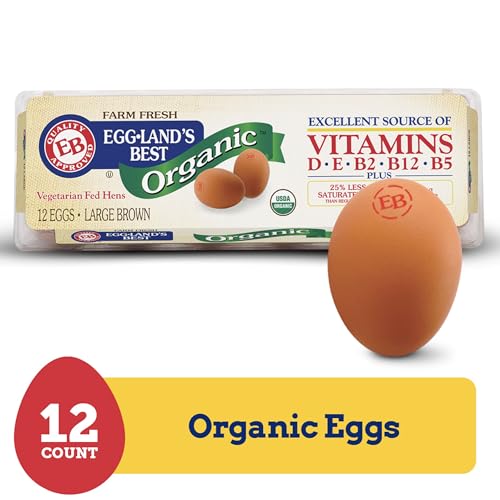
Eggland’s Best Organic Brown Eggs

Nellie’s Pasture-Range Large Eggs, 12 Count

Vital Farms Organic Pasture-Raised XL Eggs

BestPysanky 6 Ukrainian Wooden Easter Eggs

Eggland’s Best Large White Eggs
A Closer Look At Each Pick
Brown shells and cage-free production provide a clear point of difference in a category where many cartons look interchangeable. This 12-count carton fits ordinary breakfast routines, with scrambled eggs, fried eggs, and baking recipes as the natural uses. I favor it for people who want a brown-shell carton without moving to the organic or pasture-raised formats covered later.
Compared with Eggland’s Best Large White Eggs, the shell color changes but the basic carton size and nutritional positioning stay closely aligned. The meaningful choice comes down to shell preference and cage-free production, not a completely different kitchen task. That makes this the more balanced of the two everyday Eggland’s options.
Bright Spots
- The dozen-count format suits households that cook eggs several times a week without committing to a large bulk carton.
- Brown shells provide a visible contrast with the white-shell Eggland’s Best Large White Eggs.
- The label lists higher vitamin D and vitamin E levels than ordinary eggs.
- Listed omega-3 and saturated-fat figures make the nutritional positioning easier to compare.
Things To Consider
- The carton supplies cage-free and brown-shell details but does not identify individual farms.
- Owners comparing sourcing depth may prefer Vital Farms Organic Pasture-Raised XL Eggs, which lists farm-level traceability.
At A Glance
Made For
This carton fits everyday cooks who prioritize brown shells and cage-free production without requiring organic labeling.
A Better Fit Elsewhere
Farm-conscious households may prefer Vital Farms Organic Pasture-Raised XL Eggs for the stated farm network and carton traceability.
A refrigerator egg carton rarely solves the problem of keeping two dozen eggs upright and visible. The JD-002 0 uses two drawer-style trays with 20 deep grooves each, creating a 40-egg capacity. For a busy kitchen or a small refrigerator, that turns a loose stack of cartons into a more deliberate storage zone.
Unlike edible eggs in earlier selections, this model is a food-storage accessory, so capacity and footprint matter more than shell color. Its transparent walls also reduce the need to open every carton during a weekly inventory check. The two-layer configuration may use more refrigerator depth than a simple carton rack, so measuring the shelf is worthwhile.
Strong Points
- Forty deep grooves keep eggs separated in two organized layers.
- The stackable layout consolidates several dozen eggs into one compact zone.
- Transparent construction makes remaining stock visible without opening a drawer.
- A detachable tray and built-in handle simplify carrying and washing.
Small Caveats
- Owners should confirm shelf depth before purchase, especially in compact refrigerators.
- Eggs still need temperature control from the refrigerator; the container provides organization rather than cooling.
- Its wide capacity is excessive for a one-person household that finishes a dozen eggs quickly.
Feature Snapshot
Right Fit For
Households storing several dozen eggs benefit most from this capacity and stacked organization.
Another Choice May Suit
A small household may find the carton-based Eggland’s Best Brown Cage-Free Eggs easier to manage than a 40-egg drawer system.
Organic labeling is the defining detail here, with brown shells and large size handling the rest of the carton profile. It works for omelets, weekend pancakes, custards, and households that keep eggs at the center of meal preparation. In my view, the organic designation gives this Eggland’s carton a clearer sourcing reason than an unspecified brown-shell option.
The stated vitamin and omega-3 comparisons align closely with Eggland’s Best Brown Cage-Free Eggs, so the practical distinction is organic production rather than serving format. I would still compare this carton against Vital Farms Organic Pasture-Raised XL Eggs, since the latter adds pasture space and farm identification to its organic profile.
Why It Works Well
- Organic production provides a specific selection criterion for ingredient-focused kitchens.
- Brown shells pair that profile with the appearance favored by many everyday cooks.
- The dozen-count carton remains convenient for recurring breakfast and baking use.
- Labeled vitamin D, vitamin E, omega-3, and saturated-fat comparisons simplify nutrition-oriented shopping.
Practical Considerations
- Organic labeling does not make this a pasture-raised carton or provide the farm-level traceability stated by Vital Farms.
- Shops carrying regional egg varieties may offer different production labels, so comparing cartons matters in a well-stocked grocery aisle.
Who It Suits Best
Daily cooks who want organic brown eggs in a standard dozen fit this carton especially well.
Where Another Pick Shines
Pasture-focused households may prefer Vital Farms Organic Pasture-Raised XL Eggs for stated pasture acreage and farm-level identification.
Nellie’s focuses on hens with stated access to broad, grassy outdoor areas. That pasture-oriented production model sits between the simpler Eggland’s Best carton profile and Vital Farms’ more detailed farm traceability. The 12 large eggs remain familiar enough for weekday frying, scrambling, poaching, and baking, making the carton easy to fold into an established kitchen routine.
One large egg is listed with six grams of protein, and the golden yolks are presented as suitable across several cooking methods. Those claims matter more to households cooking several eggs per meal than to people using a carton for a single weekend recipe. Compared with Vital Farms Organic Pasture-Raised XL Eggs, the main tradeoff here is extra-large sizing and farm identification rather than shell appearance.
The Value In It
- Stated outdoor access gives shoppers a defined pasture-oriented production profile.
- Large eggs suit familiar recipes, breakfast plates, and meal preparation that uses multiple eggs.
- The listed six grams of protein per egg provides a concrete nutrition comparison.
- Golden yolks work across fried, poached, scrambled, and baked preparations.
Worth Noting
- The carton does not state a specific pasture area per hen or identify the producing farm.
- Pasture-oriented sourcing is a distinct category, so shoppers should not treat it as identical to organic production.
Quick Facts
Built With In Mind
Large-format home cooks who prioritize pasture access over organic labeling find this carton practical.
Look Elsewhere When
Shoppers seeking extra-large eggs and online farm identification may prefer Vital Farms Organic Pasture-Raised XL Eggs.
Vital Farms adds a level of sourcing detail missing from most of the other edible egg cartons. Each egg is identified by its producing farm, while the stated pasture space reaches at least 108 square feet per hen. For households that care about farm connections, that transparency is more useful than a broad production label alone.
The carton contains 12 brown, extra-large, Grade A eggs from a network described as more than 575 small farms. Compared with Nellie’s Pasture-Range Large Eggs, the XL format and traceability are the clearer distinctions. The tradeoff is a more specialized profile, which may matter more to sourcing-focused households than to cooks choosing solely by shell color.
Practical Pluses
- Farm names on cartons add a direct connection to the stated producing location.
- At least 108 square feet of pasture per hen gives the outdoor-access claim a measurable basis.
- Extra-large brown eggs suit kitchens that prefer a fuller egg format for familiar recipes.
- The Grade A designation provides a useful grade and appearance reference.
Possible Compromises
- XL eggs may be more than a single cook needs, especially in small households.
- Farm traceability requires checking the carton and visiting the listed company site, adding a step beyond ordinary carton shopping.
- Pasture claims and farm participation do not make every flavor preference identical.
Whose Shelf It Belongs On
Farm-conscious cooks who value traceability, outdoor access, and extra-large brown eggs fit this carton best.
Consider Something Else
Households wanting a simpler standard-large carton may prefer Nellie’s Pasture-Range Large Eggs, 12 Count.
This set moves from breakfast ingredient to Ukrainian holiday decoration, with hand-painted wooden eggs built for an Easter display. Six pieces provide enough variety for a compact table, shelf, or grouped centerpiece without taking over the room. I see the strongest fit in homes that treat Easter decorating as a craft or cultural display rather than a disposable table accessory.
Each egg measures about 2.5 inches tall by 1.85 inches wide and weighs roughly 0.07 pound, which keeps the group portable and easy to rearrange. Lindan wood provides a smooth base for the painted geometric patterns. Compared with edible cartons, the relevant ownership considerations are surface handling and long-term storage rather than food preparation or refrigeration.
The Good Stuff
- Six coordinated pieces create a fuller display than a single ornamental egg.
- Hand-painted geometric patterns give each piece visible decorative character.
- The small dimensions fit narrow shelves, dining tables, and grouped centerpieces.
- Wood construction creates a reusable alternative to disposable table decorations.
Details To Watch
- Painted pieces need careful handling during cleaning and storage to avoid surface marks.
- The approximately 2.5-inch size may be modest beside larger Easter centerpiece figures.
- These are decorative eggs, so the set does not replace edible cartons for cooking.
Core Details
Made For
Ukrainian-American households and craft-focused hosts benefit most from this compact Easter ornament set.
A Better Fit Elsewhere
Cooking-focused households may prefer Eggland’s Best Large White Eggs rather than purely decorative wooden eggs.
White large eggs remain the familiar center of American breakfast and baking routines. This dozen-count carton avoids extra production distinctions in the visible name, making it a straightforward option for omelets, cakes, custards, deviled eggs, and weekday scrambles. The format works especially well for households that prioritize easy availability and familiar shell color over a detailed farm story.
Eggland’s Best Brown Cage-Free Eggs adds brown shells and cage-free production, while this carton centers white shells and the same listed nutritional comparisons. I consider the white version the more conventional daily option, particularly where family members recognize white eggs by sight. Shell preference remains personal, though, so that familiarity should not outweigh another carton’s sourcing priorities.
What Stands Out
- The large white format fits standard recipes without introducing a specialty shell color.
- A dozen eggs supports recurring breakfast and baking routines.
- Listed vitamin D and vitamin E figures provide concrete nutrition label comparisons.
- The omega-3 and saturated-fat comparisons provide additional label distinctions.
Trade Offs To Consider
- White shell color offers less sourcing detail than the farm-identified Vital Farms Organic Pasture-Raised XL Eggs.
- Standard cartons can still crack or shift during transport, so careful unloading remains important.
The Right Fit
High-volume morning cooks and everyday bakers get the most practical use from this familiar white-shell carton.
Swap It Out When
Shoppers focused on outdoor access and farm identity may prefer Nellie’s Pasture-Range Large Eggs, 12 Count instead.
Two separate cavities turn the microwave into a compact station for poached or steamed eggs. That suits small kitchens, weekday routines, and meal prep where keeping a saucepan and frying pan on the stove feels unnecessary. Unlike the edible cartons earlier in this list, Aokid is cookware designed to control portions and contain steam around a two-egg breakfast.
The enclosed lid reduces counter splatter, while the dual-cavity format prepares both eggs in one cycle. Heat-resistant, food-grade polypropylene is the stated material, designed for repeated microwave use. The practical catch is capacity: a household cooking four eggs at once will need two cycles or another cooking method.
What Helps Most
- Two cavities cook a paired breakfast or meal-prep portion simultaneously.
- The covered design limits splatter and keeps the microwave easier to wipe down.
- Microwave heating avoids waiting for a separate pot of water to boil.
- The compact form works well in dorm rooms, studios, and compact kitchens.
Room For Improvement
- Two-egg capacity is restrictive for a larger household breakfast.
- Owners must follow microwave-safe handling and avoid trapping steam against their hand.
- The narrow cavities may be less versatile for omelets or full-size frying.
Feature Facts
Best Suited To
Solo cooks, couples, dorm residents, and compact kitchens benefit most from the two-cavity layout.
Reach For A Different Pick
Large households needing more than two eggs at once may find Eggland’s Best Large White Eggs more flexible for stovetop and baking routines.
What Matters Most In An Egg Choice
Production Style Defines The First Decision
Shell color mainly affects appearance, while cage-free, organic, and pasture-raised labels describe different approaches to hen housing and feed. Organic addresses production standards, pasture-raised emphasizes outdoor access, and cage-free identifies a housing system. Those categories are separate, so no single label should be treated as a substitute for another.
Size And Count Follow Daily Use
A dozen large eggs fits many households, while extra-large eggs may suit people preparing several dishes at once. The DCHDCO 40-Grid Two-Layer Egg Holder JD-002 0 matters only after bulk purchasing or regular farm-stand trips create a real storage problem. Capacity becomes useful at that point rather than simply looking tidy in an empty refrigerator.
Storage And Preparation Shape Convenience
Paper cartons remain simple for regular kitchen use, while a two-layer drawer helps households manage many eggs vertically. The Aokid Two-Egg Microwave Poacher addresses cooking convenience, not storage, and its two portions are practical for couples or solo routines. I consider the best setup the one that matches actual serving size, refrigerator depth, and cooking method without adding unnecessary equipment.
Common Shopping Slip Ups
Choosing by shell color alone can hide meaningful differences in organic status, cage-free housing, pasture access, and egg size. I also avoid treating decorative wooden eggs or storage containers as substitutes for edible cartons. Check the product category, count, shell description, and intended kitchen use before comparing labels.
What Separates Premium From Basic
Premium egg profiles often add organic production, outdoor-space details, or farm-level traceability. Vital Farms offers the clearest farm identification in this group, while basic cartons emphasize familiar large white or brown eggs at home. The added sourcing detail matters most to households that regularly compare production systems rather than shell color alone.
Frequently Asked Questions
What Is The Difference Between Brown And White Egg Shells?
Brown and white shells mainly differ in appearance, not automatically in nutritional value. The production label, such as organic or cage-free, is a more useful comparison point than shell color alone.
Are Organic Eggs Always Pasture-Raised?
No. Organic and pasture-raised describe separate production attributes, so one label does not automatically confirm the other. Shoppers should check each carton for both types of information.
Is A 40-Egg Refrigerator Holder Necessary?
A 40-egg holder makes the most sense for households storing several dozen eggs at once. A smaller carton remains simpler for one or two people.
Can A Microwave Poacher Cook More Than Two Eggs?
The Aokid model has two separate cavities and holds two eggs per cycle. Larger portions require additional cooking equipment or another cooking cycle.
What Does Farm-Level Egg Traceability Provide?
Farm-level traceability identifies the farm associated with the eggs on the carton. Vital Farms Organic Pasture-Raised XL Eggs provides that detail, which can matter to shoppers focused on farm connections.
Final Take
The right egg choice depends on the feature that carries the most weight in daily life. Standard large eggs suit familiar routines, organic and pasture-focused cartons serve sourcing priorities, and brown shells offer a visual change. Storage and cooking accessories matter only after portion size and refrigerator layout make those additions genuinely useful.