

You often struggle to know how much food to eat. Accurately judging food serving sizes is a common challenge. This directly impacts your health and weight management. Many people misunderstand serving size definitions. In fact, nearly half (48%) of individuals incorrectly identify its meaning. A similar number (46%) mistakenly believe the product’s manufacturer determines it. This widespread confusion leads to “portion distortion” because traditional measuring methods are often impractical.
Visual guides can help estimate healthy portion sizes without the need for measuring tools or counting. This concept offers an intuitive, tool-free solution. This blog provides 10 essential Portion Control Visuals. These visuals use everyday objects and body parts. They simplify healthy eating for you. These Portion Control Visuals help you manage your food intake easily.
Key Takeaways
Judging food serving sizes is hard for many people. This often leads to eating too much food.
Visual guides help you estimate healthy food portions. You do not need measuring tools.
Your hand is a good tool for portion control. Use your palm for protein, cupped hand for carbs, fist for vegetables, and thumb for fats.
Everyday items like a deck of cards for meat or a golf ball for nuts also help you control portions.
Using these visual guides helps you eat mindfully. This leads to better health and eating habits.
Why Visual Portion Control Matters
Portion Distortion and Calorie Impact
You might eat more food than you realize. This happens because serving sizes have grown over time. This change is called “portion distortion.” It directly affects how many calories you consume. For example, a study compared the 2006 version of Joy of Cooking with its 1936 edition. It found an average calorie increase of 63% per portion. This means you get many more calories in a single serving today.
Look at how common foods have changed:
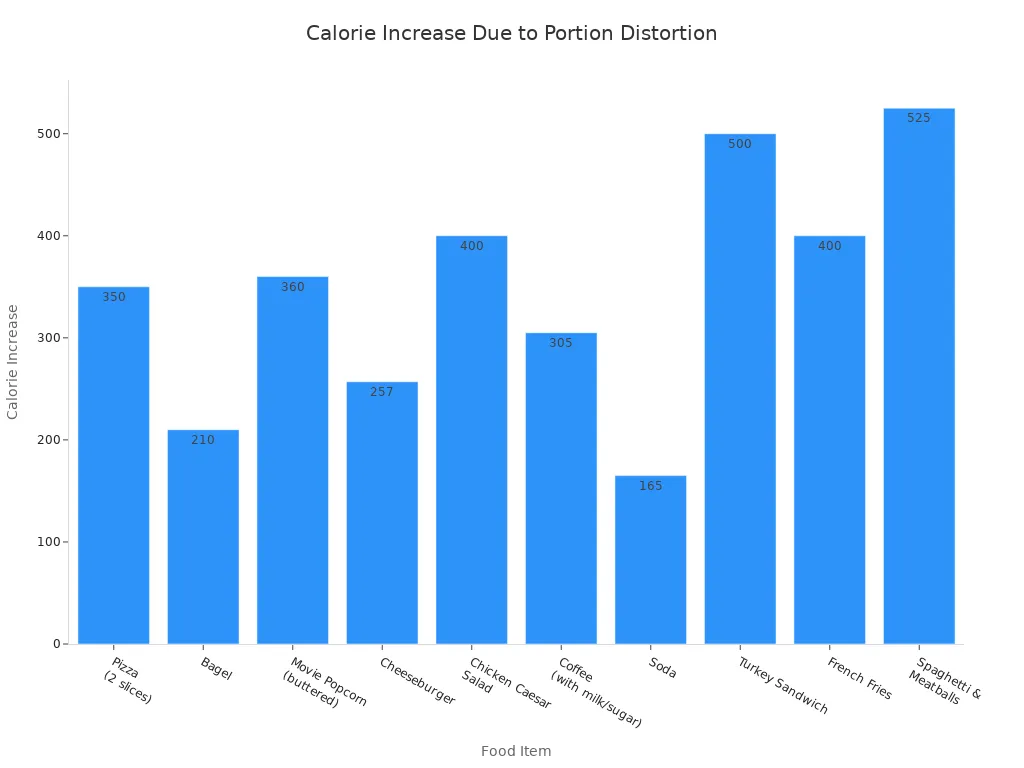
Consider a typical bagel. It once had 140 calories. Now, it often contains 350 calories. Movie popcorn, once 270 calories, can now be 630 calories. These larger portions add up quickly. Another study showed that typical orange juice portions were over 40% larger than 20 years ago. This added an extra 50 calories. When customers received 50% larger portions of a baked-pasta dish, they ate 43% more of the entrée. Their total meal calorie intake increased by 25%. Understanding these changes helps you make better choices.
Visual Cues: Simplicity and Consistency
You need simple ways to manage your food intake. Visual serving size guides help you achieve healthy eating goals. These guides are easy to use. They do not require measuring cups or scales. They offer a consistent way to estimate food amounts.
Research supports the power of visual cues. A review of 43 studies found that visual cues influence food choices. This applies to both children and adults. For adults, things like package size and shape affect how much you eat. Larger packages often lead to eating more. Visual cues can improve your ability to gauge serving sizes. They help you practice portion control. This is true even if not all foods perfectly match these cues. Using Portion Control Visuals helps you stay consistent. They make healthy eating simpler every day.
Hand as a Portion Control Tool
You can use your own hand as a powerful, always-available tool for portion control. Your hand size generally matches your body size. This makes it a personalized guide for how much food you should eat. You do not need any measuring cups or scales. Just look at your hand.
Palm for Protein
Your palm helps you measure protein. Think of your palm as a guide for protein-dense foods. This includes items like chicken breast, fish fillet, or lean ground meat. For most adults, you should aim for 1 to 2 palms of protein-dense foods at each meal.
Consider these guidelines for a single palm serving:
Category | Men (1 palm) | Women (1 palm) |
|---|---|---|
Cooked meat / tofu | ~4 oz (115 g) | ~3 oz (85 g) |
Greek yogurt / cottage cheese | 1 cup | 1 cup |
Protein powder | 1 scoop | 1 scoop |
Whole eggs | 2 | 2 |
Protein content | ~24 g | ~22 g |
Carbs | 2 g | 2 g |
Fat | 4.5 g | 4 g |
Calories | 145 kcal | 130 kcal |
Many lean protein sources fit this palm-sized portion. These include:
Skinless chicken (white meat)
90-percent (or leaner) ground beef
Beans
Lentils
Low-fat or non-fat yogurt, especially Greek yogurt
Fish and shellfish, such as tuna and salmon
White-fleshed fish like cod, haddock, and tilapia
Children aged 4-8 need about one adult palm-sized serving of lean protein each day. Measure this before cooking. Teens usually meet their protein needs through a balanced diet. This diet includes lean meats, fish, eggs, dairy, beans, nuts, and seeds. Start with a palm-size portion of lean protein. Then add plants like vegetables and fruits. Finish your meal with carbs and a healthy fat.
Cupped Hand for Carbs
Use your cupped hand to measure carbohydrates. A cupped hand roughly equals half a cup. This is a good guide for foods like cooked rice, pasta, quinoa, or potatoes. Your cupped hands can also represent one portion of fruit or vegetables.
Here are some complex carbohydrates you can measure with a cupped hand:
Rolled oats
Rice
Chickpeas
Black beans
Lentils
Potatoes
Whole-grain pasta
Fist for Vegetables
Your fist helps you measure vegetables. A serving of vegetables should be about the size of your clenched fist. This visual works well for foods like broccoli florets, spinach, or mixed greens. You can easily get enough vitamins and fiber by filling half your plate with these healthy options.
Thumb for Fats
Use your thumb to estimate healthy fats. A thumb-sized portion is a good guide for fats. This includes items like butter, oil, nut butter, or avocado.
Here are some healthy fats you can measure with your thumb:
Butter
Olive oil
Nut butter
Nuts
Mayonnaise
Half an avocado
| Food Group | Examples | 1 Serving Size | Visual Reference (Estimation) |
|---|---|---|---|
| Fruits | Apple, Banana, Orange, Berries | 1 medium fruit or ½ cup chopped fruit | About the size of a baseball |
| Vegetables | Broccoli, Carrots, Spinach | 1 cup raw leafy veggies or ½ cup cooked | About the size of a clenched fist |
| Grains | Bread, Rice, Pasta, Cereal | 1 slice bread, ½ cup cooked rice/pasta | About the size of a computer mouse |
| Protein (Meat, Fish, Poultry) | Chicken, Beef, Fish | 3 oz cooked meat/fish/poultry | About the size of a deck of cards |
| Plant Proteins | Beans, Lentils, Tofu | ½ cup cooked beans/lentils or 4 oz tofu | About the size of a small fist |
| Eggs | Chicken Egg | 1 large egg | About the size of a golf ball |
| Dairy | Milk, Yogurt, Cheese | 1 cup milk/yogurt or 1½ oz cheese | Cheese = 3 dice or thumb length |
| Nuts & Seeds | Almonds, Walnuts, Chia | 1 oz (about ¼ cup) | A small handful |
| Oils & Fats | Olive Oil, Butter | 1 tsp oil or butter | About the size of a thumb tip |
| Sweets & Snacks (Occasional) | Cake, Cookies, Candy | Small portion (100–150 kcal) | Small matchbox-size treat |
| Beverages | Water, Juice | 1 cup (8 fl oz) | Standard cup or glass |
| Whole Grains (Alternative) | Oats, Quinoa, Brown Rice | ½ cup cooked | About the size of a cupcake wrapper |
Everyday Objects for Portion Guidance
You can use common household items to help you control your food portions. These everyday objects offer simple visual cues. They make it easy to estimate serving sizes without needing kitchen scales or measuring cups.
Deck of Cards for Meat
Imagine a standard deck of playing cards. This object helps you visualize a healthy portion of meat. One serving of cooked lean meat is about 3 ounces. This amount is comparable to the size of one deck of cards. You can use this guide for various meats. This includes chicken, beef.
For example, when you prepare a steak, poultry, think of a deck of cards. A 3-ounce serving of meat is roughly the size of this common item. This visual guide helps you estimate your portion sizes. You do not need scales or measuring cups.
Golf Ball for Nuts/Seeds
A golf ball is a great visual for nuts and seeds. A small handful of nuts or seeds is an appropriate serving. This amount is approximately the size of a golf ball. This portion equals about 1 ounce.
You can use this guide for many healthy fats. Examples include:
Raw and unsalted nuts: almonds, pecans, walnuts
Raw and unsalted seeds: sunflower, sesame, pumpkin
Nut and seed butters: almond butter, sunflower butter
Other seeds: chia seeds
Remember, a golf ball helps you measure a healthy 1-ounce serving of these nutritious foods.
Lightbulb for Ice Cream
Do you enjoy frozen desserts? A standard lightbulb can help you manage your portion of ice cream. Think of a lightbulb as your guide for a single serving. This visual helps you estimate about half a cup of frozen treats. This includes ice cream, sorbet, or frozen yogurt. You can enjoy your dessert without overdoing it.
CD Case for Pancakes/Waffles
Breakfast items like pancakes and waffles can be tricky to portion. A CD case offers a simple visual. One pancake or waffle should be about the size of a compact disc. If you have smaller pancakes, two small ones together can equal the size of a CD. This guide also works for flatbreads. You can use this visual to keep your breakfast portions in check.
More Visual Food Equivalents
You can use even more everyday items to guide your food portions. These visuals help you make smart choices easily. They remove the guesswork from healthy eating.
Dice for Cheese
Cheese is a delicious food. You need to control its portion size. A small item like a dice helps you visualize a healthy serving. A healthy portion of cheese is about the size of two dice. This amount corresponds to 1 ounce. Imagine holding two small dice in your palm. This gives you a clear reference for this portion. A typical serving size for cheese is 1 ounce (28 grams). This is approximately the size of two dice. You can also think of it as the size of a matchbox.
Specific types of hard cheeses fit this visual guide. For example, a 1.5-ounce serving is about three dice. This applies to popular cheeses like:
Cheddar
Mozzarella
Swiss
Parmesan
Remember this visual when you add cheese to your meals or snacks. It helps you enjoy cheese in moderation.
Tennis Ball for Fruit
Fruits are essential for a healthy diet. You can use a tennis ball to measure your fruit portions. A tennis ball is roughly the same size as 1/2 cup of food. This visual helps you estimate a single serving of fresh fruit. Half a cup of fresh fruit is comparable in size to a tennis ball.
This visual works well for many whole fruits. Think of an apple, an orange, or a peach. Each of these fruits is often about the size of a tennis ball. This makes it easy to grab a healthy serving. You can also use this guide for berries or chopped fruit. Just imagine how much would fill half a tennis ball. This simple visual helps you get enough fruit each day.
Integrating Portion Control Visuals
Practicing Visual Portioning
You can easily apply visual portioning in your daily life. At home, reuse containers from pre-portioned meals. This helps you prepare your own meals with similar sizes. Cook larger amounts of food. Then divide them into bento-style containers for future meals. Use your hand as a guide. Your palm measures protein. Your fist measures carbs. Cupped hands measure vegetables. Your thumb tip measures fats. This helps you develop your portioning instincts. Use the plate method. Divide your plate visually. Half is for non-starchy vegetables. One-quarter is for protein. One-quarter is for starch or grains. For snacks like nuts, measure out thumb-sized handfuls. Put them into small bags. This prevents overindulgence. Eat from a plate. Take one serving. Eat it off a plate. Do not eat directly from the box or bag. Avoid distractions like TV while eating. Focus on your food. Chew well. Savor the taste. Eat slowly. Allow at least 15 minutes for your brain to register fullness. Use smaller dishes. Opt for smaller plates, bowls, and glasses. This naturally reduces portion sizes. Freeze leftovers. If you cook too much, freeze portions. This avoids overeating.
When you dine out, restaurants often serve larger portions. A burger or sandwich can be 1.5–2 times a standard serving. Sides like fries may be double typical portions. You might not realize this. Order a large plate. Divide half into a container for a future meal. Split a meal with a friend. This helps you manage portion sizes. Request a to-go box with your meal. Put half away before you start eating. This avoids overeating.
Adjusting Visuals for Needs
You can adjust these visual guides for your specific needs. If you are very active, increase your carbohydrate portions. Aim for two cupped hands per meal. Allow for flexibility. Eat larger portions on days with higher activity. If you feel dizzy or tired, you might be under-eating. This means your current method may not be enough for your active lifestyle. Consult a doctor in such cases.
Visual guides also help with health goals. For example, the Portions Master Plate helps you tailor portions. You can adjust it for weight loss or muscle gain. This plate has sections for protein, carbs, and greens. It ensures a balanced meal based on your desired weight. This personalized approach helps you manage food intake effectively.
Mindful Eating with Visual Cues
Using visual cues improves your ability to gauge serving sizes and practice portion control. This is true even if not all foods perfectly match these cues. You can use printable Portion Control Visuals handouts. These serve as a visual reference. Combine these visuals with mindful eating. This means you pay attention to your food. You notice its taste, texture, and smell. Mindful eating helps you become more aware. It increases your satisfaction with your meals.
You now have 10 essential Portion Control Visuals. These simple guides help you manage food intake without constant measuring. They empower you to make healthier choices effortlessly. This leads to improved health outcomes and sustainable eating habits. Studies show structured portion management can lead to significant, lasting weight reduction. It also lowers regain rates compared to other methods. Actively apply these Portion Control Visuals daily. Transform your relationship with food. Move closer to your wellness goals. Mastering visual portion control offers long-term benefits for your health.