


Do you consider the vital role of an often-overlooked mineral in your body? Magnesium is crucial for muscle function and your overall well-being. This essential mineral supports countless bodily processes. Many people do not get enough magnesium. For example, over half of the U.S. population consumes less than the recommended amount. Globally, many adults show low magnesium levels. You will learn about magnesium’s importance, your daily needs, and the best foods high in magnesium. This information helps you find excellent mineral sources for optimal muscle health.
Key Takeaways
- Magnesium is a vital mineral. It helps your muscles, nerves, and energy work well.
- Many people do not get enough magnesium. This can cause muscle cramps and tiredness.
- You can get more magnesium from food. Eat leafy greens, nuts, seeds, and whole grains.
- Adult men need about 400-420 mg of magnesium daily. Adult women need 310-320 mg.
- Talk to a doctor if you think you need magnesium supplements. They can help you decide.
What Is Magnesium and Why It Matters

Magnesium is a mineral your body needs for many processes. It is an essential nutrient. You must get it from your diet. This mineral helps your body work correctly every day.
Essential Mineral Functions
Magnesium is vital for your body’s basic operations. It acts as a helper molecule, called a cofactor. Magnesium serves as a cofactor in over 300 enzymatic reactions within your body. These reactions are crucial for many biological processes. They include energy production and how your body uses sugar. Magnesium also helps regulate muscle and nerve functions. It is a cofactor for over 600 enzymatic reactions in total. These reactions are vital for ATP production and how your body uses energy. This makes magnesium fundamental to your energy metabolism.
Muscle Health Connection
Magnesium plays a key role in your muscle function. It helps your muscles contract and relax properly. Magnesium acts as an antagonist to calcium. This means it competes with calcium for binding sites on proteins. This action regulates muscle contraction. In a resting state, magnesium is more concentrated than calcium in your muscle cells. It occupies available binding sites. Calcium displaces magnesium to start a contraction. If you have a magnesium deficiency, your muscles can become overactive. This can lead to cramps and spasms. Even small amounts of calcium can easily displace magnesium then.
Magnesium is also crucial for your muscles to relax after contracting. It helps your body reuptake calcium. This process needs energy. Magnesium helps stabilize and activate ATP, your body’s energy currency. If you do not have enough ATP, your muscles might stay contracted. This can cause cramps. Magnesium also keeps electrolytes balanced in your muscle cells. These electrolytes include calcium, potassium, and sodium. This balance is vital for proper muscle function and preventing fatigue.
Magnesium helps your muscles perform and recover. It is involved in energy metabolism and production. It forms a complex with ATP. This complex is called Mg-ATP. Magnesium also helps regulate neuromuscular activity. It controls muscle contraction and vascular tone. These actions help increase your strength and force production. Magnesium aids muscle recovery and relaxation. It balances contraction and relaxation in muscle fibers. It also binds to muscle receptors to calm overactive nerve signals. This helps ease cramps and spasms. Magnesium helps flush out lactic acid after a workout. It improves circulation. It also supports reactions that break down lactic acid. This prevents performance limits and helps recovery. Magnesium is crucial for building new muscle fibers. It activates amino acid chains and supports ribosome function. It also helps repair damaged fibers. A small 2022 study found that magnesium supplementation reduced muscle soreness. It also improved perceived exertion in college-aged athletes. This was after bench presses. Athletes, especially those who exercise intensely, may need more magnesium. They might need 10–20% more than people who are not active. This prevents deficiencies that can reduce performance.
Energy and Nerve Support
Magnesium is essential for your body’s energy production. ATP is the main energy source in your cells. It needs to bind to a magnesium ion to become active. So, what you call ATP is often functionally Mg-ATP. Magnesium ions are crucial for ATP’s biological function. They form Mg-ATP complexes. These complexes make up most of the ATP inside your cells. Magnesium is deeply involved in energy metabolism. It acts as a cofactor for many enzymatic reactions. These reactions are vital for ATP production and use. It supports both aerobic and anaerobic energy production. These processes include oxidative phosphorylation and glycolysis. Magnesium also regulates carbohydrate metabolism. It helps control blood sugar. Low magnesium levels link to poor glucose regulation. They also link to a higher risk of type 2 diabetes. Magnesium maintains cellular energy balance. It regulates key enzymes. An international research team found how magnesium atoms guide the chemical reactions that produce ATP. This shows a critical aspect of magnesium’s role in cellular energy production.
Deficiency Consequences
If you do not get enough magnesium, you can experience problems. This is called magnesium deficiency. Common signs of magnesium deficiency include:
- Muscle spasms and tightness
- Muscle weakness
- Tremors
- Menstrual cramps
- Constipation
- Headaches
- Fatigue
- Palpitations (a racing or pounding heartbeat)
- Loss of appetite
- Muscle twitches and cramps
Inadequate magnesium intake can affect muscle contraction and overall performance. This is because it impairs Mg-ATP complex activity. This complex is essential for glycolytic enzymes and protein kinases. Long-term health conditions are also linked to insufficient magnesium levels. These include:
- High blood pressure
- Heart disease
- Diabetes
- Osteoporosis
- Migraine headaches
Understanding magnesium and your health is important. You can see how vital this mineral is for your body.
Daily Magnesium Needs
Understanding your body’s magnesium requirements helps you maintain good health. Your needs can vary.
Recommended Intakes
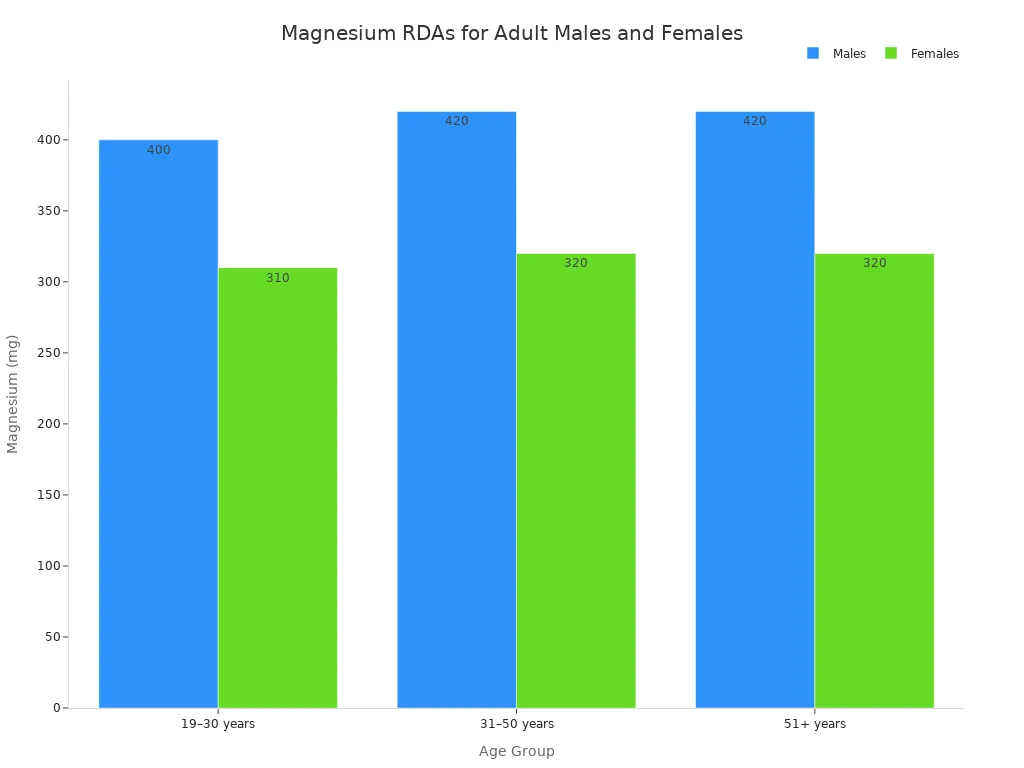
The amount of magnesium you need each day depends on your age and gender. For adults aged 19-51+ years, men need 400-420 mg daily. Women need 310-320 mg. This table shows specific daily intake of magnesium recommendations:
| Age Group | Males (mg) | Females (mg) |
|---|---|---|
| 19–30 years | 400 | 310 |
| 31–50 years | 420 | 320 |
| 51+ years | 420 | 320 |
Age and Gender Factors
Children and older adults have different magnesium needs. Children need less magnesium. For example, 1-3 year olds need 80 mg/day. Older adults often have lower magnesium intake. Their bodies absorb less magnesium from food. They also lose more magnesium through their kidneys. Chronic diseases or certain medications can also deplete magnesium levels in older adults.
| Category | Recommended Dietary Allowance (RDA) |
|---|---|
| CHILDREN | |
| 1-3 years | 80 milligrams/day |
| 4-8 years | 130 milligrams/day |
| 9-13 years | 240 milligrams/day |
| FEMALES | |
| 31 years and over | 320 milligrams/day |
| MALES | |
| 31 years and up | 420 milligrams/day |
Influencing Factors
Several factors can increase your magnesium requirements. These include:
- Poor nutrition or a diet low in magnesium.
- Gastrointestinal conditions like Crohn’s disease. These can cause vomiting, diarrhea, or poor absorption.
- Kidney disease, especially types that cause excessive magnesium loss.
- Medications such as diuretics or certain chemotherapy drugs.
- Alcohol use disorder. Alcohol increases magnesium loss.
- Long-term use of proton pump inhibitor (PPI) drugs. These can lower your magnesium levels.
High levels of physical activity also impact your magnesium needs. You lose magnesium through sweat. Chronic stress also increases your need for magnesium. Stress hormones like cortisol raise magnesium requirements. This can deplete your magnesium levels over time. Low magnesium limits your ability to cope with stress.
Upper Intake Limits
You should not exceed certain amounts of supplemental magnesium. The Tolerable Upper Intake Level (UL) for supplemental magnesium for adults is 350 mg per day. This limit applies only to supplements. You typically do not get too much magnesium from food alone. Exceeding this limit can cause side effects. These include diarrhea, stomach pain, and dehydration. Very high doses can lead to serious issues like heart arrhythmias or muscle weakness. Always consult a doctor before taking magnesium supplements.
Top Foods High In Magnesium

You can easily boost your magnesium intake by choosing the right foods. Many delicious options serve as excellent natural sources of magnesium. These foods help you meet your daily needs and support your muscle health.
Leafy Greens
Leafy green vegetables are powerhouses of nutrition. They are among the best plant-based sources of magnesium. You can add them to many meals. For example, cooked spinach contains a significant amount of magnesium. You get 156.6 mg of magnesium per 100 grams of cooked spinach. Other great choices include kale, Swiss chard, and collard greens. You can steam them, sauté them, or add them to smoothies.
Legumes and Beans
Legumes and beans offer another fantastic way to get more magnesium. These versatile foods are rich in minerals and fiber. A one-cup serving of cooked black beans provides approximately 120 mg of magnesium. This makes them a great addition to your diet. Other excellent options include edamame, lima beans, navy beans, pinto beans, garbanzo beans (chickpeas), and black-eyed peas. You can use them in soups, salads, or as a side dish.
Nuts and Seeds
Nuts and seeds are convenient and nutrient-dense foods high in magnesium. They make perfect snacks or additions to meals. One ounce of almonds contains 80 milligrams of magnesium. This accounts for 19% of your Daily Value (DV). Cashews also provide a good amount of magnesium. Seeds are particularly potent sources.
| Seed Type | Magnesium Content per Serving |
|---|---|
| Chia seeds | 23% of RDA |
| Pumpkin seeds | 18% of RDA |
| Sesame Seeds | 63.2 mg (15% of DV) per 2-tablespoon serving |
| Sunflower seeds | 9% of RDA |
You can sprinkle these seeds on yogurt, salads, or oatmeal.
Whole Grains
Whole grains are not just good for fiber; they also provide valuable magnesium. They are important natural sources of magnesium. You can easily incorporate them into your daily meals. A serving of cooked quinoa, specifically one cup (185 grams), typically contains approximately 118 milligrams of magnesium. Other whole grains like brown rice, whole wheat bread, and oats also contribute to your magnesium intake.
Dark Chocolate and Avocados
You might be happy to learn that dark chocolate is one of the delicious foods high in magnesium. A 1-ounce (approximately 30g) serving of dark chocolate with 70-85% cocoa solids contains 68mg of magnesium. This makes it a tasty treat that also benefits your health. Avocados are another excellent source. A medium-sized avocado contains approximately 58 mg of magnesium. This accounts for about 14-19% of the daily recommended intake. You can enjoy avocados in salads, guacamole, or on toast.
Other Magnesium Sources
Beyond these main categories, you can find magnesium in other foods. These include various animal sources of magnesium and some fruits. Fatty fish like salmon, mackerel, and halibut are nutritious choices. Half a filet (178 grams) of salmon contains 53 mg of magnesium. This is 13% of the Recommended Daily Intake (RDI). Other seafood options include tuna, crab, canned oysters, and sardines. You can also find magnesium in some meats, soy products like tofu, and dried fruits.
Recognizing Magnesium Deficiency
You might not always notice when your body lacks enough magnesium. Magnesium deficiency can cause various health problems. These issues range from mild to severe. You need to understand the signs and risk factors.
Common Deficiency Signs
You might experience early signs of magnesium deficiency. These include muscle spasms, tremors, and tightness. You could also feel restless or irritable. Some people notice hyperexcitability, like twitching. These symptoms often appear when your serum magnesium levels fall below 0.5 mmol/L. Magnesium is crucial for nerve and muscle function. A deficiency can lead to increased nerve and muscular excitation. This causes muscle tremor, tetany, and hyper-reflexia. You might also experience muscle tension, stiffness, or weakness. Chronic pain, cramps, or twitches are also common symptoms of inadequate magnesium. In severe cases, you could have seizures. Neurological symptoms include migraine headaches, tingling or numbness, anxiety, and depression. Some people report panic attacks or personality changes.
Risk Factors
Several factors increase your risk of magnesium deficiency. Your diet plays a big role. A modern Western diet, high in processed foods and low in fresh produce, often lacks magnesium. Industrial farming practices can also deplete magnesium in crops. Certain health problems increase your risk. Digestive disorders like Crohn’s disease or celiac disease impair magnesium absorption. Chronic diarrhea also contributes to deficiency. Some medications, such as diuretics or certain antibiotics, can lower your magnesium levels. High alcohol intake and uncontrolled diabetes also accelerate magnesium loss from your body. Aging can also make you more prone to low magnesium levels.
Supplementation Considerations
You might consider magnesium supplements if you are at risk for deficiency. Older adults, women, and those who regularly consume alcohol often benefit. People taking certain medications, like proton pump inhibitors, might also need magnesium supplements. These supplements can help ease muscle cramps, constipation, and insomnia. They may also help with high blood pressure, insulin resistance, and fatigue. Magnesium supplements can also support menstrual symptoms. However, you should always talk to a healthcare professional before starting any magnesium supplements.
Professional Consultation
You should consult a healthcare professional if you suspect you have a magnesium deficiency. They can assess your symptoms and medical history. They can also perform tests to check your magnesium levels. A magnesium blood test measures the mineral in your blood. This helps identify if your magnesium levels are too low. Your doctor can then recommend the best course of action. This might include dietary changes or magnesium supplements.
Magnesium is crucial for your muscle health and overall body functions. You now understand magnesium and your health. Eating foods high in magnesium is easy. You can find many diverse sources. Make informed dietary choices to boost your magnesium intake. If you suspect a deficiency, or consider taking magnesium supplements, always talk to a healthcare professional. They can advise you on magnesium supplements and your needs.
FAQ
What foods contain the most magnesium?
Leafy greens like spinach, legumes such as black beans, and nuts like almonds offer high magnesium content. Seeds, whole grains, dark chocolate, and avocados also provide significant amounts. You can easily add these to your daily meals.
What happens if you do not get enough magnesium?
If you do not get enough magnesium, you might experience muscle cramps, fatigue, and weakness. You could also have headaches or a racing heartbeat. Long-term deficiency links to conditions like high blood pressure and diabetes.
What are the best ways to increase your magnesium intake?
You can increase your magnesium intake by eating more magnesium-rich foods. Focus on leafy greens, nuts, seeds, and whole grains. Consider dark chocolate and avocados as tasty options. Always talk to a doctor before taking supplements.
What is the recommended daily amount of magnesium for adults?
Adult men generally need 400-420 mg of magnesium daily. Adult women need 310-320 mg per day. Your specific needs can change based on age, activity level, and health conditions.
What are the signs of too much magnesium?
Too much magnesium from supplements can cause diarrhea, stomach pain, and dehydration. Very high doses can lead to serious heart issues or muscle weakness. You typically do not get too much magnesium from food alone.