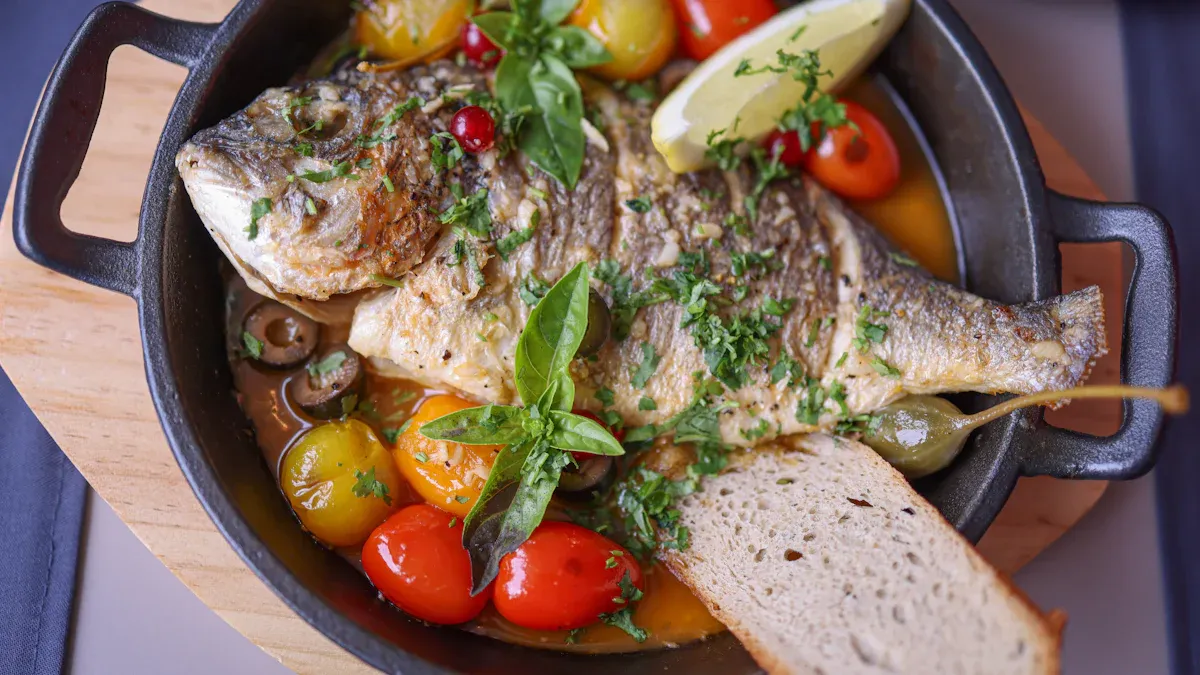
Wondering how long to cook flounder in your oven? You usually need about 5 to 15 minutes at 350°F for fillets. Thicker pieces or a whole flounder take a bit longer. If you see the fish flake easily and turn opaque, you know it’s ready. Oven-baked flounder offers more health benefits than fried options, like lower calories and fat.
Type of Flounder | Calories (per 100g) | Total Fat (g) | Protein (g) |
|---|---|---|---|
Baked | 133 | 4.24 | 22 |
Try this recipe for a quick, tasty meal that’s good for you and the planet.
Key Takeaways
Bake flounder fillets at 350°F for 12-15 minutes. Check for flakiness and an opaque color to know when it’s done.
Thicker pieces of flounder take longer to cook. Whole flounder may need 15-30 minutes at 350°F.
Always dry your fish before cooking. This helps it cook evenly and prevents it from becoming soggy.
Use a meat thermometer to ensure your flounder reaches 145°F for safe and perfect cooking.
Experiment with seasonings like lemon and herbs to enhance flavor while keeping your dish healthy.
Flounder Cooking Times
Fillet vs. Whole Flounder
When you cook flounder, the type of fish you use changes the timing. Flounder fillets cook faster than a whole flounder. If you use fillets, you can expect them to be ready in about 8-12 minutes in a hot oven. A whole flounder takes longer because it is thicker and has bones. You might need 15-30 minutes for a whole fish, depending on its size.
Flounder fillets: Bake at 400°F for 8-10 minutes.
Whole flounder: Bake at 350°F for 15-30 minutes.
If you want a quick recipe, choose fillets. They are thin and easy to handle. Whole flounder works well for special meals when you have more time.
Thickness Matters
The thickness of your flounder fillets makes a big difference. Thin fillets cook fast. Thick fillets need more time. If your fillets are about 1/2 inch thick, bake them for 12-15 minutes at 350°F. If they are thicker, add a few minutes. Always check the fish near the end of the cooking time. The fish should flake easily and look opaque.
Tip: Tuck the thin edges of your fillets under before baking. This helps the fish cook evenly and keeps the thinner parts from drying out.
Oven Temperature Options
You can bake flounder at different oven temperatures. Most recipes use 350°F, 375°F, or 400°F. Higher temperatures cook flounder faster but can dry it out if you leave it too long. Lower temperatures give you more control and help keep the fish moist.
Preheat your oven to 375°F. Bake for 12-15 minutes until the fish flakes with a fork.
Use 400°F for flounder fillets. Bake for 8-10 minutes.
For a whole flounder, stick to 350°F and bake for 15-30 minutes.
Here is a quick table showing common mistakes when you bake flounder and how they affect cooking time:
Mistake | Effect on Cooking Time |
|---|---|
Not drying the fish properly | Slower cooking time due to moisture retention. |
Not tucking thin edges under | Thinner parts overcook while thicker parts remain undercooked. |
Overcooking the fish | Results in dry texture; fish continues to cook after removed from heat. |
If you use a conventional oven, you get even cooking. Most people bake flounder fillets at 400°F for 8-10 minutes. This method works well for most recipes. You can adjust the time if your fillets are thicker or thinner. Always check the fish early to avoid overcooking.
Remember: For best results, use a timer and check your flounder after 8-12 minutes. If you see the fish flake and turn opaque, your baked flounder is ready.
How to Cook Flounder
Prepping the Fish
Start with fresh or thawed flounder fillets. Pat them dry with a paper towel. This step helps the baked fish cook evenly. If you want extra flavor, marinate the fillets. Most recipes suggest marinating flounder for no longer than 30 minutes when using lemon or herbs. Longer marinating can start to cook the fish before it hits the oven. You can also prepare a marinade ahead and store it for up to four days, but only add the fillets right before baking.
Tip: Tuck the thin edges of the fillets under. This keeps the baked fish moist and prevents overcooking.
Baking Steps
Arrange the fillets on a baking sheet lined with parchment paper or foil. Place the tray about 4 to 5 inches below the oven’s heating element. This position gives you even heat and a nice texture. Most baked flounder recipes use a preheated oven set to 350°F or 400°F. Bake the fillets until they turn opaque and flake with a fork. Cooking times depend on thickness, but most fillets need 8 to 15 minutes.
Here’s a quick checklist for baking flounder:
Dry the fillets
Marinate if desired (no more than 30 minutes)
Arrange on a lined baking sheet
Place 4–5 inches below the heating element
Bake at the right temperature for the right time
Seasoning Ideas
Many people love classic lemon-pepper seasoning for baked flounder. You can also try garlic, herbs, or a mix of spices. Popular combinations include:
Lemon zest, black peppercorns, ground coriander, granulated garlic, dried thyme, kosher salt
Garlic herb marinades
Lemon and herb vinaigrette
Herbed mayo with vermouth
Artichoke pesto with asiago crust
Pair your baked fillets with roasted red potatoes, green beans, or herbed couscous for a complete meal. This recipe style keeps things simple and tasty every time you cook flounder.
Flounder Doneness
Visual Signs
You want to know what to look for when checking if your flounder is done in the oven. The healthiest baked flounder shows clear signs when it reaches the perfect point. Here’s what you should notice:
The fish turns opaque. You see the color change from shiny and translucent to a solid, pale shade.
The fillets flake easily with a fork. You can gently press the fork into the fish, and it separates without effort.
If you spot these signs, your baked fillets are ready for your favorite recipe. You get the healthiest baked flounder every time when you watch for these changes.
Internal Temperature
Checking the temperature gives you another way to know when your flounder is done. The USDA recommends cooking fish to an internal temperature of 145°F for safety. You can use a food thermometer to check the thickest part of your fillets. Here’s a quick table to show you the temperature levels for fish:
Cooking Level | Internal Temperature (°F) |
|---|---|
Rare | 110 – 125 |
Medium Fair | 125 – 140 |
Medium | 145 – 155 |
For the healthiest baked flounder, aim for the medium range. Your oven helps you reach this temperature quickly, especially with thin fillets. Always check the temperature before serving your recipe.
Texture Check
Texture tells you a lot about your baked flounder. When you touch the fillets, they should feel flaky and tender. If you notice the fish feels dry, tough, or rubbery, you probably cooked it too long. Overcooked fish loses moisture and becomes chewy. Undercooked flounder feels mushy or raw. You want the healthiest baked flounder to have a soft, flaky texture that breaks apart easily.
Tip: Avoid leaving your fillets in the oven too long. Overcooking is a common mistake. Set a timer and check early to keep your recipe moist and delicious.
If you follow these signs, you always get the healthiest baked flounder. Your recipe turns out perfect, and your fillets taste great.
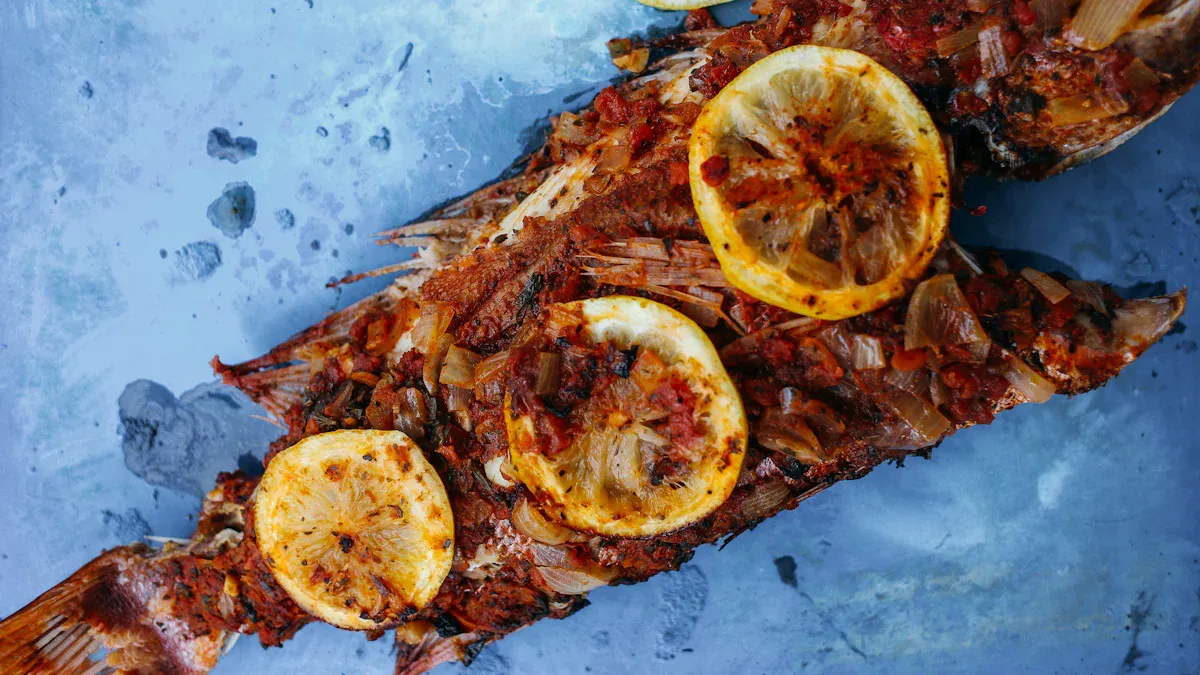
Tips for Baked Flounder with Lemon Garlic
Avoid Overcooking
You want juicy, tender baked flounder with lemon garlic every time. Overcooking can ruin your recipe. What helps you avoid dry fish?
Choose the right cooking method for your flounder.
Use a meat thermometer. Aim for 145°F for perfect baked flounder with lemon and garlic.
Try brining. Soak your fish in saltwater for 15–30 minutes before baking.
Pat your fillets dry before you start. This keeps your baked flounder with lemon garlic from falling apart. You can also check doneness with a wooden skewer. Insert it into the thickest part. If it slides through easily, your baked flounder with lemon and garlic is ready.
Flavor Boosts
What makes baked flounder with lemon garlic taste amazing? You have many options to keep your recipe moist and flavorful.
Cover your dish while baking to trap moisture.
Wrap your flounder in parchment paper for a sealed bake.
Coat the fish with olive oil or melted butter.
Add a splash of white wine or chicken stock.
Bake with vegetables like tomatoes or green beans.
Top with a lemon garlic sauce for extra flavor.
Leave the skin on if possible.
Baste your fish halfway through baking.
These tricks help your baked flounder with lemon and garlic stay juicy and delicious.
Serving Suggestions
What sides go best with baked flounder with lemon garlic?
Squeeze fresh lemon juice over your baked flounder with lemon and garlic before serving.
Serve with steamed vegetables or a light salad.
Try sauteed eggplant and tomatoes, roasted green beans, crispy Brussels sprouts, or honey glazed carrots.
Oven roasted potatoes or creamy au gratin potatoes work well.
Fregola Sarda pasta or Italian style pasta salad add variety.
If you have leftovers, reheat your baked flounder recipe gently in the oven at a low temperature. Cover the fish to keep it moist. You can also flake the fish and add it to salads or wraps for a quick meal.
You can bake flounder in your oven at 350°F for 12–15 minutes for thin fillets. Always check if your fish flakes and looks opaque. Try these seasoning ideas for your next recipe:
Lemon herb for a fresh taste
Cajun spices for a bold kick
Want to experiment? This recipe cooks fast, gives you health benefits, and lets you swap herbs or add veggies. Many readers share their own recipe twists and love the results.
Tip: Use a thermometer for perfect baked flounder every time.
FAQ
What is the best way to store leftover flounder?
You should place leftover flounder in an airtight container. Keep it in the fridge for up to two days. Reheat gently in the oven or microwave. This helps keep the fish moist and tasty.
What can you serve with oven-baked flounder?
You can pair oven-baked flounder with roasted potatoes, steamed vegetables, or a fresh salad. Rice and pasta also work well. Try adding lemon wedges for extra flavor.
What should you do if your flounder sticks to the pan?
Line your baking sheet with parchment paper or foil. Spray with a little oil before placing the fish. This helps prevent sticking and makes cleanup easier.
What is the healthiest way to season flounder?
Use fresh herbs, lemon juice, and a small amount of olive oil. Avoid heavy sauces or lots of salt. Simple seasonings keep your flounder light and healthy.