
A meat protein chart is a guide. It details protein in various meat, poultry, and fish. This chart helps you make smart dietary choices. It is crucial for your diet in 2026. You see many discussions about protein. High-protein diets are a big trend. Your body needs protein for muscle health. Protein helps you feel full. It supports overall well-being. People add more protein to snacks.
Choosing the right meat provides important protein. Every piece of meat contributes to your protein goal. Your diet benefits from understanding meat protein. This protein from meat is key. Select the best meat for your plate.
Key Takeaways
A meat protein chart shows how much protein is in different meats. This helps you choose foods that meet your daily protein needs.
Meat gives you important nutrients like iron and B vitamins. These nutrients keep your body healthy, not just protein.
Protein helps your muscles grow and keeps you feeling full. This can help you manage your weight and stay healthy.
Choose lean meats like chicken breast and lean beef. Limit processed meats because they can be bad for your health.
Using a meat protein chart helps you plan meals and make smart food choices. This is important for your health now and in the future.
What is a Meat Protein Chart?

A meat protein chart is a simple guide. It lists the amount of protein you find in different types of meat, poultry, and fish. You use this chart to quickly see how much protein you get from your food. While exact numbers can change a little based on how a product is made, these charts give you good general ideas for common serving sizes. This meat protein chart helps you make smart choices for your diet.
Understanding the Chart’s Purpose
You use a meat protein chart to understand your food better. Its main purpose is to show you the protein content in various animal products. This helps you plan your meals. You can easily compare different options. For example, you might want to know if chicken breast has more protein than salmon. The chart gives you that answer. It empowers you to choose foods that meet your daily protein goals. You become more aware of what you eat.
How Protein Content Varies in Meats
The amount of protein in meat changes a lot. It depends on the type of meat and even the specific cut. Leaner cuts usually have more protein per serving because they have less fat. For instance, chicken breast is very lean. It offers a high amount of protein. Fatty cuts of meat might have less protein per 100 grams of protein because fat takes up some of the weight.
Look at this table to see how beef cuts vary in protein:
Beef Cut | Protein per 100g (grams) |
|---|---|
Ribeye | 20-24 |
Sirloin | 23-25 |
Tenderloin | 22-24 |
Ground Beef (85% lean) | 26 |
Ground Beef (70% lean) | 22 |
You can also see how different beef cuts compare in this chart:
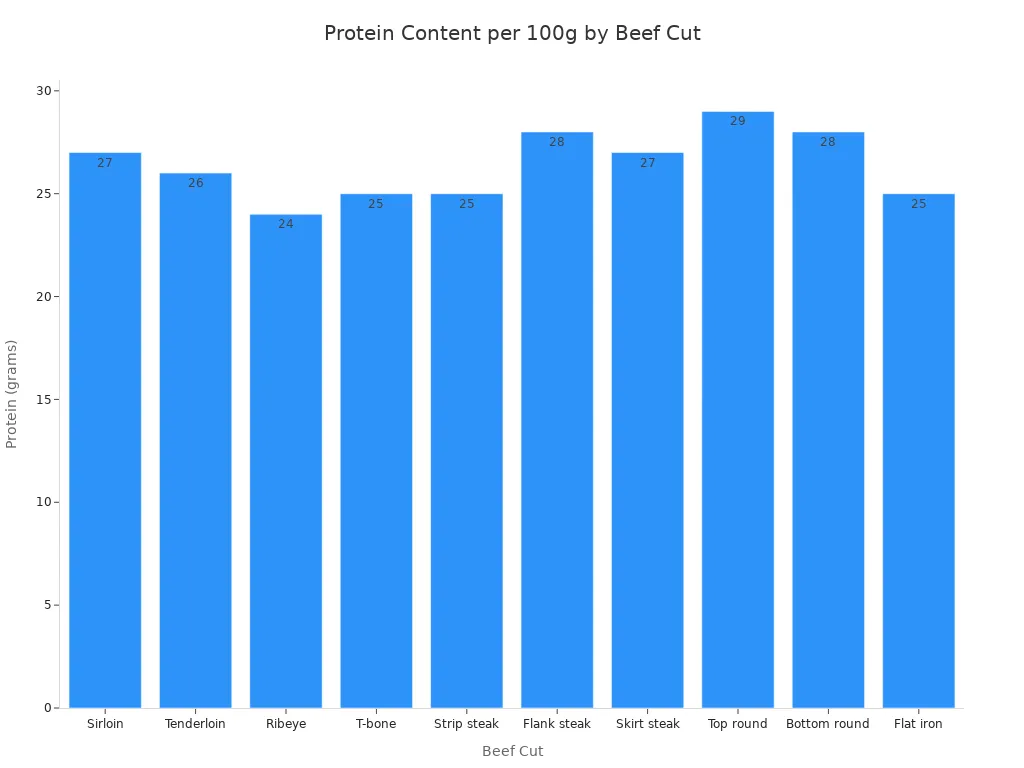
You see that some cuts, like Top Round, offer more protein than others. This information helps you pick the best meat for your needs.
Beyond Protein: Other Nutrients in Meat
While protein is a big reason you eat meat, it offers more than just that. Meat is a powerhouse of other important nutrients. You get essential vitamins and minerals from meat. For example, red meat gives you iron. Iron helps your blood carry oxygen. You also get B vitamins, like B12, from meat. Vitamin B12 is crucial for nerve function and making DNA. Zinc is another mineral you find in meat. Zinc supports your immune system. So, when you choose meat, you are not just getting protein. You are also getting a range of vital nutrients that keep your body healthy.
Why Meat Protein Matters for Your Health

You understand protein is vital. It is a critical macronutrient. Protein fulfills essential bodily needs. It provides energy. It aids in weight management. It supports mental focus. The Dietary Guidelines for Americans 2020-2025 emphasize consuming a variety of protein foods. This includes lean or low-fat meat and poultry.
Essential Amino Acids and Muscle Growth
You need protein for muscle growth. Your body uses amino acids from protein to build and repair muscles. Some amino acids are “essential.” You must get these from your diet. Different types of meat offer varied amino acid profiles. For example, beef has different essential amino acid proportions. Even different cuts of beef, like chuck versus loin, show distinct amino acid quantities.
Studies show meat helps muscle building. Nicholas Burd’s research found lean beef burgers led to more muscle protein synthesis than high-fat ones. This means you get more muscle benefit per grams of protein. Whole foods like eggs and salmon also work well. A descriptive review highlights how whey protein elevates leucine levels more than casein. Both soy and whey protein supplementation increase lean mass. A trial by Burd also showed vegan and omnivore diets can have similar muscle-building potential if protein intake is sufficient. This suggests the importance of quality protein and sufficient grams of protein.
Protein for Satiety and Weight Management
Protein helps you feel full. This is important for managing your weight. When you eat protein, your body uses more energy to digest it. This is called Diet-Induced Thermogenesis (DIT).
This increased energy use helps you feel satisfied. Studies show protein-rich foods make you feel fuller than carbohydrate or fat-rich foods. Your body releases hormones like GLP-1, CCK, and PYY when you eat protein. These hormones tell your brain you are full. Protein also reduces ghrelin, a hormone that makes you hungry. High protein intake increases plasma amino acid levels. This signals satiety to your brain. This helps you control your overall food intake.
Key Micronutrients from Meat Sources
Meat provides more than just protein. It gives you many important micronutrients. These are vital for your overall nutrition and protein and health. Red meat is rich in iron, zinc, and vitamin B12. It also contains niacin, vitamin B6, and phosphorus. You get riboflavin, pantothenic acid, selenium, and vitamin D from red meat.
Poultry also offers many nutrients. You find copper, iodine, iron, manganese, selenium, and zinc in poultry. It has vitamins A, D, E, K, C, and B vitamins like B12, biotin, folacin, niacin, pantothenic acid, pyridoxine, and thiamin. These healthy protein foods are packed with essential vitamins and minerals. You get a lot of nutrition from these healthy protein sources. The Dietary Guidelines for Americans 2020-2025 emphasize consuming a variety of protein foods, including lean meat and poultry. This ensures you get a wide range of nutrients.
Using Your Meat Protein Chart Effectively
You can use your meat protein chart to make smart food choices. This tool helps you meet your specific protein goals. It is especially useful for certain eating plans, like a keto diet.
Comparing Different Protein Sources
Your meat protein chart helps you compare different protein sources. You can easily see which meat offers the most protein per serving. For example, you might compare chicken breast to salmon. This helps you choose the best meat for your meal. You can also compare different cuts of meat. This ensures you get enough protein for your needs.
Choosing Lean Meats and Avoiding Processed Options
You should choose lean meat options. These choices give you more protein with less fat. For example, sirloin steak provides about 26 grams of protein per 100 grams of protein. Lean ground meat also offers around 26 grams of protein per 100 grams. These are healthy protein foods.
You should also limit processed meat. Processed meat includes items like sausage or jerky. While jerky has 33.2g of protein per 100g, and sausage has 18.2g, these options carry health risks. High intake of processed meat is linked to serious health issues.
It increases your risk of type 2 diabetes.
It raises your risk of heart disease.
It can increase your risk of certain cancers, like colorectal cancer.
The World Health Organization (WHO) classifies processed meat as carcinogenic.
These protein foods contain harmful compounds. They can damage your DNA. Your daily intake of processed meat should be low. Focus on healthy protein foods from whole, unprocessed meat for your dietary protein.
Integrating Meat Protein into Meal Planning
You can use your meat protein chart to plan your meals. This helps you ensure enough protein intake throughout the day. You can choose healthy protein sources for breakfast, lunch, and dinner. For example, you might have eggs for breakfast, chicken for lunch, and lean beef for dinner. This balanced intake supports muscle health and keeps you feeling full. You can also use the chart to adjust your protein based on your activity level. Higher activity may mean higher protein intake. This helps you meet your overall protein needs.
Meat Protein Charts: Essential for 2026 Diets
Also, you will find a meat protein chart remains an essential tool for your diet in 2026. It helps you navigate evolving food landscapes and make informed choices for your health.
Adapting to Future Dietary Trends
You see many changes happening in the food world. People are looking at different protein sources. You might notice a growing interest in alternative proteins. Industry professionals expect plant-based options to grow significantly. Algae-based, insect-based, and cultured meat options also show potential. Consumers buy these alternatives for perceived health benefits. Environmental concerns and animal welfare also drive these choices. You might also just feel curious about new foods.
Despite this, demand for animal protein, especially dairy, remains strong. People value its convenience and focus on health and fitness. However, you also see a flagging demand for plant-based meats. Sales declined recently due to inflation and changing prices. This shows you that traditional meat still holds its ground. You also see a rise in value and private label brands. Consumers look for savings and good value.
The 2025-2030 Dietary Guidelines will likely include more plant-based meal options. They will suggest beans, peas, and lentils as protein sources. You will also see a growing demand for natural and less processed meat alternatives. People want clean labels and recognizable plant-based ingredients. They seek added value in both meat and alternatives. This includes high protein, low fat, and targeted nutrition. Sustainability and ethical sourcing are also key drivers for your purchases. You might see blended minced meat products, for example, beef mixed with pea protein. This balances affordability and climate impact.
You will continue to see the “proteinization” of foods. Manufacturers will highlight protein content. Social media will popularize high-protein foods and recipes. Protein will remain a top nutrient. You associate it with health, wellness, energy, stamina, and weight management. You will find a meat protein chart helps you understand the protein content of both traditional meat and new blended options. This helps you make smart choices in this changing landscape.
Personalized Nutrition and Informed Choices
You live in an age of personalized nutrition. This means your diet can be tailored specifically for you. A meat protein chart helps you make these informed choices. Personalized nutrition offers many benefits.
You can manage specific health conditions better. For example, you might need to restrict fructose for intolerance. You might regulate carbohydrates for glycogen storage disease. You could restrict gluten for grain intolerance. Hypertensive patients might limit salt intake. Patients with chronic kidney disease might need low protein intake.
Personalized plans improve your weight management. They optimize nutrient intake for sustainable weight loss. You can also enhance control of blood sugar and cholesterol levels. Tailored diets help manage chronic conditions.
This significantly improves your health outcomes. You can integrate personalized nutrition into your fitness plans. This aligns your dietary goals with your fitness routines. It supports your overall health objectives. Personalized nutrition also supports mental health. It incorporates brain-boosting nutrients. This enhances cognitive function and mood stability. It focuses on holistic wellness. This fosters a healthier relationship with food and promotes longevity.
New technologies will enhance personalized dietary recommendations by 2026. Generative artificial intelligence will significantly improve this guidance. Machine learning and deep learning analyze your data. This includes lab results, wearable device feeds, and dietary logs.
Computer vision assesses your food consumption by analyzing meal photos. This improves accuracy for portion size and nutritional value. Microbiome and genomics-based nutrition analyze your biological data. This leads to highly customized dietary recommendations based on your gut microbiome. Mobile apps and cloud-based platforms offer convenience. Wearable devices provide continuous, real-time data. Conversational AI acts as a virtual nutritionist. It offers personalized suggestions and continuous support. You can use your meat protein chart with these tools. This helps you select the right meat and protein sources for your unique needs. This ensures your nutrition is perfectly aligned with your health goals.
Sustaining Overall Health and Vitality
You want to maintain your health and vitality as you age. Adequate protein intake plays a crucial role in this.
It helps maintain bone density, especially for older adults. Protein intake links positively to bone mineral density in many studies. Higher protein consumption reduces the risk of hip fractures in postmenopausal women. Protein enhances intestinal calcium absorption and retention. This is especially true when your dietary calcium is limited. It positively influences bone turnover markers. Dietary protein regulates IGF-1, a hormone beneficial for both bone and muscle. Maintaining muscle mass, which protein supports, contributes to bone strength. This happens through the physical forces muscles exert on bones. Protein is crucial for the continuous bone remodeling process.
A moderate increase in dietary protein intake beyond the current recommended dietary allowance (RDA) of 0.8 g/kg benefits bone health for older adults. This increased intake remains safe and acceptable. Increasing protein intake moderately above 0.8 g/kg does not pose serious risks for healthy older adults.
This includes renal damage, dehydration, or hyperlipidemia. The potential benefits for reducing sarcopenia and attenuating age-related bone loss generally outweigh these minimal risks.
Total and animal protein intake associate with higher bone mineral density (BMD). Conversely, plant protein intake has been linked to lower BMD. Participants with a higher ratio of animal to plant protein intake exhibited higher BMD.
This positive association was stronger in individuals with adequate calcium intake and sufficient vitamin D levels. Protein intake supports bone health by up-regulating anabolic hormones. It improves intestinal calcium absorption. It maintains muscle mass and strength. You can use your meat protein chart to ensure you get enough quality protein. This helps you sustain your overall health and vitality for years to come.
A meat protein chart is your essential tool. It helps you plan your diet. You use it to understand protein in meat. This protein supports muscle. It aids weight management. You achieve nutritional balance with enough protein. This chart guides your protein choices. It is vital for your diet in 2026. You optimize your health with proper protein intake. Animal protein remains key. You make smart food decisions for your diet. This ensures you get enough protein. Your body needs this protein. Meat provides quality protein. Focus on your protein goals.