You’ll want five Santoku knives that cover slicing, chopping, and fine prep with confidence: Dalstrong 7 Vanquish for razor sharp thin slices and a tough POM handle, imarku 5 for quick nimble work with SUS440A rust resistance, a hand-forged 7 for long-lasting hardness and a lightweight rosewood grip, HOSHANHO 7 for a balanced Japanese edge and anti-stick grooves, and the Cutluxe 7/5 set for versatile daily use and solid balance — keep going to learn which fits your style.
| Dalstrong 7″ Vanquish Santoku Knife (High-Carbon) |

| Professional Grade | Blade Type: 7″ Santoku | Steel Material / Construction: High-carbon German steel (forged) | Edge Angle / Sharpness: Hand-sharpened 9–11° per edge | VIEW LATEST PRICE | Read Our Analysis |
| imarku 5″ Santoku Chef Knife SUS440A Pakkawood |
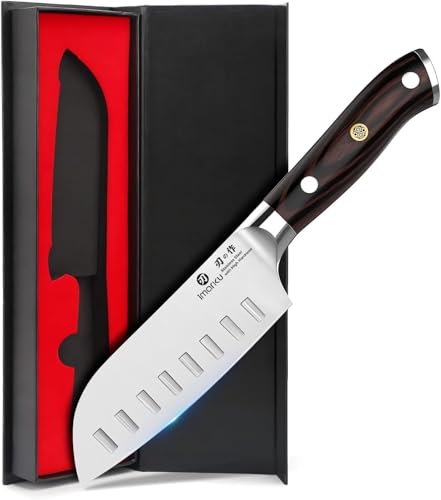
| Best for Precision | Blade Type: 5″ Santoku | Steel Material / Construction: SUS440A Japanese stainless (high-carbon) | Edge Angle / Sharpness: Hand-polished 15–18° per side | VIEW LATEST PRICE | Read Our Analysis |
| 7″ Santoku Knife — Hand-Forged High-Carbon Rosewood Handle |

| Premium Craftsmanship | Blade Type: 7″ Santoku | Steel Material / Construction: 5-layer 9CR18MOV high-carbon stainless (hand-forged) | Edge Angle / Sharpness: Ultra-sharp, high hardness (edge retained; HRC up to 62) — hand-finished | VIEW LATEST PRICE | Read Our Analysis |
| HOSHANHO 7″ Japanese High-Carbon Santoku Chef Knife |

| Best for Durability | Blade Type: 7″ Santoku | Steel Material / Construction: Triple-layer 10Cr15CoMoV Japanese steel (laminated) | Edge Angle / Sharpness: Hand-sharpened 15° blade angle | VIEW LATEST PRICE | Read Our Analysis |
| Cutluxe Artisan Santoku Knife Set – 7″ & 5 |

| Best Value Set | Blade Type: 7″ & 5″ Santoku set | Steel Material / Construction: High-carbon German steel (forged) | Edge Angle / Sharpness: Hand-sharpened 14–16° per side | VIEW LATEST PRICE | Read Our Analysis |
More Details on Our Top Picks
Dalstrong 7″ Vanquish Santoku Knife (High-Carbon)
If you want a santoku that feels like a pro tool but works in a home kitchen, the Dalstrong 7″ Vanquish is a smart pick because it pairs a high-carbon German steel blade with a level of sharpness and balance that makes everyday prep faster and more enjoyable. You’ll notice the 55+ Rockwell hardness gives lasting edge retention. The taper ground, stone polished blade is hand-sharpened to 9–11 degrees per edge for razor performance. The midnight black POM handle resists water and heat and feels secure. It’s NSF certified, comes with a sheath, luxury box, and a lifetime warranty you can trust.
- Blade Type:7″ Santoku
- Steel Material / Construction:High-carbon German steel (forged)
- Edge Angle / Sharpness:Hand-sharpened 9–11° per edge
- Hardness / Heat Treatment:55+ HRC (Rockwell)
- Handle Material & Ergonomics:Midnight black POM — ergonomic, water/heat impervious
- Gift/Packaging & Warranty/Support:Luxury packaging; custom sheath; lifetime warranty & money-back guarantee
- Additional Feature:Taper-ground stone polished
- Additional Feature:Custom-fit protective sheath
- Additional Feature:Dalstrong lion-head pin
imarku 5″ Santoku Chef Knife SUS440A Pakkawood
You’ll love the imarku 5″ Santoku if you want a compact, precise knife that makes everyday cooking feel easier and more confident. You’ll notice the SUS440A high carbon steel holds a sharp, hand-polished 15 to 18 degree edge, so you can slice ultra-thin pieces with little effort. The 2.3 mm blade resists rust and discoloration, and its anti-stick design keeps food from clinging. The Pakkawood handle fits comfortably, reduces wrist tension, and stays secure for long prep sessions. Packaged in a sleek black box, it’s ideal for busy home cooks and small professional kitchens.
- Blade Type:5″ Santoku
- Steel Material / Construction:SUS440A Japanese stainless (high-carbon)
- Edge Angle / Sharpness:Hand-polished 15–18° per side
- Hardness / Heat Treatment:Restaurant-grade hardness implied (SUS440A) — 2.3 mm blade
- Handle Material & Ergonomics:Pakkawood — comfortable, reduces wrist tension
- Gift/Packaging & Warranty/Support:High-quality black gift box; recommended for home/restaurant (implied support)
- Additional Feature:Anti-stick blade design
- Additional Feature:Compact 5″ maneuverability
- Additional Feature:High-quality black gift box
7″ Santoku Knife — Hand-Forged High-Carbon Rosewood Handle
Home cooks who want a dependable, professional-feeling knife will love this 7 inch santoku with a hand-forged high-carbon blade and rosewood handle. You’ll feel the balance immediately when you pick it up. The five-layer 9CR18MOV steel, quenched and vacuum nitrided over a 60-day process, gives a hard HRC 62 edge that stays sharp through heavy use. Its enhanced anti-corrosion finish fights rust and keeps the blade looking new. The octagonal rosewood handle is lightweight, non-slip, and reduces hand fatigue so you can slice precisely. Customer support is personal, so you’ll get help if anything goes wrong.
- Blade Type:7″ Santoku
- Steel Material / Construction:5-layer 9CR18MOV high-carbon stainless (hand-forged)
- Edge Angle / Sharpness:Ultra-sharp, high hardness (edge retained; HRC up to 62) — hand-finished
- Hardness / Heat Treatment:Up to HRC 62
- Handle Material & Ergonomics:Rosewood octagonal — non-slip, ergonomic
- Gift/Packaging & Warranty/Support:Presented as gift option; one-on-one customer service
- Additional Feature:60-day forging process
- Additional Feature:Vacuum nitriding treatment
- Additional Feature:Octagonal non-slip handle
HOSHANHO 7″ Japanese High-Carbon Santoku Chef Knife
Serious home cooks who want pro-level sharpness and balance will love the HOSHANHO 7″ Santoku, because its triple-layer 10Cr15CoMoV steel and 62 HRC hardness give you lasting edge retention and strength that stand up to daily use. You’ll notice the hand-sharpened 15° angle makes thin, precise cuts and the double-side grooves cut with less drag so food won’t cling to the blade. The frosted finish and polishing help slices glide. Its smooth African pakkawood handle feels secure, resists thermal cracking, and keeps you comfortable during long prep. It’s boxed nicely, so it’s a thoughtful gift too.
- Blade Type:7″ Santoku
- Steel Material / Construction:Triple-layer 10Cr15CoMoV Japanese steel (laminated)
- Edge Angle / Sharpness:Hand-sharpened 15° blade angle
- Hardness / Heat Treatment:~62 HRC
- Handle Material & Ergonomics:African pakkawood — ergonomic, resists thermal cracking
- Gift/Packaging & Warranty/Support:Luxurious gift box; positioned as gift option
- Additional Feature:Triple-layer laminated blade
- Additional Feature:Double-side groove design
- Additional Feature:African pakkawood handle
Cutluxe Artisan Santoku Knife Set – 7″ & 5
If you want knives that make prep faster and feel steady in your hand, the Cutluxe Artisan Santoku set fits the bill. You’ll get a 7 inch santoku and a 5 inch vegetable knife that handle chopping, slicing, dicing, and mincing with ease. The blades have Granton grooves to stop food from sticking, and each edge is hand sharpened to 14–16 degrees per side for precise cuts. Forged from high carbon German steel at 56 plus Rockwell hardness, they resist rust and hold an edge. Full tang, triple rivets, and pakkawood handles give balance, comfort, and lasting reliability with a lifetime warranty.
- Blade Type:7″ & 5″ Santoku set
- Steel Material / Construction:High-carbon German steel (forged)
- Edge Angle / Sharpness:Hand-sharpened 14–16° per side
- Hardness / Heat Treatment:56+ HRC (Rockwell)
- Handle Material & Ergonomics:Laminated pakkawood, triple-riveted — full-tang, ergonomic
- Gift/Packaging & Warranty/Support:Packaged as set; lifetime warranty covering defects
- Additional Feature:Includes 7″ and 5″
- Additional Feature:Granton/air grooves
- Additional Feature:Triple-riveted full-tang construction
Factors to Consider When Choosing Santoku Knives
When you pick a santoku, think about the blade steel and edge angle because they determine how long the knife will hold a sharp edge and how it will cut. Also pay attention to blade length and weight along with handle material and grip so the knife feels balanced and comfortable during long prep sessions. Finally consider maintenance and corrosion resistance so you won’t be surprised by rust or a high upkeep routine down the line.
Blade Steel Type
Choosing the right blade steel for your santoku matters because it shapes how the knife performs every day and how much care it needs. You’ll often choose high-carbon stainless steels like 440 or 9Cr/10Cr because they balance edge life and resistance to rust. If you want a sharper, harder edge and don’t mind more upkeep, carbon-only tool steels give you that bite but ask for oiling and careful drying. Pay attention to Rockwell hardness ratings. Blades around HRC 55 to 62 trade toughness and edge retention, with higher numbers holding an edge longer but risking chipping. Also note construction. Monosteel is simple. Laminated blades marry a hard core to softer faces for toughness. Steels with chromium, molybdenum, and vanadium resist stains and wear better.
Edge Angle & Sharpness
Because the edge angle shapes how a santoku cuts and how much care it needs, you’ll want to think about angles before you buy or sharpen a knife. A typical santoku angle runs about 9° to 18° per side. Lower angles, around 9° to 12°, feel razor keen and slice thin, but they need harder steel and you’ll sharpen more often. Wider angles, roughly 15° to 18°, give you a sturdier edge that resists chips and suits everyday home tasks. Match honing and sharpening to the angle: acute edges need finer stones and gentler re-profiling. Remember that thinner geometry cuts with less drag yet chips more on bones or hard veggies. Choose an angle that fits your food, skill, and willingness to maintain the blade.
Blade Length & Weight
If you spend time cooking every week, blade length and weight will shape how a santoku feels in your hand and how you work at the cutting board. Blade lengths run about 5 to 7 inches, and that range matters. A 5 or 6 inch santoku is lighter, so you’ll make precise slices and quick wrist motions with less effort. Move to a 7 inch blade and you get more slicing surface and reach, plus extra mass that helps long straight cuts and faster chopping of larger items. Weight also changes balance and fatigue. Heavier blades add chopping momentum but can tire your wrist over time. Match length and weight to your prep habits and kitchen size for comfort and control.
Handle Material Grip
You’ve already felt how blade length and weight change the way a santoku moves in your hand, and the handle is what turns that blade into an extension of you. Choose hard synthetic materials like POM or stabilized pakkawood when you want a grip that resists water and heat. They stay stable, don’t swell, and cut down microbial growth so your hold stays consistent. Full tang with triple or riveted handles adds balance and keeps the handle from separating during heavy chopping. Look for textured or contoured grips, such as octagonal or scalloped profiles, to reduce wrist fatigue and prevent slippage. Think about handle thickness and weight. Thicker, heavier handles give momentum for forceful cuts. Thinner, lighter handles give precision for detailed work. Smooth wood feels nice but needs regular care.
Maintenance & Corrosion Resistance
When you choose a santoku, maintenance and corrosion resistance are as important as blade shape and handle feel, so you won’t be surprised by how a knife ages with regular use. Pick a harder, higher carbon steel if you want long-lasting sharpness, but know it needs quick drying and occasional oiling to stop surface corrosion. Choose stainless or high-carbon stainless if you cook with acidic or salty ingredients and want lower upkeep. Rinse knives promptly after cutting citrus, tomatoes, or salt-brined foods, dry them immediately, and never leave them soaking to avoid pitting. Hone the edge every few uses and sharpen on stones matched to the hardness when needed. Store high-carbon blades with a thin coat of food-safe mineral oil and avoid dishwashers and abrasive pads.
Balance And Construction
After you’ve looked at how to keep a santoku from rusting and dulling, it helps to feel how the knife sits in your hand, because balance and construction shape every cut you make. You want full-tang construction so the blade steel runs through the handle and gives steady weight and strength. Try a pinch grip and note the point-of-balance; it should sit near where blade meets handle so the knife feels even, not blade- or handle-heavy. Notice bolster and spine thickness next because heavier material near the handle adds chopping power but slows delicate slicing. Also check handle material and shape. Dense stabilized wood, POM, or composite with a contoured or octagonal shape helps you hold the knife securely. Finally match blade thickness and length to your cutting style.