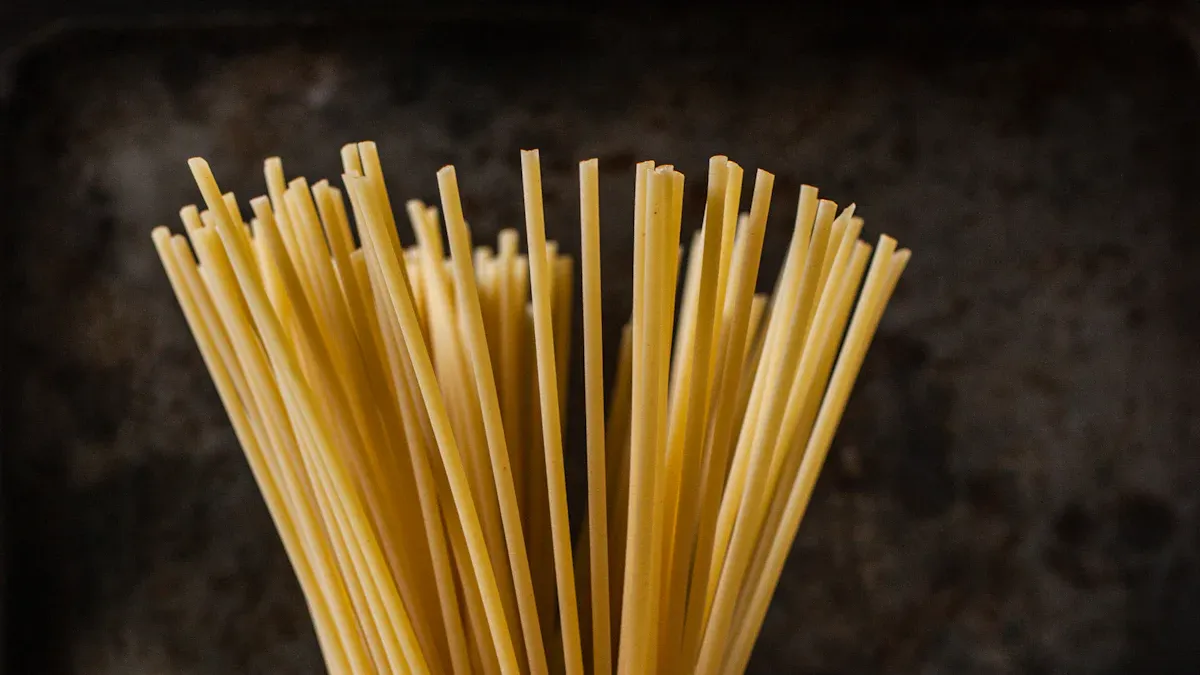
You might wonder if it’s actually safe to eat uncooked pasta. Many people have tried a bite and then worried about possible effects.
Raw pasta is tough for your body to digest.
It hasn’t softened, so you may feel bloating or discomfort.
Eating uncooked pasta can cause your digestive system trouble. You may not get many nutrients, and there’s a small risk of food poisoning from ingredients like flour or eggs.
Key Takeaways
Eating uncooked pasta can lead to bloating and discomfort. Small amounts are usually safe, but larger amounts increase risks.
Fresh pasta carries a higher risk of foodborne illness due to raw eggs. Always cook pasta thoroughly to ensure safety.
If you eat uncooked pasta, drink water and monitor your symptoms. Seek medical help if you experience severe stomach pain or nausea.
Is It Safe to Eat Uncooked Pasta?

Immediate Effects
If you eat uncooked pasta, you might notice some effects right away. Chewing dry pasta feels tough and can even hurt your teeth. You may find it hard to swallow, especially if you don’t chew well. This can create a choking hazard, especially for kids or anyone who tries to eat a large piece.
Eating small amounts of uncooked pasta usually leads to mild discomfort.
Larger amounts can make these problems worse and increase your risk of choking.
If you have gluten intolerance, eating raw pasta could trigger an allergic reaction.
You might feel bloated or get a stomachache soon after eating raw pasta. The low moisture content makes it hard for your body to break down, so you could feel uncomfortable for a while.
Digestive Issues
Your body struggles with digestion when you eat uncooked pasta. The starches inside haven’t softened through cooking, so your digestive enzymes can’t break them down easily. This leads to bloating, gas, and sometimes cramps.
Raw pasta is very difficult to digest. It hasn’t undergone gelatinization (the process where starches absorb water and swell during cooking), so your digestive enzymes can’t easily break it down. This can lead to bloating, gas, and discomfort.
The biggest concern is digestibility. Our bodies struggle to break down the dense starches that would cause bloating or stomach issues after eating.
If you eat a lot of uncooked or slightly undercooked pasta, you may notice more severe digestive issues. You might feel full, gassy, or even get cramps. Your body can’t absorb nutrients well from raw pasta, so you miss out on the benefits you get from properly cooking pasta.
Here’s a quick look at how your body handles uncooked versus cooked pasta:
Type of Pasta | Digestibility | Effect on Blood Sugar |
|---|---|---|
Uncooked Pasta | Not easily digestible; enzymes cannot adhere | Slower release of glucose into the bloodstream |
Cooked Pasta | Easier to digest; especially when al dente | Gradual release of glucose into the bloodstream |
If you eat slightly undercooked pasta, your body still has trouble with digestion, but the effects are usually less severe than with raw pasta. Cooking helps break down starches, making pasta easier to digest and safer to eat.
Foodborne Illness Risk
Food safety experts like the CDC and FDA warn against eating raw dough or batter made with uncooked flour. Raw flour can contain bacteria such as E. coli, which may cause foodborne illness. Fresh pasta made with raw eggs carries a higher risk because eggs can contain Salmonella, a bacteria that leads to food poisoning.
Eating raw pasta can lead to foodborne illness due to untreated flour, which may harbor bacteria like E. coli.
Raw eggs in pasta can contain Salmonella, increasing the risk of food poisoning.
Most dried pasta is pasteurized, so the risk of bacterial growth is very low.
Fresh pasta with raw eggs is more dangerous than dry pasta when eaten uncooked.
Some bacteria found in uncooked pasta include Staphylococcus aureus, Bacillus cereus, and Cronobacter species. Bacillus cereus spores can survive cooking and grow into bacteria if pasta sits at room temperature. These bacteria produce toxins that cause nausea, vomiting, and cramps.
Type of Pasta | Risk of Foodborne Illness |
|---|---|
Uncooked Dry Pasta | Very Low |
Uncooked Fresh Pasta | Higher (due to raw eggs) |
If you eat uncooked pasta, especially fresh pasta, you should watch for symptoms like stomach pain, nausea, or vomiting. These signs may mean you have food poisoning. Cooking pasta according to package directions is the best way to avoid these risks and ensure general safety.
Safe to Eat Undercooked Pasta?
Digestion and Nutrients
When you eat uncooked pasta or slightly undercooked pasta, your body faces a challenge. The starches inside raw pasta and undercooked noodles have not gone through full gelatinization. This means your digestive enzymes cannot break them down easily. You might notice bloating or discomfort because digestion takes longer.
Cooking pasta changes its carb content by absorbing water. For example, 100g of uncooked pasta becomes about 31.6g carbs once cooked.
Undercooked pasta is tough for your body to digest. Digestive enzymes struggle to stick to the pasta, so you get less nutrition compared to properly cooked pasta.
Fully cooked pasta is easier for your body to handle. It lets you absorb more nutrients and helps with general safety.
Dry vs. Fresh Pasta
You might wonder about the difference between dry and fresh pasta. Dry pasta is usually safer if you eat uncooked pasta or slightly undercooked pasta. Fresh pasta often contains raw eggs, which can carry Salmonella. This bacteria causes food poisoning and can lead to vomiting or diarrhea. In the U.S., eggs and egg products caused over 5% of Salmonella outbreaks in 2020.
Dry pasta: Lower risk, especially if you eat it undercooked.
Fresh pasta: Higher risk because of raw eggs and possible poisoning.
Food safety experts recommend cooking pasta fully to lower your risk.
What To Do If You Eat It
If you eat uncooked pasta or slightly undercooked pasta, you usually do not need to worry. Most people will not have serious problems. If you have gluten allergies, you could get sick from undercooked noodles. Watch for symptoms like severe stomach pain, vomiting, or bloating. These signs mean you should seek medical help.
Drink water to help with digestion.
Rest and monitor your symptoms.
Contact a doctor if you feel very sick or have signs of food poisoning.
Cooking pasta until it is soft helps with digestibility and general safety.
Eating uncooked or undercooked pasta can cause bloating or discomfort, but small amounts are usually not dangerous for most people.
Fresh pasta may carry a higher risk of foodborne illness, especially for kids or those with weak immune systems.
For safety, cook stuffed pasta to 165°F. To check doneness, taste a piece-if it’s soft with a slight bite, it’s ready!
FAQ
What should you do if you eat raw pasta?
You can drink water and rest. Watch for stomach pain or nausea. If you feel very sick, call your doctor.
What happens if you eat slightly undercooked pasta?
You might feel bloated or get a stomachache. Your body finds it hard to digest. Usually, you will feel better after a few hours.
What is the safest way to enjoy pasta?
You should focus on cooking pasta until it is soft but still has a little bite. Properly cooked pasta helps your body absorb nutrients and lowers your risk of illness.
Tip: Always follow cooking directions on the package for the best results!